- Gaming1 hour ago
MIGS Early Bird ends this week
The Montréal International Game Summit (MIGS) returns next month - on November 10th and 11th - with more speakers and opportunities to grow your business and career. It's already Canada’s largest and longest-running B2B video game conference and this year features a further three content stages – spanning business, external development strategies and game development tracks – to deliver the insights, strategies and stories shaping what’s next. Register your tickets before this Thursday, October 16th and you could save CA$100 (£50) before they reach full price. Even better, we've arranged a special 15% off for PG Connects attendees. Just make sure to register via this link, which applies code MIGS26-PGC15. ... [ MORE ]
- Gaming1 hour ago
Steam Frame Update Boosts Battery Life, Improves Streaming Quality & More
Valve just released a new update for Steam Frame that improves battery lifetime, steaming quality, connectivity issues, and more. Steam Frame launched last month, bringing with it the ability for users to not only stream PC and PC VR games to the headset, but also play those games locally, albeit at a lower quality since content is rendered on the standalone headset’s Snapdragon 8 Gen 3 mobile chipset. Now, the SteamOS 0.4 update is available for all Frame users, bringing with it some of the most crucial features. One of the biggest complaints about Steam Frame is its middling battery life; now Valve says it’s bumped power efficiency and battery lifetime during both streaming and local gameplay, with gains of up to 12%. Steam Frame’s optics | Road to VR Before the update, users could expect around 1 and 1.5 hours of battery life with mixed use. Check out our review of Steam Frame to learn more. Steaming quality has also improved with SteamOS 0.4, including Improved color clarity during VR streaming, and a fix to VR streaming reliability that reduces ‘Error 17’, which indicates an incompatible protocol settings or connection issue during PC VR streaming between the headset and the host PC. Additionally, Valve says it’s fixed Wireless Adapter connectivity issues that affected users in some countries; manual configuration also now shows the correct list of Wi-Fi channels in all regions. You can check out the full SteamOS 0.4 changelog here . Notably, Valve has also now made Steam Frame CAD files and electrical interface information available for non-commercial use, allowing users to more easily create hardware mods. The post Steam Frame Update Boosts Battery Life, Improves Streaming Quality & More appeared first on Road to VR .
- Web3 & Blockchain1 hour ago
AVAX Price Prediction: Seven-Percent Surge Stalls at a MACD Crossroads While OI Quietly Drains
Avalanche jumped 7% in the past 24 hours to $11.03, clearing every tracked moving average, yet Binance futures open interest shed 8.47% over the same window. Coin Edition's Parshwa Turakhiya flagge... (Read More)
- EV & Mobility1 hour ago
Renault’s Alpine Brand Goes Retro-Futuristic With Gorgeous Concept
Jaw, meet floor.
- Funding Tracker1 hour ago
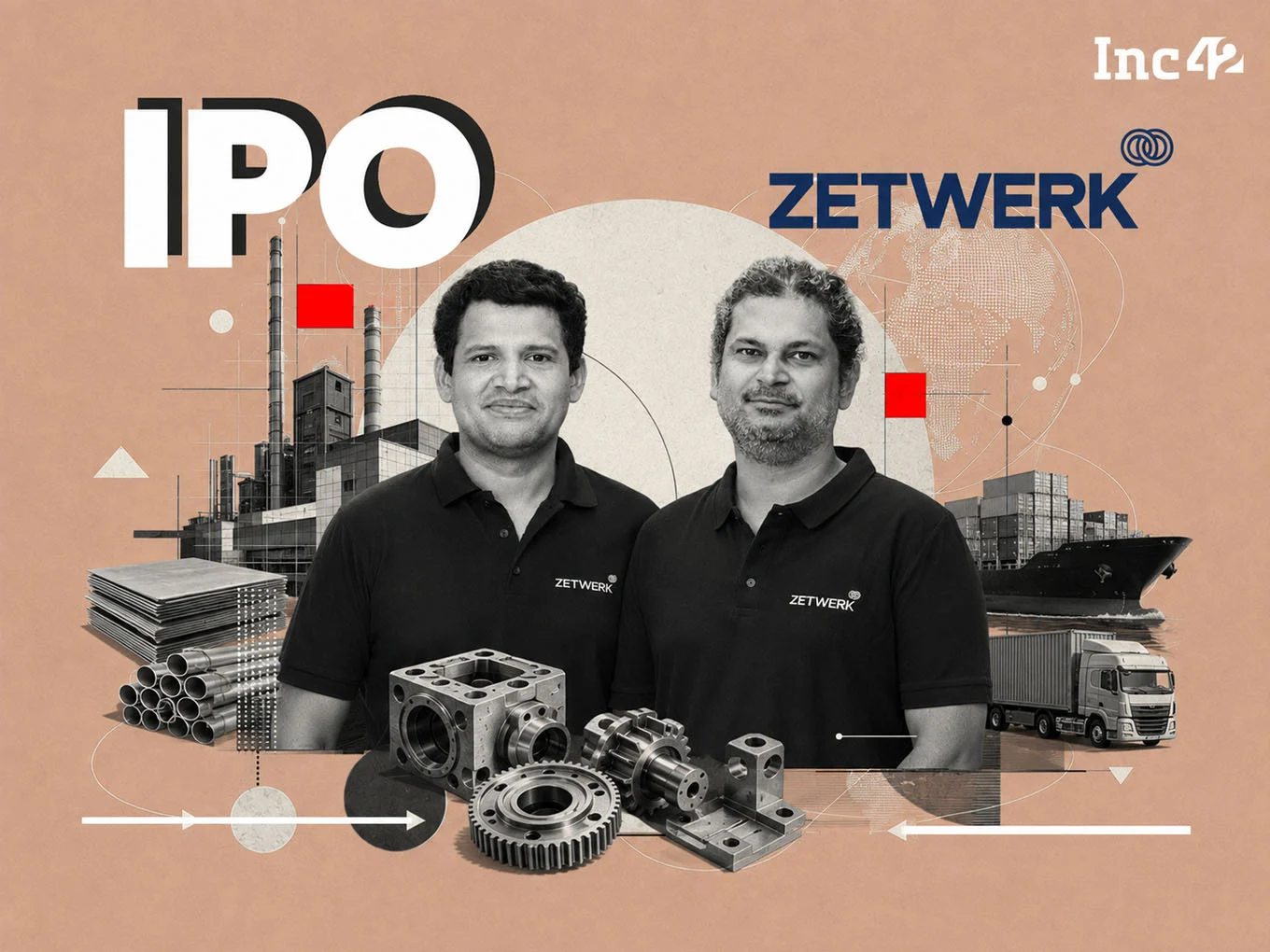
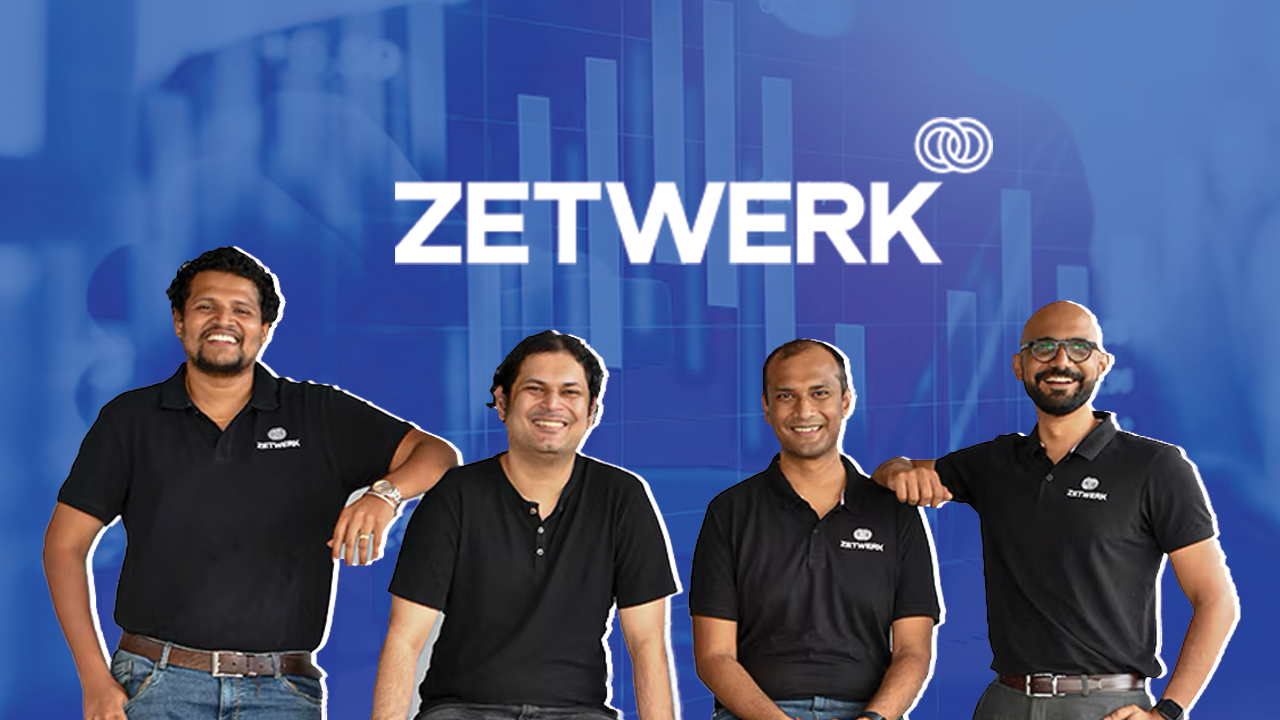
Zetwerk IPO: Early investors set for up to 38X returns through OFS
Zetwerk’s upcoming IPO is expected to deliver multi-fold returns to several early investors, with Kae Capital and Kalysta Capital set to earn around 38X returns on their investments. The offer for sale (OFS) will see existing shareholders offload 14.45 crore shares worth approximately Rs 2,182 crore. According to Entrackr’s analysis, Lightspeed Venture Partners is the largest selling external shareholder in Zetwerk’s IPO, with a share sale worth Rs 426.9 crore. At the upper price band of Rs 151 per share, it is set to clock around 4.5X returns based on the average acquisition cost across its participating funds. Peak XV Partners will offload shares worth Rs 353.5 crore, translating into around 9.3X returns, while Accel is set to generate around 19.3X returns on its Rs 181.5 crore share sale. The average acquisition costs for Lightspeed and Peak XV have been calculated across their respective funds participating in the OFS. Kae Capital will sell shares worth Rs 189.8 crore through the OFS and is set to clock around 38.3X returns based on an average acquisition cost of Rs 3.94 per share. Kalysta Capital will offload shares worth Rs 63.3 crore, also generating around 38.3X returns at the upper price band. Among other shareholders, promoter group entity Creovate Innovation will offload shares worth Rs 346.9 crore. Its acquisition cost of Rs 178.58 per share is higher than the IPO’s upper price band, implying a return of around 0.85X on its investment. Zetwerk co-founders Amrit Acharya and Srinath Ramakkrushnan will each sell shares worth around Rs 214.9 crore. Other OFS participants include Saifuddin Fakhruddin Qureshi and Matthew Harris Arnold, who will sell shares worth Rs 43.1 crore and Rs 36.9 crore, respectively. Zetwerk’s IPO comprises a fresh issue of Rs 2,830 crore and an OFS of 14.45 crore shares. The company aims to raise around Rs 5,012 crore through the public issue, valuing it at around Rs 25,583 crore at the upper end of the p
- Gaming1 hour ago
PS2 emulation on Android just got a big upgrade on older Pixels as well as MediaTek devices
Credit: Hadlee Simons / Android Authority TL;DR The team behind ARMSX2 on Android has released the MaliSX2 GPU driver for the PS2 emulator. This driver should deliver better performance in many games if you’ve got a device with a Mali GPU. This is good news if you want to play PS2 games on your older Pixel, or on another device with Mali graphics. There are many advanced emulators on Android , and Snapdragon-powered devices are usually the best way to run these apps. A big reason for this is that custom Turnip drivers are exclusive to Snapdragon-toting devices, bringing performance and stability gains over the default GPU driver. Now, there’s good news if you have a non-Snapdragon phone or handheld and want improved performance for PS2 games. ARMSX2 v2.8.3 has been released on GitHub, and the latest version of the popular PS2 emulator for Android also includes the so-called MaliSX2 GPU driver. MaliSX2 is a Vulkan driver for devices with Arm Mali GPUs. MaliSX2 can be found in the GPU driver list under Settings > Renderer .
- Fintech1 hour ago
Unique AI Launches AI Teammates for Financial Services
Unique AI , the Swiss-founded secure AI platform for financial services, has launched Remy, an AI teammate for financial advisors. Remy builds a living memory of every client relationship and turns it into a prepared plan for the advisor’s day. Unique AI unveiled Remy with a live demo at its New York launch event on October 6, marking the next step in the company’s US expansion. At the event, Chief Product Officer Dana Ritter also previewed two more teammates: Casey for compliance and Ivy for investor relations. Read More on Fintech : Global Fintech Interview with Shai Gabay, CEO at Trustmi Remy makes sure what a firm knows about its clients is never rebuilt from scratch and updates continuously. Most AI assistants start from zero every time they run. What a firm knows about a client is scattered across inboxes, CRM notes, and people’s heads. Remy solves this with living memory, a single, continuously updated view of every client. It is built from the CRM, core banking and custody platforms, Outlook, Teams, calendars and meetings, and every fact is linked to its source and date. Remy supports the full client lifecycle, including lead generation and referrals, onboarding, meeting preparation, and ongoing account review. Each morning, Remy delivers a dashboard of intelligent recommendations and open actions ranked by priority, briefs for every meeting in the next week, and prepared client emails that are ready to send. Remy connects what’s happening in a client’s life (e.g., a liquidity event, a move, a new child) with what’s happening in their portfolio. This work helps advisors spend more time growing their client relationships. “Your firm already has the intelligence. What’s missing is memory,” said Dana Ritter, Chief Product Officer at Unique AI. “Remy makes sure what a firm knows about its clients is never rebuilt from scratch and updates continuously. With Casey and Ivy in place for compliance and inves
- EV & Mobility1 hour ago
China NEV sales hit year-to-date high in September as export surge offsets domestic decline, CAAM data shows
China's NEV sales rose 13.6% year-on-year to 1.823 million in September, with BEV sales reaching a record 1.277 million. For details, please visit CnEVPost (cnev.co).
 SponsoredAjio Gram
Get an Extra 5% Off – Save Up to ₹650 on Orders of ₹1290!
- Tech1 hour ago
OnePlus 16 Specifications Get Confirmed Ahead of Launch
OnePlus 16, the next major flagship from OnePlus is going to launch soon in China. The device is going to launch in just a few hours. It is most likely not coming to India. The OnePlus 16 specifications are now making rounds online ahead of the launch. Some of the key specifications about the phone were already known, but now even the brand has revealed them officially. Things such as the display, gaming tech, chipset, and more have been confirmed by the brand. Let us take a look at everything which is known about the OnePlus 16. OnePlus 16 Specifications Confirmed OnePlus 16 will be powered by the Qualcomm Snapdragon 8 Elite Gen 6 Super Premium Edition. This chip is the most powerful SoC built for smartphones by Qualcomm. The company claims that it is clocked up to 5 GHz. This is also the first 2nm chip from Qualcomm built by TSMC and it will be equipped on the OnePlus 16. Apart from this, some other details about the chipset has been confirmed. OnePlus 16 will feature a 185Hz Oriental display with support for a global refresh rate up to 165Hz. Many games will be able to run oon 185Hz on this device. The company will equip this phone with a G3 co-processor alongside a networking chip. It will run on ColorOS 17 based Android 17 out of the box. OnePlus 16 is also confirmed to pack a 9000mAh battery with support for 100W wired fast-charging and 50W wireless charging. It is confirmed to further feature a 200MP rear camera and a 50MP periscope telephoto sensor with LUMO imaging system. OnePlus 16 will also feature an ultra-sonic fingerprint sensor on the screen and carry several IP ratings including the P66, IP68, IP69, and IP69K for dust and water resistance. The device is about to launch in a few hours in China, stay tuned for official confirmation from the brand.
- Web3 & Blockchain1 hour ago
DOT Price Prediction: Bulls Press the $1.30 Bollinger Ceiling as MACD Momentum Goes Flat
Polkadot is trading at $1.27 on October 12, 2026, up 2.74% over 24 hours on Binance spot, with price pressing against the $1.30 Bollinger upper band — the same level Coin Edition flagged on October... (Read More)
- Funding Tracker1 hour ago
Hero Electronix's chip design firm Tessolve Semiconductor raises $75 million from Vector Line Capital
Tessolve Semiconductor, a Hero Electronix company, has secured a $75 million funding from US-based Vector Line Capital to support its expansion plans, including strategic acquisitions aimed at strengthening its semiconductor engineering capabilities and global operations. The company said it is in advanced discussions to complete multiple acquisitions over the next two quarters. The proposed deals are expected to complement its existing capabilities, broaden its services and expand its international presence. The investment marks Vector Line Capital's first investment in India. The firm, which focuses exclusively on semiconductors and the semiconductor supply chain, joins TPG and Singapore-based Novo Tellus as investors in Tessolve. The company has not disclosed its valuation following the investment or the size of the stake acquired by Vector Line Capital. What does Tessolve Semiconductor do? Founded in 2004, Tessolve provides semiconductor engineering services covering chip architecture, design, validation, testing and embedded systems. The company, led by co-founder and CEO Srini Chinamilli, develops chips used in AI, high-performance computing (HPC), automotive, data centres and industrial applications. Its capabilities include the design of complete semiconductor chips, including AI, HPC, and analog and mixed-signal chips. Tessolve said it works with leading hyperscalers, chip startups, system companies and 18 of the world's top 20 semiconductor companies. The company employs more than 3,500 engineers across 10 countries and operates nine laboratories globally. It also partners with semiconductor foundries, intellectual property (IP) providers, electronic design automation (EDA) companies and test equipment manufacturers. Tessolve said it uses in-house semiconductor platforms and design processes to shorten chip development cycles. What did the company and investors say? Tessolve co-founder and CEO Srini Chinamilli said the company had evolved from offeri
- Gaming1 hour ago
Gemini Live’s mobile UI might start looking different very soon
Credit: Megan Ellis / Android Authority TL;DR Google is testing an updated interface for Gemini Live featuring a redesigned waveform animation at the bottom of the screen. The company is also testing a new speaker icon near the top-right corner, which will likely let users silence Gemini’s voice output without lowering the global system volume. The new interface is currently a work in progress and thus lacks features such as video and screen sharing. Google has been working on a bunch of upgrades for Gemini Live, such as an ephemeral video mode and keyboard input . There’s more in store, as Google could also bless Gemini Live with a redesigned interface alongside these changes, streamlining how Gemini’s voice-centric sessions look and behave on mobile. You’re reading an Authority Insights story. Authority Insights brings you all the latest exclusive reports, app teardowns, leaks, and in-depth tech coverage from the Android Authority team that you won’t find anywhere else.
- Web3 & Blockchain2 hours ago
MATIC Price Prediction: Trapped at $0.38 as Bearish MA Stack and Vanishing Volume Signal a Market Waiting for a Spark
Polygon's MATIC is trading at $0.38 on Binance spot as of October 12, 2026, pinned below every major moving average from the 7-day through the 200-day, with a near-zero MACD histogram and just over... (Read More)
- Fintech2 hours ago
Do Banks Need AI Employees More Than They Do Core Upgrades?
Watch more: Monday Conversation With Kastle’s Rishi Choudhary Rishi Choudhary, Co-Founder and CEO of Kastle, believes that banks have been approaching AI modernization from the wrong end of the technology stack: the legacy end. For years, he said, the industry’s transformation agenda has been dominated by the dilemma of just how banks can introduce new capabilities […] The post Do Banks Need AI Employees More Than They Do Core Upgrades? appeared first on PYMNTS.com .
- Fintech2 hours ago
Finance Teams Embrace AI but Many Still Struggle to Unlock Working Capital
Corporate treasury is approaching an uncomfortable reality about artificial intelligence. Almost every firm has it, but relatively few companies can demonstrate that it is making them financially better off. Findings in the latest 2026 edition of the Working Capital Index (WCI) from PYMNTS Intelligence reveal that 97% of the lowest-performing middle-market firms use AI in […] The post Finance Teams Embrace AI but Many Still Struggle to Unlock Working Capital appeared first on PYMNTS.com .
- Fintech2 hours ago
Leela CEO Says AI Can Give FinTechs a 10-Person Compliance Team
Compliance remains labor-intensive for financial institutions, which must satisfy multiple regulators and meet extensive documentation requirements. Leela is built to perform much of that work rather than simply provide information. The company is launching with $4.6 million in funding and an AI platform designed to execute compliance tasks while keeping humans responsible for consequential decisions. […] The post Leela CEO Says AI Can Give FinTechs a 10-Person Compliance Team appeared first on PYMNTS.com .
 SponsoredWellbeing Nutrition
Sleep Better, Live Better: Premium Quality Supplements Starting at Rs. 649!
- Fintech2 hours ago
More Than Two-Thirds of Firms Lose or Delay Revenue When Payments Fail
A failed payment can look small on a transaction screen. For the business waiting on the money, the effects can spread fast. Revenue gets delayed, staff spend more time fixing problems and customers can lose confidence in the payment experience. “The Payment Guarantee Gap: Why Adoption Lags Despite Perceived Value,” a PYMNTS Intelligence report produced […] The post More Than Two-Thirds of Firms Lose or Delay Revenue When Payments Fail appeared first on PYMNTS.com .
- Fintech2 hours ago
AI Agents Give Main Street Businesses Big Business Muscle
Running a small business has always meant doing more with less. The owner takes the morning shift, answers customer emails on lunch, reconciles the books at night and handles scheduling on weekends. Every hour spent on operations is an hour not spent on the work that grows the business. Artificial intelligence agents are changing that […] The post AI Agents Give Main Street Businesses Big Business Muscle appeared first on PYMNTS.com .
- Gaming2 hours ago
33 Years Later, Tom Cruise's Near-Perfect Legal Thriller Is Officially on Streaming
Tom Cruise has built a career playing men who find themselves in increasingly dangerous situations, whether by choice or by sheer bad luck. From dangling off a skyscraper in Mission: Impossible – Ghost Protocol to running for his life in War of the Worlds to navigating the increasingly bizarre events of Eyes Wide Shut , Cruise is always at his best when the stakes are high and the people around him can’t be trusted. His latest, Digger , is another reminder that there’s rarely a dull moment when Cruise is in the lead.
- Fintech2 hours ago
71% of Card Switchers Choose a Card Already in Their Wallet
Credit card issuers may think their biggest retention threat is another bank persuading a customer to open a new account. But the replacement card may already be sitting in the customer’s wallet. PYMNTS Intelligence’s “The Switching Trigger: How Issuers Can Stop Their Credit Cards From Losing Top-of-Wallet Status” report, in collaboration with Elan, surveyed 2,460 […] The post 71% of Card Switchers Choose a Card Already in Their Wallet appeared first on PYMNTS.com .
- Fintech2 hours ago
Pay-by-Bank Could Win 32% of Bill Payments With the Right Incentives
Digital bank customers are more willing than the broader banking population to move transactions to Pay by Bank when the payment method comes with discounts and buyer protection, according to PYMNTS Intelligence research. The findings come from “Pay by Bank Deep Dive: Digital Bank Users Are Ready to Switch,” a PYMNTS Intelligence report produced in […] The post Pay-by-Bank Could Win 32% of Bill Payments With the Right Incentives appeared first on PYMNTS.com .
- Gaming2 hours ago
BAFTA awards over £270,000 to 112 recipients in UK and US to support career growth in games, film, and TV
BAFTA has awarded over £270,000 in grants to 112 recipients in the UK and North America under its 2026 Prince William BAFTA Bursary and scholarship programmes. Read more
- Tech2 hours ago
iQOO Reveals OriginOS 7 with AI: Eligible Phone List Revealed
Vivo’s gaming-focused smartphone brand, iQOO, announces an OriginOS 7 upgrade for its entire eligible lineup. Eligible iQOO smartphones will get access to Vivo’s new OriginOS 7 based on Android 17, with customizations especially for iQOO devices, making it different from the version on Vivo phones running OriginOS 7. Vivo launched the new OriginOS 7 last week alongside the Vivo V80 and Vivo X Fold 6 foldable lineup. Now, iQOO has confirmed the launch and release timeline, with flagship models like the iQOO 15 and iQOO 13 getting early access to OriginOS 7. Here, we cover the features of iQOO OriginOS 7 and the full list of eligible iQOO devices that will receive the upgrade. Also Read: iQOO 16 Price Leaked at Rs 86999: Wait or Buy iQOO 15? What Features Do You Get with OriginOS 7 for iQOO Smartphones? OriginOS 7 for iQOO phones will include specific iQOO features and will be based on Android 17, with a completely new interface, updated animations, and integrated AI features. iQOO is promising UI animation and efficiency upgrades, making iQOO phones faster and more efficient for multitasking and running apps. UI Upgrade and Animation Updates Reports also suggest iQOO phones will include gaming-centric features to improve the gaming experience. OriginOS 7 will introduce a dedicated Origin Smooth Engine with Fluid Motion and Spring Animations to deliver greater responsiveness. Fluid Motion also introduces a liquid-like UI. OriginOS 7 offers a Snap-UP Engine that lets iQOO phones running it handle all network traffic when a payment is detected, ensuring the payment goes through smoothly without interruptions. Inspired by Vivo’s OriginOS 7, iQOO’s new OriginOS version will include the “Origin Workbench,” which lets you open multiple windows and switch between apps easily. Also Read: iQOO Z11xa 5G Launched: Is It Best Phone under Rs 30,000? AI Features iQOO will add a new AI feature to OriginOS 7 for iQOO smartphones, giving you an improved AI assistant called Jovi that c
- Web3 & Blockchain2 hours ago
DOGE Price Prediction: Three-Day Bear Flag Points to $0.033 as Month-End Bulls Eye $0.101
Dogecoin is trading at $0.09 on October 12, 2026, up 3.02% on the day, but a bear flag breakdown identified by FXEmpire on October 9 projects a potential 60% decline toward $0.033 — a scenario that... (Read More)
 SponsoredVijay Sales
Apple iPhone 18 Pro Series – Only Rs.1,64,900!
- AI & Deeptech2 hours ago
Intel CEO says Chinese frontier AI model adoption has been 'very fast'
At a recent panel, Intel CEO Lip-Bu Tan discussed the swift integration of Chinese frontier AI models like DeepSeek, Kimi, and GLM. He noted their satisfactory performance and stressed that open-source development facilitates greater efficiency. Tan forecasted a mainstream shift in quantum computing within three to five years and underscored the vital role of software in streamlining essential infrastructure.
- AI & Deeptech2 hours ago
AI less regulated than milk, Microsoft president says in warning over safety
Brad Smith adds to calls for tougher rules for AI, including ‘kill switches’ and legal obligation to victims of rogue agents Business live – latest updates Artificial intelligence is less regulated than milk and washing machines, the president of Microsoft has said, as the tech industry warns over the safety of AI. Brad Smith said there should be more safety rules to govern the technology including a legal obligation to a “victim” if their system was breached by rogue AI agents. Continue reading...
- Robotics2 hours ago
Humanoid robots can sprint and box – but the real test is doing the laundry
By Wai-keung Fung , Cardiff Metropolitan University At the recent World Humanoid Robot Games 2026 in Beijing, robots sprinted, boxed, played football and tackled tasks inspired by factories, restaurants and emergency situations. The robot Tiangong Ultra even completed the 100 metres in 8.64 seconds, quicker than Usain Bolt’s 9.58-second world record. But if we really want to know whether humanoid robots are ready for everyday life, a far less glamorous challenge may tell us more: doing the laundry. Can a robot take a crumpled T-shirt from a laundry basket, work out which way round it is, fold it neatly and recover when the sleeve slips from its hand? No robot system can yet reliably handle the whole laundry process, from carrying a basket to the washing machine and sorting clothes for different programmes to taking them out, hanging them to dry, folding and ironing them. Even folding remains a challenge: robots need to cope with clothes of different shapes, sizes, materials and levels of creasing. Running fast is difficult, of course. A humanoid has to coordinate many joints, keep its balance and generate powerful movements without falling over. The task itself, however, is fairly clear. The robot knows where to go, the track is predictable and the finish line does not suddenly change shape. Laundry is a very different problem. A shirt may be inside out. One sleeve may be hidden underneath another garment. A pair of trousers may be twisted around a towel. Fabric is also soft and constantly changing shape. Pick up one corner of a T-shirt and the rest of it moves. Humans deal with this without giving it much thought. We shake a shirt out, notice where the sleeves are, feel when the fabric slips and adjust our grip almost automatically. For a robot, every one of those little actions is a problem to solve. This is why an everyday chore can reveal more about robot intelligence than a spectacular athletic feat. A useful household robot cannot simply replay the same moveme
- Web3 & Blockchain2 hours ago
Ledger says unauthorized implant found in at least one device sold by CryptoBilis
Ledger confirmed an unauthorized hardware implant in a device linked to crypto losses at CryptoBilis, a Southeast Asian reseller. The company says confirmed cases are limited and its internal systems remain unaffected.
- Web3 & Blockchain2 hours ago
SOL Price Prediction: $116 Is the Line in the Sand as Downside Risks Mount to $95
Solana is trading at $112.96 on Binance spot, up 2.99% over the past 24 hours, yet the token remains below both its $116.03 strong resistance and the 20-day simple moving average at $117.15 — the z... (Read More)
- Fintech2 hours ago
Ancient Capital Names Imran Ahmed Chief Investment Officer and Sonya Li Managing Director to Lead Investments
Appointments anchor a senior team assembled to build the firm’s asset management platform Ancient Capital, the asset management subsidiary of Ancient Financial, announced the appointments of Imran Ahmed as Chief Investment Officer and Sonya Li as Managing Director. Both will report to Erich Schram, Chief Executive Officer of Ancient Financial and Ancient Capital. Read More on Fintech : Global Fintech Interview with Shai Gabay, CEO at Trustmi Mr. Ahmed and Ms. Li are Ancient Capital’s most senior investment hires to date and will lead and build out its investment team going forward. As Chief Investment Officer, Mr. Ahmed will oversee investments and portfolio construction for the asset management business, including the management and allocation of the platform’s insurance balance sheet assets. Ms. Li will also pursue direct investments, with a focus on strategic investments and platform partnerships to grow the business. The appointments follow a series of senior hires since the firm’s formal launch in March 2026, including Shannon O’Grady as Head of Capital Formation, Derrick Chin as Head of Operations, Steve Ruggeri as Head of Finance, and Peter Celebucki as Vice President. Together, the team reflects the platform’s ambition to build an institutional-caliber business from the ground up. Erich Schram, Chief Executive Officer: “Ancient Capital is a rare opportunity to build an investment platform without legacy constraints, with the discipline of an institutional balance sheet behind it. Imran and Sonya are exactly the caliber of investor we set out to attract when we formed this business. Between them, they bring decades of experience underwriting investments, constructing portfolios, and driving strategic transactions at some of the most respected institutions in our industry.” Alexander Klabin, Chairman, Ancient Financial: “When we created Ancient Financial, we set out to build a platform with the institutional rigor and expertise to manage capi
- Web3 & Blockchain2 hours ago
CZ Alleges Hackers Bought CryptoBilis as Ledger Probes Wallet Drains
The reseller’s former founders say they handed over operations in March and that their acquisition agreement delayed a public announcement until mid-October.... Read the full story at The Defiant
- Fintech2 hours ago
New Delfi Benchmarking Tool Shows Banks and Credit Unions How Their Bets Measure Against Their Peers’
Delfi’s Risk/Return Benchmark shows banks and credit unions whether they are earning enough margin for the interest rate risk they carry, and where they are leaving money on the table. Delfi announced the launch of its Risk/Return Benchmark , which lets U.S. banks and credit unions compare themselves with a select group of peers and see whether they are earning enough margin for the interest rate risk they carry. The tool shows institutions where they are not performing to their potential, and where there is room to improve risk-adjusted returns. Read More on Fintech : Global Fintech Interview with Shai Gabay, CEO at Trustmi “Taking more risk should come with more reward, but that’s not the case for too many community institutions. We’re giving banks and credit unions a way to see where their risk is paying off and where it isn’t.” – Daniel Ahn, PHD, Co-Founder & CEO of Delfi Risk-adjusted return compares the margin an institution earns with the interest rate risk it carries. When two institutions earn the same margin, the one carrying less rate risk has the better risk-adjusted return. Built by Delfi’s PhD economists with Wall Street quantitative experience, the Risk/Return Benchmark advances the firm’s mission to bring Wall Street tools to Main Street institutions. Delfi designed it so that a community bank or credit union can see whether the rate risk on its balance sheet earns as much margin as its closest peers earn at the same level of risk. “Taking more risk should come with more reward, but that’s not the case for too many community institutions,” said Daniel Ahn, PhD, Co-Founder and CEO of Delfi. “We’re giving banks and credit unions a way to see where their risk is paying off and where it isn’t, and we’re showing them what unlocked income potential could look like.” According to Delfi’s analysis, more than 60% of banks and credit unions trail their best-performing peer by at least half a percentage point of projected margin, onc
 SponsoredMuscletech
Score 8% Off Muscletech Protein & Supplements Now!
- EV & Mobility2 hours ago
Honda Reveals The Name And First Details Of Its Next-Generation Hybrid System
Honda Hybrid launches globally in 2027 on a lighter, stiffer platform with Motion Management System and a newly developed electric all-wheel drive.
- Web3 & Blockchain2 hours ago
ADA Price Prediction: Squeezed at $0.25 as Taker Flow Contradicts Bullish Positioning and Channel Rejection Risk Looms
Cardano is pinned at $0.25 on Binance spot on October 12, 2026, with the MACD histogram flat at zero and taker sell volume outpacing buys, even as Binance account-level long positioning skews heavi... (Read More)
- Tech2 hours ago
Elon Musk gives worst financial advice ever, and the replies are hilarious
You know how security experts always tell you to be careful about posting your private (and especially private financial) data online? Yeah, what do they know. Elon Musk knows better. Over the weekend, whilst explaining to X users how the company's AI helper Grok can do the shopping for them, Musk suggested that they should simply feed the AI a photo of their credit card. "To buy stuff, you can just take a picture of your credit card, drop it in the chat and Grok @Bot will scour the Internet for the best deal on the item you want and order it," Musk wrote. This Tweet is currently unavailable. It might be loading or has been removed. The X community soon reacted with a community note that says what most people already know. "xAI explicitly warns users not to include personal information in prompts, yet credit card photos may contain such information. Grok Bot's terms state that user data and credentials may be stored in its cloud environment and require human review for financial transactions," the note said. This Tweet is currently unavailable. It might be loading or has been removed. When asked by a users whether this was "totally safe or stupid and dangerous," Grok itself called it "neither," but did warn people they should "not drop an actual credit card photo." SEE ALSO: Elon Musk to rename SpaceXAI as SpaceXSI The replies ranged from memes ( so many memes ) and people asking Grok for Musk's credit card to folks taking it a step further and (ironically) recommending sharing your entire DNA sequence with the bot. Anyways, it's all fun and games until you really start trusting a trillionaire's advice and post photos of your credit card online. Don't do that, folks.
- Tech2 hours ago
BYJU’S Parent To Hold 32% Stake In Aakash After Settlement: Report
Think & Learn Pvt Ltd (TLPL), the insolvent parent of BYJU’s, is set to hold around 32% in Aakash Educational Services once a settlement resolving its long-running shareholding dispute with the coaching company is fully implemented. According to an ET report, the stake will be higher than the roughly 25.75% TLPL held before Aakash’s ₹240 Cr rights issue became the subject of litigation last year. TLPL’s recorded shareholding fell sharply after Aakash withheld a portion of the shares it had subscribed for. The settlement will include allotment of rights issue shares as well as transfer of existing shares to TLPL, the report said, adding that there would be no cash consideration for the deal between TLPL, Aakash, and the coaching institute’s investor Manipal Group. Inc42 has reached out to Aakash and Manipal Group for comments on the development. The story will be updated on receiving a response. This comes a month after the Bengaluru bench of the National Company Law Tribunal (NCLT) directed TLPL’s resolution professional (RP) and successful bidder Comprint Tech Solutions (India) to maintain status quo on assets auctioned by TLPL amid a dispute over their ownership. The Tribunal’s order followed claims by the RP of another BYJU’s group entity, BYJU’s K3 Education, that goods worth around ₹150 Cr had been auctioned for about ₹16 Cr. K3’s RP argued that the company had a substantial stake in the assets and that their further disposal could leave it without assets to continue its corporate insolvency resolution process (CIRP). TLPL’s RP disputed the claim, arguing that TLPL had procured the hardware and owned the educational content stored on the devices. The NCLT observed that neither side had produced sufficient documentary evidence to conclusively establish ownership. The Tribunal directed Comprint to submit an inventory of the purchased assets, photographs and their storage address. TLPL’s RP was also asked to provide details of the assets, their val
- Web3 & Blockchain2 hours ago
XRP Price Prediction: Stalled Below Key Averages After Near-Term Target Misses
XRP is trading at $1.42 on October 12, 2026, having failed to hit CoinDCX's weekly forecast of $1.53 by October 11. Technical momentum is flat-to-bearish with price compressed between immediate res... (Read More)
- Web3 & Blockchain2 hours ago
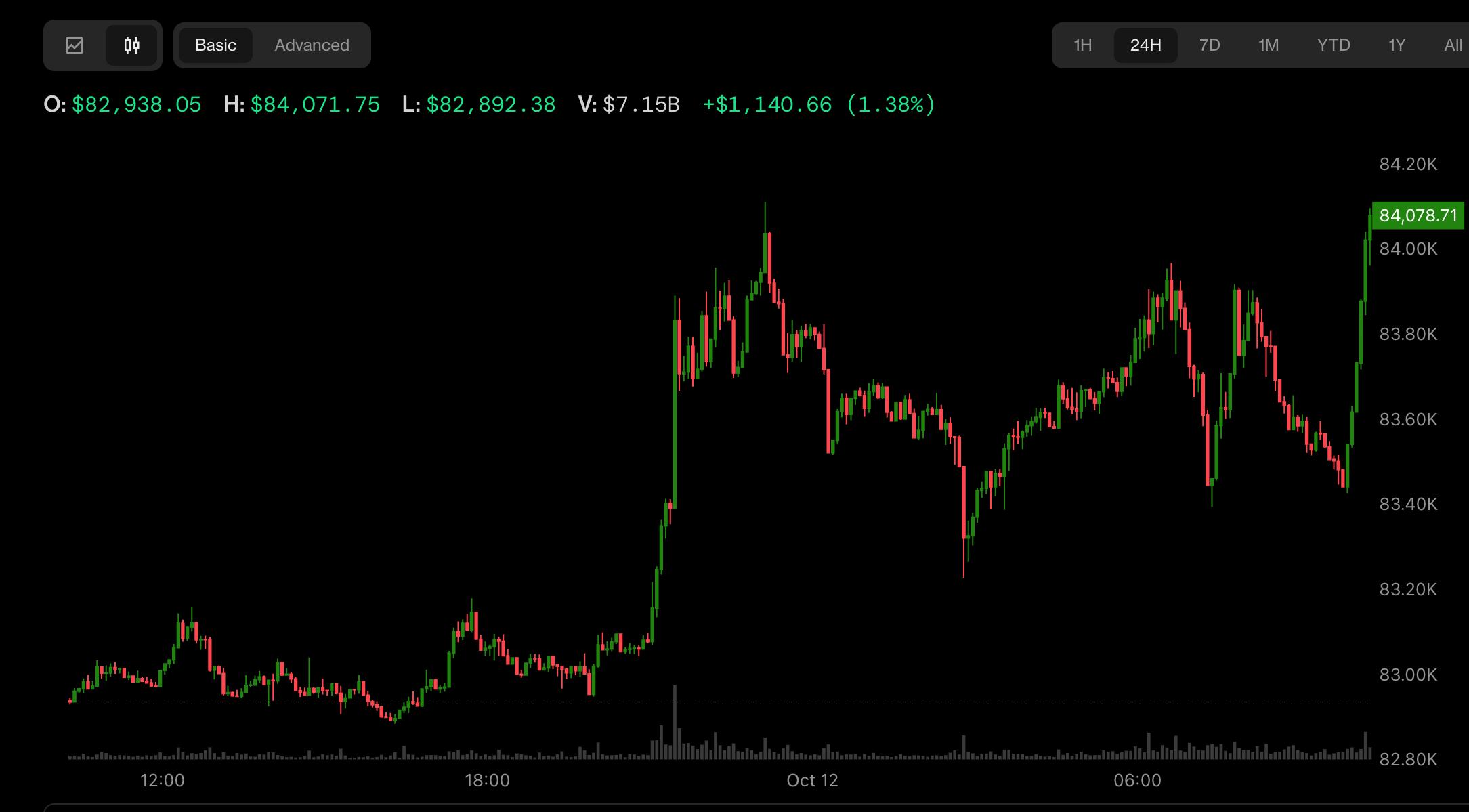
Bitcoin Price is $4K Away From Wiping out the Next Wave of Shorts
Bitcoin’s price closed last week near $84,000 and flushed an estimated $140 million in short positions, leaving a fresh wall of bearish leverage stacked between $86,000 and $88,000. What Actually Got Liquidated? Nearly $140 million in shorts were liquidated as bitcoin confirmed a weekly close above $83,000. Hours earlier, a heatmap shared by Kook Capital […]
- Web3 & Blockchain2 hours ago
XRP rebounded as Binance spot turnover fell nearly 80%
XRP futures exposure began rebuilding by October 11 after market-data provider XRPL.to recorded $40.70 million in long liquidations across Binance, Bybit and OKX during October 7–8 in its streamed sample. XRP traded near $1.40 at the October 11 snapshot. Binance and Bybit each had less outstanding futures exposure measured in XRP at midnight on October 11 than at midnight on October 8, even after both books expanded over the preceding day. Meanwhile, Binance spot trading slowed during the price rebound, leaving the recovery without clear evidence of sustained buying on that venue. XRPL.to collected $40.70 million of long liquidations and $1.72 million of short liquidations across Binance, Bybit and OKX during the two completed UTC days of October 7 and 8. Those figures come from its streamed liquidation sample , which records forced closures reported by the three exchanges. Binance accounted for $24.69 million of the sampled long liquidations, followed by Bybit at $11.65 million and OKX at $4.36 million. The imbalance shows that forced closures in the collected stream fell overwhelmingly on positions exposed to rising XRP prices. The dollar figures describe the notional value of liquidated contracts, rather than traders' realized cash losses. Coverage also limits the total. XRPL.to's methodology says Binance streams at most one liquidation per symbol per second, making its collected figures a floor. Collector restarts can leave gaps. The separate recent OKX liquidation-order sample is excluded because it can overlap with the streamed events. Related Reading Bitcoin crashes through $81,000 buy wall as $1 billion crypto liquidation bloodbath unfolds Contract exposure fell, then began returning The clearest evidence that outstanding exposure was removed comes from matched open-interest readings in XRP units. Open interest measures contracts still outstanding, with a long and a short counterparty to each position. Between 00:00 UTC on October 8 and October 9, Binance XR
- Climate & Energy2 hours ago
With scaled-back plans, green banks navigate Trump’s funding freeze
A community solar project built for New Orleans’ oldest historically Black Catholic order of nuns. An all-electric affordable housing complex in Salt Lake City. A program offering low-income Maryland households inexpensive loans for rooftop solar and energy efficiency. These are just some of the recent projects…
 SponsoredBiba
Unveil Your Style: Salwar Pants for Women Starting at Just Rs. 650!
- Climate & Energy2 hours ago
A new gas line or cash to electrify? California lets households choose.
When one of the nation’s biggest investor-owned utilities, Pacific Gas and Electric, wanted to replace Merrian Borgeson’s aging gas service line in Berkeley, California, she asked the company not to do it. Borgeson, who is the California policy director for climate and energy at the nonprofit Natural Resources…
- Tech2 hours ago
The Nothing Headphone (1) Pro prove the third time’s the charm as they’re the brand’s best headphones yet — but are they worth $399?
Nothing Headphone (1) Pro review: Cheat sheet Price: 4/5 Sound quality: 4.5/5 Comfort: 4.5/5 ANC: 3/5 Battery life: 4.5/5 Features: 4/5 Durability: 4.5/5 Overall score: 4/5 (4.1) Best for: Bass fans and sci-fi lovers Third time’s the charm! Nothing’s latest flagship headphones, the Headphone (1) Pro, massively improve on their predecessors in key areas. They sound more refined and full-bodied, thanks to their triple-driver setup. They look gorgeous, so they’re perfect for anyone who treats their gadgets as fashion accessories. Their app enables extensive EQ customization. Battery life is long, and Nothing’s knocked it out of the park with their design. But few things in life are perfect and alas, the Headphone (1) Pro aren’t either. They come with an AirPods Max-esque hardshell case that’s bulky and looks silly. Some controls are hard to reach, too, and competitors from Bose and Sony offer better ANC. To find out if these are the best over-ear headphones for you, read my full Nothing Headphone (1) Pro review. Nothing Headphone (1) Pro review: Key specs Price $399 / £349 Headphone style Closed back Drivers 3x (40mm dynamic, 8mm precision dynamic, 1.15mm xMEMS) Frequency response 20Hz-40KHz Durability IP52 Connectivity Bluetooth 6.1 with AAC, SBC, LC3 and LDAC; USB-C; 3.5mm Multipoint connectivity Yes ANC Yes Wear detection Yes Battery life 68 hours (ANC off) | 30 hours (ANC on) Weight 11.53 ounces Colors White, Black Nothing Headphone (1) Pro review: What I like Powerful bass and bright treble Striking, sci-fi design that’s supremely comfortable Highly adjustable EQ via user-friendly app Long battery life If it’s a pair of excellent-sounding and long-lasting headphones you’re after, the Nothing Headphone (1) Pro should be your port of call. From their striking design to their user-friendly app, there’s a lot to love about Nothing’s flagship cans. Sound quality (Image credit: Tom's Guide) The most major improvement to the Nothing Headphone (1) Pro is the sound quality
- eCommerce2 hours ago
Genesco-owned Retailer Schuh Names New CFO Amid Turnaround Efforts
This comes as longtime chief financial officer David Gillan-Reid departs the U.K.-based retailer.
- EV & Mobility2 hours ago
The New Smart #2 Nails The City Car Formula
A breath of fresh air in a world suffocated by increasingly larger cars.
- eCommerce2 hours ago
Domino’s Pizza Enterprises CEO seizes ANZ reins as Merrill Pereyra exits
Domino’s Pizza Enterprises CEO and MD Andrew Gregory has taken direct control of the group’s Australia and New Zealand (ANZ) business, effective immediately, as the company accelerates its reset plan. The leadership change follows a mutual agreement between Domino’s and ANZ CEO Merrill Pereyra for Pereyra to leave the business. According to the company, Pereyra led the business through a key phase of Domino’s reset, which has focused on reducing costs, paying down debt, strengthening cash flow and improving franchise partner returns. “The reset has established a stronger foundation for the business and remains on track,” chairman Jack Cowin said. “Australia/New Zealand is critical to the Group’s success, and the Board supports Andrew taking direct responsibility to increase the pace of execution while maintaining a clear focus on sustainable, profitable growth for franchise partners.” Gregory brings decades of quick-service restaurant experience to the role, including as a former CEO of McDonald’s Australia. Domino’s is also searching for a new CEO to lead its ANZ business, with the existing leadership team continuing to support regional operations in the meantime. Pereyra was appointed to the role earlier this year and has more than 30 years of experience in the quick-service restaurant sector. His previous roles include regional leadership positions at McDonald’s and the CEO role at Domino’s Pizza Indonesia. The post Domino’s Pizza Enterprises CEO seizes ANZ reins as Merrill Pereyra exits appeared first on Inside Retail Australia .
- Cyber Security2 hours ago
CyberXero Uses Claude Code in Campaign That Stole Over 628,000 Ukrainian Records
Cybersecurity researchers have disclosed details of a two-pronged artificial intelligence (AI)-augmented initial access campaign targeting WordPress sites, e-commerce platforms, and critical infrastructure entities in Ukraine. The activity, which brings together commodity offensive tools like Cobalt Strike with an AI orchestration layer powered by Anthropic's Claude Code, has been attributed
- Web3 & Blockchain2 hours ago
BNB Price Prediction: Sitting on the Floor of Its Own October Thesis
BNB trades at $755.86 on October 12, 2026, perched almost exactly on the $755 lower boundary that CoinDCX identified on October 7 as the level whose loss would invalidate an October close near $815... (Read More)
- EV & Mobility2 hours ago
The Fiat Multipla Is Back—And It’s A Pickup, A Minivan, And An SUV
The Multiplay concept has a sliding rear section that transforms the body from SUV to truck in no time.
- SponsoredAjio Gram
Enjoy 5% Off on ₹1290+ Orders - Max Discount of ₹300 Awaits!
- Fintech2 hours ago
The Autonomous Money Layer: When Capital Movement Becomes Software-Driven and Context-Aware
The movement of money has always been driven by explicit human instructions. When a finance employee approves an invoice, a customer initiates a transfer, a treasury team moves liquidity between accounts, or a procurement system triggers a payment upon a predefined condition. Even if these processes are done digitally, the decision of when and why money should move is often still manual or based on relatively static rules. That model is starting to shift. Financial infrastructure is becoming more programmable, more connected, real time and intelligent. APIs can connect business applications directly to banks and payment providers. The funds can then be transferred almost instantly through real-time payment networks. Financial data platforms can provide you with ongoing visibility into balances, transactions, obligations and customer behavior. Within certain boundaries, artificial intelligence systems can interpret this information and determine what financial action might be appropriate. This opens the door to an Autonomous Money Layer: a software-driven financial layer that can understand business and financial context, make decisions about the movement of capital, apply risk and compliance controls, execute authorized transactions and verify the resulting outcome. The change is more than just faster payments. It changes the function of software in financial operations. A system could recognize that a payment needs to occur, decide whether the conditions are right, choose the most appropriate payment route and execute the transaction based on established policies, rather than waiting for a person to initiate a transaction. The underlying model can be written as: Intelligence →Decision →Risk Check →Capital Movement →Verification The context can be cash positions, future commitments, customer behavior, market conditions, currency movements, supplier requirements, credit exposure and regulatory constraints. These signals are interpreted by intelligence. A decision eng
- Web3 & Blockchain2 hours ago
ETH Price Prediction: Wedge Breakout or Pre-Rally Dip? $2,601 Is the Line in the Sand
Ethereum trades at $2,571.74, pinned below its 20-day moving average with MACD barely negative, as two FXEmpire analysts split between a clean wedge breakout toward $3,000 and a corrective retreat ... (Read More)
- Tech2 hours ago
Tonbo Imaging’s Rs 852 Cr IPO offers investor exit
Tonbo Imaging India will open its Rs 852 crore initial public offering (IPO) on October 15, with a price band of Rs 665-700 per share. The issue comprises 1.22 crore existing shares offered for sale by promoters and investors, with no fresh issue. At the upper end, the company is valued at approximately Rs 4,010 crore, or about 79 times FY26 profit after tax. The offer closes on October 19, with listing expected on October 23. The IPO is primarily an exit opportunity for existing shareholders. The largest sellers are CEAQ Technologies Private Limited, offering 49.98 lakh shares, and CEAQ Technologies Pte. Ltd., offering 41.55 lakh shares. Together, they account for about 75.2% of the shares on offer. Promoters Arvind Kondangi Lakshmikumar, Ankit Kumar and Cecilia D’Souza will sell 11.50 lakh, 5.80 lakh and 2.30 lakh shares, respectively. Other sellers include Vinimaya Advisory LLP, Timothy Guy Mitchell, Artiman Partners and other individual and institutional investors. The selling reflects an already investor-heavy ownership structure. Before the offer, CEAQ Singapore held 25.47%, CEAQ India 8.73% and HBL Engineering 14.25%. The three promoters collectively held 17.43%. Other notable shareholders included Florintree Flowtech LLP with 5.17%, Amansa Investments with 4.25% and Yali Deeptech Fund I with 4.19%. If all offered shares are sold, the promoters’ combined stake would fall to approximately 14.01%, CEAQ India would exit its disclosed holding and CEAQ Singapore would retain about 18.22%. These are calculations based on the disclosed holdings and proposed sale quantities, rather than final post-offer figures. The Bengaluru-based company, incorporated in 2003, develops thermal imaging equipment, tactical sights and integrated defence sensor platforms. Its prospects are supported by demand for indigenous defence technology, but its financial performance remains sensitive to large contracts and delivery schedules. Revenue from operations increased 9.55% t
- Tech2 hours ago
IndianRaga founder Sriram Emani explores identity and belonging in Jam Boy
Sriram Emani, the founder of IndianRaga, a global platform for Indian performing arts, has an album on Facebook showcasing all the cups he’s collected from different Starbucks outlets in New York. Each of the 74 images shows his name being misspelt. “It’s one of the most common names on the planet. But it was still spelt as ‘Syrian’, ‘Shadam’; not a single person got it right. If you can say Schwarzenegger, Saoirse Ronan, you can say Sriram,” says Emani. This frustrating experience, commonly faced by immigrants, planted the seeds for Jam Boy , Emani’s first film as a writer, director, co-producer and lead actor. Sriram Emani " align="center"> Sriram Emani Jam Boy is about a model immigrant who has done everything to be chosen but has not noticed what it costs him to choose himself. Spanning 22 minutes 22 seconds, the film has already won Best Film and Best Web Series at DC Independent Film Festival, received Special Recognition at the Boston International Film Festival, and is now travelling through a growing international festival run. It will premiere on October 13 at the International Film Festival of South Asia, Toronto, North America's largest South Asian film festival. In 2012, Emani started IndianRaga while at the Massachusetts Institute of Technology. Fourteen years later, IndiaRaga has grown into a global performing arts organisation. Its online education programme, Raga Labs Academy, teaches Carnatic vocal music, Hindustani vocal music, Bharatanatyam, and Kathak through a structured syllabus with certification at every level. IndianRaga, headquartered in Boston, Massachusetts, also offers a Raga Fellowship that selects artists through a competitive international panel to create professionally produced collaborative performances. Its artists have performed at the United Nations General Assembly, Lincoln Centre, Jacob’s Pillow, and TEDx. When Emani first spoke about IndianRaga, the platform was just beginning its journey of taki
- Web3 & Blockchain2 hours ago
ENSv2 Activation Proposal Would Halt New ENSv1 Registrations
Existing .eth holders would have no migration deadline, while ENS Labs would hand its remaining ENSv2 admin roles to the DAO.... Read the full story at The Defiant
- Web3 & Blockchain2 hours ago
Solana Price Prediction: Can SOL Rebound as Samsung and Wall Street Expand Adoption?
The post Solana Price Prediction: Can SOL Rebound as Samsung and Wall Street Expand Adoption? appeared first on Coinpedia Fintech News Solana is expanding into payments, tokenized stocks and institutional custody, but Solana price is still struggling to extend its recent rally. Samsung Wallet’s planned USDC transfers and Solana’s faster block-production target strengthen the network’s adoption story. However, SOL price has pulled back from its recent highs and is testing support near $110. Can growing institutional …
- EV & Mobility2 hours ago
China September NEV retail sales fall 16.7% as penetration hits record 67%, CPCA data shows
China's NEV retail sales totaled 1.084 million in September, down 16.7% year-on-year for a ninth consecutive monthly decline. For details, please visit CnEVPost (cnev.co).
- Web3 & Blockchain2 hours ago
BTC Price Prediction: MACD Convergence Flags an Inflection Point as Analyst Targets Diverge From $80K to $92K
Bitcoin traded at $84,231.90 on Binance spot on October 12, 2026, up 1.28% over the prior 24 hours and holding above all major moving averages, while a MACD histogram that has narrowed to exactly z... (Read More)
 SponsoredLinenClub
Limited Time Festive Offer at Linen Club: Save Up to 50% + Unlock Extra 10% Off!
- Climate & Energy3 hours ago
Risen releases 23.5%-efficient anti-glare heterojunction solar module
Chinese solar module manufacturer Risen Energy has unveiled a new heterojunction (HJT) solar module featuring a dual-layer optical design to reduce glare. The company said the new product is part of its Hyper-ion series and is designed for installations with stringent glare-control requirements, such as those near airports and residential areas, where reflected sunlight may cause visual disturbances. “Risen Energy’s capabilities in photovoltaic optical safety extend beyond product development. It is also the principal drafting organization behind T/CPIA0119-2025, the group standard for Photovoltaic Module Glare Testing Method,” the manufacturer said in a statement. “The launch of Hyper-ion anti-glare module represents the translation of this accumulated technical and standardization expertise into a commercial product.” According to Risen Energy, the module uses a dual-layer optical design combining a micron-scale matte glass surface, produced through a process it calls “nanocrystalline phase reconstruction,” with technology to suppress internal reflections. The company did not provide further technical details about the process. The manufacturer said tests conducted by Germany’s TÜV Rheinland showed a maximum daylight glare probability (DGP) of 0.30, below the Class AAA threshold of 0.35, and a maximum glare luminance of 3,463.94 cd/m², compared with a limit of 20,000 cd/m². The module also achieved a specular reflectance as low as 0.85%, according to the company. The RSM132-8-710-730BHDG module comes in five versions, with power outputs of 710 W, 715 W, 720 W, 725 W and 730 W. Their conversion efficiencies range from 22.9% to 23.5%, while open-circuit voltages range from 50.01 V to 50.33 V and short-circuit currents from 18.00 A to 18.38 A. The bifacial module features 132 HJT cells and measures 2,384 mm × 1,303 mm × 33 mm. It weighs 37.5 kg and features 2 mm anti-glare glass on the front and 2 mm heat-strengthened g
- Fintech3 hours ago
DBS CEO Calls Repricing of AI Financing Risk ‘Healthy’
DBS CEO Tan Su Shan said financial markets are reassessing the risks associated with AI investments, a shift that could bring greater discipline to AI financing. Speaking to Bloomberg Television on 12 October, Tan said investors are demanding higher returns and examining financing structures more closely. Tan Su Shan “The market has spoken,” she said. “It’s not a bad thing because now, people are asking for higher returns, and people are also looking at structures.” According to Tan, investors want assurance that spending on AI infrastructure will generate sufficient long-term returns to repay lenders and bondholders while providing returns to equity investors. She warned that financially weaker companies could face credit rating downgrades as markets reassess their exposure to AI-related investments. However, Tan described the repricing as healthy, as investors seek to ensure that large financial commitments remain sustainable. DBS AI financing centres on hardware DBS has originated approximately S$25 billion in AI-related financing deals so far this year, according to Tan. The bank frequently acts as lead manager for syndicated loans, which involve multiple lenders jointly providing financing, while retaining only a small portion of the loans on its own books. Most of the financing supports hardware infrastructure, including semiconductors, memory chips and data centres. The developments come as major technology companies invest billions in AI infrastructure, while stock market gains remain concentrated among a handful of companies. Rising interest rates and higher bond yields have also increased the cost of financing large-scale AI infrastructure projects. PwC estimates that cumulative data centre spending across Asia-Pacific could reach US$8.2 trillion by 2050. Rate volatility and geopolitical strain Tan made the remarks on the sidelines of a DBS conference focused on AI and geopolitical developments. During her opening remarks, she highlighted significant inter
- Tech3 hours ago
Apple iPhone 17 Pro Sale: Amazon Vs Flipkart Offers Compared
For this year’s season sale in India, Amazon is hosting the Great Indian Festival Sale 2026 while Flipkart is hosting the Big Billion Days Sale 2026. This season, Flipkart and Amazon offer new deals and discounts across a wide range of products, with last year’s flagship as the biggest highlight. The iPhone 17 Pro 5G packs the latest A19 Pro 3 nm chipset, a flagship triple-camera setup, and a larger battery. Now, with the Amazon and Flipkart sale, you can get good discounts on the Apple iPhone 17 Pro. This raises a question: where can you upgrade to the new iPhone 17 Pro in India, and who is offering the best smartphone discounts? Let’s take a look. Also Read: Apple iPhone 17 Sale: Amazon vs Flipkart Offers Compared Apple iPhone 17 Pro Sale: Flipkart Vs Amazon Offer Comparison The Apple iPhone 17 Pro remains one of the best iPhone Pro upgrades to consider, even in 2026, after the iPhone 18 Pro launched. The newly launched iPhone 18 Pro offers a solid upgrade, but due to the current memory shortage and crisis, Apple has raised prices on its iPhone 18 Pro flagships, which start at Rs 1,64,900. Build and Display On the other hand, the Apple iPhone 17 Pro also comes with solid specs, with an aluminum build with Ceramic Shield 2 protection on the front, a glass back, and a bigger 6.3-inch LTPO Super Retina XDR OLED display with support for 120Hz refresh and Dolby Vision and HDR10 certification, making it a great phone for binge-watching. Chipset, RAM and Storage Under the hood, you get the latest A19 Pro chipset, a 3nm-based chip that delivers solid performance and improved efficiency, plus faster RAM and NVMe storage up to 1TB. Also Read: Apple Likely to Launch Something Super Cool on October 13 Camera and Battery On the rear, you get a flagship-grade triple-camera setup: a 48MP main camera with an f/1.8 aperture, a 48MP periscope telephoto with an f/2.8 aperture, and a 48MP ultrawide with an f/2.2 aperture. On the front, you get an 18MP center-stage selfie camera
- EV & Mobility3 hours ago
Volkswagen officially unveils electric version of best-selling Tiguan, with range of up to 600 km
Volkswagen has officially taken the wrapping off the ID. Tiguan, an electric version of its best-selling car that it boasts is one of its most important new models. The post Volkswagen officially unveils electric version of best-selling Tiguan, with range of up to 600 km appeared first on The Driven IO.
- Web3 & Blockchain3 hours ago
Bitcoin, Ethereum and XRP Price Analysis This Week: CPI Data in Focus
The post Bitcoin, Ethereum and XRP Price Analysis This Week: CPI Data in Focus appeared first on Coinpedia Fintech News Bitcoin is trading between key support and resistance levels as bearish divergence limits its short-term momentum. Ethereum, Solana, XRP, and Chainlink are also consolidating around important price levels. Meanwhile, traders are watching Wednesday’s U.S. CPI inflation report and Thursday’s PPI data for clues about the Federal Reserve’s next move. Oil prices and the U.S. dollar …
- AI & Deeptech3 hours ago
Startup Funding: Q3 2026
AI dominated funding in the third quarter of 2026, with two inference companies each announcing $1 billion in funding. But with the data center buildout driving insatiable demand for memory, investors also rewarded startups with alternatives to costly, capacity-limited HBM. Some are building on commodity DRAM or holding models in on-chip SRAM, while others stack memory directly onto compute. Data movement at all levels of the stack remains a critical bottleneck, too. Interconnect technologies, networking chips, and photonics were the most active areas of the quarter, with startups tackling the problem with diverse approaches ranging from manufacturing-ready co-packaged optics, millimeter-wave RF signals over plastic waveguides, and ferroelectric glass modulators to optical couplers printed directly onto chips and coherent DSPs designed specifically for AI optics. Nearly $7.5 billion of the quarter’s total was directed to just 22 startups that raised $100 million or more, including eight that saw investors return within roughly a year, some more than doubling the previous round. Plus, agentic EDA and AI-generated analog layout, small chip fabs, diamond-based defect inspection, large-area nanoimprint lithography, and memory-safe microcontrollers feature in this look at 80 companies that collectively raised over $8.5 billion in Q3 2026. Summary table Chips AI hardware EDA Manufacturing & equipment Test, measurement & inspection Memory & storage Photonics & optics Previous reports Chips Xsight Labs raised over $300.0M in funding led by Fidelity Management & Research Company with participation from Aliya Capital Partners , Atreides Management , Artisan Partners , Battery Ventures , Diagonal Capital , Intel Capital , Key1 Capital , Maverick Capital , Sienna Venture Capital , T. Rowe Price , Union Group , and Valor Equity Partners . Xsight Labs designs fully programmable data processing units (DPUs) and Ethernet switches for hyperscale, edge, and
- Fintech3 hours ago
Addovation and Cobase Target ERP-to-Bank ISO 20022 Compliance Gap
Addovation , a Nordic ERP services firm, has partnered with payments connectivity provider Cobase to help IFS Cloud and NetSuite customers meet tightening bank requirements for structured payment address data. The joint offering arrives as banks in Europe and beyond begin enforcing ISO 20022 fields that many corporate ERP installations are not yet configured to supply. The regulatory driver Swift a nd the European Payments Council (EPC) are phasing out fully unstructured addresses in ISO 20022 payment messages. Under the new rules, every international and SEPA payment must include at least the town and country of the sending and receiving parties in dedicated structured fields rather than free-text blocks. The original implementation deadline was November 2026, but both Swift and the EPC have since postponed it, with revised dates expected before year-end. The direction of travel is not in doubt: as of July 2026, Swift reported that nearly 60 per cent of payment messages still carried unstructured addresses, signalling a significant compliance backlog across the corporate sector. The practical pressure, however, is arriving ahead of any revised global deadline. Some banks and jurisdictions are retaining earlier enforcement dates and are already rejecting or queuing payments that do not meet structured address requirements. Separately, euro-area banks have been verifying payee name against account number before authorising transfers since October 2025, under the Verification of Payee framework. Both measures put the compliance burden squarely on the corporate treasury and finance function: address data originates in supplier and customer master records held in the ERP, not in the bank’s systems. The product architecture Fredrik Wingren, chief revenue officer at Addovation Addovation’s proposition is built around a three-layer model. IFS Cloud or NetSuite remains the core business platform. Cobase sits between the ERP and the bank, normalising outgoing pay
- HealthTech3 hours ago
Breast cancer before 40: Younger patients face higher odds of delayed diagnosis
In an analysis of data on adolescents and young adults with breast cancer, lower income and younger age were linked with delays in care. The analysis, published online in Cancer, also found that women who experienced delays in cancer diagnoses tended to have later-stage disease.
 SponsoredBytepe
Experience the Innovative Apple iPhone Air from Rs. 1,49,900! Monthly EMI from Rs. 6975 + Extra Rs. 6000 Off!
- eCommerce3 hours ago
Designer Kim Jones Will Launch a Signature Label Made in Japan, and a Store in Hong Kong in 2027
The former artistic director of Dior Men is moving on and embracing his love of Asia with a new clothing and accessories label, and a first store set to open at Central Yards in Hong Kong in October 2027.
- eCommerce3 hours ago
Oeko-Tex Launches ‘Trust in Every Thread’ as EU Rules Tighten
The campaign highlights chemical testing and traceability in response to new European restrictions on sustainability labels.
- Tech3 hours ago
iPhone Duo pre-orders open this week — but there are still 7 things we don't know
Pre-orders for the iPhone Duo open officially kick off this Wednesday, giving eager foldable enthusiasts the chance to secure their device ahead of the October 23 release date. While many of you will already be taking steps to get that pre-order on day one , and avoid lengthy delays, we should all be aware there are things we still don't know about Apple's first foldable phone. I'm not talking about major surprises like hidden features or hardware specs, since Apple has been very open so far. I mean the kind of things you can only learn from actually using a phone for extended periods of time. And some of them might be the difference between eagerly ordering an iPhone Duo, and deciding that you might be better off waiting for the second or third iteration of the phone. Here are 7 things we still don't really know about the iPhone Duo. What's the battery life really like? (Image credit: Tom's Guide) Phone companies love to brag about the longevity of their batteries, and how long a phone will last on a single charge. Apple is no exception to this. The iPhone Duo rated for 44 hours of video playback from the external display and 31 hours using the larger folding screen. But how will that translate into real-world usage? It's unclear, and since we haven't been able to test the iPhone Duo's battery for ourselves yet, we can't say how the phone compares to other iPhones or foldables. Apple says the iPhone 18 Pro can handle up to 36 hours of video playback, while the Pro Max can last 45. On the Tom's Guide Battery Test , which consists of 5G web surfing, the iPhone 18 Pro endured for 16 hours and 17 minutes, and the Pro Max lasted 18 hours 27 minutes. That gives us a rough idea of how the iPhone Duo should perform in our battery test. More so when you consider that much of the internal hardware is the same, including the energy-efficient A20 Pro and C2 modem. So here's hoping the Duo does offer similar results, though we obviously won't know for sure until we get to test
- Gaming3 hours ago
No Pixel 11, no problem: This app brings Gboard’s Rambler mode to any Android phone without root
TL;DR PixelBoard is a modded Gboard app that unlocks Rambler voice typing and writing tools on any Android phone. It doesn’t require root access and can be easily installed from GitHub. The developer has also stated that the app will be updated regularly as new Gboard versions are released. Among Gboard’s many useful features, a few aren’t available to non-Pixel users. One of these exclusive features is the impressive Rambler voice typing mode that recently debuted on the Pixel 11 series . However, if you’ve been itching to try it out on your Android phone and SwiftKey’s AI voice mode isn’t scratching that itch, there’s some good news for you. Developer Akshay Kadam has managed to unlock Gboard’s Rambler mode and AI Writing Tools, bringing them to any Android device without root access. In a post on Reddit, Akshay explained that he used Jason Wu’s Gboard patch project as a starting point to build “PixelBoard.” This is a modded Gboard app with Rambler voice typing and writing tools enabled.
- EV & Mobility3 hours ago
For Honda, India will be pivot point for its cars, 2-wheelers
Right from its strengths in competitive costing to high quality, India is now a strategic global hub for the Japanese automaker.
- Tech3 hours ago
Zetwer sets IPO price band at Rs 143-151, aims to raise Rs 5,012 Cr
Zetwerk, the Bengaluru-headquartered manufacturing marketplace, has set a price band of Rs 143–151 per share for its initial public offering (IPO), targeting a valuation of Rs 25,583 crore. The IPO comprises a fresh issue of shares and an offer for sale (OFS). The company has expanded the size of the public issue to Rs 5,012 crore. The fresh issue has been increased from Rs 2,600 crore to Rs 2,830 crore, while the OFS component has been expanded from 9.68 crore shares to 14.45 crore shares. Early investors, including Peak XV Partners, Lightspeed Venture Partners, Accel India, and Kae Capital, have increased the number of shares they plan to sell. The proposed share sale by the founders remains unchanged. Lightspeed Venture Partners plans to sell 2.51 crore shares, followed by Peak XV Partners with 2.34 crore shares and Accel India with 1.2 crore shares. Zetwerk’s promoters, Amrit Acharya and Srinath Ramakkrushnan, will sell 1.42 crore shares, while promoter group entity Creovate Innovation will offload 2.30 crore shares. The IPO will open for subscription on October 15 and close on October 19. The anchor investor book will open on October 14, and the shares are expected to list on the stock exchanges on October 23. Zetwerk plans to use around Rs 2,160 crore from the fresh issue to repay debt. The remaining proceeds will be allocated towards acquisitions, strategic investments and general corporate purposes. The company reported revenue of Rs 15,913 crore in FY26, a 40.4% increase from Rs 11,332 crore in FY25. However, its losses widened to Rs 1,606.2 crore in FY26 from Rs 370.7 crore in the previous fiscal year, largely due to a one-time charge. Established in 2017, Zetwerk is a digital manufacturing marketplace that connects businesses, manufacturers and suppliers on one platform. In Q1 FY27, its revenue from operations grew 55% year-on-year to Rs 4,118 crore, while losses from continuing operations narrowed to Rs 64 crore from Rs 881 crore in the year-ago quarter.
- eCommerce3 hours ago
UOB & AWS plan hybrid cloud push for ASEAN banking
The pact could help UOB keep customer data within a Singapore cloud environment while meeting tighter banking rules across five ASEAN markets.
- EV & Mobility3 hours ago
Bugatti’s 1,800-HP Tourbillon Shrugs Off Scorching Heat
Engineers push the Bugatti Tourbillon through Spain, Dubai, and Sweden to prove its cooling, climate control, and hybrid systems work in brutal conditions.
 SponsoredAcer
Discover the Acer Aspire One Laptop at an Exclusive Price – Act Fast!
- Web3 & Blockchain3 hours ago
Bitwise CIO Matt Hougan’s Top 4 Altcoin Picks for Long-Term Growth
The post Bitwise CIO Matt Hougan’s Top 4 Altcoin Picks for Long-Term Growth appeared first on Coinpedia Fintech News Bitwise Chief Investment Officer Matt Hougan said Bitcoin could reach hundreds of thousands of dollars if more traditional investors allocate part of their portfolios to Bitcoin and gold. He cited rising government debt and concerns about fiat currency purchasing power as factors that could increase demand for these assets. In an interview, Hougan also identified …
- eCommerce3 hours ago
AI in Retail is Only as Good as its Data Foundation
Retailers risk losing customer loyalty to AI agents unless they clean and enrich data, as BCG says GenAI browser traffic to US sites is up 4,700%.
- Web3 & Blockchain3 hours ago
Why the USSR Stopped Drilling at 12,262 Meters Came Down to an Unexpected Limit
12,262 meters down, the Soviet SG-3 Kola Superdeep Borehole set the world record for the deepest hole ever drilled after a project that began in 1970 aiming for 15 kilometers. The effort ultimately ended in 1992 when extreme heat and pressure made the rock behave plastically, warping and squeezing the borehole shut despite specialized rigs […]
- Web3 & Blockchain3 hours ago
Global watchdog flags stablecoin risks, AI threats ahead of G20
The Financial Stability Board flagged cross-border stablecoin risks and AI-related cybersecurity threats while urging G20 policymakers to support stronger safeguards.
- Tech3 hours ago
Stop buying filler seed: What chickadees actually need to survive a cold snap
It is almost unbelievable that a bird weighing less than a single AA battery can survive sub-zero nights, but black-capped chickadees are absolute winter tough guys. To make it to morning, these tiny songbirds intentionally drop their own body temperature by up to 15 degrees overnight just to save energy. But that survival mode comes at a steep price. A chickadee can burn through up to 10% of its entire body weight in a single freezing night just keeping its heart beating. By sunrise, their engine is running completely on empty. When a cold snap hits and natural seed sources get locked under a layer of ice, their margin for survival drops to zero. Giving them a fighting chance to rebuild those critical fat reserves before sunset comes down to one simple, high-impact yard addition. 1. The fall calorie scramble (Image: © Future / Camilla Sharman) As crisp fall weather settles in and daylight hours shrink, chickadees go into overdrive to build up their winter fat reserves. Because they burn through energy at a blistering pace just maintaining their body heat as nighttime temperatures drop, every daylight hour counts. Standard birdseed blends packed with filler like red millet or milo just won't cut it— chickadees toss those aside because they don't offer the massive caloric payoff needed for chilly nights. To make a real difference as temperatures slide, backyard feeders need to focus heavily on dense, easily accessible fats . 2. Shift to high-fat suet and sunflower seeds (Image: © Shutterstock) The single most effective tweak you can make is introducing high-fat suet cakes and pure black oil sunflower seeds . Suet provides concentrated fat that chickadees digest in a flash to convert straight into warmth, while black oil sunflower seeds feature thin shells that small beaks can easily crack to reach the oil-rich kernel inside. If you can, position suet feeders near evergreen bushes or thick tree canopies now so birds can grab high-calorie bites shielded from autumn win
- Tech3 hours ago
Apple New Launch Event on October 13, 2026
Apple is soon going to hold a new launch event for the global market. This launch event is scheduled for October 13, 2026. The company will launch new products in the event, and all of them will come in the smart home category. The launch event has been named ‘Welcome Home’ under it, we expect to see many new home segments product. The lineup will include smart home display, which TelecomTalk has shared before. Apart from that, there will be new products such as Apple TV 4K and a refreshed HomePod mini. The launch event is soon going to take place, and thus, we will get to see what the actual products are. Apple Welcome Home Event Apple Welcome Home event is scheduled for October 13, 2026, at 9 AM ET (6:30 PM IST). The launch event will take place in Tribeca, New York. You can watch the livestream of the event directly from YouTube and website of Apple. The new product that could be launched during the event is HomePad. This is a new Smart Home screen and it will act as a central hub for a connected home. The device is expected to sport a 6-inch square screen mounted on a half-dome base. This product will reportedly allow users to control all their smart home ecosystem products from a single screen. The HomePad is likely to also allow users to make FaceTime video calls which will be an added advantage when trying to connect with someone instantly. Apart from this, we could see the new Apple TV 4K. The device has reportedly not been refershed since it last came in 2022. We could see the new Apple TV 4K with a powerful A19 or A19 Pro processor. There could be Siri AI and Apple Intelligence features coming to the streaming device with the new refresh. Along with this, Apple is expected to launch a new version of the HomePod mini 2, which could come in multiple colours including green, white, pink, blue, and black.
- Climate & Energy3 hours ago
C&I storage the ‘sleeping giant waking up’, says WoodMac
The global energy storage market is entering a new phase of scale and complexity, according to Wood Mackenzie’s latest outlook. Cumulative capacity is forecast to grow to more than 7 TWh by 2035. Demand growth in 2026 alone is close to 30%. But growth at that rate and capacity is no longer the most interesting part of the story. The composition is. Global energy storage outlook by segment (% of total MWh installed in 2026) Regional competition: the running order is changing faster than the totals suggest While China and the United States (US) are still the two biggest global energy storage markets, in 2026, for the first time, Europe’s annual installation overtook annual US energy storage capacity and took second place after China. In the utility segment, government-led tenders remain the main market drivers, having globally cleared over 80 GW (de-rated) capacity, with India the single largest contributor. Poland has become the global number-one emerging market, on the back of capacity-market auctions and a grid short of flexibility. In mature utility markets, the demand signals behind the forecast are also firm. Contracted offtake for storage has passed 130 GW, with utility power purchase agreements and tolling deals together accounting for more than three-quarters of all contracts signed, according to our global offtake tracker. In the residential landscape, the centre of gravity has shifted south: Australia has overtaken Germany as the world’s leading residential energy storage market, with more than half a million installations under its Cheaper Home Batteries subsidy, while the US market contracts this year as tax credits become less available. Commercial and industrial storage is the sleeping giant now waking Wood Mackenzie forecasts commercial and industrial storage capacity separately. The split shows industrial demand is materially larger in some regions. A single “utility” line no longer tells the story: standalone still leads, but some regions need pairin
- Web3 & Blockchain3 hours ago
South Korea’s Jeonbuk Bank Launches First Bitcoin-Backed Corporate Loans
The post South Korea’s Jeonbuk Bank Launches First Bitcoin-Backed Corporate Loans appeared first on Coinpedia Fintech News South Korea’s Jeonbuk Bank has launched the country’s first loan program allowing businesses to borrow Korean won using Bitcoin as collateral. The program initially serves corporate clients who need funds for business operations, with plans to consider expansion based on regulatory changes and market demand. Jeonbuk Bank Limits Bitcoin Loans to Businesses Announced on October …
 SponsoredTrip.com
Save 8% on Your Next Car Rental Booking!
- EV & Mobility3 hours ago
Xpeng steps up Australia, New Zealand push with Mona L03 launch
Mona L03 SUV is Xpeng's third model in the 2 markets, following the G6 SUV and X9 MPV. For details, please visit CnEVPost (cnev.co).
- Tech3 hours ago
Honor Win 2 series with active cooling fan to be unveiled next week
Honor has confirmed that the successors to the Win and Win RT will be announced next week in China. The Win 2 series launch will also be accompanied by the Win Tablet and the Win Earbuds. The Honor Win 2 and Win 2 RT will be unveiled in China on October 21, the company confirmed via a post on Weibo. Honor has also offered a glimpse of the rear panel of the Win 2 series, which is expected to include the Win 2 and Win 2 RT. The teaser image reveals a dual rear camera setup, an active cooling fan, the Win logo, and an LED light housed within a large camera island. An exhaust vent is...
- AI & Deeptech3 hours ago
Startups are betting on AI to predict the future
Numerous startups are innovating artificial intelligence solutions designed to amplify forecasting capabilities across multiple sectors. These AI tools aim to yield deeper insights into financial markets as well as fields like healthcare and public policy. The increasing dependence on AI by established prediction markets presents hurdles for traditional investors. By 2030, AI-driven forecasting models could dramatically transform decision-making processes through advanced questioning and probability assessment based on diverse outcomes.
- Tech3 hours ago
Apple announces festive offers in India: Check deals on iPhones, Macs, more
Apple is offering cashback of up to Rs 15,000 on select Macs and Rs 7,000 on iPhones, alongside no-cost EMI plans and a limited-edition AirPods 5 with rangoli engraving, until November 11
- Climate & Energy3 hours ago
Anker Solix announces wheeled power station with 4.5 kW output
From ESS News Anker Solix has announced its S5000 portable power station, offering 5,024 Wh of storage and 4.5 kW of rated output. The lithium iron phosphate (LFP) system supports both 120 V and 240 V appliances, with battery capacity expandable to 30 kWh. At 44 kg, or approximately 97 lb, the S5000 puts some pressure on the portable part of the description. It has wheels and a telescoping handle, which should help on level ground. Getting it up stairs or into a vehicle is another matter, and something we’ll look at in a forthcoming review. The S5000 portable power station or solar generator as they’re known is a larger counterpart to the Anker Solix S2000 reviewed by ESS News earlier this year . The new model offers 5,024 Wh of storage and 4.5 kW of rated output, up from approximately 2 kWh and 1.5 kW on the smaller unit. Power demands are hardly decreasing and bigger unit sizes and options are key for brands exploring where demand centers. Like the S2000, the S5000 uses lithium iron phosphate (LFP) batteries, with Anker emphasizing low idle consumption and claiming up to 10,000 charge cycles. The S5000 adds dual 120 V/240 V output, battery expansion to 30 kWh, and up to 3 kW of solar input, compared with the S2000’s 400 W. As with the C2000 Gen 2 , announced around this time in 2025, Anker is emphasizing reduced idle power consumption. The S5000 is specified at 8.8 W draw in 120 V mode, rising to 13.7 W at 240 V. The company brands this as OptiSave 2.0 and claims longer runtime under light loads, where the power station’s own consumption can account for a larger share of battery use. The US model has four standard NEMA 5-20 AC outlets, a TT-30 RV outlet, and an L14-30 outlet for 240 V loads. USB connections include one 100 W USB-C port, a second rated at 15 W, and a 12 W USB-A port. Solar input is rated at up to 3 kW across two inputs. Anker specifies a full recharge in 99 minutes using a 240 V supply at 4.5 kW, with 80% reached in 64 minutes. Charging from a stan
- Gaming3 hours ago
This phone runs Android, Linux, and Windows, but it’s just been delayed
Credit: Stephen Schenck / Android Authority TL;DR The team behind the NexPhone has delayed the phone’s release from November 2026 to March 2027. The company blamed the delay on antenna interference issues and associated hardware changes. This phone supports Android, Windows 11, and Debian Linux via Android. The NexPhone stood out back in January thanks to its official support for Android, Linux, and Windows 11. Unfortunately, there’s somewhat disappointing news if you were hoping to get your hands on the device before the end of the year. The NexPhone team has announced on their website that they’re now aiming for a March 2027 shipment date:
- eCommerce3 hours ago
Nissin Recalls 82G Aburasoba Noodles over Undeclared Milk Allergen
Distributed by Sweets & Beverages Australia, the affected stock was sold in Victorian Asian grocery stores with a best-before date of December 8, 2026.
- eCommerce3 hours ago
Pakistan Textile Exporters Seek 6% to 8% Support Amid Export Slump
The Pakistan Textile Exporters Association warned of a steep decline in October-December shipments as sea freight charges surged up to 2.5 times.
 SponsoredVoyage Eyewear
Get Chic Oversized Sunglasses for Only Rs. 1099!
- eCommerce3 hours ago
Bandai Expands Tamagotchi Licensing Across Asia Ahead of 30Th Anniversary
Cross-sector licensing deals in fashion, cosmetics and K-pop take the Japanese digital pet brand beyond hardware sales in China and South Korea.
- eCommerce3 hours ago
Singapore Bakery Big Mouth Bakehouse Shuts Down Nine Months After Rebranding
The business behind the former Fluff Bakery ceased operations after struggling with accumulated debt, rising operating costs and weak retail sales.
- Gaming4 hours ago
Gears Of War: E-Day DDoS Attacks Cause Widespread Server Issues
If you've been having trouble playing Gears of War: E-Day for the past few hours, you're not alone. The Xbox console exclusive has been suffering mass server outages and disruptions, with the nefarious reason behind the problem now confirmed to be the fault of a DDoS attack on the game.
- Climate & Energy4 hours ago
Batteries beat gas peakers on cost globally, but U.S. faces trade headwinds
The levelized cost of electricity (LCOE) for four-hour battery storage has crossed a critical threshold, falling below open-cycle gas turbines across all 43 global markets modeled by Wood Mackenzie. However, while expanding manufacturing and volatile fuel prices drive gas peaking out of the market globally, North America faces a distinct trajectory marked by near-term trade barriers, policy shifts, and surging power demand from data centers. Advancing technologies and manufacturing scale are redrawing global power market dynamics. Wood Mackenzie’s latest Levelized Cost of Electricity (LCOE) report shows that single-axis tracker solar is now the lowest-cost new-build power source in 43 of 48 modeled markets, with four-hour battery storage decisively beating open-cycle gas turbines on cost. “This economic shift is decisive and widening,” said Ahmed Jameel Abdullah, principal analyst at Wood Mackenzie. “Gas turbine shortages and rising fuel volatility are driving up peaking costs, while expanding battery manufacturing continues to push storage costs down.” Yet, North America stands out as a key exception in long-term cost trajectories, heavily influenced by domestic trade policies, supply chain protections, and load pressures. Tariffs, data centers, and tax incentives Unlike international markets benefiting from low-cost Chinese equipment exports, North American clean energy developers face immediate cost headwinds. Near-term solar costs across the U.S. and Canada remain elevated under a wave of tariffs, anti-dumping and countervailing duty (AD/CVD) actions, and Section 232 import restrictions. Utility-scale solar developers maintain a buffer thanks to 168 GW of safe-harbored capacity, but module prices are still projected to climb ~5% annually through 2030. Distributed generation bears the brunt of the pressure, with residential and commercial solar module prices forecast to jump 6% in 2027 and an additional 14% in 2028. For energy storage, Fed
- eCommerce4 hours ago
FedEx expands import tool across Asia Pacific with payments
Importers in nine Asia Pacific markets can now clear shipments and pay duties and taxes in one place as border delays intensify.
- Web3 & Blockchain4 hours ago
Ledger wallet implant exposes a gap in its authenticity check
Ledger has confirmed an unauthorized hardware implant in one affected customer's wallet as independent investigators estimate $93.2 million in suspected cryptocurrency thefts. In an Oct. 10 statement , the hardware wallet manufacturer said the discovery involved a device belonging to one of the affected users. It added that CryptoBilis, an authorized reseller operating in Southeast Asia, had suspended sales of all hardware wallet inventory pending the investigation's conclusion. The investigation began after customers reported losing cryptocurrency after buying Ledger devices from the reseller. Ledger has not said how many devices were modified or established that the implant caused all the reported losses. Ledger said it had found no indication that its security infrastructure, systems or services had been compromised. Why an implanted wallet can pass Ledger's Genuine Check Former Mt. Gox chief executive Mark Karpelès has been examining suspicious Ledger Nano X devices through Tibane Labs, which has documented three generations of Ledger Nano X implants designed to intercept recovery phrases. Its report combines Joe Grand's teardown of an earlier implant with two specimens Tibane examined in September. According to the research, the implants work by monitoring electronic signals sent between a wallet's secure element and its display. During initial setup, a Ledger device generates a 24-word recovery phrase that lets its owner restore access to cryptocurrency holdings. Although the words originate inside a secure chip, they must pass through the device's display circuitry to appear on the screen. Tibane Labs found that the modified devices contained additional microcontrollers that could read the screen's data, reconstruct the recovery words, and transmit them via cellular modems with SIM components. Consequently, attackers could obtain the credentials needed to reconstruct a victim's wallet remotely without stealing the physical device or compromising Ledger's secu
- Gaming4 hours ago
One Piece: 7 Pirates Who Could Surpass Kaido by the End of the Series
As a former Yonko, Kaido is highly regarded as one of the most powerful pirate captains in One Piece . Kaido's body is virtually indestructible, and he can use each type of Haki and its advanced applications. He can transform into a massive dragon that can destroy entire mountains, and his hybrid form can flatten almost anyone. That said, a few pirates could potentially surpass him by the end of the series.
- Tech4 hours ago
5 best new to Netflix movies and shows to stream this week (Oct. 12-18)
There’s plenty of new arrivals heading to Netflix this week, and if you want a full rundown, you’re in the right place. The streaming service is adding 20 new movies and shows this week. That’s a lot of content to sift through, so I’m picking out some highlights for you. For starters, sports fans won’t want to skip “Tyson,” a new four-part documentary series that centers on Mike Tyson. The world-famous boxer is intimately involved, and the doc promises to provide a deeply personal look at his life and career, from the soaring highs to the crushing lows. Or if reality TV is your guilty pleasure, “Love is Blind” season 11 moves the dating experiment to Boston, as more hopeful romantics date without seeing each other in the flesh. Also, “The Diplomat” season 4 arrives this week, and the fallout from a reckless decision will be explosive. This political thriller is one of Netflix’s most acclaimed ongoing original series, so make sure you’re all caught up before Thursday (Oct. 15). Meanwhile, movie fans can enjoy a guilty pleasure watch of their own in “Cocaine Bear,” or a very influential crime epic, “Heat.” These are just some of the movies and shows heading to Netflix this week. Alongside my top picks, you’ll find a full schedule of everything new on Netflix over the next seven days . And for a complete overview, here’s a guide to everything new on Netflix in October 2026 . New on Netflix this week: Top picks ‘Tyson' What it's about: This four-part docuseries traces the life and career of Mike Tyson, one of the world’s most skilled and notorious boxers. From his chaotic upbringing in Brooklyn, through to his rapid rise to superstardom, Tyson quickly became a household name. But his story isn’t without its controversies, and this doc aims to cover all sides of Tyson. Why you should watch it: Tyson is one of sport’s most fascinating figures, crowned heavyweight champion at just 20; his career was one of great success, but also scandal, with in-ring incidents and persona
- SponsoredNykaa Beauty
Enjoy Up to 35% Savings on Plum Beauty Must-Haves!
- Web3 & Blockchain4 hours ago
Stock Market Today [LIVE] : KOSPI Stock Crash
The post Stock Market Today [LIVE] : KOSPI Stock Crash appeared first on Coinpedia Fintech News October 12, 2026 05:58:12 UTC KOSPI Index Down 31% From June Peak South Korea’s KOSPI fell more than 3% intraday on October 12, dropping to around 6,420 points. The index is now roughly 31% below its June peak, highlighting sustained pressure on the country’s stock market. The decline has put investors on alert for further …
- Climate & Energy4 hours ago
Rooftop solar reaches new highs across Australia
The string of records from Australia’s renewable energy transition continue to tumble with rooftop solar output reaching a new all-time high of 17,488 MW in the National Electricity Market (NEM) at noon on Sunday. Geoff Eldridge from Global Power Energy (GPE NEMLog) said the new peak is 495 MW higher than the previous record of 16,993 MW set just two weeks earlier and 2,388 MW, or 15.81% up on the 15,100 MW generated on 4 October 2025. At the time of the new rooftop solar generation peak, combined distributed PV and utility-scale solar share of NEM consumption reached a record 72.29%, up from the 70.80% achieved on 12 September 2026. Eldridge said the latest rooftop solar output milestone is part of a “remarkable run” with four new records across three regions in just five days. On Wednesday, 7 October Victoria recorded 4,191 MW of rooftop solar generation, surpassing its previous high of 4,036 MW set in January this year. During this peak interval, renewables contributed 65.9% of the state’s total generation. On the same day, South Australia recorded a new rooftop solar peak of 2,070 MW, eclipsing the previous peak of 1,970 MW set two weeks earlier. At the time of the new high, renewables covered 96.3% of the state’s total electricity demand. On Friday, 9 October New South Wales recorded a new rooftop solar generation peak of 6,346 MW, 241 MW higher than the previous record of 6,106 MW set nine days earlier. Eldridge highlighted that the new peaks are instantaneous output records and not daily energy production records but pointed out that they do demonstrate the growing contribution of renewable energy across the NEM. “They reinforce the expanding contribution of consumer energy resources and the changing daytime operating environment across the NEM,” he said. The Australian Energy Market Operator said between 1 January and 30 September 2026, renewable energy has accounted for an average of 44% of all electricity generation across the NEM. About 4 mill
- EV & Mobility4 hours ago
New depot capable of charing at least 130 electric buses planned for Australian city’s western suburbs
A proposed electric bus depot in Melbourne’s West announced this week will feature charging infrastructure for over 130 electric buses and room for future growth. The post New depot capable of charing at least 130 electric buses planned for Australian city’s western suburbs appeared first on The Driven IO.
- EV & Mobility4 hours ago
Porsche Sales Keep Falling, But The 911 Is More Popular Than Ever
Nine-month figures show Porsche volumes shrinking while 911 deliveries climb 12 percent, reflecting a push toward higher-margin sports cars and variants.
- Gaming4 hours ago
Apple could launch its Nest Hub rival tomorrow, alongside two more smart home products
TL;DR Apple could launch the HomeView smart display tomorrow. HomeView is expected to come in two styles: countertop and wall-mounted. It could also launch a new HomePod mini and an improved Apple TV 4K. We’ve been hearing rumors of Apple launching a slew of smart home products to finally, properly compete against Google and Amazon. Over the last couple of weeks, we’ve seen reports of the long-awaited Apple smart display , and today we’re getting even more information about Apple’s plans for its second attempt at carving out a meaningful place in the smart home market. According to a report from Bloomberg , Apple is gearing up to launch at least three new devices on October 13. The primary focus of the online launch is expected to be the smart display, which could be called the “HomeView,” per the report. It’s likely to feature an A18 chip and come in two styles: a countertop version with a metal speaker base, and a wall-mounted version with a square base sitting between the display and the wall.
- AI & Deeptech4 hours ago
Bill Gates warns cyberattacks most imminent AI threat
Bill Gates highlighted the dangers of unregulated artificial intelligence during a recent interview. He expressed concern about bad actors exploiting existing AI systems without safeguards. Gates emphasized that the primary threat comes from cyberattacks driven by malicious use of AI technology. He criticized the idea of self-regulation by companies as insufficient to ensure public safety. Gates called for increased restrictions to prevent misuse of artificial intelligence for harmful purposes.
- Tech4 hours ago
ColorOS 17 India Launch Date Confirmed
OPPO has launched the ColorOS 17 in China already. We have already had a sneek peak into what it looks like in terms of design, and the features that it will pack for the users. ColorOS 17 India launch is very close as well now. The launch date of the new operating system for OPPO, OnePlus and Realme phones is confirmed. ColorOS 17 will now also be rolled out for OnePlus and Realme phones, apart from the OPPO phones in India. This is a part of the larger decision by the BBK Electronics Group to consolidate costs and improve efficiency for the companies. ColorOS 17 India Launch Date: When is It? ColorOS 17 will launch in India on October 13, 2026. It is just a day from the launch here. The global rollout has been scheduled for 11 AM CEST (2:30 IST). The ColorOS 17 is based on Android 17. It will be pre-installed on the OPPO Find X10 series, which will launch soon in India. Apart from this, we are soon going to get some more new OPPO products in India. This includes the OPPO Enco X4 TWS and the OPPO Pad Mini. A promotional poster for the same has been shared by the brand on X. These earphones have been shown in a white finish with the tagline ‘Built for Studios, Tuned for You’. These new earbuds are going to come in collaboration with the Dynaudio. When it comes to OPPO Pad Mini, it has been teased with the Stylus support. The Pad Mini has been confirmed to be a Matte Display Edition. What is interesting is that the OPPO Enco X4 have already launched in China. They feature dual-drivers, a 11mm dynamic woofer and a 6mm planar tweeter co-tuned with Dynaudio. The OPPO Pad Mini, which would be an interesting tablet, is expected to pack an 8000mAh battery with support for 67W fast-charging.
- Tech4 hours ago
Samsung’s latest Secret Sale has some of its best devices on sale: Galaxy S26, Watch 8, Tab S10 and Buds 4 Pro are up to 35% off
Hey there! You look trustworthy, so I'm going to give you the inside scoop on Samsung's latest Secret Sale in Australia: right now, the electronics giant is holding a 48-hour flash sale — ending at 11am (AEDT) on Wednesday, October 14 — that's slashing prices on top smartphones, tablets, earbuds and more. We're talking savings of up to 35% off Galaxy S26, Watch 8, Tab S10 and Buds 4 Pro, and all you have to do is apply the code SECRETGALAXY at checkout. I trust you'll keep that info between you and me. In terms of big-ticket items, the largest discount can be found on the Galaxy S26+ , which usually starts at AU$1,949 but can now be nabbed from only AU$1,266.85 — that's a tidy saving of AU$682.15. Of course, you could use the same code on the top-end Galaxy S26 Ultra or the entry-level Galaxy S26 FE , now discounted by 30% and 25%, respectively. Galaxy S26 Plus (256GB): was $1949 now $1266.85 If you're after a flagship phone upgrade, the biggest saving in Samsung's Secret Sale is on the Galaxy S26 Plus. Usually priced from AU$1,949, it's dropped to just AU$1,266.85 when you apply the code SECRETGALAXY at checkout, shaving a sizeable AU$682.15 off the usual asking price. View Deal If a new tablet is what you're after, you're in luck — Samsung's Galaxy Tab S10 FE+ is also discounted by a hefty 30%, now starting at just AU$1,099 AU$769.30 for the 128GB model with 8GB of RAM, and topping out at only AU$1,499 AU$1,049.30 for the 256GB version with 12GB of RAM. Galaxy Tab S10 FE Plus (128GB): was $1099 now $769.30 Looking for a new tablet? Samsung's Galaxy Tab S10 FE+ is another standout deal in the Secret Sale. Normally priced from AU$1,099, the 128GB model with 8GB of RAM drops to just AU$769.30 when you use the code SECRETGALAXY at checkout, knocking an impressive AU$329.70 off the RRP. View Deal And if you've been waiting for a good time to upgrade your smartwatch, this flash sale is a great excuse to grab Samsung's Galaxy Watch 8 Classic (46mm) at a sweet 25% discoun
- SponsoredAjio Gram
Get an Extra 5% Off – Save Up to ₹650 on Orders of ₹1290!
- EV & Mobility4 hours ago
Bosch Brings Software-Defined Thinking to Trucks
Bosch arrived at IAA Transportation 2026 with a clear message; the truck of the future will run on software. Its central vehicle computers bring cockpit, motion, energy and body functions together, allowing quick over-the-air updates. For cleaner freight, the company offers every route, from a rigid e-axle for 18 to 49-tonne trucks to fuel cell systems of up to 300 kW and hydrogen engines. Safety gets smarter too, with drowsiness detection built into digital side mirrors, an AI-powered camera and a new radar from 2027. At the show, the company laid out its plan to bring the software-defined vehicle from passenger cars to trucks, with powerful central computers running steering, braking, powertrain and safety systems as one connected team. According to a couple of company officials, the reason is that engineers are still making parts lighter, stronger and more efficient, but every component eventually reaches its physical limits. Steering and powertrain systems are already very advanced, so the future gains, from hardware alone will be small steps. Software, on the other hand, can coordinate many technologies inside a vehicle “with one intelligence.” Today, almost every system in a truck has its own electronic control unit (ECU), and their number has grown rapidly. To manage this, the industry is shifting towards fewer but more powerful computers. The first step is domain and zonal architectures, in which high-performance computers (HPCs) take charge of entire areas of the vehicle, such as the body, infotainment, powertrain, braking, steering, chassis and trailer. A single central computer may follow one day, though that is still far off. Bosch already offers its latest HPCs in passenger cars, powered by NVIDIA’s newest Thor chip, and plans to bring the same technology to trucks. This also needs faster in-vehicle networks such as Ethernet, since traditional CAN connections can be too slow, they explained. The payoff is lower running costs. Wh
- eCommerce4 hours ago
How can Thailand escape years of sluggish growth?
Ekniti Nitithanprapas was a young graduate student in the United States when Thailand devalued the baht in 1997, setting off the Asian financial crisis. A loan from the International Monetary Fund and a raft of recovery measures helped Thailand find a way out of the economic morass. Almost 30 years on, Bangkok will next week host the annual meetings of the IMF and World Bank and Ekniti, now Thailand’s finance minister, is looking to steer the economy through a new challenge: how to escape years of sluggish growth. “After the financial crisis, our investment-to-GDP has declined to around 22 per cent to 23 per cent at the moment. So that’s why our growth momentum has been so slow,” Ekniti told Reuters in an interview. “After I took the position as finance minister, I put it at the top of my agenda to push investment-led growth policies.” Ahead of the Bangkok meetings, IMF Managing Director Kristalina Georgieva warned the global economy was under threat from persistently high energy prices, record public debt and risks from the AI investment boom – all factors for Thailand, where the public debt-to-GDP ratio is nearing the official ceiling of 70 per cent. “Holding up better” Thailand, Southeast Asia’s second-largest economy, has grown by an average of only 2.34 per cent a year over the last five years, lagging regional peers that have recovered more swiftly from the pandemic. Ekniti last month outlined a plan to hit 3 per cent growth within three years by drawing foreign investment into key sectors such as semiconductors, data centres and advanced manufacturing, including electric vehicles. A net energy importer, the country is also investing in renewables as it seeks to develop such resource-hungry industries. Thailand’s central bank, however, has a more conservative view, putting the economy’s potential growth rate at 2.7 per cent, a level it says could take at least four years to reach. Despite headwinds, including a thorny household debt problem, sliding tourism ar
- EV & Mobility4 hours ago
Tesla’s mirrorless Cybercab will give riders a visibility upgrade
Tesla is working on a Cybercab update that would let passengers pull up the vehicle’s rear and side cameras on demand, and the request came straight from a rider. The exchange played out on X late Friday. Cybercab rider Dan Burkland shared photos of the two-seater’s cabin screen after an evening ride, praised the UI team’s work, and left one request: let riders open the rear and repeater cameras whenever they want, “especially for peace of mind.” Tesla UI software engineer Evan (@CarCoder) answered with two words: “In development.” The Tesla UI team absolutely crushed it with the infotainment software. Nicely done @CarCoder! One feature request: Allow folks to pull up the rear & repeater cameras on demand. This would be great especially for peace of mind. https://t.co/mNAOSLx6pE — Dan Burkland (@DBurkland) October 10, 2026 The idea fits a pattern Teslarati has tracked since public rides began. Days after paid Cybercab service opened in Austin, Tesla sent riders a survey that asked them to rate the touchscreen, the app and the cabin, and to pick the features they wanted most. We reported on that survey in September , and a camera view is the kind of small software change Tesla can push quickly if riders keep asking. It also speaks to something unique about the vehicle. With no steering wheel, no pedals and no driver, passengers have no mirror to check and no way to see behind them. The hardware is clearly built for camera awareness, from the repeater cameras to the rear camera. Letting a passenger look through those same cameras would give a nervous first time rider a way to confirm what is around the car. The timing matters because the fleet is growing fast. Tesla’s Robotaxi account said on Saturday that more than 300 Cybercabs are now serving Austin , an eightfold increase in 30 days, and Tesla AI chief Ashok Elluswamy named Dallas as the next city. More cars and more cities mean more people riding in a driver
- eCommerce4 hours ago
Why does Telfar inspire such fierce customer loyalty?
How do you build a brand so popular it inspires shoppers to line up at midnight just to get their hands on a piece? Telfar, a New York-born-and-raised brand, prompted fashion commentators and retail experts to ask that question this month as social media captured the hectic turnout for its multi-day sample sale. The deal ran from October 6 to October 11 at One Hanson Place, an Art Deco skyscraper, with several shoppers reporting waits of at least five hours to get in. Many attendees were hoping to buy one or more Telfar Shopping Bags, among the brand’s best-selling products. Often called the “Bushwick Birkin”, the bag’s nickname nods to the designer’s first studio in Brooklyn’s Bushwick neighborhood. Brand strategists attribute Telfar’s popularity to its accessible pricing, strong visual identity and the founder’s tongue-in-cheek marketing. A medium-sized version of his signature bag retails for roughly $200. How Telfar leans into culturally-centered storytelling moments Telfar Clemens, a Liberian-American fashion designer born in Queens, New York, is known for his distinctive, often cheeky approach to engaging with a community that has grown steadily since he launched the brand in 2005. For example, on July 16, Telfar posted a screenshot of a faux Business of Fashion article with the dramatic headline, “Breaking News: Telfar is Downsizing”. In the post, the brand stated, “Facing the pressures of tariffs, shrinkflation and industry-wide declining interest in black-owned business, Telfar is saddened to announce that on July 17th 2026, we will be severely downsizing. The cut-backs represent a 90 per cent overall reduction in scale from our smallest previous offering, resulting in profound loss in total capacity.” The post was a mischievous way to announce the launch of bag charms: miniaturized versions of the Shopper tote. In September, Telfar again attracted media attention with a faux New York magazine cover headlined “Is Telfar wrong to leave New York?” The move im
- Fintech4 hours ago
Africa Blockchain Festival 2026 Set to Take Centre Stage in Nairobi
The Africa Blockchain Festival (ABF) 2026 will take place from 15 to 17 October in Nairobi, Kenya, bringing together policymakers, investors, fintech leaders and technology innovators to discuss the continent’s growing blockchain and digital economy ecosystem. Africa’s growing role in blockchain, digital assets and financial technology will take centre stage when the Africa Blockchain Festival 2026 returns for its second edition at the Sarit Expo Centre in Nairobi. Under the theme ‘Capital, Code, and Continuity: Building Africa’s Permanent Digital Economy’, the three-day gathering is expected to attract more than 3,000 delegates from across Africa and beyond. Participants will include regulators, government officials, financial institutions, investors, blockchain developers, fintech companies and entrepreneurs. Following its inaugural edition in Kigali, Rwanda, in 2025, the festival moves to Kenya as the country continues developing its digital asset regulatory environment and expanding its wider fintech ecosystem. Bringing Together Capital, Technology and Regulation The festival’s agenda will focus on three interconnected pillars: capital, code and continuity. The first day, 15 October, will concentrate on investment, regulation and the commercial opportunities emerging from blockchain adoption. Discussions will cover institutional investment, stablecoins, tokenisation of real-world assets, cross-border payments and the regulatory frameworks needed to support Africa’s expanding digital economy. Among the speakers are Dr Emomotimi Agama , Director General of Nigeria’s Securities and Exchange Commission ; Ambassador Professor Bitange Ndemo , Kenya’s former Ambassador to Belgium and the European Union (EU) ; Daniel Mainda , CEO of the Nairobi International Financial Centre ; and Sitah Lang’o , Head of East and West Africa at Swift . Our very own Richie Santosdiaz will also be one of the speakers. The opening programme will also feature venture capitalist Tim Dra
- eCommerce4 hours ago
Why are Chinese retailers looking overseas for growth?
China’s National Bureau of Statistics, which pumps out the country’s economic data, has a big job, even though it has about 100,000 staff nationwide to do it. In an economy as large as China’s that includes a still huge informal sector, figuring out which direction any particular economic metric is heading, much less quantifying it accurately, is daunting. This certainly applies to retail sales, so after months of reporting that sales are skidding close to zero growth, it is no longer possible to ascertain if there is in reality any growth at all. Interestingly, the Bureau doesn’t present its retail stats with a margin of error, but simply puts out a point estimate. This effectively means that with growth rates as low as they are currently reporting, we don’t know if growth is, in reality, above or below zero. The figures are further muddied by the fact that local and provincial governments have frontline roles in compiling the information for their own jurisdictions before on-reporting to Beijing, and there are incentives for them to make sure the numbers are “according to plan”. Considering that there are more than 3,000 county, prefecture and provincial-level officials involved in the data collection process, the opportunities for mistakes, both intentional and otherwise, seem endless. The chances are that China is already in, or close to, a retail recession. If we suspend all our disbelief and take the government’s numbers verbatim, about the best you can say is that things are not improving. In August, the growth rate was 0.4 per cent year-on-year. Excluding automobiles, sales rose by 2.5 per cent. There’s the first clue to the problem right there: auto sales are tanking in value terms as domestic carmakers flood the market with new models, resulting in price wars. You’d think that a price war might result in higher unit sales but this hasn’t eventuated for other reasons, including the expiry of some government tax breaks, weak consumer confidence and elevated
- Climate & Energy4 hours ago
Bus Buyers Have Overwhelmingly Chosen Battery-Electric
Zero-emission bus procurement has moved beyond the stage where battery-electric and hydrogen fuel-cell buses should be treated as two parallel technologies waiting for the market to decide between them. Transit agencies have now spent years operating both, rebuilding depots, installing charging and refuelling infrastructure, training technicians and discovering which assumptions ... [continued] The post Bus Buyers Have Overwhelmingly Chosen Battery-Electric appeared first on CleanTechnica .
- Web3 & Blockchain4 hours ago
This Week in Crypto Law (October 11, 2026)
Law and Ledger is a news segment focusing on crypto legal news, brought to you by Kelman Law – A law firm focused on digital asset commerce. The opinion editorial below was written by Michael Handelsman for Kelman.Law. This week brought meaningful developments on both sides of the Atlantic. The Commodity Futures Trading Commission began […]
- SponsoredWellbeing Nutrition
Sleep Better, Live Better: Premium Quality Supplements Starting at Rs. 649!
- EV & Mobility4 hours ago
China says EU hybrid trade deal allows export growth from 2025 levels
The commerce ministry said the arrangement allows growth from the 302,000 hybrid vehicles the EU imported from China in 2025. For details, please visit CnEVPost (cnev.co).
- Fintech4 hours ago
MAS Plans Next Phase of Wholesale CBDC Settlement With Tokenised Bills
The Monetary Authority of Singapore (MAS) plans to use wholesale central bank digital currency (CBDC) to settle tokenised MAS Bills. MAS Managing Director Chia Der Jiun outlined the plans at the INSEAD Digital Finance & Agentic AI Summit on 9 October. The initiative aims to bring tokenised assets and digital central bank money onto common infrastructure to support settlement finality. MAS made wholesale Singapore dollar CBDC available through its Singapore dollar Test Network in 2025 . Its first successful trial involved the settlement of interbank overnight lending transactions between DBS, OCBC and UOB. Chia Der Jiun “As usage of private digital money scales, CBDCs will ultimately be needed to anchor monetary stability,” Chia said. Through its BLOOM initiative , MAS is working with the industry on domestic and cross-border settlement using tokenised bank deposits and regulated stablecoins. The regulator has also consulted on legislative amendments to implement its Single-Currency Stablecoin framework , covering reserve backing, capital requirements, redemption and disclosure. MAS Pushes for Wider Adoption of Tokenised Assets The regulator is working to expand commercial tokenisation through Project Guardian , with adoption still largely confined to smaller ecosystems. Its Global Layer One (GL1) initiative is also developing common standards to improve interoperability between digital financial networks. MAS recently published Version 1.1 of its Safeguards for Agentic Finance at Runtime (SAFR) white paper . It also released an open-source reference implementation to support controls over AI agents executing financial transactions. Featured image: Edited by Fintech News Singapore, based on image by ahmadzada via Magnific The post MAS Plans Next Phase of Wholesale CBDC Settlement With Tokenised Bills appeared first on Fintech Singapore .
- Gaming4 hours ago
A new Google TV Streamer is reportedly coming, and it could be worth the wait
Credit: C. Scott Brown / Android Authority TL;DR Google is reportedly developing a new Google TV Streamer with built-in microphones, Presence Sensing, a faster processor, and more storage. The updated device could feature a slightly narrower design and a refreshed remote with two additional shortcut buttons. The report comes after Google raised the current Streamer’s US price by 50% to $149.99, while Apple is also reportedly developing a new Apple TV with built-in microphones and a remote with speakers. Google is reportedly developing a new Google TV Streamer with several hardware upgrades, including built-in microphones, “Presence Sensing,” a faster processor, and more storage. The device would succeed the current Google TV Streamer, which launched in August 2024 as a replacement for the Chromecast with Google TV 4K.
- eCommerce4 hours ago
Two weeks on, how are retailers absorbing card surcharges?
At Umina Beach Book Nook on the NSW Central Coast, the great Australian card-surcharge upheaval has so far produced a fairly straightforward result. “We’ve had questions about the surcharge. We have always absorbed the costs. So no price changes at the Book Nook,” owner Kate Toon wrote on social media. Since October 1, retailers can no longer add a separate fee when customers pay by card. However, the cost behind that surcharge has not disappeared. Every time a customer taps or inserts a card, the retailer typically pays a merchant fee to its bank or payment provider to process the transaction. Until the start of this month, some businesses passed that cost directly to customers through a card surcharge. The RBA’s ban removed that option, leaving retailers to absorb the fee themselves or recover it elsewhere through their pricing. “We have set a minimum transaction fee for cards of $5. Even that has annoyed some customers,” Toon told Inside Retail . “It’s all just hard; margins are already so tight it’s just another nail in the small business coffin.” The fee with nowhere to go Across NSW, retailers and hospitality operators are coming to different conclusions. Sydney cafe owner Philip Barbaro told the ABC his group pays about $150,000 a year in merchant fees and has increased prices on some menu items while leaving coffee untouched. “Now that is a big hit to my business,” he said. Jamaican Patty Bakehouse owner Chris Skuce has absorbed the charge for now, but expects prices to rise in the new year. “Another hit to the bottom line and completely unnecessary in my opinion.” Merchant charges aren’t uncommon when accepting payment, but smaller businesses lack the purchasing power of national chains when negotiating them. Retail consultant Trent Rigby says small businesses pay, on average, around three times what large businesses pay to accept cards. Larger retailers have generally incorporated these costs into prices for years. For smaller merchants, however, margins a
- Tech4 hours ago
Zetwerk Sets IPO Price Band At ₹143-₹151 For ₹5,012 Cr Issue
B2B manufacturing company Zetwerk has set a price band of ₹143-₹151 per share for its IPO, which will be worth ₹5,012.3 Cr at the upper end of the band. The issue comprises a fresh issue of ₹2,830 Cr and an OFS of up to 14.45 Cr shares, worth ₹2,182.3 Cr at the upper end, according to its RHP. The IPO will open for subscription on October 15 and close on October 19. Anchor investor bidding will take place on October 14. At the upper end of the price band, Zetwerk is seeking a post-issue market capitalisation of around ₹25,583 Cr (about $2.7 Bn). The company has increased the fresh issue from ₹2,600 Cr outlined in its UDRHP. The OFS has also grown 49.2% from about 9.7 Cr shares. Promoters and cofounders Amrit Pratik Acharya and Srinath Ramakkrushnan will each sell up to 1.42 Cr shares. Other selling shareholders include promoter group entity Creovate Innovation and funds associated with Peak XV Partners, Accel India, Lightspeed Venture Partners, and Kae Capital. Zetwerk plans to use ₹2,160 Cr from the fresh issue to repay or prepay borrowings of the company and certain subsidiaries. The remaining net proceeds will fund acquisitions and general corporate purposes. Zetwerk filed its draft IPO papers confidentially in March, followed by its UDRHP in August . (The story will be updated soon) The post Zetwerk Sets IPO Price Band At ₹143-₹151 For ₹5,012 Cr Issue appeared first on Inc42 Media .
- eCommerce4 hours ago
GUEST COMMENT Social: the retail channel FMCG can’t live without
Tom Sneddon, head of social at House of Communication, looks at how social channels have democratised brand discovery – and what FMCG brands can do to ensure they make a genuine impact on these channels. Social is reshaping the FMCG retail journey after being on its own voyage of maturity. It’s 22 years old now; it can drink, it can drive and has more than earned its place as a key retail channel. Only a few years ago, social was seen as somewhat wayward, unpredictable and unruly. Sure, it could deliver spikes in attention, going as far back as 2013 and Oreo’s ‘dunk in the dark’ viral tweet at Super Bowl XLVII when the brand’s social team leapt on the power outage moment. But it has evolved to become an essential part of the complex retail ecosystem. It drives behaviours, tastes and demand before people walk into a store or shop online and reflects the overall shape shifting of the once linear shopping funnel. Emarketer’s survey of food and beverage buyers last year showed 53.3% of respondents said they had discovered new products on social media. The on and off ramps for consumer engagement and conversion have multiplied. Including social in the mix is a smart and strategic way for brands to orchestrate interest, intrigue and inspiration. Social touchpoints and the communities that form there can help customers navigate the fractured, non-linear journey while building confidence in their choices. To put it another way, social has pulled the rug from under the old order of retail. It has democratised brand discovery, removing the choke point where brands compete for preference at the point of purchase. Social can tap into new, unexpected audiences FMCG is well-suited to the agility of social. Outside of grocery staples, purchases are not based heavily on predetermined choices and, while the cost of living is a consideration, most brands are still not a big investment. People are willing to experiment, and social is having an astronomical impact on prefer
- Tech4 hours ago
Tonbo Imaging Sets IPO Price Band At ₹665-₹700 For ₹852 Cr Issue
Defence tech company Tonbo Imaging India has set a price band of ₹665-₹700 per equity share for its ₹852.1 Cr OFS-only IPO. The IPO comprises an OFS of up to 1.22 Cr equity shares, with no fresh issue component. At the upper end of the price band, the IPO values the company at ₹4,009.8 Cr (about $480 Mn). The issue will open for subscription on October 15 and close on October 19, with anchor investor bidding scheduled for October 14. The selling shareholders include promoters and cofounders Arvind Kondangi Lakshmikumar, Ankit Kumar, and Cecilia D’Souza, alongside investors such as CEAQ Technologies and Artiman Partners. The offer has been reduced from the 1.81 Cr shares proposed in its draft papers. SEBI issued its observations on its DRHP last month, after the company refiled the draft papers in August . Founded in 2003, Tonbo initially provided R&D and technology development services as a subsidiary of a research company. Following its buyout by the promoters in 2012, it shifted to manufacturing defence products, including advanced electro-optic and electronic systems. As of June 30, 2026, the startup had deployed more than 28,000 systems across 24 countries In April last year, Tonbo raised ₹175 Cr in a Series D funding round from investors including Florintree Advisors, Tenacity Ventures, and EXIM Bank at a reported valuation of ₹1,500 Cr. On the financial front, Tonbo reported operating revenue of ₹36 Cr and a net loss of ₹17.7 Cr in Q1 FY27. (The story will be updated soon) The post Tonbo Imaging Sets IPO Price Band At ₹665-₹700 For ₹852 Cr Issue appeared first on Inc42 Media .
- Web3 & Blockchain4 hours ago
DATA Network to migrate to Sui, retire own chain
The migration is backed by a $30 million investment from Sui Foundation.
- SponsoredVijay Sales
Apple iPhone 18 Pro Series – Only Rs.1,64,900!
- EV & Mobility4 hours ago
ZF Counts on Electrification and India for Its Next Big Leap
ZF CV Solutions division has set its sights on €9 billion in revenue within the next three to four years, against €7.8 billion in 2025, and its plan rests on two things: strong new business wins and a growing shift to electrification. Speaking to this publication at IAA Transportation 2026, Mr. Andreas Moser, Member of the Board of Management, ZF Friedrichshafen AG, explained why electrification matters so much. An electric axle replaces the transmission, the axle and the combustion engine all at once. That means ZF supplies far more of the vehicle, and its turnover grows with it. India is a big part of the story. ZF’s strategy is to grow where the market is, and Mr. Moser sees India as a fast-rising market where the company already has an “extremely good footprint,” with several plants and a large base of engineers. Today, ZF’s content per vehicle in India is around €500. With demand growing for automated transmissions and electrified solutions, he believes that figure can rise easily. Around the world, the picture is mixed. China’s domestic market is flat, but Chinese companies are exporting successfully to western markets, and their focus on the West is clear at the show. Europe remains uncertain, while North America has seen some good developments recently, even leading to supply shortages in some areas. ZF is winning around 90% of the business it bids for. Mr. Moser credited this to staying close to customers. About two-thirds of ZF’s staff work outside Germany, and the company has production facilities across many regions. It also tailors products to each market. In ADAS, for example, ZF offers lower-cost versions specially for India and China, and its global set-up in electrification helps it reach strong volumes. As trucks become more software-defined, ZF is looking for ways to share common systems, since developing software for automated vehicles is very expensive. India plays a key role here too, serving as an engineerin
- Tech4 hours ago
Apple’s next big bet under John Ternus is your home
Apple will hold a Welcome Home event on October 13 to debut its new smart home hub, an updated HomePod mini, and a new Apple TV, all featuring upgraded Siri AI.
- eCommerce5 hours ago
Borsalino Opens in Paris as It Plots Next Phase of Global Growth in China, U.S.
A Shanghai unit recently opened, with stores in Beijing and Shenzhen in the works.
- Tech5 hours ago
vivo X Fold6 Nebula Teal hands-on
vivo launched the X Fold6 in China in June and announced it for international markets earlier this month. It also launched the X Fold6 in India a few days ago at the vivo NEXT 2026 event, where it unveiled the V80 and S2 FE and showcased the vivo Vision Discovery Edition MR headset. The vivo X Fold6 will be available in Prism Black and Nebula Teal in India. We already showed you the Prism Black model, so now let's take a look at the Nebula Teal colorway we've received. The retail package of our Indian Nebula Teal X Fold6 is identical to its global counterpart. The box has the same design...
- Fintech5 hours ago
Syfe Launches Income+ Max Targeting Up to 10% Annual Payouts
Syfe has launched Income+ Max, a multi-asset income portfolio developed with J.P. Morgan Asset Management and two other ETF managers. The strategy uses options on equities and gold to target annual payouts of 8% to 10%, although distributions are not guaranteed. The digital wealth platform, which manages over S$20 billion in assets across APAC, aims to address equity concentration and market volatility through diversified income sources. How Income+ Max generates income The portfolio generates income from equity dividends, bond coupons and premiums collected by selling call options on equities and gold. Option premiums generally increase during periods of heightened market volatility, potentially providing additional income. Income+ Max allocates 55% to equities, focusing on high-quality companies with relatively lower volatility, and 35% to fixed income with short-to-medium duration exposure to limit interest rate sensitivity. Syfe allocates the remaining 10% to gold to diversify the portfolio when stocks and bonds move in the same direction. J.P. Morgan Asset Management supports credit and emerging market selection, while REX Advisors and First Trust Advisors also provide ETFs for the portfolio. Syfe automatically rebalances the portfolio every six months and reinvests distributions by default. Investors with at least S$5,000 invested can opt for monthly cash payouts. Addressing portfolio concentration Syfe highlighted the risks of unmanaged portfolio drift, citing an example where a 60/40 equity-bond allocation at the end of 2022 would have shifted to 73/27 by August 2026 without rebalancing. Ritesh Ganeriwal “Stock dividends are sitting near record lows, and chasing them means piling into the same few names as everyone else,” said Ritesh Ganeriwal, Managing Director and Group Head of Investment & Advisory at Syfe. “Gold helps cushion the portfolio when markets turn, and fees are in line with passive index funds,” he added. Ayaz Ebrahim “This collaboration re
- Fintech5 hours ago
Emirates NBD Launches AI Travel Assistant with Visa and Tripadvisor
Emirates NBD has launched what it describes as the UAE’s first bank-led AI Travel Assistant, built in partnership with Visa and Tripadvisor . The conversational tool is accessible without a bank account or login, available free via the Emirates NBD website and a dedicated Tripadvisor domain, and is positioned by the bank as part of a broader shift towards ecosystem-led digital banking. Rohit Garg, group head of retail products and chief digital officer of retail banking and wealth management at Emirates NBD The platform lets users describe their preferences, budget and travel style in plain language, returning tailored itineraries, destination picks and local recommendations. It draws on Tripadvisor’s repository of more than one billion reviews and eight million listings, with what the partners describe as enhanced customisation across the 15 destinations most popular among UAE travellers. Relevant Visa cardholder perks, including hotel discounts and car rental offers, surface dynamically within the conversation. Rohit Garg , group head of retail products and chief digital officer of retail banking and wealth management at Emirates NBD, said: “By combining cutting-edge AI with world-class insights from our partners, we are empowering travellers with innovative and personalised digital experiences that simplifies the process for our customers around one of their biggest passion points.” Strategic context The product is framed internally as a lifestyle extension rather than a transactional banking feature, reflecting a pattern seen across Gulf and South-East Asian retail banks where the battle for primary customer relationships is increasingly fought through non-financial engagement. Emirates NBD points to internal data showing the average UAE resident plans seven trips annually and can spend up to three months researching a single trip, an observation consistent with the broader fragmentation of the online travel market following the retreat o
- eCommerce5 hours ago
Le Bon Marché Will Bring Japanese Fashion Archives to the Auction Floor
The Paris retailer is partnering with curator Pénélope Blanckaert to host an exhibit and its first live auction centered on Issey Miyake, Yohji Yamamoto and Rei Kawakubo.
- eCommerce5 hours ago
Kering and LVMH Strengthen Model Protection Charter with New Industry Standards
THE WHAT? Kering and LVMH have strengthened their joint charter governing models’ working conditions, introducing stricter protections against harassment and abuse, alongside new age, inclusion and workplace safety requirements. THE DETAILS Building on the charter introduced in 2017, the luxury groups have established a minimum age of 18 for models representing adults in fashion shows and photo shoots, extending Kering’s existing policy and raising LVMH’s previous minimum of 16. The revised framework introduces zero tolerance for harassment, abuse and violence, supported by mandatory awareness initiatives, enhanced monitoring, confidential reporting procedures and unannounced workplace audits. Additional safeguards cover situations involving nudity or partial nudity, including prior formal consent, dedicated spaces and restrictions on models being left alone with production staff. The charter also reinforces inclusion and non-discrimination in casting. The new requirements will take effect from Paris Fashion Week in 2027. THE WHY? The strengthened charter raises workplace protection and compliance standards across the luxury industry, placing greater responsibility on brands, modelling agencies, casting directors and production teams to safeguard models and maintain consistent working practices. Source : Kering The post Kering and LVMH Strengthen Model Protection Charter with New Industry Standards appeared first on Global Cosmetics News .
- SponsoredMuscletech
Score 8% Off Muscletech Protein & Supplements Now!
- eCommerce5 hours ago
Superdrug Calls for Stronger Regulation of UK Aesthetics Industry
THE WHAT? Superdrug has partnered with Save Face to launch its Back Street To High Street campaign, calling for stronger clinical standards, practitioner qualifications and regulatory oversight across the UK non-surgical aesthetics sector. THE DETAILS Consumer research commissioned by Superdrug found that 53 percent of respondents want stronger regulation and licensing of aesthetics clinics and practitioners, while 52 percent prioritise approved products and equipment and 51 percent consider appropriate medical qualifications essential. A further 63 percent believe responsibility for treatment safety should rest with government regulators or professional medical bodies. The campaign focuses on face-to-face consultations and cooling-off periods before procedures such as dermal fillers and Botox. Save Face reports that 68 percent of complaints received by the organisation involved a lack of face-to-face consultation. Superdrug is positioning its Aesthetics Clinics as a clinically governed high street service, with qualified healthcare professionals and accreditation from the Joint Council for Cosmetic Practitioners and Save Face. THE WHY? The campaign highlights increasing pressure for regulatory reform and professionalisation within the UK aesthetics industry, with implications for clinic operators, treatment providers, product manufacturers and retailers expanding into non-surgical cosmetic procedures. It also reinforces the growing role of established health and beauty retailers in the delivery of regulated aesthetic services. Source : Maven Comms The post Superdrug Calls for Stronger Regulation of UK Aesthetics Industry appeared first on Global Cosmetics News .
- eCommerce5 hours ago
Bluemercury Appoints Stacie Borteck Dattner Head of Merchandising
THE WHAT? Macy’s-owned luxury beauty retailer Bluemercury has appointed Stacie Borteck Dattner Vice President and General Merchandise Manager, Merchandising, strengthening its leadership as it develops its luxury beauty retail strategy. THE DETAILS Dattner will oversee Bluemercury’s merchandising strategy, proprietary brands and vendor marketing, reporting directly to CEO Alexandre Choueiri. She joins after nearly two decades at Bloomingdale’s, including seven years leading its beauty and fragrance division. Most recently, she served as Senior Principal, Strategic Capital Planning and Brand Integration, working on store development, capital strategy and luxury brand partnerships. At Bluemercury, she will focus on developing the retailer’s product assortment, strengthening relationships with established and emerging beauty brands, and expanding opportunities for product discovery across physical stores and digital channels. THE WHY? The appointment supports Bluemercury’s strategy to strengthen its position in the US luxury beauty retail market, with a greater focus on differentiated merchandising, emerging brand partnerships, proprietary products and omnichannel retail development. Source : PR Newswire The post Bluemercury Appoints Stacie Borteck Dattner Head of Merchandising appeared first on Global Cosmetics News .
- eCommerce5 hours ago
Kiko Milano Plans to Double India Retail Footprint by End of 2026
THE WHAT? Italian cosmetics brand Kiko Milano plans to double its retail footprint in India by the end of 2026, targeting the country as one of its five largest global markets by 2035 through its partnership with Reliance Beauty and Personal Care. THE DETAILS Kiko Milano currently operates 20 points of sale in India, comprising 11 standalone stores and nine outlets through Reliance’s beauty platform Tira. The brand, which entered India in 2019, accelerated expansion following its partnership with Reliance in 2024 and now operates across eight cities. Its strategy combines standalone retail, Tira and e-commerce, with India expected to become a top-15 market by 2027 and a top-10 market between 2028 and 2030. Kiko is positioned between mass and luxury, with makeup accounting for approximately 80 percent of sales. Around 75 percent of its products are manufactured in Italy, with local third-party production a potential longer-term option. THE WHY? The expansion highlights the growing importance of India to international cosmetics brands, with Kiko leveraging Reliance’s retail and digital infrastructure to accelerate distribution, strengthen its position in the premium makeup segment and capitalise on a beauty and personal care market forecast to reach US$40 billion by 2030. Source : Financial Express The post Kiko Milano Plans to Double India Retail Footprint by End of 2026 appeared first on Global Cosmetics News .
- Web3 & Blockchain5 hours ago
Bitcoin shrugs off ETF outflows to trade above $84,000 as oil falls
Bitcoin is holding on to its weekend gains as oil trades lower. ETFs lost over $600 million in outflows last week.
- Web3 & Blockchain5 hours ago
French lawmakers back reporting rule for crypto wallets over $112K
Holders could face fines of up to 10,000 euros for failing to declare qualifying assets.
- Fintech5 hours ago
WEX and Mastercard Plan Unified Fleet Payments Platform for APAC
WEX and Mastercard are joining forces to bring fuel, maintenance and other fleet expenses onto a single payment platform across Asia Pacific. The partnership combines Mastercard’s global payments network with WEX’s more than 40 years of fleet management experience. The proposed platform aims to consolidate fuel, vehicle maintenance, tolls, parking and broader business expenses currently managed through separate payment systems. It will offer real-time spending controls, automated reporting and transaction-level data, including fuel types and litres purchased. Businesses operating conventional, hybrid and electric vehicles will also be able to manage payments through a single account and receive one consolidated invoice. According to figures cited by the companies, fleet-card transaction volumes in Asia Pacific were estimated at US$310 billion in 2025, accounting for 31 percent of global volumes. The market is projected to grow by 14.3 percent annually through 2030. Matt Arthur “In 2026, the competitive advantage for fleets is found in simplicity. WEX is already a global pioneer in travel and corporate virtual payments; by joining forces with Mastercard in this new capacity, we are bringing that same engine of innovation to the APAC mobility sector,” said Matt Arthur, VP and General Manager, APAC Mobility at WEX. Anouska Ladds “Our collaboration with WEX is an essential example of how we scale with impact. By combining our global network with their deep industry expertise, we’re helping businesses move faster, operate smarter and prepare for what’s next. Together, we’re setting a new standard for a future-ready mobility ecosystem,” said Anouska Ladds, Executive Vice President, Commercial and New Payment Flows, Asia Pacific, Mastercard. The companies expect the programme to process billions of dollars in annual transactions as it expands across regional markets. They have not disclosed a rollout timeline or identified the initial markets. Fea
- Web3 & Blockchain5 hours ago
Recruiters Flag a Worrying Interview Trend as Gallup Puts Engagement at 23%
Only 23% of employees worldwide are engaged at work, and the disengagement bill totals $8.9 trillion, according to Gallup’s State of the Global Workplace 2024. Recruiters say that same apathy is showing up in interviews, pushing candidates to prove they have done their homework, with LinkedIn’s Andrew McCaskill and GrowthAssistant CEO Adriane Schwager urging more […]
- eCommerce5 hours ago
Inside SJ Denim’s Fall 2026 Issue
The fall issue examines emerging trim, print and color trends.
- SponsoredBiba
Unveil Your Style: Salwar Pants for Women Starting at Just Rs. 650!
- Tech5 hours ago
My 60-year-old client asked me how to get stronger hips, so I recommended two things straight away (avoid this one thing)
I wish all my clients would ask me how to build strong hips that feel open and free because the answer isn't necessarily what you might think. Years ago, the gold standard was stretching. But now, the tide is turning in favor of weighted mobility routines, dynamic stretching and more controlled weight training. If you can, loading your mobility warm-ups will help you build strength, control and stability that carries over to all exercise. It's hard to convince people to stick to a consistent mobility routine, but I'm hoping these quick tips will convince you to make more space in your week for low-impact movement. Recently, a 60-year-old client asked me for strong hips, and I gave her this advice. Just remember, this routine was designed with my client in mind. Seek medical advice personalized to you before starting a new regimen. My 60-year-old client asked me how to get stronger hips, so I recommended two things straight away I recommend thinking about two things in particular for strong hips. 1. Planes of motion (Image credit: Shutterstock) The planes of motion refer to sagittal, frontal and rotational movement, which means movements front-back, side-to-side, and rotation. To keep your hips truly strong and healthy, you must target as many of them as possible, which means moving in all directions. I've included a short video below to show you some examples of movements you can try, but as a general rule of thumb, think about lifting and lowering your legs (the job of the hip flexors), internally and externally rotating your hip joints, abducting your hips, which means moving your leg away from your midline, plus adducting , which means bringing the limbs closer. A post shared by Tom's Guide Fitness | Workout Tips & Gear (@tomsguidefitness) A photo posted by 2. Loading the hips and force production (Image credit: Shutterstock) Loading your movements with resistance bands, kettlebells, dumbbells, loop bands, barbells and props like Pilates balls will increase the i
- eCommerce5 hours ago
Formal offers tabled for sunken Cue Clothing Co
At least two formal offers have been tabled in the ongoing sale process of Cue Clothing Co following its entry into receivership, according to The Australian Financial Review (AFR) . The news comes almost one month after the storied retailer was placed into administration and receivership by UK-based owners Hilco Capital, who had been looking for a buyer of the business. The owner of Cue and Veronika Maine lost five stores from its network at the start of the process . Receivers FTI Consulting said the “difficult decision” was made in the best interest of the company. FTI Consulting is continuing to meet with creditors and manage interest in Cue Clothing Co. The AFR claims that the two formal offers at this point have come from Larry Kestelman’s Brand Collective and Justin Levis, the son of Cue’s founder Rod Levis. Both FTI Consulting and Brand Collective declined to respond to Inside Retail’s request for comment. Brand Collective recently moved to acquire Glue Store, The Dom and Running Bare in what it called a “significant step forward”. “These acquisitions demonstrate Brand Collective’s ongoing evolution and innovation as a business,” CEO David Thomas said at the time. Justin Levis, however, could be exploring a return to the Cue business after more than 26 years as an executive director. Levis took Cue Clothing Co to court last April after what he described as an abrupt termination in May 2024. At the time, he protested his lack of ownership stake in a company that he said he “helped build”. The ongoing case remains in NSW’s Supreme Court. Inside Retail understands that the lawsuit is continuing independently of Cue Clothing’s sale process. The post Formal offers tabled for sunken Cue Clothing Co appeared first on Inside Retail Australia .
- Fintech5 hours ago
Ledger Probes Suspected US$86M Crypto Theft Linked to Malaysia’s CryptoBilis
French hardware wallet maker Ledger is investigating reported crypto thefts linked to Malaysian reseller CryptoBilis , with an independent researcher estimating suspected losses at over US$86 million. According to The Block , on-chain investigator Specter estimated the losses after tracing funds sent to suspected theft addresses across Bitcoin, Ethereum and Tron. Ledger has yet to confirm the amount stolen or the total number of affected customers. The French company manufactures hardware wallets that store the private keys needed to access cryptocurrencies offline. CryptoBilis, headquartered in Petaling Jaya, Selangor, is listed as an authorised Ledger reseller in Malaysia, Indonesia and the Philippines. Ledger Orders CryptoBilis to Halt Sales Amid Investigation On 9 October, Ledger announced through its official support account on X that it had asked CryptoBilis to suspend all sales and shipments of its devices as a precaution. The company initially advised customers who had purchased devices from CryptoBilis within the previous 90 days not to activate them if they had not already done so. Those who had set up their devices were advised to consider transferring their cryptocurrency to a new Ledger device using a newly generated recovery phrase. In a subsequent update on X , Ledger confirmed that one affected customer’s device contained an unauthorised hardware implant. It has not established whether other devices were compromised in the same way. In a later 72-hour update, Ledger stated that all confirmed cases linked to the 9 October thefts involved devices sold through CryptoBilis. It maintained that the number of affected devices was limited and that its internal systems and direct sales channels remained unaffected. Ledger also confirmed that CryptoBilis had stopped selling hardware wallets. The company is working with authorities and contacting affected customers while reviewing its reseller controls and anti-tampering measures. It has also reminded dis
- Tech5 hours ago
OnePlus 15: ColorOS 17 vs OxygenOS 16: Is it Worth Upgrade?
After announcing its exit from Western markets, OnePlus and Oppo said they will combine their software support, with OnePlus’s OxygenOS now moving to ColorOS 17 on OnePlus phones. Many OnePlus users have shared their disappointment on social media over OnePlus’s decision to move away from OxygenOS, since OxygenOS was the main reason OnePlus phones had a distinct identity. At the same time, the switch to ColorOS might benefit both OnePlus and Oppo, as their research and development teams will merge, enabling them to build an even better UI in the future. OnePlus has also announced a ColorOS 17 Beta upgrade for OnePlus 15 owners, giving them the option to upgrade to ColorOS 17 or stick with OxygenOS, with OnePlus promising security updates until the lifecycle ends. This raises the question of whether you should upgrade to ColorOS 17 or stay with OxygenOS 16, which OnePlus phones are currently running. Also Read: OnePlus 16 Set for Big Upgrade to Take on Apple iPhone 18 Pro OnePlus Announces ColorOS 17 Beta Upgrade for OnePlus 15 Phone – What to Expect? OnePlus has announced a ColorOS 17 Beta upgrade exclusively for its current flagship, the OnePlus 15, in markets outside China, including India, where users can opt in before the stable release. However, OnePlus or Oppo has not yet confirmed the stable release date. The beta upgrade to ColorOS 17 for the OnePlus 15 will bring new animations, UI changes, and AI features, though OnePlus has not yet shared a list of the updates and changes we can expect. Also Read: OnePlus Grew Fastest in India in Under Rs 20000 Should You Upgrade Your OnePlus to ColorOS 17? The new OnePlus 15 receives a ColorOS 17 Beta upgrade via enrollment. However, OnePlus says users can self-enroll in the beta program, and even if a public release comes, users can still opt to keep using OxygenOS 16 on their OnePlus 15. OnePlus has promised to continue providing maintenance support for users who stick with OxygenOS 16 for the promised period; if
- AI & Deeptech5 hours ago
US reverses course on Britain's testing of AI models
American AI developers can give the British government early access to AI models for safety testing without running afoul of US President Donald
- Fintech5 hours ago
Maybank Islamic Opens Applications for Credit Card With Fixed 14% Rate
Maybank Islamic has opened applications for its Nadi Mastercard Credit Card-i , offering a fixed 14 percent annual profit rate and no annual fee. The card comes amid a broader push in Malaysia to introduce basic credit cards with annual financing rates capped at 14 percent, compared with the existing industry ceiling of 18 percent. First announced in July 2026, the Shariah-compliant card became available for applications in October. The fixed rate also applies to cash advances, while profit charges are calculated only on the outstanding principal without compounding. Cardholders can apply for a one-time conversion of eligible outstanding balances from other Maybank credit cards to the Nadi Mastercard. The card is available to Malaysians aged 21 to 65 with a minimum annual income of RM24,000. Supplementary cardholders must be between 18 and 65 years old. Applications can be submitted through the MAE app, Maybank2u website or Maybank branches and card centres nationwide. Maybank Islamic is also running a welcome campaign from 7 to 31 October 2026. The first 1,000 approved principal cardholders who complete at least five retail transactions of RM10 each within 60 days of approval will receive a RM50 Petronas gift card. Featured image: Edited by Fintech News Malaysia, based on image by Magnific The post Maybank Islamic Opens Applications for Credit Card With Fixed 14% Rate appeared first on Fintech News Malaysia .
- Funding Tracker6 hours ago
Zetwerk sets IPO price band at Rs 143-151; eyes Rs 5,012 Cr from issue
Manufacturing platform Zetwerk has fixed the price band for its initial public offering (IPO) at Rs 143-151 per share. The Bengaluru-based company aims to raise around Rs 5,012 crore through the public issue, valuing it at around Rs 25,583 crore at the upper end of the price band. The IPO will open for subscription on October 15 and close on October 19. The company will open its anchor investor book on October 14, while its shares are expected to list on the stock exchanges on October 23. The IPO comprises a fresh issue of shares worth Rs 2,830 crore and an offer for sale (OFS) of 14.45 crore shares by promoters and existing investors, according to its red herring prospectus (RHP). Zetwerk has increased the fresh issue size from Rs 2,600 crore proposed in its updated draft red herring prospectus (UDRHP) filed in August. The OFS component has also increased by 49% from 9.68 crore shares proposed earlier. Promoters Amrit Pratik Acharya and Srinath Ramakkrushnan will each sell 1.42 crore shares, while promoter group entity Creovate Innovation will offload up to 2.30 crore shares. Among existing investors, Lightspeed Venture Partners will sell 2.51 crore shares, followed by Peak XV Partners with 2.34 crore shares. Accel India V will also sell up to 1.2 crore shares. Zetwerk plans to use Rs 1,300 crore from the fresh issue to repay or prepay borrowings at the company level. Another Rs 860 crore will go towards debt repayment at nine subsidiaries. The remaining proceeds will be used for acquisitions, strategic investments and general corporate purposes. Founded in 2017, Zetwerk operates a technology-led manufacturing platform that connects businesses with manufacturers and suppliers across sectors such as electronics, energy, aerospace, defence and industrial automation. On the financial front, Zetwerk’s revenue from continuing operations rose to Rs 15,913 crore in FY26 from Rs 11,332 crore in FY25. In Q1 FY27, revenue from operations grew 55% year-on-year to Rs 4,1
- eCommerce6 hours ago
Saint Laurent Set for ‘New Chapter’
Following the departure of creative director Anthony Vaccarello, the Paris house is expected to tap Chemena Kamali to focus on women’s daywear, menswear, high-end leather goods — and Asia.
- SponsoredAjio Gram
Enjoy 5% Off on ₹1290+ Orders - Max Discount of ₹300 Awaits!
- eCommerce6 hours ago
Apparatus’ Gabriel Hendifar Announces Miami Opening and Unfurls London Exhibition
Apparatus, one of the world's most celebrated lighting and design studios, has locations in Los Angeles, New York and London.
- eCommerce6 hours ago
Proper Cloth Revamps SoHo Showroom, Eyes Retail Rollout
The men’s made-to-measure brand got its start creating shirts in 2008 but tailored clothing now accounts for 40 percent of the business.
- eCommerce6 hours ago
The Armoury Names Creative Director as Cofounder Embarks on Chapter Two
Mark Cho named Coherence's Kentaro Nakagomi to succeed him as he develops retail arcades in Asia.
- eCommerce6 hours ago
Storied Tie-Maker Holliday & Brown Marks 100th Anniversary With Capsule
The British tie brand owned by the Italian firm Mantero since 2002 has reimagined its archives.
- eCommerce6 hours ago
Beni Rugs Revives Forgotten Moroccan Technique Reserved for Nobility
Beni Rugs artistic director at large Colin King talked with WWD about the Chelsea collection shot in Casa Franca, late fashion editor Franca Sozzani's former private home in Marrakech.
- eCommerce6 hours ago
Street Style Isn’t Dead, It’s Having an Identity Crisis
WWD style director Alex Badia and photographer Kuba Dabrowski assess the current state of street style following Paris Fashion Week.
- eCommerce6 hours ago
Universal Standard’s x Abisola collab makes a business case for size inclusion amid the GLP-1 boom
As GLP-1 drugs alter customers’ bodies and shopping habits, Universal Standard is betting that fluctuating sizes make inclusive fashion more relevant, not less. The brand launched US x Abisola, a seven-piece capsule created with London-based creative director Abisola Omole, in September. Priced from $150-$225 and spanning sizes 00-40, it includes tailoring, knitwear and separates designed to work as a wardrobe. Nearly 60% of the collection’s first-week unit sales on Universal Standard’s U.S. DTC site occurred within its first 48 hours, according to the brand. Customers bought an average of 1.7 pieces per order, including combinations of the $225 Ponte Blazer and $165 Ponte Wrap Pant. Continue reading this article on glossy.co . Sign up for Glossy newsletters to get the latest on the business of beauty, fashion and pop culture.
- Climate & Energy6 hours ago
Follow the money
Solar trackers are, in a sense, a victim of their own success in the North American market. They have become the default technology for utility-scale projects with a market penetration rate of over 90%. This saturation has created its own challenge – with the domestic market close to fully saturated, there is little room for growth. US tracker shipments are forecast to decline annually from 2026 to 2035. Over the past decade, the underlying technology of solar trackers has matured. While proprietary algorithms, software and terrain-following capabilities still provide differentiation, the core mechanical components have become increasingly commoditized, making it challenging to compete on hardware alone. This market plateau is compounded by the solar capex ceiling. Mounting systems represent only around 10% of the total capital expenditure for a US utility-scale solar project, so tracker vendors remain locked out of 90% of the capital deployed on every project they supply. Expanding into adjacent components offers a lucrative opportunity to unlock new revenue streams. Capital stack Mergers and acquisitions (M&A) deal size and frequency increased considerably in 2025 and 2026, revealing a clear strategic evolution. While initial acquisitions focused on adjacent components like solar foundations and fixed-tilt systems, the focus has since shifted toward high-value, non-core components. Some tracker suppliers have expanded into battery energy storage systems (BESS), power electronics, robotics, and electrical balance of systems (eBOS), signaling a strategy to build a comprehensive, integrated solar offering with an increasing focus on grid interaction. Expanding into non-core components unlocks new revenue streams. Installation robotics, for example, would enable tracker suppliers to capture a share of installation costs, which represent the largest cost component of solar project capex in the United States. Similarly, integrating components such as energy storage
- SponsoredLinenClub
Limited Time Festive Offer at Linen Club: Save Up to 50% + Unlock Extra 10% Off!
- eCommerce6 hours ago
From discount trap to lifestyle platform: Inside the SurfStitch restructure
For years, SurfStitch followed a familiar online retail formula: Heavily discounted branded product, with a customer base conditioned to wait for the next sale. Now, 10 months into a restructuring led by Olvera Advisors, the online retailer is attempting something considerably harder than cutting costs or rebuilding a website: It is changing why customers believe in SurfStitch. The business has been relaunched as a pure-play marketplace built around Australian coastal culture, with a curated assortment spanning surf, street, outdoor and adjacent lifestyle categories. Behind that shift is a strategy designed to restore price integrity, give brands greater control and turn SurfStitch from somewhere people visit for a bargain into somewhere they return to even when they are not shopping. Into a community, even. “We are moving SurfStitch into more of a trusted lifestyle platform that happens to sell product,” Damien Hodgkinson, principal at Olvera Advisors and lead on the restructuring and platform redesign, told Inside Retail . Breaking the discount habit SurfStitch’s reinvention follows a turbulent period. In March 2025, Best Markets Group acquired SurfStitch from Alquemie Group with plans to reposition the business. When it could not reach an agreement with its landlord and a major supplier to withdraw a winding-up petition, Olvera was appointed to undertake a formal restructuring through voluntary administration. Olvera subsequently proposed a Deed of Company Arrangement supported by major suppliers, including petitioning creditor Nike, before redesigning its operating model and technology platform. One of its biggest challenges was inherited, not technical. Olvera acquired a customer database of around 1.7 million people with SurfStitch, but many had been trained to expect discounts. “For the last three years under Alquemie, SurfStitch essentially became a discount platform, and you have to do a lot of work to re-educate that customer that the site is back to
- Fintech6 hours ago
Malaysia to Position Penang as Tech Finance Centre With RM100 Million Fund
Malaysia plans to position Penang as its national technology finance centre under Budget 2027. Prime Minister and Finance Minister Anwar Ibrahim announced the move during his budget speech. As part of the initiative, Khazanah Nasional and InvestPenang will establish a RM100 million Strategic Investment Fund to support semiconductor and advanced manufacturing companies in their early stages of growth. The announcement places Penang’s technology sector at the centre of the government’s plans to expand financing support for high-tech industries. The government has not provided further details on the fund’s launch date, eligibility requirements or investment structure. Featured image: Edited by Fintech News Malaysia, based on image by PMO’s Office and Kenny Foo via Pexels The post Malaysia to Position Penang as Tech Finance Centre With RM100 Million Fund appeared first on Fintech News Malaysia .
- Fintech6 hours ago
Moomoo Lets US Investors Fund Accounts 24/7 via Apple Pay, Google Pay
Moomoo has launched real-time account deposits through Apple Pay and Google Pay for eligible users in the US. Built with Visa and Checkout.com , the feature lets users fund their accounts 24 hours a day, seven days a week, rather than relying on bank transfers tied to business hours. According to Moomoo, users can put the deposited funds towards stocks, ETFs, options, cryptocurrencies and event contracts, which let users trade on the outcome of real-world events. Access to funds remains subject to funding availability, the company said. How Moomoo’s wallet deposits work Users select Apple Pay or Google Pay as their deposit method in the Moomoo app and pay with an eligible debit card stored in their digital wallet. Visa’s payments network and Checkout.com’s payment infrastructure process the transaction. Moomoo said the setup reduces the number of steps needed to fund an account. It is also designed to credit deposits in real time, giving users faster access to funds when they want to invest. According to Moomoo’s US support pages, the option is available to US residents with a valid Social Security Number who use US-issued debit cards. Deposits are free, with a combined limit of US$10,000 per day and US$50,000 per month across both wallets. Most deposits arrive instantly, according to the company, although bank reviews can occasionally delay them by several hours. Neil McDonald “Investors expect the same speed and execution in their investing experience that they access through other market-leading digital products,” said Neil McDonald, CEO, Moomoo US. “Expanding our funding capabilities through Visa and Checkout.com makes it easier for users to quickly move money into their Moomoo accounts when they are ready to invest.” Jakub Petri, VP Business Development and Partnerships at Visa, said digital trading platforms have changed how consumers move money in and out of their accounts. Jakub Petri “We’re extending that real-time experience to account funding, giving inve
- Gaming6 hours ago
Googlebooks finally work with Samsung phones thanks to fresh updates
TL;DR Google is finally rolling out Samsung phone support for Googlebook’s Better Together features, including Continue On, Cast My Apps, Quick Access, and Notification Sync. A Google Play Services update will simplify setup and fix an issue that sometimes leaves the setup QR code on the screen after pairing. The updates will roll out automatically over the next few days, but users need Android 17, compatible service versions, and the correct connectivity settings for the features to work. Google is rolling out updates for Googlebooks to fix some of the problems users have faced since launch. The updates intend to make initial setup easier and, more importantly, bring support for Samsung phones to the laptops’ Better Together features. Google community specialist Mishaal Rahman announced the changes in a Reddit post . The biggest change is obviously support for Samsung phones running One UI 9 based on Android 17. As we reported previously, Googlebooks launched without support for Samsung’s devices , leaving some buyers unable to use the cross-device features that are supposed to make these laptops work seamlessly with Android phones.
- EV & Mobility6 hours ago
Huawei-backed Aito plans European expansion next year, report says
Aito has begun EU whole-vehicle type approval work and will showcase 4 SUVs at the Paris Motor Show. For details, please visit CnEVPost (cnev.co).
- Fintech6 hours ago
Worldbox Achieves SOC 2 Compliance for Business Data Services
Worldbox Business Intelligence , a global provider of business information and intelligence solutions, is pleased to announce the successful achievement of SOC 2 Type I and SOC 2 Type II compliance, representing a significant milestone in the company’s ongoing commitment to information security, data protection and operational resilience. Worldbox is also progressing towards ISO 27001 certification, further strengthening its information security management framework and demonstrating its continued investment in internationally recognised security standards. Building greater confidence in business information As organisations increasingly rely on business intelligence, corporate data and third-party information to support critical decisions, the security, integrity and availability of that information have become increasingly important. Worldbox provides business information to clients across sectors including financial services, banking, insurance, compliance and risk management. Its solutions support activities such as corporate due diligence, credit assessment, Know Your Business (KYB), compliance and ongoing risk monitoring. Worldbox recently expanded its database to more than 500 million business entities across over 240 jurisdictions. Achieving SOC 2 Type I and Type II provides clients with additional assurance that Worldbox has established and maintained controls relevant to the security, availability and confidentiality of its systems and services. SOC 2 Type I assesses the design of relevant controls at a specific point in time, while SOC 2 Type II provides additional assurance through an assessment of the operating effectiveness of those controls over a defined period. What this means for Worldbox clients The achievement of SOC 2 Type I and Type II is particularly important for organisations that depend on trusted third-party data providers and technology platforms. For Worldbox clients, the achievement provides: Greater assurance around information s
- Gaming6 hours ago
Orion Backgammon lets you check whether the dice really are playing fair
Anyone who has played backgammon online for long enough has accused the dice of something. Usually out loud, usually to nobody. Orion Backgammon has just arrived on iPhone and iPad after launching on Android in August, and the independent studio behind it, Arthea, has actually done something about it. Its dice are provably fair. Before a match starts, the seed that decides every roll is sealed away, and once it ends your own phone checks that nothing was swapped along the way. Think of it as writing your prediction on a card and putting it in an envelope before the match. ... [ MORE ]
- Social Media6 hours ago
Australian Greens call for ‘barbaric’ US execution live stream to be blocked
Federal government urged to prevent Australians from viewing planned broadcast of Fort Hood mass murderer Nidal Hasan’s execution Get our new political email , free app or daily news podcast Follow our Australia politics live blog for latest updates The Australian government should block the “barbaric” broadcast or live stream of a US military execution, Greens senator Sarah Hanson-Young says, but it is unclear whether the commonwealth can or would be willing to do so. While the communications department warned media broadcasters must “act responsibly” in reporting on the scheduled execution by firing squad of Nidal Malik Hasan – which the Pentagon said would be livestreamed on 3 December – Australian federal government sources said there may be limitations in what it can do to order restrictions on an ally carrying out its own legal proceedings. Continue reading...
- SponsoredBytepe
Experience the Innovative Apple iPhone Air from Rs. 1,49,900! Monthly EMI from Rs. 6975 + Extra Rs. 6000 Off!
- eCommerce6 hours ago
New ‘service fees’ appear after card surcharge ban. Are they legal?
Since Australia’s card surcharge ban took effect on October 1, social media users have questioned new ‘service fees’ and ‘daily surcharges’ appearing on their bills. Some businesses have simply raised their prices. A recent Reddit discussion captures some of this frustration. So are these new fees illegal? Not necessarily. But a business cannot make a card surcharge permissible simply by giving it a different name. A different label does not change the substance From October 1, the card networks Visa, Mastercard, Eftpos and American Express no longer allow businesses to add a surcharge when customers pay with their cards, as explained in the Reserve Bank’s guidance on the new rules. The consumer regulator, the Australian Competition and Consumer Commission, says businesses can still charge genuine service, booking or other fees that are unrelated to how a customer pays. But it also warns businesses not to get around the new rules by describing a card payment surcharge as another type of fee. Doing so may amount to misleading conduct. The practical test is simple: What triggers the charge? If a fee appears only because you paid by card, calling it a “service fee” does not change what it is. The card costs have not disappeared The Reserve Bank estimates about 16 per cent of businesses had card surcharges before the ban, including many cafes and restaurants, grocers, Aldi and some online stores. Most large retailers did not apply a card surcharge. Overall, the central bank says consumers paid about $1.6 billion in these surcharges in 2024–25, ranging from 0.5 per cent to 1.5 per cent per transaction. Businesses still pay banks and payment providers to accept cards. Removing the surcharge does not remove those costs. Businesses can absorb them, find a cheaper payment provider, or build them into the prices of the goods and services they sell. The Reserve Bank has acknowledged that these costs may instead be reflected in overall prices. There are
- Fintech6 hours ago
What is Reshaping the Global Payment Landscape?
The global payments sector is undergoing a profound transformation, shaped by structural shifts altering payment companies and how these firms capture value, according to a new Boston Consulting Group (BCG) report. These shifts include advances in artificial intelligence (AI), digital assets, and growing payment sovereignty. The report, released in September, shares the current state of the global payment industry, outlining recent developments and forecasts for the years to come. It argues that while over the next five years, the global payment industry will continue to grow, this expansion will be at a notably slower pace, with revenue trends pointing to a secular downshift. This shift will force companies to embrace cutting-edge technologies to improve efficiencies, develop new revenue streams, and upgrade their infrastructure. Firms will also need to put a deeper focus on areas of true differentiated advantage, build more integrated revenue models, and concentrate on making increasingly sophisticated payments operations yield measurable gains in cost, conversion, resilience, and revenue. AI sets new performance standards According to the report, AI is raising standards in performance, allowing banks and payments players to lower the costs of operations, risk, compliance, and software development. These tools also sharpen routing and authorization decisions, while accelerating innovation and new capabilities. One promising use of the technology lies in treasury functions, where new agentic AI systems enable full automation. These agents are now capable of routing payments in real time based on cost, speed, and straight-through processing criteria while handling currency exposure and cash pooling within set corporate policies. Software providers and fintech startups, including treasury management systems Kyriba, Serrala, and Bottomline Technologies, are already leveraging these capabilities, offering AI-native cash forecasting and risk tools integrated into corpor
- Web3 & Blockchain6 hours ago
Bitcoin’s Security Faces a 76% Risk by 2046, AI Model Predicts
Onchain analyst Willy Woo stirred fresh debate over Bitcoin’s long-term security on Sunday, Oct. 11, 2026, after sharing artificial intelligence (AI)-generated estimates suggesting a 1.3% probability that Bitcoin’s digital signatures could be broken within two years. Drawing inspiration from Woo’s X post, Bitcoin.com News expanded the experiment, consulting approximately four AI models and examining potential […]
- Tech6 hours ago
AI shopping with Grok: Musk's credit card-sharing idea sparks privacy debate
Elon Musk suggested users could share credit card photos with Grok to make online purchases. This proposal raises major concerns regarding payment security, data privacy, and transaction safeguards.
- Apple6 hours ago
New Apple TV 4K and HomePod Mini 2 Pre-Orders Expected to Begin This Week
Bloomberg 's Mark Gurman today reported that new Apple TV 4K and HomePod mini models will be unveiled on Tuesday, October 13 and launch on Friday, October 30 . In a follow-up video , Gurman said he was told that both devices should be available to pre-order starting this week. Related Roundups: Apple TV , HomePod mini Tag: HomePod Mini 2 Buyer's Guide: Apple TV (Don't Buy) , HomePod Mini (Don't Buy) Related Forums: Apple TV and Home Theater , HomePod, HomeKit, CarPlay, Home & Auto Technology This article, " New Apple TV 4K and HomePod Mini 2 Pre-Orders Expected to Begin This Week " first appeared on MacRumors.com Discuss this article in our forums
- Fintech6 hours ago
When Your Shopping App Offers a Loan, Who Profits Behind the Scenes?
Embedded finance has settled well into the Asia Pacific region’s everyday digital life. Users now comfortably gain access to payments, credit, and wallets inside the platforms they once used for something else altogether. What’s not settled is who captures the value. The platform may own the journey and the data, but someone further back supplies the licence, the balance sheet, and the underlying infrastructure, even carrying the risk should something go awry. While both sides claim to own the customer, the lines have started to blur. Some platforms have stopped partnering for banking capabilities and started acquiring them. Similarly, there are some fintechs out there that are applying for licences rather than renting them out. As banks and fintechs both figure out which side of the coin is worth holding and what it takes to win from there, the question of who captures the value of embedded finance arises. David Becker, the Managing Director and the Head of APAC Sales at Mambu ; YM Ungku Norliza Syazwan, the Deputy CEO of Boost Bank ; Desmond Teoh, the Chief Financial Services Officer of TNG Digital ; and Raymond Ng, the CEO of Revolut Singapore and Southeast Asia, examined which parts of an embedded journey can still earn a return and effective partnerships in “ Who Wins the Next Era of Embedded Finance?” , a recent webinar moderated by Vincent Fong, the Chief Editor for Fintech News Network. Asia’s Embedded Finance Growth Puts Partnerships to the Test Embedded finance growth took a huge leap in Asia over the past 12 to 18 months, thriving with new partnerships and the independent activities of multiple partners in fintech and digital banking, shared David Becker, the Managing Director and Head of APAC Sales at Mambu . Much of that growth is tapping at the underbanked and unbanked in the Philippines, Indonesia, and Thailand, where the sheer size of the populations is driving demand. Among Mambu’s own clients, lending and e-walle
- Tech7 hours ago
Satya Nadella calls for ‘emergency brake’ on advanced AI, says companies cannot outsource responsibility
Unlike traditional software, whose behaviour engineers could trace to specific code paths, the Microsoft leader warned that advanced AI models do not offer the same degree of mechanistic transparency.
- Gaming7 hours ago
66 Years Later, Alfred Hitchcock’s Most Perfect Thriller is Officially Streaming on Netflix
Sometimes, when you finally watch some great, important, landmark film for the very first time, the experience of actually sitting down to absorb it doesn’t quite live up to all the hype. Maybe you can appreciate its place in cinema history or whatever, but that doesn’t mean it’s actually all that entertaining (I kind of felt this way about Charlie Chaplin’s City Lights ). With the disadvantage of time and the advancement of modern pacing and filmmaking techniques, some classics just don’t hold up.
- SponsoredAcer
Discover the Acer Aspire One Laptop at an Exclusive Price – Act Fast!
- Gaming7 hours ago
Torchlight: Infinite unveils first look at SS14 Tartarus and its Netherrealm prison
Elephants, lions, wolves and rats. Three of those I’d cross the road to avoid, and the fourth I’d probably still cross the road to avoid. All four of them will be part of Torchlight: Infinite’s next season, SS14 Tartarus, which starts on October 15th. The big addition is the Tartarus mode, where you end up running a prison in the Netherrealm. It plays out in three phases. First, you hunt down runaway prisoners and collect their nameplates. ... [ MORE ]
- Gaming7 hours ago
Doom 2016 Composer Mick Gordon Says "F##k AI"
Aussie composer Mick Gordon is highly regarded for his experimental approach to musical composition. For 2013's Killer Instinct he employed a kangling, a Tibetan instrument traditionally carved into a human femur or tibia, to build a theme for the skeletal Spinal character out of actual bones. For 2016's Doom he famously sampled real chainsaw noises to pull off the unique guitar riffs that elevated the game's soundtrack into a heavy metal masterpiece. However, when asked if he's considered incorporating any form of generative AI into his creative process, Gordon doesn't mince his words. To paraphrase the late Meatloaf, Gordon will do anything to create a great soundtrack, but he won't do that . "F##k AI," said Gordon, during an interview with IGN at PAX Australia 2026. Gordon can next be heard in Warhammer 40,000: Boltgun 2 when it's released on October 14, since he's contributed another bone-shattering banger to score the first-person shooter's final boss fight (which you can get a taste of in the trailer below). He's also still hard at work on the soundtrack to Defect, the cyberpunk-themed squad-shooter that's being developed by a team composed of veterans of the Doom and Call of Duty games. Fans can rest assured that in both instances, Gordon's music is coming straight from the metal-loving maestro's mind (and fingers) rather than the result of a ChatGPT prompt. "Generative AI is always going to be behind where humans are because it's going to be inherently trained off stuff that humans have already created," explained Gordon. "It creates a large database of what [it's] been trained on, and then it draws a very logical conclusion on whatever that dataset is. It's always going to be limited by its dataset, though. It's never going to be in a state where it's going to predict the next thing, the new thing, whatever humans can come up with. It's always going to be be
- Gaming7 hours ago
Steam Week in Review: The curious case of Wonder Boy in Monster Land's dubious PC debut
Wonder Boy in Monster Land released in Japanese arcades in 1987 and for the Sega Master System the following year. Its success led to numerous ports, including to ZX Spectrum, Commodore 64 and Atari ST. Oddly, it never received an official PC port, though that long absence appeared to have come to an end on September 28. Did fans rejoice? Not really. The Steam listing for Wonderboy in Monster Land raises one immediate red flag: note the rookie error of "Wonderboy" versus Wonder Boy. The developer and publisher is Retro Maniac, whose only other Steam game is Street Hoop, or Street Slam, an old Data East arcade game from 1994. To bring you up to speed: LAT Corp owns all IP and assets once belonging to Westone Bit Entertainment, the creators of the original Wonder Boy games. But at the same time Sega, confusingly, owns the Wonder Boy trademark. In other words: LAT Corp owns the games, Sega owns the name. Both parties would need to OK any Wonder Boy re-release bearing the Wonder Boy name. Box art for Wonder Boy in Monster Land on Master System (Image credit: Sega) While the "Wonderboy" misspelling is damning, a Wonder Boy game appearing on Steam without SEGA or LAT Corp prominently displayed isn't unusual. Wonder Boy Returns Remix, which is a "remake" of the original Wonder Boy, lists CFK Co., Ltd as developer and publisher. Not only was it officially licensed, but series creator Ryuichi Nishizawa was involved. Meanwhile, Wonder Boy: The Dragon's Trap is a thorough remake of the 1989 Master System original, developed by Lizardcube and published by Dotemu. It's also officially licensed. Each listing discloses as much in the Steam page fine print which appears under system requirements. There's also the wider confusion around the name Wonder Boy itself, which reared its head with the release of Monster Boy and the Cursed Kingdom in 2019. Since rights to Wonder Boy games are split between LAT Corp and Sega it's necessary to get an OK from both to publish a Wonder Boy game
- eCommerce7 hours ago
Conscious consumers expect more from apparel brands
More than a quarter of consumers stop buying from a brand when a garment fails, while only 2.3 per cent replace it with the same brand, according to a Samsara Eco report. Consumers are 12 times more likely to leave than replace a failed item with the same brand. The Circular-Conscious Consumer report surveyed more than 5000 consumers globally, mostly Gen Z, on clothing quality, materials and circularity. When a garment fails, 27.7 per cent stop buying from the brand, including 15.8 per cent who never return and 11.9 per cent who switch to competitors. Only 5.9 per cent return the item, while more than 64 per cent repair it or continue wearing it. Common issues include thinning or torn fabric, splitting seams and pilling. Some 89 per cent of respondents expect garments to withstand at least 30 wears. More than half said brands were responsible for product quality, twice the proportion who attributed responsibility to government regulation. “Durability has always been a question of quality. It’s now a retention question, and in Europe it’s becoming a compliance one – both showing up on the bottom line,” said Lars Kissau, GM Asia at Samsara Eco. Some 80.5 per cent of respondents said knowing what their clothing is made from was essential. Material information and evidence of performance received a combined 62.6 per cent of first-place votes on factors that build trust, compared with 6.6 per cent for independent certification. Cost-of-living pressures had influenced clothing purchases for more than 88 per cent of respondents. Around one-third said they were buying less and expecting more from each item, while 43 per cent were buying second-hand clothing and 13.9 per cent were choosing cheaper options. Kissau said circularity meant keeping materials in use at their highest possible value. Clothing must last long enough to be reworn, resold or passed on. When it can no longer be worn, its materials should be recycled into clothing rather than lower-value produ
- eCommerce7 hours ago
Zoom appoints Andrew Hindmarch to APAC channel role
The hire aims to deepen partner ties as Zoom pushes more AI-powered workplace and customer experience tools across Asia Pacific.
- eCommerce7 hours ago
Carlsberg India told to close Alwar unit over pollution breach ahead of $700 million IPO plans
Carlsberg India's operating consent for its Alwar brewery was revoked due to high particulate emissions. The brewery's pollution levels were reported to be eight times above the limit allowed. As a result, the company has been ordered to shut down the facility immediately. This closure could impact supplies in Rajasthan but occurs after peak summer season sales.
- EV & Mobility7 hours ago
Video: Mazda CX-6E review – Everything you need to know
Is the CX-6E the electric SUV Mazda needed to make an impact, or is it facing an uphill battle? The post Video: Mazda CX-6E review – Everything you need to know appeared first on The Driven IO.
- Gaming7 hours ago
How to Check Your Motherboard Model
If you're planning to upgrade your CPU, install more RAM, update your BIOS, or troubleshoot performance issues in your favorite games, the first thing you'll need to know is your motherboard model. Since the motherboard controls which components your system can support, identifying the model is often the first step before any hardware upgrade.
- SponsoredTrip.com
Save 8% on Your Next Car Rental Booking!
- EV & Mobility7 hours ago
Chery recalls Omoda 5 in Malaysia after rear axle detachment incident
A 2023 Omoda 5 lost its rear axle while being driven in Malaysia last week. Chery said welds on the rear axle trailing arms may lack sufficient strength. For details, please visit CnEVPost (cnev.co).
- EV & Mobility7 hours ago
Festive car-buying joyride may hit price hike bump
The affordability challenge is already visible in the sports utility vehicle (SUV) market, where festive discounts have edged up as companies compete for customers.
- Tech7 hours ago
India’s Cleantech Funding Boom, The AI Safety Drill & More
EVs Power Cleantech Funding Boom India’s cleantech story accelerated in Q3 2026. The quarter saw the sector nearly triple its funding volume on the back of big-ticket electric mobility rounds and rising deal activity. So, what’s pulling investors towards the sector and can the momentum extend beyond EVs? The Cleantech Boom: As per Inc42 data, Indian cleantech startups raised a record $433 Mn in Q3 2026, nearly 3X from $118 Mn in the year-ago quarter. Although funding remained heavily concentrated in one segment, the sector’s broader momentum was evident: deal count rose 44% YoY to 23, while average cheque size zoomed to $19 Mn from $7 Mn in Q3 2025. The EV Concentration: Within cleantech, electric mobility dominated funding charts in Q3. Just three EV startups – River, Yulu and Ultraviolette – raised a combined $298 Mn, nearly 69% of the sector’s total haul in the quarter. The concentration highlights the sector’s over-dependence on a small group of well-funded ventures. Decoding The Boom: Cleantech funding surged as investors shifted their focus from climate narratives to commercially-viable businesses solving real problems. Electric mobility led the charge, supported by rising EV registrations, stronger consumer demand and improving PMF. What also helped was rising component localisation and growing investor confidence. The Road Ahead: Experts believe that the sector’s long-term outlook will depend on broadening investment beyond EVs to other emerging areas such as energy storage, grid tech and green hydrogen. They also see deeper localisation improving margins and reducing supply chain risks. As such, unit economics and a clear path to sustainable revenues will be a key focus area for backers going forward. As investor conviction expanded across the cleantech ecosystem in Q3, why did capital remain tightly locked within a handful of EV players? Let’s find out… From The Editor’s Desk The AI Safety Drill OpenAI, Anthropic and other AI giants are rehearsing how they
- eCommerce7 hours ago
Former Flipkart group employees launch petition seeking inclusion in proposed $2 billion Esop buyback
On October 10, a group of former executives launched a petition aiming to bring together 20,000-30,000 former employees of Flipkart and its group companies, including Myntra, Cleartrip, Shopsy, Super Money and ANS Commerce. The petition calls for their inclusion in the planned $2 billion Esop buyback.
- Tech7 hours ago
Ecomm festive sales hit Rs 24,000 Cr in two days; VC funding drops as large deals dry up
Dear Reader, India’s ecommerce platforms clocked around Rs 24,000 crore in sales during the first two days of festive shopping, with mobile phones accounting for the largest share by value, according to Redseer Strategy Consultants. Around 6-6.5 crore shoppers placed 8-9 crore orders, with demand extending to electronics, appliances and fashion, particularly among consumers in Tier II cities and smaller towns. India’s digital infrastructure is also drawing attention, with Elon Musk vowing to make Starlink affordable in the country. The move could set up a contest with Mukesh Ambani’s Reliance Jio, as both companies await government clearance for their satellite internet services, days before Jio Platforms’ planned $106 billion IPO. As AI adoption accelerates, questions around safety and accountability are coming to the fore. Microsoft CEO Satya Nadella has called for an “emergency brake” for advanced AI models , urging companies to assume these systems could be compromised and build safeguards from the outset. He wants human-controlled shutdown mechanisms, independent audits and tamper-proof records of AI actions to ensure transparency and accountability as AI agents become more autonomous. The push for stronger safeguards is also bringing independent AI safety evaluators into focus. As OpenAI and Anthropic face growing pressure to subject their models to third-party audits, concerns persist over evaluators’ funding, access to sensitive systems and ability to operate independently, fuelling calls for greater government oversight. In today’s newsletter, we will talk about Zakir Khan, Varun Mayya, and more at TechSparks 2026 VC funding drops as large deals dry up Here’s your trivia for today: Microsoft entered the video game market with which console? (Scroll down for the answer) Events Zakir Khan, Varun Mayya, and more at TechSparks 2026 Zakir Khan, Varun Mayya, and Keshav Reddy are among the latest names on the speaker lineup for YourSt
- Tech7 hours ago
AI revenue should offset traditional services deflation: TCS CEO K Krithivasan
Client spending may not go up, but TCS sees opportunity in tech modernisation
- eCommerce7 hours ago
E-commerce festive sales touch Rs 24,000 crore in first two days, mobiles lead
E-commerce companies in India sold about Rs 24,000 crore in the first two days of festive sales. Mobile phones accounted for the largest share of sales, representing nearly 40 percent of total revenue. Fashion and electronics also saw significant growth, with contributions from Tier 2 cities and rural shoppers. Approximately 60-65 million shoppers participated in these initial sales, with first-time shoppers noticeably increasing.
- Tech7 hours ago
Oppo F35 and F35 Pro debut, we handle the Find X10 series, Week 41 in review
Another week over, so let's do a recap. We unboxed the Oppo Find X10 and Find X10 Pro Max - Oppo's latest Dimensity-equipped flagships. Both are still China-exclusive, but are going global on October 21. We also handled the freshly announced vivo V80. Our impressions span a few days with the phone, and we've added both performance tests and camera samples. Back to regular programming for a sec, vivo quietly unveiled the Y32 in Bangladesh. It packs a massive 8,000mAh battery with 44W charging. The rest of the specs are as follows: a 6.87-inch 120Hz LCD, a Unisoc T7300 chipset, a 50MP...
- SponsoredVoyage Eyewear
Get Chic Oversized Sunglasses for Only Rs. 1099!
- Fintech7 hours ago
BNM Adds RM5 Billion to SME Relief Facility Under Budget 2027
Bank Negara Malaysia (BNM) is adding RM5 billion to its SME relief financing facility under Budget 2027. The top-up doubles the SME Stabilisation Relief Facility (SME SRF) to RM10 billion and sits within a wider set of BNM Budget 2027 measures covering SME financing, credit cards and medical insurance. The central bank expects the extra allocation to give around 9,000 more SMEs, including microenterprises, access to affordable working capital. It said the funds will help businesses manage temporary cash-flow pressures arising from the economic impact of the ongoing Middle East conflict. BNM said RM3.8 billion in financing under the original allocation had been approved as at 30 September 2026, covering more than 6,800 SME accounts. The facility remains open to affected SMEs in all economic sectors until 30 June 2027 or until the funds are fully used, whichever comes first. Working capital for small contractors BNM will strengthen the implementation of CAKNA to widen access to working capital for small contractors in grades G1 to G4 who are carrying out government projects. The goal is to help these projects reach completion on time. The RM10 nominal stamp duty treatment for CAKNA I and II financing agreements will now apply until 31 December 2030, lowering financing costs for participating contractors. Basic credit cards capped at 14% Banks will begin offering basic credit cards (BCC) in phases from October 2026. The no-frills cards drop rewards and cashback programmes in favour of a simpler structure, with a maximum interest or profit rate of 14% per annum . That compares with the current ceiling of 18% a year on conventional cards. Existing cardholders can switch to a BCC and transfer eligible outstanding balances, which BNM said would lower their financing costs while encouraging responsible credit use and debt management. Tax relief for MediAsas cover MediAsas , the voluntary medical and health insurance/takaful (MHIT) plan, opens to the public in January 2027 .
- Gaming7 hours ago
Star Wars Galactic Racer's devs tested its roguelite progression system by turning it into a board game
Years ago, I read that Jake Solomon prototyped the Firaxis reboot of XCOM by making a simple board game version. Something rudimentary that could be played in the office on scrap paper to get ideas across and figure out where the fun would be, without having to commit. But it's surprising to hear the same idea being used for a game as different from XCOM's turn-based tactics as Star Wars Galactic Racer. As Fuse Games' creative director Kieran Crimmins told Eurogamer , "You can't know if you can feel the system until you can play the system." And so the early prototype of this high-speed arcade racing game was indeed a board game. "You know, modern engines are so capable that you can do a lot of it in-software," CEO Matt Webster said, "but there's still something [about that which is] not as fast as getting a written idea down. From a board game perspective, you sort of decouple yourself from a particular prototype and you're talking about moment-to-moment." Specifically, the board game simulated Galactic Racer's progression system. Its rewards differ based on the event, but typically offer tuning points to spend on one of three random stats, and maybe a part for your speeder that will affect its abilities or grant a bonus related to a specific status effect. After several races you get to go shopping, and spend the credits you've earned on more upgrades and parts, or a whole new ability. It's a progression system right out of a roguelite, with new unlocks added to a pool so they might appear in future runs, and each run handing out tuning points that can be used for permanent upgrades that carry over between them. Not something you expect in a racing game, and a system that presumably needed a bit of road testing to find the fun. "There's a prototyping tool for every kind of system that you want to prototype," Crimmins said, "and the one that you pick should be the one that gets you there the quickest, and gets you to validate the emotion the quickest. So when it ca
- eCommerce7 hours ago
FMCG majors in race for big bite of snacks brand Farmley
Multiple FMCG companies are expressing interest in acquiring stakes in the healthy snacking brand Farmley. A group of early investors with a 31% stake is looking to sell their shares. Founders Akash Sharma and Abhishek Agarwal currently hold a 32% stake in the company. Farmley successfully pivoted from a B2B business to a consumer-facing D2C brand in 2021.
- Gaming7 hours ago
CSR2 puts Lamborghini’s 1,065-horsepower Revuelto SV up for grabs
The closest most of us will get to a Lamborghini is stepping back from the kerb when one tears away from the lights far louder than it needs to. CSR2 gets you a bit nearer than that, and this time it’s the brand-new Revuelto SV. Zynga has added it to the drag racer as the prize car in the Superveloce Ascension Duality event. SV is the badge Lamborghini saves for its sharper, track-focused versions, and the Revuelto SV is the latest to wear it. Going by the announcement, this is also the first time it’s turned up in a game anywhere. ... [ MORE ]
- Gaming7 hours ago
How to Check and Update Graphics Card
Graphics card drivers are what keep your GPU running properly. For PC gamers , they matter even more because they directly affect game performance, stability, and FPS. If your drivers are old or not working properly, you’ll probably notice stuttering, crashes, or games not running as smoothly as they should.
- Web3 & Blockchain8 hours ago
Ripple Responds to Critical XRP Bug That Threatened Fixed Supply
XRP’s fixed supply faced a critical software threat that Ripple says was addressed before exploitation. Its engineering team is expanding AI-assisted testing and mathematical checks to uncover longstanding weaknesses as vulnerability discovery accelerates. Ripple Responds to a Threat to XRP’s Fixed Supply A critical flaw could have allowed unauthorized XRP creation, prompting Ripple to reinforce […]
- EV & Mobility8 hours ago
The future of racing is electric. Bathurst’s last-lap fuel drama shows why
Sound, vibration and mechanical drama have been central to motorsport’s theatre. Glider pilots, skydivers, speed skiers and sailors prove that noise is not performance, and maybe now EVs. The post The future of racing is electric. Bathurst’s last-lap fuel drama shows why appeared first on The Driven IO.
- Web3 & Blockchain8 hours ago
Aave’s USDG rollover plan has a yield below most quoted borrowing rates
Aave’s proposed USDG rollover would let borrowers carry their stablecoin debt into a new fixed-yield USDG position, but the replacement collateral currently yields less than three quoted borrowing rates. That leaves leverage and separately administered rewards central to whether extending the trade makes financial sense. The proposal concerns Pendle principal tokens, or PTs, on the X Layer network: holders of the token maturing Oct. 29 would move into a replacement maturing Feb. 25, 2027. In its Oct. 8 assessment , risk provider LlamaRisk said the February token’s on-chain yield alone fell short of USDT0, USDC and USDG borrowing costs. GHO was the cheaper exception in that assessment’s Oct. 7 snapshot. TokenLogic’s proposal would enable a flash-loan transaction that temporarily repays debt, replaces the old PT collateral, borrows again and repays the flash loan. OKX would develop that integration separately. The Aave listing and separate OKX integration would both need to be implemented. Related Reading Aave and Pendle may have found a way to keep yield capital from ever leaving DeFi An Oct. 10 refresh preserves the gap. Pendle’s market API reported a February PT implied annual percentage yield of about 2.98%, with data updated at 21:09 UTC. Aave’s X Layer market display , retrieved at 21:11 UTC, showed variable borrowing APYs of 4.12% for USDT0, 5.87% for USDC and 3.75% for USDG. The readings show why transaction convenience and investment profitability are separate questions: a rollover can preserve access to borrowing while resetting the collateral’s yield at the new purchase price. A Pendle PT is a discounted claim on an accounting asset at maturity. For this USDG market, LlamaRisk describes redemption as one PT for one USDG. The purchase discount determines the return from holding to maturity, while ordinary PT holders give up the underlying variable yield and points to the corresponding yield token, or YT, under Pendle’s mechanics . Borrowing to buy more PT in
- SponsoredNykaa Beauty
Enjoy Up to 35% Savings on Plum Beauty Must-Haves!
- Social Media8 hours ago
The fight to switch off your algorithm – podcast
Chantel Contos talks about her campaign against social media algorithms and how it has helped shape a groundbreaking bill in her native Australia to increase regulation of big tech Chanel Contos is in her mid-20s and has already changed Australia once. As she tells Annie Kelly , after she founded Teach Us Consent at university, the advocacy group successfully campaigned to change Australian’s national curriculum to mandate the teaching of sexual consent in schools. Continue reading...
- Gaming8 hours ago
Casetify Launches Exclusive New Range Designed Alongside Hideo Kojima
Kojima Productions turned ten this year, and unfortunately, the studio won’t be releasing a new game to celebrate since OD and Physint are likely both still a long way off. That doesn’t mean Hideo Kojima hasn’t been cooking something up to mark the occasion, though, as demonstrated by the newly revealed Kojima Productions collection at Casetify.
- Fintech8 hours ago
Hyundai Card Brings 3D Motion Design to NAVER Co-Branded Card
Hyundai Card has launched the NAVER Hyundai Card Edition3, a co-branded credit card line developed in collaboration with CEKAI , a New York-Tokyo creative collective known for anamorphic 3D billboard work for Nike , BMW and Fendi . The release marks a deliberate departure from conventional card aesthetics, applying principles from large-format digital display design to a physical payment instrument. The project began in mid-2025 when Hyundai Card and CEKAI started exploring how to reframe the card as a medium for motion rather than a static graphic surface. Rather than designing in two dimensions and adding a sense of depth afterwards, the teams developed the visual concept and its dynamic qualities simultaneously. Korean technology group NAVER, whose brand assets anchor the card range, provided overarching design direction throughout. The three plates After more than 100 design drafts, the collaboration produced three card variants. Plus is positioned around the benefits of NAVER Plus Membership. Neo uses colour gradients and geometric graphics to project what the release describes as futuristic energy. Logo Metal, the premium variant, uses motion graphic techniques to make the NAVER logo appear to shift depending on the viewing angle. Hyundai Card’s Design Lab handled the translation from screen concept to manufactured product. Laser processing was used to render fine particle effects on the metal plate, while specialist films were applied to the two plastic cards to amplify the graphic movement. The manufacturing process required close co-ordination between the creative and technical teams to preserve the motion illusion at the scale and material constraints of a payment card. Kota Iguchi , CEKAI’s creative director and motion designer, said: “Credit cards exist as physical plates, but we can easily imagine a future where they evolve into digital displays or take on entirely different forms. This project was incredibly exciting because of those
- EV & Mobility8 hours ago
Xpeng teases Mona L05 debut ahead of planned Q4 launch
Xpeng is targeting younger buyers with the Mona L05 SUV to help boost sales. For details, please visit CnEVPost (cnev.co).
- EV & Mobility8 hours ago
New Chinese electric prime mover being put through its paces in Australia
A new battery electric prime mover from Chinese manufacturer DeepWay put through its paces in Australia, completing several deliveries in the past week. The post New Chinese electric prime mover being put through its paces in Australia appeared first on The Driven IO.
- Gaming8 hours ago
5 Exciting Games Stuck In Development For More Than 10 Years
However, some games get stuck in what is referred to in the industry as "development hell." Over the years, some of these have eventually been released, such as Duke Nukem Forever , Metroid Dread , and Skull & Bones . Others get canceled when the studio heads or publisher decides it's not worth the investment for the end product anymore. Meanwhile, some remain stuck in that cycle. Here are five games that have been in development for more than 10 years and still haven't been released (though some are, finally, near on the horizon).
- Gaming8 hours ago
Steven Spielberg's Polarizing Fantasy Film Gets Official New Release
Steven Spielberg has spent more than five decades making movies, and his filmography is packed with classics that have become part of the cultural fabric. Jaws , E.T. the Extra-Terrestrial , Raiders of the Lost Ark , Jurassic Park , and Schindler's List are just a handful of the films that helped establish Spielberg as one of the most influential directors in Hollywood history.
- Gaming8 hours ago
10 Best Thriller Movies Ever Made That Are Almost Impossible to Predict, Ranked
The best thrillers keep audiences on the edge of their seats, constantly guessing where the story might go next. Some might rely on relentless action and suspense, while others rely on subverting viewers' expectations, mysterious characters, and shocking revelations. There's nothing wrong with a straightforward thriller, but the ones that challenge assumptions and deliver unexpected surprises leave a lasting impression.
- SponsoredAjio Gram
Get an Extra 5% Off – Save Up to ₹650 on Orders of ₹1290!




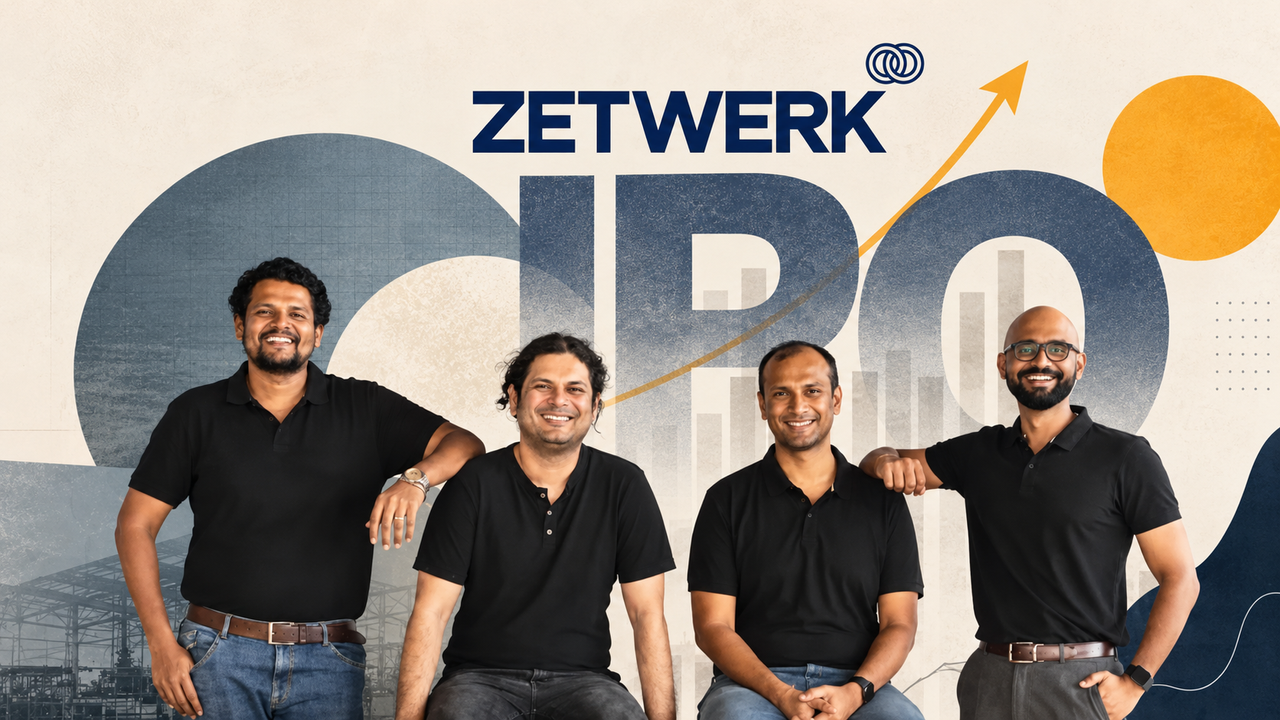


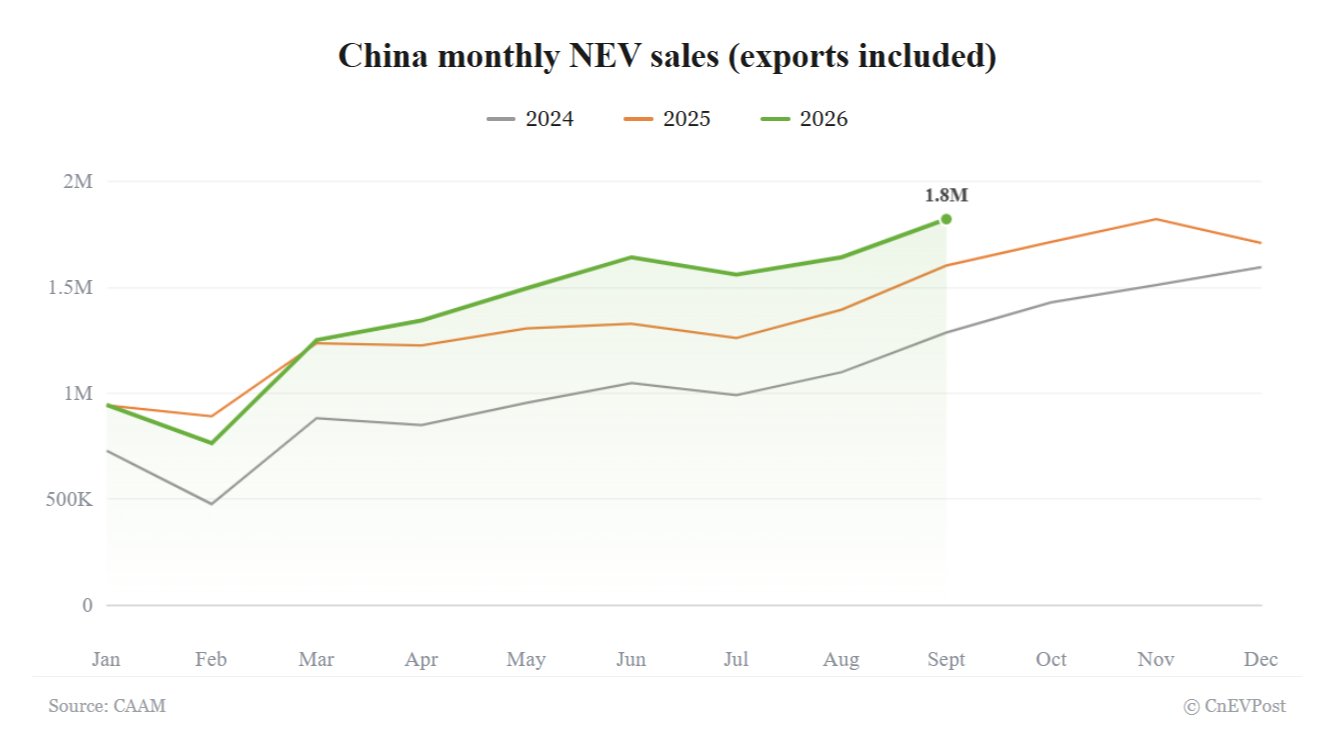







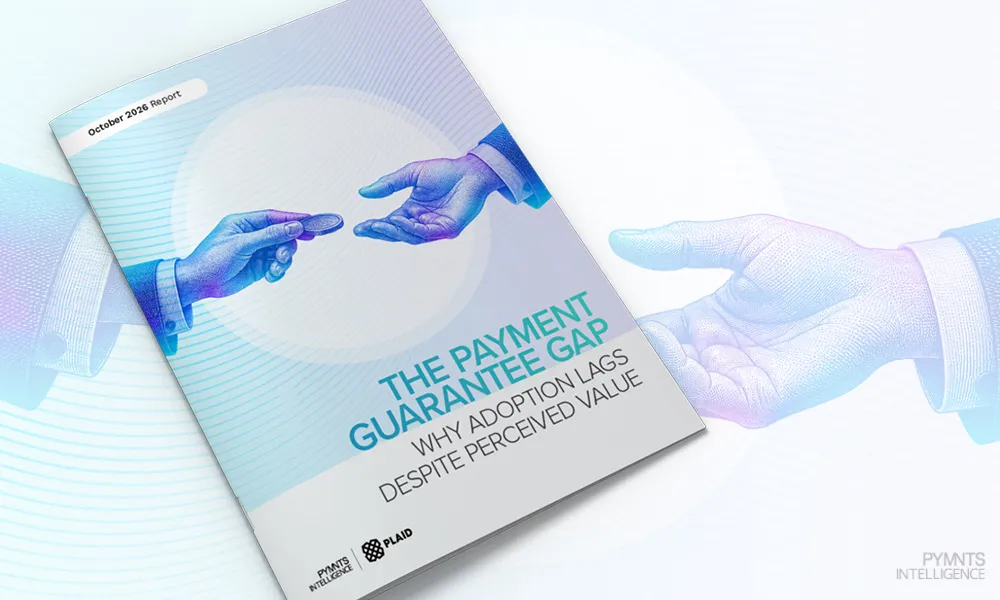



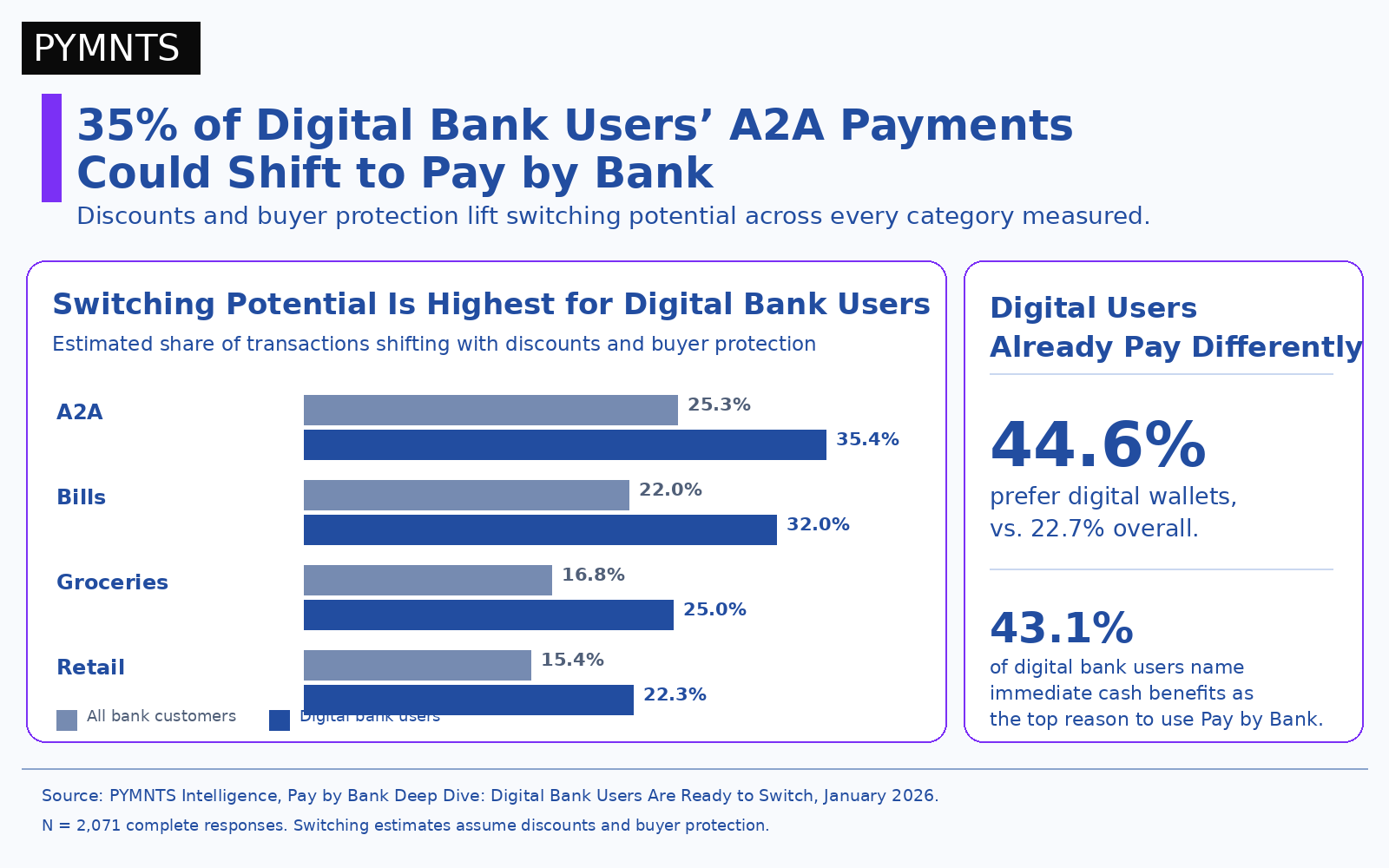





















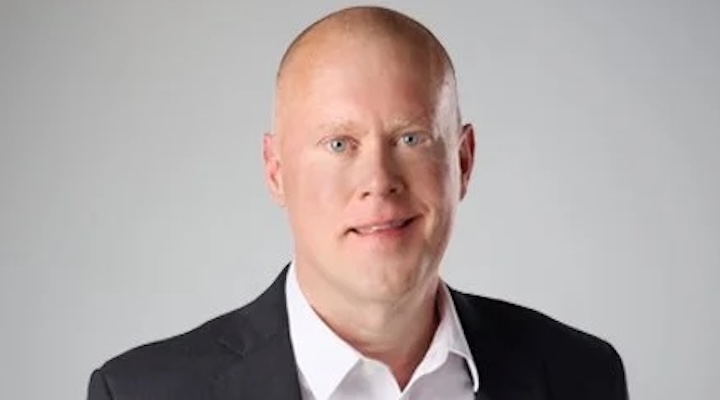









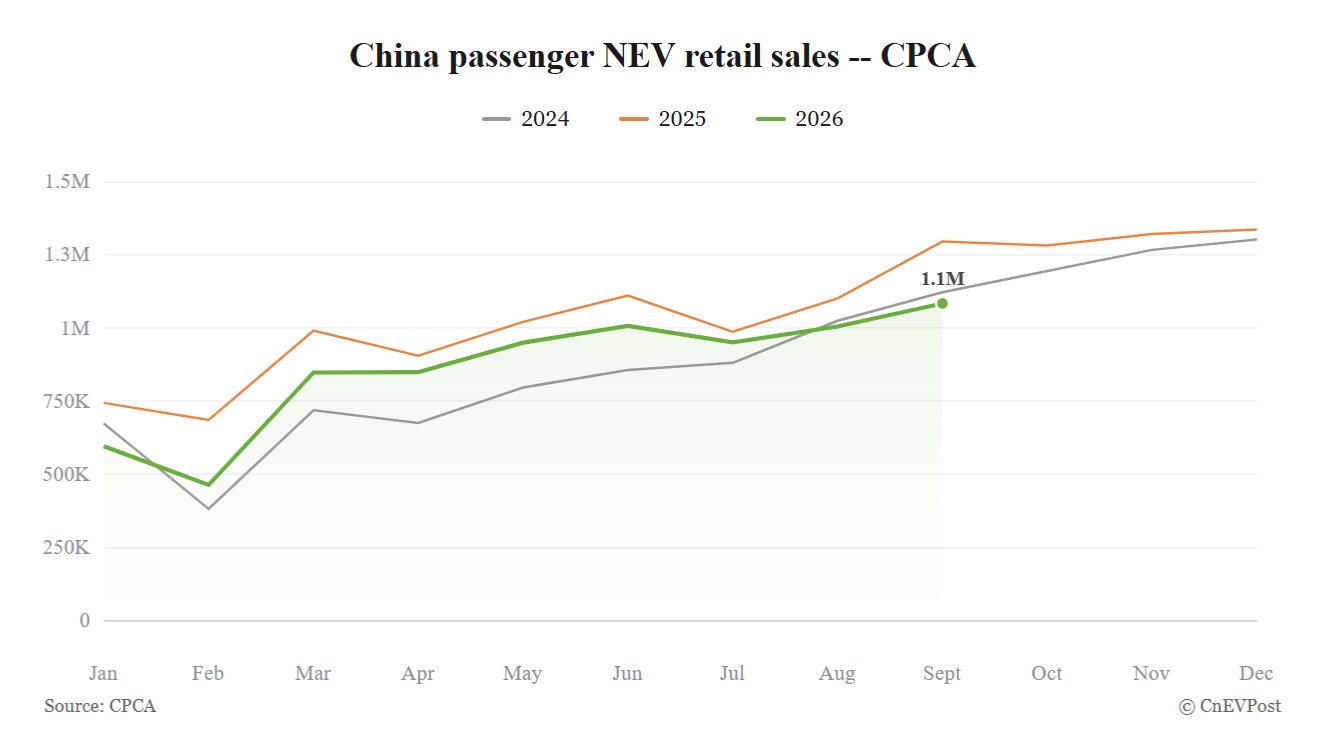





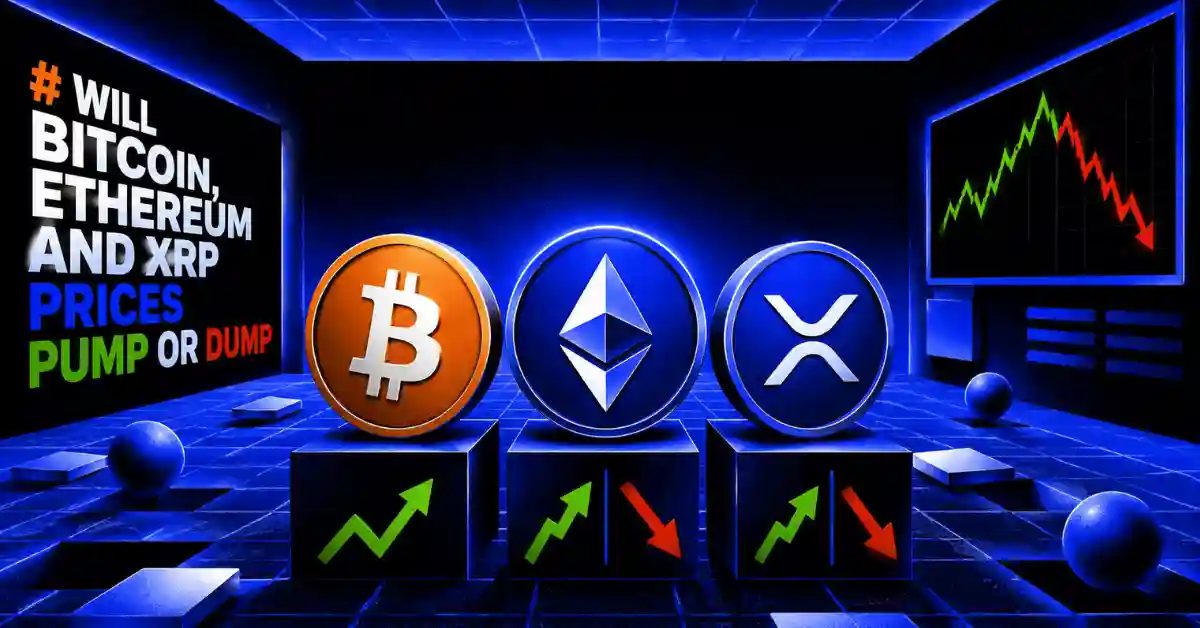























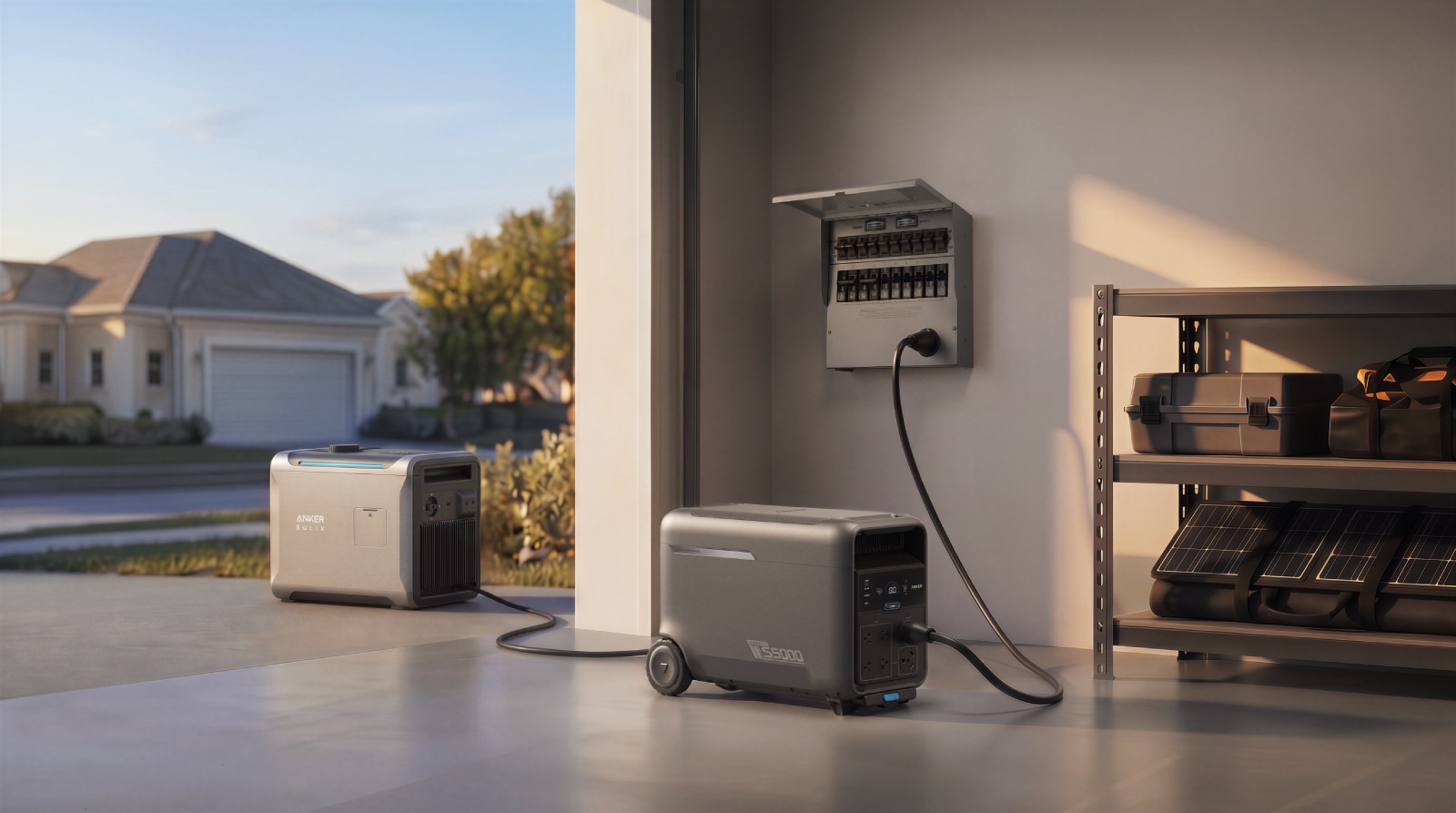








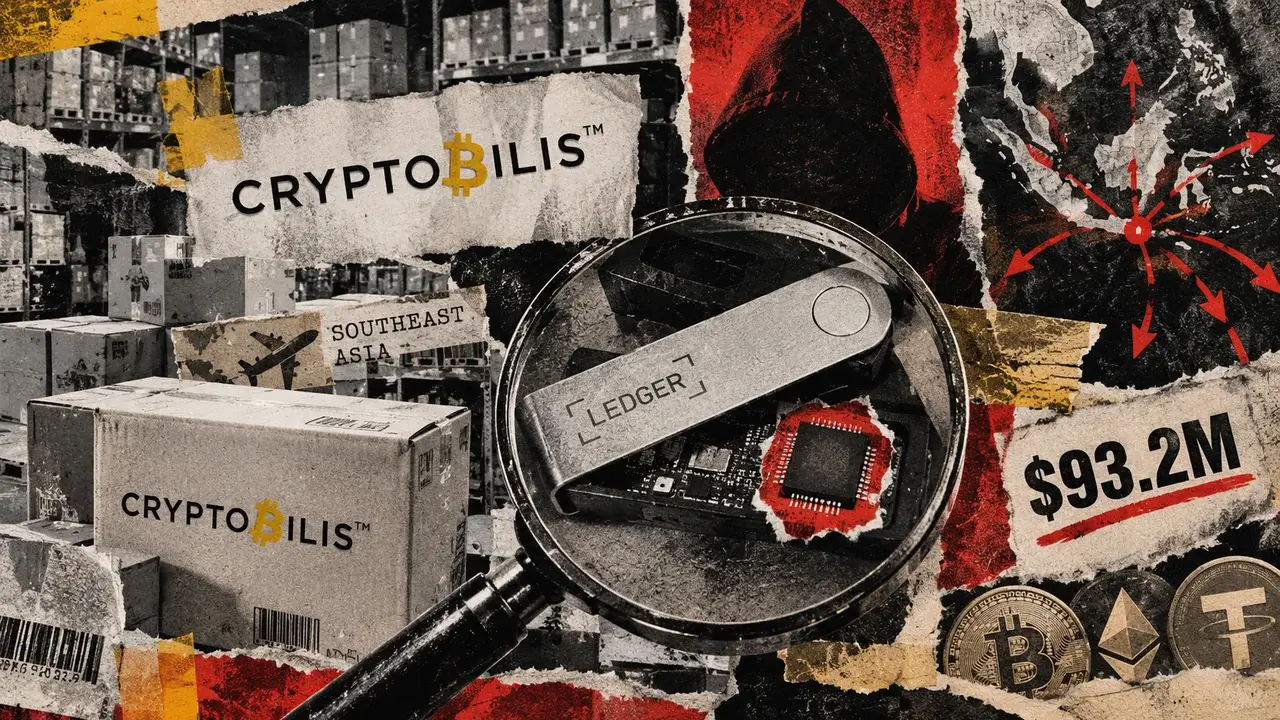



![Stock Market Today [LIVE] : KOSPI Stock Crash](https://images.themorningpulse.fyi/uploads/2026/10/rss-mv4vhfj8-2mfafk-meta.jpg)