Climate & Energy
- Climate & Energy2 hours ago
A new gas line or cash to electrify? California lets households choose.
When one of the nation’s biggest investor-owned utilities, Pacific Gas and Electric, wanted to replace Merrian Borgeson’s aging gas service line in Berkeley, California, she asked the company not to do it. Borgeson, who is the California policy director for climate and energy at the nonprofit Natural Resources…
- Climate & Energy3 hours ago
Risen releases 23.5%-efficient anti-glare heterojunction solar module
Chinese solar module manufacturer Risen Energy has unveiled a new heterojunction (HJT) solar module featuring a dual-layer optical design to reduce glare. The company said the new product is part of its Hyper-ion series and is designed for installations with stringent glare-control requirements, such as those near airports and residential areas, where reflected sunlight may cause visual disturbances. “Risen Energy’s capabilities in photovoltaic optical safety extend beyond product development. It is also the principal drafting organization behind T/CPIA0119-2025, the group standard for Photovoltaic Module Glare Testing Method,” the manufacturer said in a statement. “The launch of Hyper-ion anti-glare module represents the translation of this accumulated technical and standardization expertise into a commercial product.” According to Risen Energy, the module uses a dual-layer optical design combining a micron-scale matte glass surface, produced through a process it calls “nanocrystalline phase reconstruction,” with technology to suppress internal reflections. The company did not provide further technical details about the process. The manufacturer said tests conducted by Germany’s TÜV Rheinland showed a maximum daylight glare probability (DGP) of 0.30, below the Class AAA threshold of 0.35, and a maximum glare luminance of 3,463.94 cd/m², compared with a limit of 20,000 cd/m². The module also achieved a specular reflectance as low as 0.85%, according to the company. The RSM132-8-710-730BHDG module comes in five versions, with power outputs of 710 W, 715 W, 720 W, 725 W and 730 W. Their conversion efficiencies range from 22.9% to 23.5%, while open-circuit voltages range from 50.01 V to 50.33 V and short-circuit currents from 18.00 A to 18.38 A. The bifacial module features 132 HJT cells and measures 2,384 mm × 1,303 mm × 33 mm. It weighs 37.5 kg and features 2 mm anti-glare glass on the front and 2 mm heat-strengthened g
- Climate & Energy3 hours ago
C&I storage the ‘sleeping giant waking up’, says WoodMac
The global energy storage market is entering a new phase of scale and complexity, according to Wood Mackenzie’s latest outlook. Cumulative capacity is forecast to grow to more than 7 TWh by 2035. Demand growth in 2026 alone is close to 30%. But growth at that rate and capacity is no longer the most interesting part of the story. The composition is. Global energy storage outlook by segment (% of total MWh installed in 2026) Regional competition: the running order is changing faster than the totals suggest While China and the United States (US) are still the two biggest global energy storage markets, in 2026, for the first time, Europe’s annual installation overtook annual US energy storage capacity and took second place after China. In the utility segment, government-led tenders remain the main market drivers, having globally cleared over 80 GW (de-rated) capacity, with India the single largest contributor. Poland has become the global number-one emerging market, on the back of capacity-market auctions and a grid short of flexibility. In mature utility markets, the demand signals behind the forecast are also firm. Contracted offtake for storage has passed 130 GW, with utility power purchase agreements and tolling deals together accounting for more than three-quarters of all contracts signed, according to our global offtake tracker. In the residential landscape, the centre of gravity has shifted south: Australia has overtaken Germany as the world’s leading residential energy storage market, with more than half a million installations under its Cheaper Home Batteries subsidy, while the US market contracts this year as tax credits become less available. Commercial and industrial storage is the sleeping giant now waking Wood Mackenzie forecasts commercial and industrial storage capacity separately. The split shows industrial demand is materially larger in some regions. A single “utility” line no longer tells the story: standalone still leads, but some regions need pairin
- Climate & Energy3 hours ago
Anker Solix announces wheeled power station with 4.5 kW output
From ESS News Anker Solix has announced its S5000 portable power station, offering 5,024 Wh of storage and 4.5 kW of rated output. The lithium iron phosphate (LFP) system supports both 120 V and 240 V appliances, with battery capacity expandable to 30 kWh. At 44 kg, or approximately 97 lb, the S5000 puts some pressure on the portable part of the description. It has wheels and a telescoping handle, which should help on level ground. Getting it up stairs or into a vehicle is another matter, and something we’ll look at in a forthcoming review. The S5000 portable power station or solar generator as they’re known is a larger counterpart to the Anker Solix S2000 reviewed by ESS News earlier this year . The new model offers 5,024 Wh of storage and 4.5 kW of rated output, up from approximately 2 kWh and 1.5 kW on the smaller unit. Power demands are hardly decreasing and bigger unit sizes and options are key for brands exploring where demand centers. Like the S2000, the S5000 uses lithium iron phosphate (LFP) batteries, with Anker emphasizing low idle consumption and claiming up to 10,000 charge cycles. The S5000 adds dual 120 V/240 V output, battery expansion to 30 kWh, and up to 3 kW of solar input, compared with the S2000’s 400 W. As with the C2000 Gen 2 , announced around this time in 2025, Anker is emphasizing reduced idle power consumption. The S5000 is specified at 8.8 W draw in 120 V mode, rising to 13.7 W at 240 V. The company brands this as OptiSave 2.0 and claims longer runtime under light loads, where the power station’s own consumption can account for a larger share of battery use. The US model has four standard NEMA 5-20 AC outlets, a TT-30 RV outlet, and an L14-30 outlet for 240 V loads. USB connections include one 100 W USB-C port, a second rated at 15 W, and a 12 W USB-A port. Solar input is rated at up to 3 kW across two inputs. Anker specifies a full recharge in 99 minutes using a 240 V supply at 4.5 kW, with 80% reached in 64 minutes. Charging from a stan
- Climate & Energy4 hours ago
Batteries beat gas peakers on cost globally, but U.S. faces trade headwinds
The levelized cost of electricity (LCOE) for four-hour battery storage has crossed a critical threshold, falling below open-cycle gas turbines across all 43 global markets modeled by Wood Mackenzie. However, while expanding manufacturing and volatile fuel prices drive gas peaking out of the market globally, North America faces a distinct trajectory marked by near-term trade barriers, policy shifts, and surging power demand from data centers. Advancing technologies and manufacturing scale are redrawing global power market dynamics. Wood Mackenzie’s latest Levelized Cost of Electricity (LCOE) report shows that single-axis tracker solar is now the lowest-cost new-build power source in 43 of 48 modeled markets, with four-hour battery storage decisively beating open-cycle gas turbines on cost. “This economic shift is decisive and widening,” said Ahmed Jameel Abdullah, principal analyst at Wood Mackenzie. “Gas turbine shortages and rising fuel volatility are driving up peaking costs, while expanding battery manufacturing continues to push storage costs down.” Yet, North America stands out as a key exception in long-term cost trajectories, heavily influenced by domestic trade policies, supply chain protections, and load pressures. Tariffs, data centers, and tax incentives Unlike international markets benefiting from low-cost Chinese equipment exports, North American clean energy developers face immediate cost headwinds. Near-term solar costs across the U.S. and Canada remain elevated under a wave of tariffs, anti-dumping and countervailing duty (AD/CVD) actions, and Section 232 import restrictions. Utility-scale solar developers maintain a buffer thanks to 168 GW of safe-harbored capacity, but module prices are still projected to climb ~5% annually through 2030. Distributed generation bears the brunt of the pressure, with residential and commercial solar module prices forecast to jump 6% in 2027 and an additional 14% in 2028. For energy storage, Fed
- Climate & Energy4 hours ago
Rooftop solar reaches new highs across Australia
The string of records from Australia’s renewable energy transition continue to tumble with rooftop solar output reaching a new all-time high of 17,488 MW in the National Electricity Market (NEM) at noon on Sunday. Geoff Eldridge from Global Power Energy (GPE NEMLog) said the new peak is 495 MW higher than the previous record of 16,993 MW set just two weeks earlier and 2,388 MW, or 15.81% up on the 15,100 MW generated on 4 October 2025. At the time of the new rooftop solar generation peak, combined distributed PV and utility-scale solar share of NEM consumption reached a record 72.29%, up from the 70.80% achieved on 12 September 2026. Eldridge said the latest rooftop solar output milestone is part of a “remarkable run” with four new records across three regions in just five days. On Wednesday, 7 October Victoria recorded 4,191 MW of rooftop solar generation, surpassing its previous high of 4,036 MW set in January this year. During this peak interval, renewables contributed 65.9% of the state’s total generation. On the same day, South Australia recorded a new rooftop solar peak of 2,070 MW, eclipsing the previous peak of 1,970 MW set two weeks earlier. At the time of the new high, renewables covered 96.3% of the state’s total electricity demand. On Friday, 9 October New South Wales recorded a new rooftop solar generation peak of 6,346 MW, 241 MW higher than the previous record of 6,106 MW set nine days earlier. Eldridge highlighted that the new peaks are instantaneous output records and not daily energy production records but pointed out that they do demonstrate the growing contribution of renewable energy across the NEM. “They reinforce the expanding contribution of consumer energy resources and the changing daytime operating environment across the NEM,” he said. The Australian Energy Market Operator said between 1 January and 30 September 2026, renewable energy has accounted for an average of 44% of all electricity generation across the NEM. About 4 mill
- Climate & Energy4 hours ago
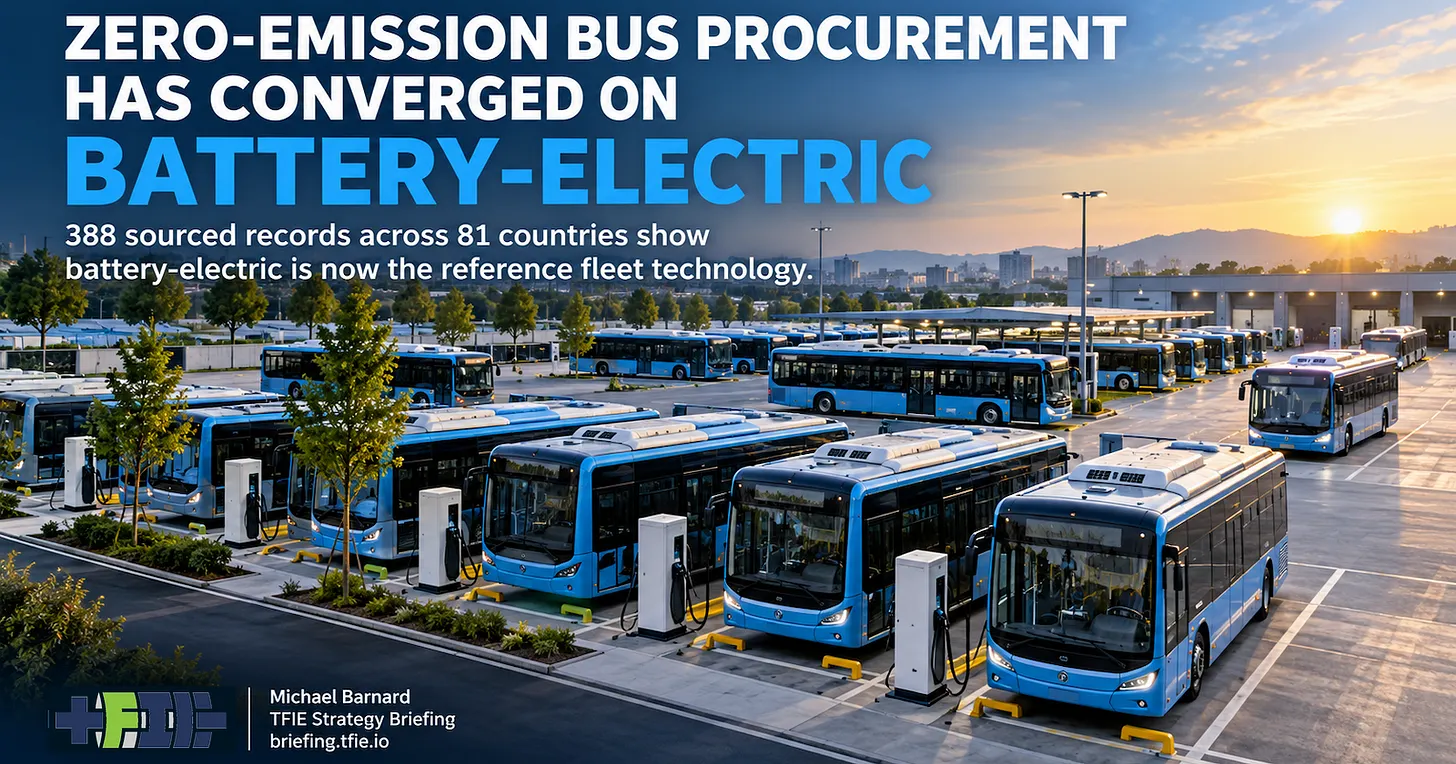
Bus Buyers Have Overwhelmingly Chosen Battery-Electric
Zero-emission bus procurement has moved beyond the stage where battery-electric and hydrogen fuel-cell buses should be treated as two parallel technologies waiting for the market to decide between them. Transit agencies have now spent years operating both, rebuilding depots, installing charging and refuelling infrastructure, training technicians and discovering which assumptions ... [continued] The post Bus Buyers Have Overwhelmingly Chosen Battery-Electric appeared first on CleanTechnica .
- Climate & Energy6 hours ago
Follow the money
Solar trackers are, in a sense, a victim of their own success in the North American market. They have become the default technology for utility-scale projects with a market penetration rate of over 90%. This saturation has created its own challenge – with the domestic market close to fully saturated, there is little room for growth. US tracker shipments are forecast to decline annually from 2026 to 2035. Over the past decade, the underlying technology of solar trackers has matured. While proprietary algorithms, software and terrain-following capabilities still provide differentiation, the core mechanical components have become increasingly commoditized, making it challenging to compete on hardware alone. This market plateau is compounded by the solar capex ceiling. Mounting systems represent only around 10% of the total capital expenditure for a US utility-scale solar project, so tracker vendors remain locked out of 90% of the capital deployed on every project they supply. Expanding into adjacent components offers a lucrative opportunity to unlock new revenue streams. Capital stack Mergers and acquisitions (M&A) deal size and frequency increased considerably in 2025 and 2026, revealing a clear strategic evolution. While initial acquisitions focused on adjacent components like solar foundations and fixed-tilt systems, the focus has since shifted toward high-value, non-core components. Some tracker suppliers have expanded into battery energy storage systems (BESS), power electronics, robotics, and electrical balance of systems (eBOS), signaling a strategy to build a comprehensive, integrated solar offering with an increasing focus on grid interaction. Expanding into non-core components unlocks new revenue streams. Installation robotics, for example, would enable tracker suppliers to capture a share of installation costs, which represent the largest cost component of solar project capex in the United States. Similarly, integrating components such as energy storage
 SponsoredAjio Gram
Get an Extra 5% Off – Save Up to ₹650 on Orders of ₹1290!
- Climate & Energy11 hours ago
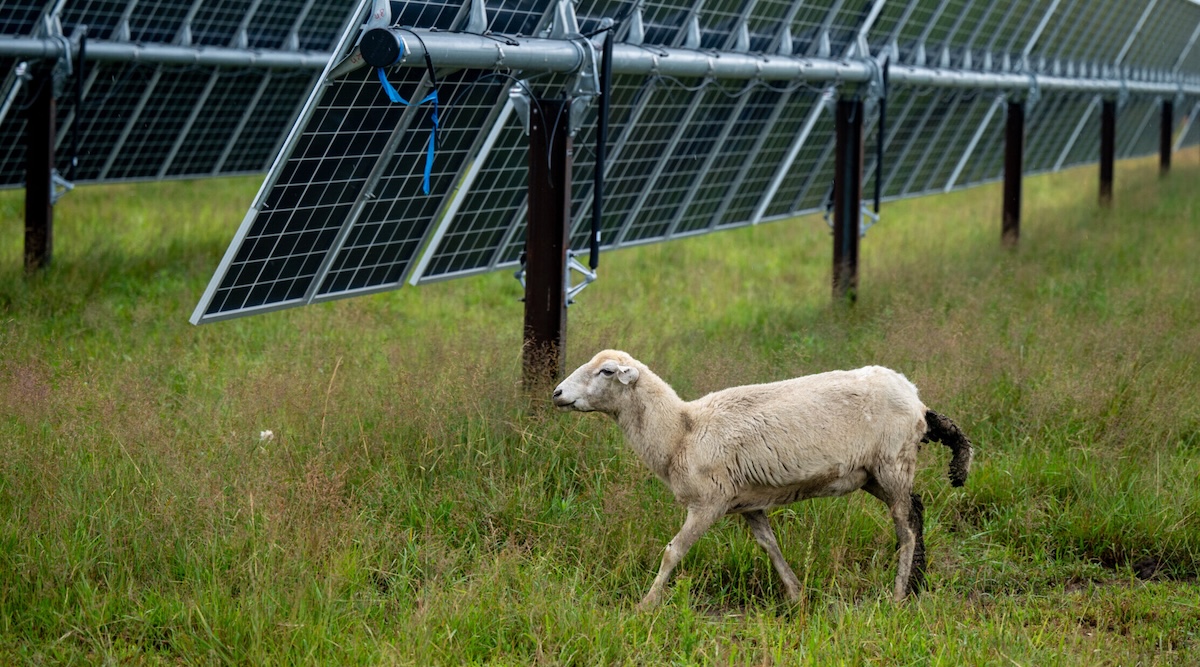
Trump Must Absolutely Love Solar Panels, Because They Help Farmers
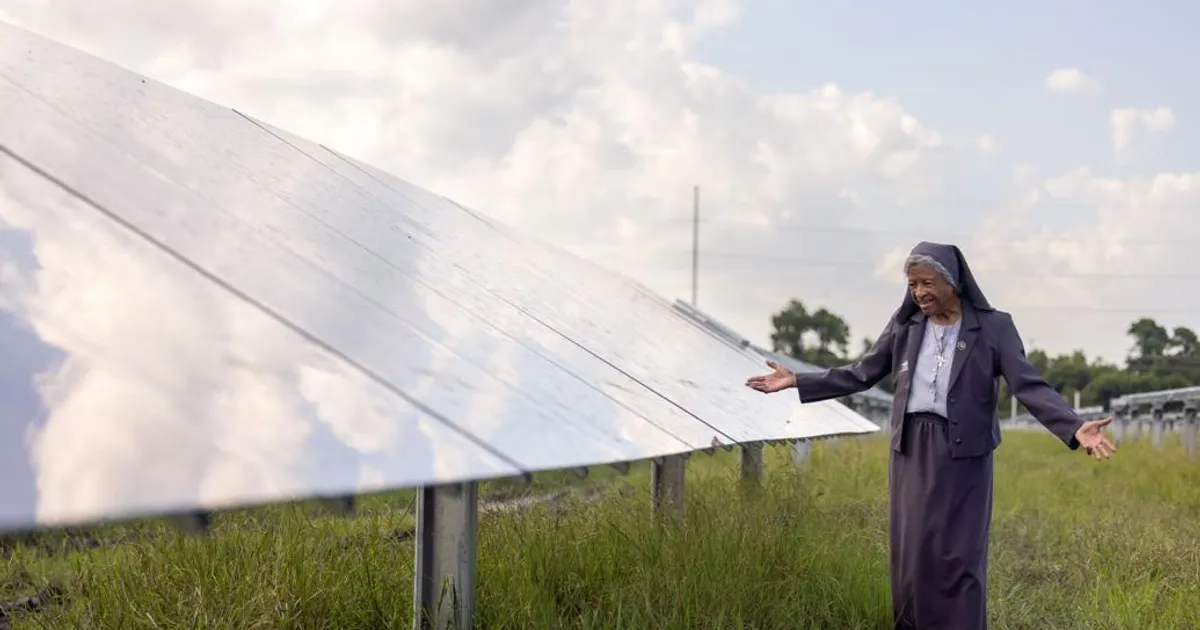
The agrivoltaic movement combines solar panels with agriculture, providing farmers with new opportunities to improve their financial situation at a time of skyrocketing fuel costs. The post Trump Must Absolutely Love Solar Panels, Because They Help Farmers appeared first on CleanTechnica .
- Climate & Energy11 hours ago
Tesla Enables V2H Bidirectional Charging, Europe Completes EV4EU Trial
Every Tesla Model 3 and Model Y built in the US on or after October 1, 2026, is capable of vehicle to home (V2H) operation, according to Not A Tesla App. In fact, some cars built as long ago as April may have the upgrade available, as some cars were ... [continued] The post Tesla Enables V2H Bidirectional Charging, Europe Completes EV4EU Trial appeared first on CleanTechnica .
- Climate & Energy12 hours ago
Energy-importing countries record 3x faster clean energy generation than exporters
A new report has revealed that energy-importing countries are scaling clean energy generation three times faster than exporters. The disruption to energy supply through the Strait of Hormuz is reinforcing governments’ determination to reduce dependence on imported oil and gas, according to the tenth edition of DNV’s Energy Transition Outlook. At the same time, exporting countries outside the Middle East are increasing production to compensate for disrupted supplies, whilst their own decarbonization journeys are increasingly slower compared to the rest of the world. Share of non-fossil energy As a result, the share of non-fossil energy in the primary energy mix of importing regions increased by 2.2 percentage points over the past five years, compared with just 0.7 percentage points in exporting regions. This means China, India and Europe have collectively shifted towards non-fossil energy more than three times as fast as the Middle East, North America and Russia, according to the report. “Energy security is redrawing the map of the energy transition,” said Ditlev Engel, CEO – Energy Systems at DNV. “Importing regions are accelerating electrification, renewables and storage to reduce their exposure to the most insecure fossil-fuel markets. Exporters, meanwhile, are responding to today’s shortages by increasing investments and production. The result is a widening divide in the speed and direction of the transition.” The disruption to the Strait of Hormuz has strengthened incentives for importing countries to diversify supply and reduce their exposure to oil and gas, increasing the long-term risks facing fossil-a exporters. DNV’s new forecast sees the Middle East supplying around 40% of global oil production in 2050, compared with 50% in last year’s outlook, according to a press release. An additional DNV sensitivity analysis examines the impact of the Middle East conflict continuing until 2030, with oil and gas prices remaining moderately
- Climate & Energy15 hours ago
48 hours to TechCrunch Disrupt 2026 — hear directly from the people building what’s next
Less than 48 hours, TechCrunch Disrupt 2026 starts in San Francisco’s Moscone West. Save up to $100 on your pass before prices increase at the door, plus get 50% on a second pass. Or score other deals.
- Climate & Energy17 hours ago
Zinc-air batteries gain new momentum with long-lasting catalyst
Zinc-air batteries can store significantly more energy than lithium-ion batteries, but until now have been virtually impossible to recharge. A team led by Professor Jörg J. Schneider from the Department of Chemistry has now demonstrated how a material made of iron, nickel and carbon enables the battery to be charged and discharged up to 500 times.
- Climate & Energy18 hours ago
Why plugging ships into the grid can cost more than running onboard generators
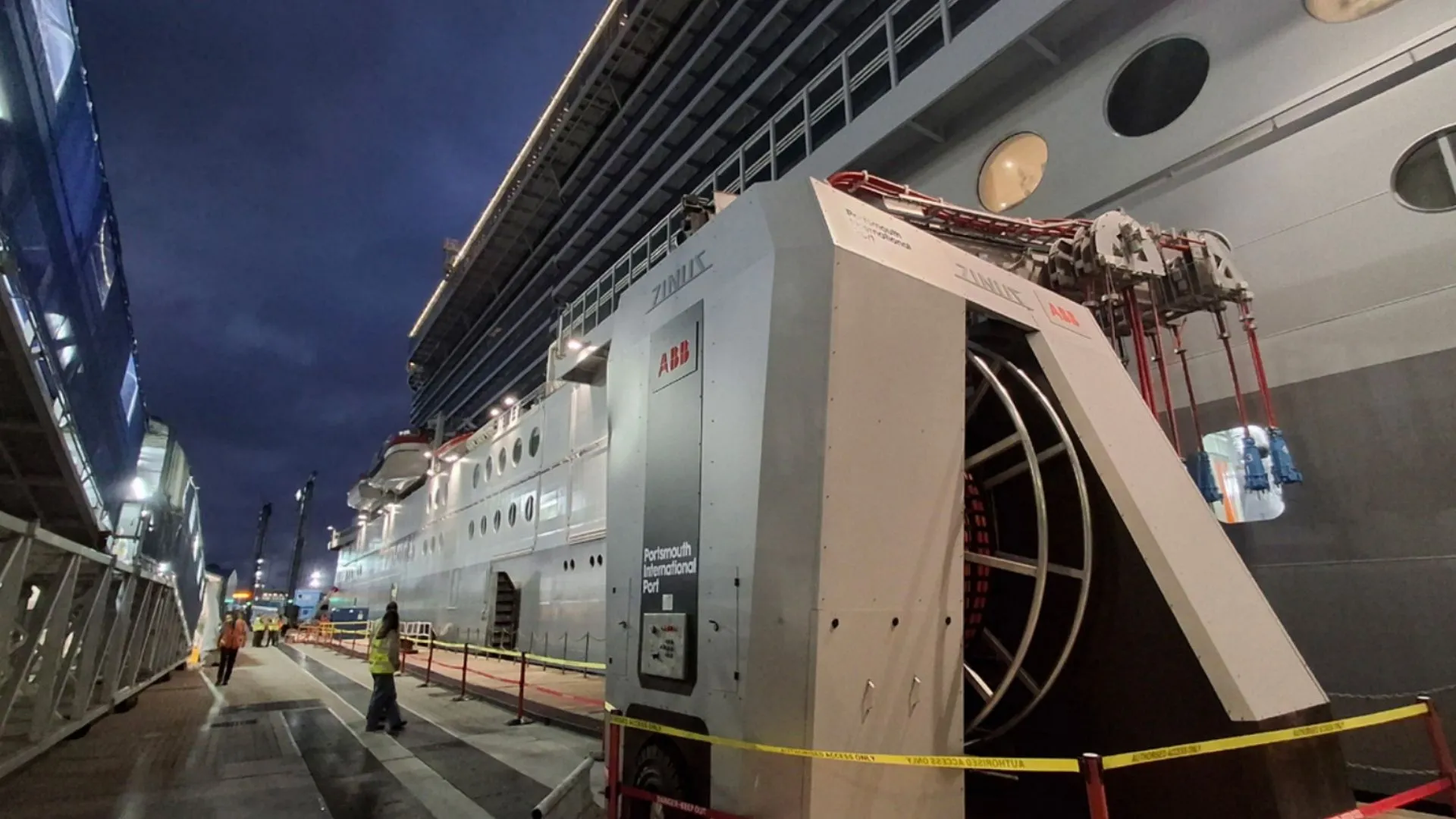
A ship can switch off its generators, burn less fuel and reduce pollution while docked, yet still face a higher power bill. That is the financial challenge surrounding Portsmouth International Port’s new shore power system. The port has launched the UK’s first high-voltage, multi-berth installation, allowing docked ships to connect to grid electricity instead of generating power onboard. It supports Portsmouth’s ambition to become a net-zero facility, improve local air quality and contribute to the wider decarbonization of shipping. However, high UK electricity prices complicate the economics. Shore power can replace fuel-burning generators without delivering the savings operators might expect, while rising grid-related charges add further pressure. How shore power cuts fuel use Shore power changes where a docked ship gets its electricity. Rather than keeping onboard generators running, vessels connect to the grid and switch those generators off. For Portsmouth, this provides a way to address air pollution from marine engines while supporting its broader environmental goals. The principle is straightforward: supplying electricity from the shore reduces the need to burn fuel onboard while a vessel remains docked. Portsmouth’s ambition sits alongside efforts at the ports of Long Beach and New York and New Jersey, as well as JFK’s Terminal One project, to make transport infrastructure cleaner. But the environmental and financial arguments depend on different factors. Switching off generators reduces onboard fuel consumption. Whether it also saves money depends on the price of the electricity purchased to replace that generation. Access to grid power therefore creates an alternative, rather than guaranteeing a cheaper option. A vessel operator still has to compare the cost of plugging in with the cost of keeping its generators running. At Portsmouth, expensive electricity makes that comparison challenging, even as the system offers a way to reduce pollution. Why electri
- Climate & Energy19 hours ago
17-gigawatt Texas power project passes key hurdle for world’s largest private grid
A planned nuclear-powered supercomputing hub in the Texas Panhandle has cleared a major federal regulatory hurdle. The US Nuclear Regulatory Commission (NRC) has published its draft environmental review for Project Matador, an energy and artificial intelligence campus run by developer Fermi America. Crucially, NRC staff issued a preliminary recommendation to approve combined licenses for four Westinghouse AP1000 nuclear reactors, provided the project passes an ongoing safety evaluation. The positive assessment arrived just 15 months after Fermi America filed its application. In the nuclear industry, federal environmental reviews typically take years to complete. Reaching this stage so quickly marks significant momentum for an initiative designed to power high-demand computing facilities. Proposing a new power outlook With Project Matador, the overall technology infrastructure could get a new outlook. It does not rely solely on the public grid. Instead, Fermi America is building a dedicated private system in Carson County, near Amarillo. The private network will combine commercial nuclear reactors with natural gas units, solar arrays, and utility-scale battery storage. Original plans for the site called for an 11-gigawatt (GW) campus, anchored by 4.4 GW of nuclear power. However, developers recently expanded their ambitions to nearly 17 GW. The upgrade aims to meet the relentless power appetite of next-generation artificial intelligence models and high-performance computing clusters, which require round-the-clock baseload electricity that intermittent renewables cannot supply alone. The site is being developed across 18 million square feet in partnership with Texas Tech University. Construction is scheduled to bring the facility online in stages, starting in the late 2020s and running into the mid-2030s. The federal recommendation builds directly on state-level regulatory wins from earlier this year. In February, Texas environmental authorities granted Project Matado
- Climate & Energy19 hours ago
Successful Market Launch of the Electric Urban Car Family: CUPRA Raval, Volkswagen ID. Polo, Škoda Epiq, and Volkswagen ID. Cross Together for the First Time at the Paris Motor Show
Four entry-level electric models. Three brands. Almost 150,000 orders. Already a joint success story for affordable electric mobility. The Electric Urban Car Family (EUCF) is celebrating a milestone at this year’s Paris Motor Show: For the first time, all four models will be presented together. The CUPRA Raval, Volkswagen ID. ... [continued] The post Successful Market Launch of the Electric Urban Car Family: CUPRA Raval, Volkswagen ID. Polo, Škoda Epiq, and Volkswagen ID. Cross Together for the First Time at the Paris Motor Show appeared first on CleanTechnica .
 SponsoredWellbeing Nutrition
Sleep Better, Live Better: Premium Quality Supplements Starting at Rs. 649!
- Climate & Energy20 hours ago
You Can Now Get The Kia EV3 At US Dealerships — Dream EV!
When it comes to most things, you pay less for something that’s smaller. In the car business, that rule typically holds true as well. Smaller cars typically cost less than larger ones (unless they come with a ton of power). That also gives the impression generally that smaller cars are ... [continued] The post You Can Now Get The Kia EV3 At US Dealerships — Dream EV! appeared first on CleanTechnica .
- Climate & Energy1 day ago
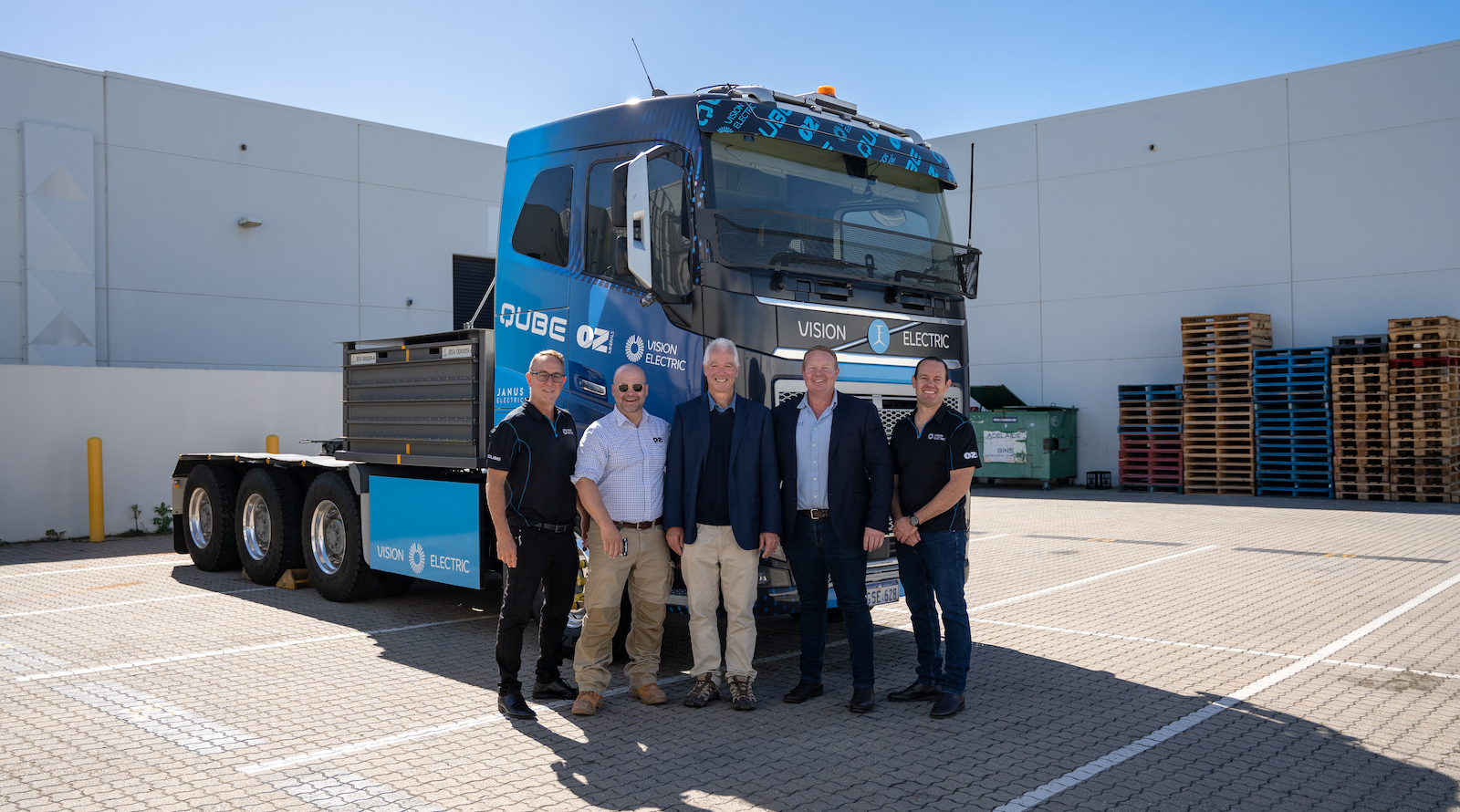
Battery Swap Uses Fewer Batteries Than You Think
When I wrote an article a while ago about Janus Electric, an electric truck company in Australia that featured diesel semi electric conversions and battery swap, I put it away in my mind, until I happened upon an interview with Janus CEO Ben Hutt. The interviewer asked how much extra ... [continued] The post Battery Swap Uses Fewer Batteries Than You Think appeared first on CleanTechnica .
- Climate & Energy1 day ago
Trump’s Latest Diesel Fuel “Deal” Already Reeks Of Failure (And Corruption, Of Course)
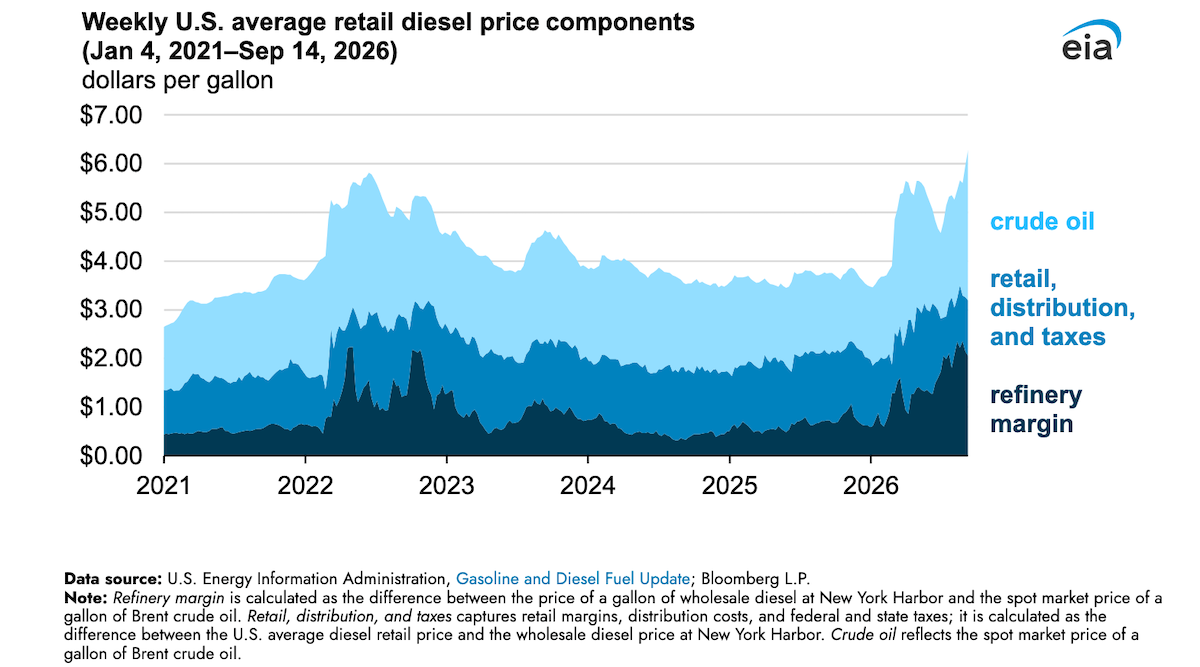
The cost of diesel fuel in the US remains stubbornly high, even as US President Donald Trump experiments with various schemes to push prices down ahead of the mid-term elections. The post Trump’s Latest Diesel Fuel “Deal” Already Reeks Of Failure (And Corruption, Of Course) appeared first on CleanTechnica .