Fintech

- Fintech2 hours ago
Do Banks Need AI Employees More Than They Do Core Upgrades?
Watch more: Monday Conversation With Kastle’s Rishi Choudhary Rishi Choudhary, Co-Founder and CEO of Kastle, believes that banks have been approaching AI modernization from the wrong end of the technology stack: the legacy end. For years, he said, the industry’s transformation agenda has been dominated by the dilemma of just how banks can introduce new capabilities […] The post Do Banks Need AI Employees More Than They Do Core Upgrades? appeared first on PYMNTS.com .
- Fintech2 hours ago
Finance Teams Embrace AI but Many Still Struggle to Unlock Working Capital
Corporate treasury is approaching an uncomfortable reality about artificial intelligence. Almost every firm has it, but relatively few companies can demonstrate that it is making them financially better off. Findings in the latest 2026 edition of the Working Capital Index (WCI) from PYMNTS Intelligence reveal that 97% of the lowest-performing middle-market firms use AI in […] The post Finance Teams Embrace AI but Many Still Struggle to Unlock Working Capital appeared first on PYMNTS.com .
- Fintech2 hours ago
Leela CEO Says AI Can Give FinTechs a 10-Person Compliance Team
Compliance remains labor-intensive for financial institutions, which must satisfy multiple regulators and meet extensive documentation requirements. Leela is built to perform much of that work rather than simply provide information. The company is launching with $4.6 million in funding and an AI platform designed to execute compliance tasks while keeping humans responsible for consequential decisions. […] The post Leela CEO Says AI Can Give FinTechs a 10-Person Compliance Team appeared first on PYMNTS.com .
- Fintech2 hours ago
More Than Two-Thirds of Firms Lose or Delay Revenue When Payments Fail
A failed payment can look small on a transaction screen. For the business waiting on the money, the effects can spread fast. Revenue gets delayed, staff spend more time fixing problems and customers can lose confidence in the payment experience. “The Payment Guarantee Gap: Why Adoption Lags Despite Perceived Value,” a PYMNTS Intelligence report produced […] The post More Than Two-Thirds of Firms Lose or Delay Revenue When Payments Fail appeared first on PYMNTS.com .
- Fintech2 hours ago
AI Agents Give Main Street Businesses Big Business Muscle
Running a small business has always meant doing more with less. The owner takes the morning shift, answers customer emails on lunch, reconciles the books at night and handles scheduling on weekends. Every hour spent on operations is an hour not spent on the work that grows the business. Artificial intelligence agents are changing that […] The post AI Agents Give Main Street Businesses Big Business Muscle appeared first on PYMNTS.com .
- Fintech2 hours ago
71% of Card Switchers Choose a Card Already in Their Wallet
Credit card issuers may think their biggest retention threat is another bank persuading a customer to open a new account. But the replacement card may already be sitting in the customer’s wallet. PYMNTS Intelligence’s “The Switching Trigger: How Issuers Can Stop Their Credit Cards From Losing Top-of-Wallet Status” report, in collaboration with Elan, surveyed 2,460 […] The post 71% of Card Switchers Choose a Card Already in Their Wallet appeared first on PYMNTS.com .
- Fintech2 hours ago
Pay-by-Bank Could Win 32% of Bill Payments With the Right Incentives
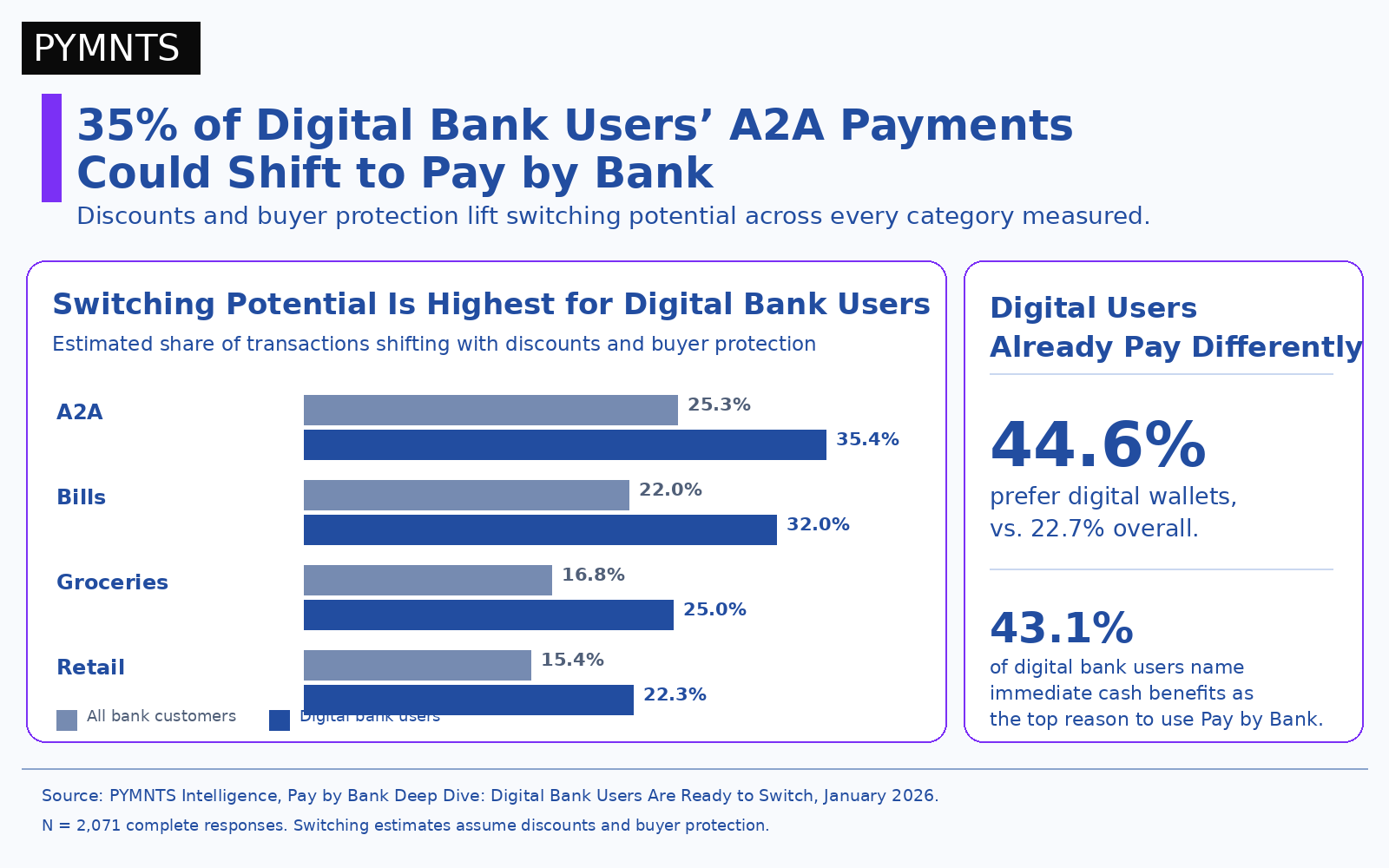
Digital bank customers are more willing than the broader banking population to move transactions to Pay by Bank when the payment method comes with discounts and buyer protection, according to PYMNTS Intelligence research. The findings come from “Pay by Bank Deep Dive: Digital Bank Users Are Ready to Switch,” a PYMNTS Intelligence report produced in […] The post Pay-by-Bank Could Win 32% of Bill Payments With the Right Incentives appeared first on PYMNTS.com .
- Fintech2 hours ago
Ancient Capital Names Imran Ahmed Chief Investment Officer and Sonya Li Managing Director to Lead Investments
Appointments anchor a senior team assembled to build the firm’s asset management platform Ancient Capital, the asset management subsidiary of Ancient Financial, announced the appointments of Imran Ahmed as Chief Investment Officer and Sonya Li as Managing Director. Both will report to Erich Schram, Chief Executive Officer of Ancient Financial and Ancient Capital. Read More on Fintech : Global Fintech Interview with Shai Gabay, CEO at Trustmi Mr. Ahmed and Ms. Li are Ancient Capital’s most senior investment hires to date and will lead and build out its investment team going forward. As Chief Investment Officer, Mr. Ahmed will oversee investments and portfolio construction for the asset management business, including the management and allocation of the platform’s insurance balance sheet assets. Ms. Li will also pursue direct investments, with a focus on strategic investments and platform partnerships to grow the business. The appointments follow a series of senior hires since the firm’s formal launch in March 2026, including Shannon O’Grady as Head of Capital Formation, Derrick Chin as Head of Operations, Steve Ruggeri as Head of Finance, and Peter Celebucki as Vice President. Together, the team reflects the platform’s ambition to build an institutional-caliber business from the ground up. Erich Schram, Chief Executive Officer: “Ancient Capital is a rare opportunity to build an investment platform without legacy constraints, with the discipline of an institutional balance sheet behind it. Imran and Sonya are exactly the caliber of investor we set out to attract when we formed this business. Between them, they bring decades of experience underwriting investments, constructing portfolios, and driving strategic transactions at some of the most respected institutions in our industry.” Alexander Klabin, Chairman, Ancient Financial: “When we created Ancient Financial, we set out to build a platform with the institutional rigor and expertise to manage capi
 SponsoredAjio Gram
Get an Extra 5% Off – Save Up to ₹650 on Orders of ₹1290!
- Fintech2 hours ago
New Delfi Benchmarking Tool Shows Banks and Credit Unions How Their Bets Measure Against Their Peers’
Delfi’s Risk/Return Benchmark shows banks and credit unions whether they are earning enough margin for the interest rate risk they carry, and where they are leaving money on the table. Delfi announced the launch of its Risk/Return Benchmark , which lets U.S. banks and credit unions compare themselves with a select group of peers and see whether they are earning enough margin for the interest rate risk they carry. The tool shows institutions where they are not performing to their potential, and where there is room to improve risk-adjusted returns. Read More on Fintech : Global Fintech Interview with Shai Gabay, CEO at Trustmi “Taking more risk should come with more reward, but that’s not the case for too many community institutions. We’re giving banks and credit unions a way to see where their risk is paying off and where it isn’t.” – Daniel Ahn, PHD, Co-Founder & CEO of Delfi Risk-adjusted return compares the margin an institution earns with the interest rate risk it carries. When two institutions earn the same margin, the one carrying less rate risk has the better risk-adjusted return. Built by Delfi’s PhD economists with Wall Street quantitative experience, the Risk/Return Benchmark advances the firm’s mission to bring Wall Street tools to Main Street institutions. Delfi designed it so that a community bank or credit union can see whether the rate risk on its balance sheet earns as much margin as its closest peers earn at the same level of risk. “Taking more risk should come with more reward, but that’s not the case for too many community institutions,” said Daniel Ahn, PhD, Co-Founder and CEO of Delfi. “We’re giving banks and credit unions a way to see where their risk is paying off and where it isn’t, and we’re showing them what unlocked income potential could look like.” According to Delfi’s analysis, more than 60% of banks and credit unions trail their best-performing peer by at least half a percentage point of projected margin, onc
- Fintech2 hours ago
The Autonomous Money Layer: When Capital Movement Becomes Software-Driven and Context-Aware
The movement of money has always been driven by explicit human instructions. When a finance employee approves an invoice, a customer initiates a transfer, a treasury team moves liquidity between accounts, or a procurement system triggers a payment upon a predefined condition. Even if these processes are done digitally, the decision of when and why money should move is often still manual or based on relatively static rules. That model is starting to shift. Financial infrastructure is becoming more programmable, more connected, real time and intelligent. APIs can connect business applications directly to banks and payment providers. The funds can then be transferred almost instantly through real-time payment networks. Financial data platforms can provide you with ongoing visibility into balances, transactions, obligations and customer behavior. Within certain boundaries, artificial intelligence systems can interpret this information and determine what financial action might be appropriate. This opens the door to an Autonomous Money Layer: a software-driven financial layer that can understand business and financial context, make decisions about the movement of capital, apply risk and compliance controls, execute authorized transactions and verify the resulting outcome. The change is more than just faster payments. It changes the function of software in financial operations. A system could recognize that a payment needs to occur, decide whether the conditions are right, choose the most appropriate payment route and execute the transaction based on established policies, rather than waiting for a person to initiate a transaction. The underlying model can be written as: Intelligence →Decision →Risk Check →Capital Movement →Verification The context can be cash positions, future commitments, customer behavior, market conditions, currency movements, supplier requirements, credit exposure and regulatory constraints. These signals are interpreted by intelligence. A decision eng
- Fintech3 hours ago
DBS CEO Calls Repricing of AI Financing Risk ‘Healthy’
DBS CEO Tan Su Shan said financial markets are reassessing the risks associated with AI investments, a shift that could bring greater discipline to AI financing. Speaking to Bloomberg Television on 12 October, Tan said investors are demanding higher returns and examining financing structures more closely. Tan Su Shan “The market has spoken,” she said. “It’s not a bad thing because now, people are asking for higher returns, and people are also looking at structures.” According to Tan, investors want assurance that spending on AI infrastructure will generate sufficient long-term returns to repay lenders and bondholders while providing returns to equity investors. She warned that financially weaker companies could face credit rating downgrades as markets reassess their exposure to AI-related investments. However, Tan described the repricing as healthy, as investors seek to ensure that large financial commitments remain sustainable. DBS AI financing centres on hardware DBS has originated approximately S$25 billion in AI-related financing deals so far this year, according to Tan. The bank frequently acts as lead manager for syndicated loans, which involve multiple lenders jointly providing financing, while retaining only a small portion of the loans on its own books. Most of the financing supports hardware infrastructure, including semiconductors, memory chips and data centres. The developments come as major technology companies invest billions in AI infrastructure, while stock market gains remain concentrated among a handful of companies. Rising interest rates and higher bond yields have also increased the cost of financing large-scale AI infrastructure projects. PwC estimates that cumulative data centre spending across Asia-Pacific could reach US$8.2 trillion by 2050. Rate volatility and geopolitical strain Tan made the remarks on the sidelines of a DBS conference focused on AI and geopolitical developments. During her opening remarks, she highlighted significant inter
- Fintech3 hours ago
Addovation and Cobase Target ERP-to-Bank ISO 20022 Compliance Gap
Addovation , a Nordic ERP services firm, has partnered with payments connectivity provider Cobase to help IFS Cloud and NetSuite customers meet tightening bank requirements for structured payment address data. The joint offering arrives as banks in Europe and beyond begin enforcing ISO 20022 fields that many corporate ERP installations are not yet configured to supply. The regulatory driver Swift a nd the European Payments Council (EPC) are phasing out fully unstructured addresses in ISO 20022 payment messages. Under the new rules, every international and SEPA payment must include at least the town and country of the sending and receiving parties in dedicated structured fields rather than free-text blocks. The original implementation deadline was November 2026, but both Swift and the EPC have since postponed it, with revised dates expected before year-end. The direction of travel is not in doubt: as of July 2026, Swift reported that nearly 60 per cent of payment messages still carried unstructured addresses, signalling a significant compliance backlog across the corporate sector. The practical pressure, however, is arriving ahead of any revised global deadline. Some banks and jurisdictions are retaining earlier enforcement dates and are already rejecting or queuing payments that do not meet structured address requirements. Separately, euro-area banks have been verifying payee name against account number before authorising transfers since October 2025, under the Verification of Payee framework. Both measures put the compliance burden squarely on the corporate treasury and finance function: address data originates in supplier and customer master records held in the ERP, not in the bank’s systems. The product architecture Fredrik Wingren, chief revenue officer at Addovation Addovation’s proposition is built around a three-layer model. IFS Cloud or NetSuite remains the core business platform. Cobase sits between the ERP and the bank, normalising outgoing pay
- Fintech4 hours ago
Africa Blockchain Festival 2026 Set to Take Centre Stage in Nairobi
The Africa Blockchain Festival (ABF) 2026 will take place from 15 to 17 October in Nairobi, Kenya, bringing together policymakers, investors, fintech leaders and technology innovators to discuss the continent’s growing blockchain and digital economy ecosystem. Africa’s growing role in blockchain, digital assets and financial technology will take centre stage when the Africa Blockchain Festival 2026 returns for its second edition at the Sarit Expo Centre in Nairobi. Under the theme ‘Capital, Code, and Continuity: Building Africa’s Permanent Digital Economy’, the three-day gathering is expected to attract more than 3,000 delegates from across Africa and beyond. Participants will include regulators, government officials, financial institutions, investors, blockchain developers, fintech companies and entrepreneurs. Following its inaugural edition in Kigali, Rwanda, in 2025, the festival moves to Kenya as the country continues developing its digital asset regulatory environment and expanding its wider fintech ecosystem. Bringing Together Capital, Technology and Regulation The festival’s agenda will focus on three interconnected pillars: capital, code and continuity. The first day, 15 October, will concentrate on investment, regulation and the commercial opportunities emerging from blockchain adoption. Discussions will cover institutional investment, stablecoins, tokenisation of real-world assets, cross-border payments and the regulatory frameworks needed to support Africa’s expanding digital economy. Among the speakers are Dr Emomotimi Agama , Director General of Nigeria’s Securities and Exchange Commission ; Ambassador Professor Bitange Ndemo , Kenya’s former Ambassador to Belgium and the European Union (EU) ; Daniel Mainda , CEO of the Nairobi International Financial Centre ; and Sitah Lang’o , Head of East and West Africa at Swift . Our very own Richie Santosdiaz will also be one of the speakers. The opening programme will also feature venture capitalist Tim Dra
- Fintech4 hours ago
MAS Plans Next Phase of Wholesale CBDC Settlement With Tokenised Bills
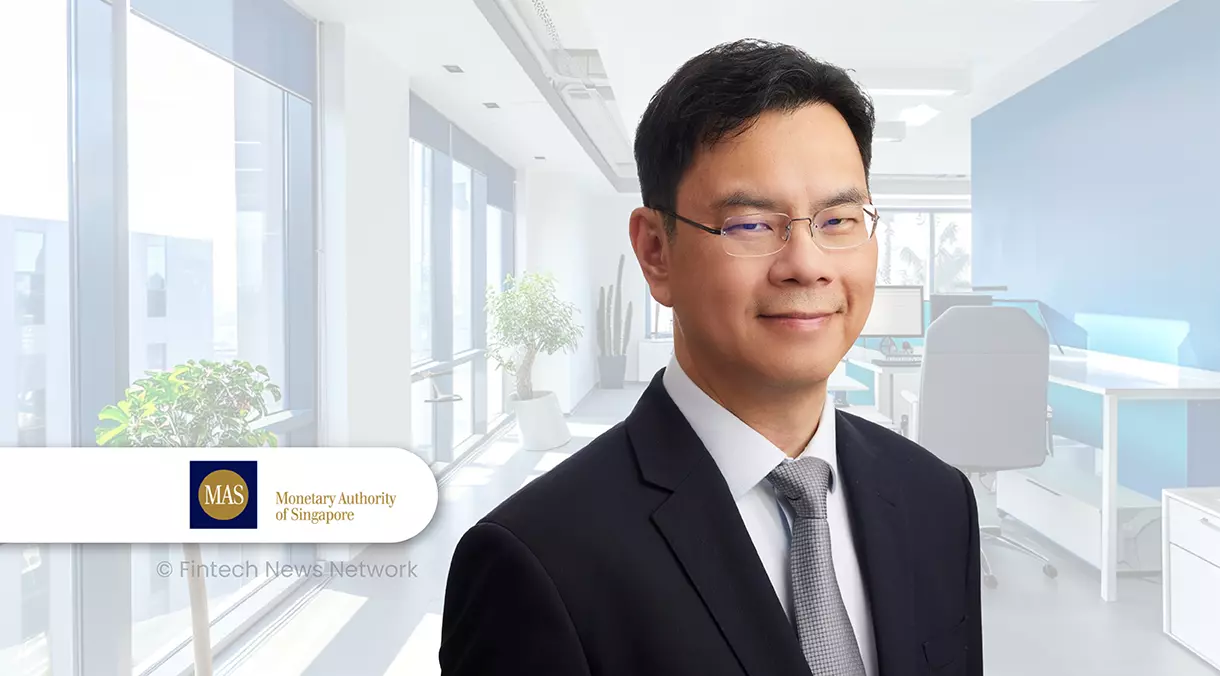
The Monetary Authority of Singapore (MAS) plans to use wholesale central bank digital currency (CBDC) to settle tokenised MAS Bills. MAS Managing Director Chia Der Jiun outlined the plans at the INSEAD Digital Finance & Agentic AI Summit on 9 October. The initiative aims to bring tokenised assets and digital central bank money onto common infrastructure to support settlement finality. MAS made wholesale Singapore dollar CBDC available through its Singapore dollar Test Network in 2025 . Its first successful trial involved the settlement of interbank overnight lending transactions between DBS, OCBC and UOB. Chia Der Jiun “As usage of private digital money scales, CBDCs will ultimately be needed to anchor monetary stability,” Chia said. Through its BLOOM initiative , MAS is working with the industry on domestic and cross-border settlement using tokenised bank deposits and regulated stablecoins. The regulator has also consulted on legislative amendments to implement its Single-Currency Stablecoin framework , covering reserve backing, capital requirements, redemption and disclosure. MAS Pushes for Wider Adoption of Tokenised Assets The regulator is working to expand commercial tokenisation through Project Guardian , with adoption still largely confined to smaller ecosystems. Its Global Layer One (GL1) initiative is also developing common standards to improve interoperability between digital financial networks. MAS recently published Version 1.1 of its Safeguards for Agentic Finance at Runtime (SAFR) white paper . It also released an open-source reference implementation to support controls over AI agents executing financial transactions. Featured image: Edited by Fintech News Singapore, based on image by ahmadzada via Magnific The post MAS Plans Next Phase of Wholesale CBDC Settlement With Tokenised Bills appeared first on Fintech Singapore .
- Fintech5 hours ago
Syfe Launches Income+ Max Targeting Up to 10% Annual Payouts
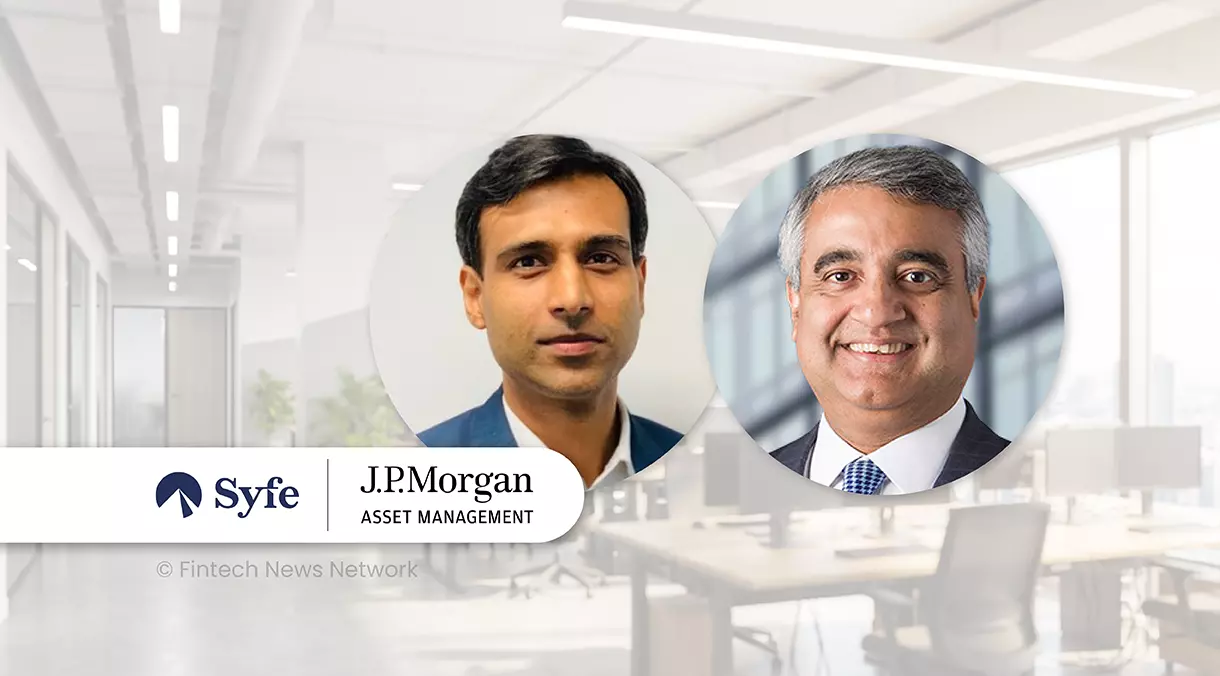
Syfe has launched Income+ Max, a multi-asset income portfolio developed with J.P. Morgan Asset Management and two other ETF managers. The strategy uses options on equities and gold to target annual payouts of 8% to 10%, although distributions are not guaranteed. The digital wealth platform, which manages over S$20 billion in assets across APAC, aims to address equity concentration and market volatility through diversified income sources. How Income+ Max generates income The portfolio generates income from equity dividends, bond coupons and premiums collected by selling call options on equities and gold. Option premiums generally increase during periods of heightened market volatility, potentially providing additional income. Income+ Max allocates 55% to equities, focusing on high-quality companies with relatively lower volatility, and 35% to fixed income with short-to-medium duration exposure to limit interest rate sensitivity. Syfe allocates the remaining 10% to gold to diversify the portfolio when stocks and bonds move in the same direction. J.P. Morgan Asset Management supports credit and emerging market selection, while REX Advisors and First Trust Advisors also provide ETFs for the portfolio. Syfe automatically rebalances the portfolio every six months and reinvests distributions by default. Investors with at least S$5,000 invested can opt for monthly cash payouts. Addressing portfolio concentration Syfe highlighted the risks of unmanaged portfolio drift, citing an example where a 60/40 equity-bond allocation at the end of 2022 would have shifted to 73/27 by August 2026 without rebalancing. Ritesh Ganeriwal “Stock dividends are sitting near record lows, and chasing them means piling into the same few names as everyone else,” said Ritesh Ganeriwal, Managing Director and Group Head of Investment & Advisory at Syfe. “Gold helps cushion the portfolio when markets turn, and fees are in line with passive index funds,” he added. Ayaz Ebrahim “This collaboration re
- Fintech5 hours ago
Emirates NBD Launches AI Travel Assistant with Visa and Tripadvisor
Emirates NBD has launched what it describes as the UAE’s first bank-led AI Travel Assistant, built in partnership with Visa and Tripadvisor . The conversational tool is accessible without a bank account or login, available free via the Emirates NBD website and a dedicated Tripadvisor domain, and is positioned by the bank as part of a broader shift towards ecosystem-led digital banking. Rohit Garg, group head of retail products and chief digital officer of retail banking and wealth management at Emirates NBD The platform lets users describe their preferences, budget and travel style in plain language, returning tailored itineraries, destination picks and local recommendations. It draws on Tripadvisor’s repository of more than one billion reviews and eight million listings, with what the partners describe as enhanced customisation across the 15 destinations most popular among UAE travellers. Relevant Visa cardholder perks, including hotel discounts and car rental offers, surface dynamically within the conversation. Rohit Garg , group head of retail products and chief digital officer of retail banking and wealth management at Emirates NBD, said: “By combining cutting-edge AI with world-class insights from our partners, we are empowering travellers with innovative and personalised digital experiences that simplifies the process for our customers around one of their biggest passion points.” Strategic context The product is framed internally as a lifestyle extension rather than a transactional banking feature, reflecting a pattern seen across Gulf and South-East Asian retail banks where the battle for primary customer relationships is increasingly fought through non-financial engagement. Emirates NBD points to internal data showing the average UAE resident plans seven trips annually and can spend up to three months researching a single trip, an observation consistent with the broader fragmentation of the online travel market following the retreat o
 SponsoredWellbeing Nutrition
Sleep Better, Live Better: Premium Quality Supplements Starting at Rs. 649!
- Fintech5 hours ago
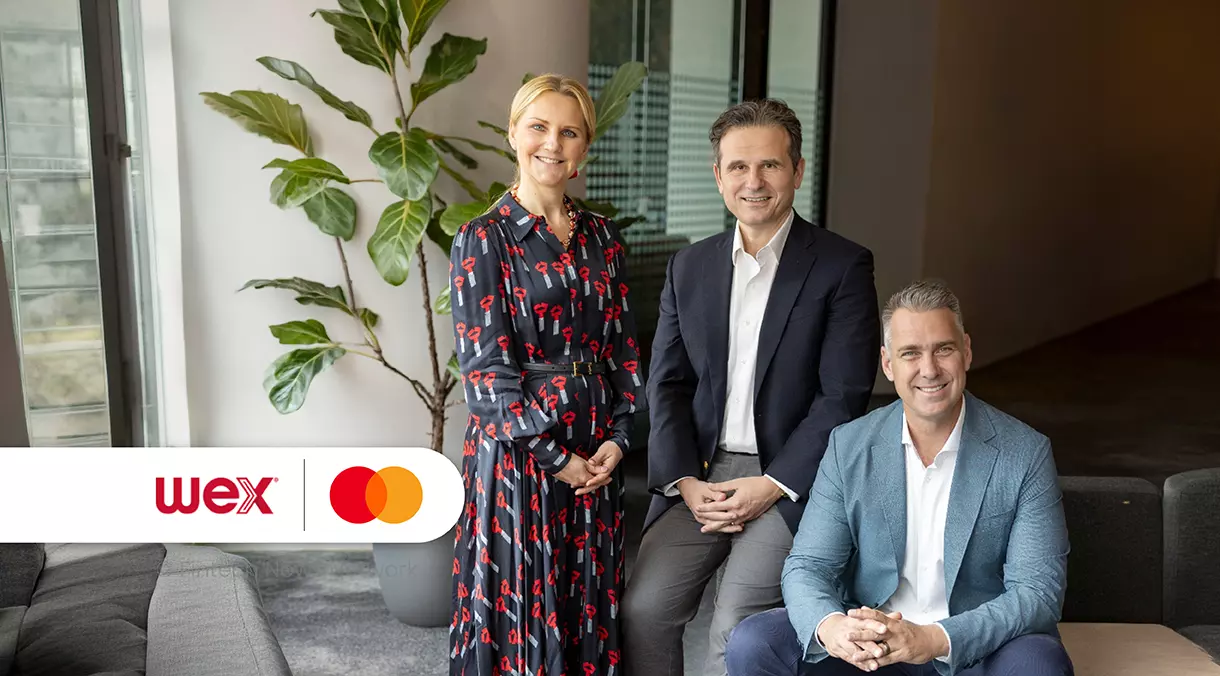
WEX and Mastercard Plan Unified Fleet Payments Platform for APAC
WEX and Mastercard are joining forces to bring fuel, maintenance and other fleet expenses onto a single payment platform across Asia Pacific. The partnership combines Mastercard’s global payments network with WEX’s more than 40 years of fleet management experience. The proposed platform aims to consolidate fuel, vehicle maintenance, tolls, parking and broader business expenses currently managed through separate payment systems. It will offer real-time spending controls, automated reporting and transaction-level data, including fuel types and litres purchased. Businesses operating conventional, hybrid and electric vehicles will also be able to manage payments through a single account and receive one consolidated invoice. According to figures cited by the companies, fleet-card transaction volumes in Asia Pacific were estimated at US$310 billion in 2025, accounting for 31 percent of global volumes. The market is projected to grow by 14.3 percent annually through 2030. Matt Arthur “In 2026, the competitive advantage for fleets is found in simplicity. WEX is already a global pioneer in travel and corporate virtual payments; by joining forces with Mastercard in this new capacity, we are bringing that same engine of innovation to the APAC mobility sector,” said Matt Arthur, VP and General Manager, APAC Mobility at WEX. Anouska Ladds “Our collaboration with WEX is an essential example of how we scale with impact. By combining our global network with their deep industry expertise, we’re helping businesses move faster, operate smarter and prepare for what’s next. Together, we’re setting a new standard for a future-ready mobility ecosystem,” said Anouska Ladds, Executive Vice President, Commercial and New Payment Flows, Asia Pacific, Mastercard. The companies expect the programme to process billions of dollars in annual transactions as it expands across regional markets. They have not disclosed a rollout timeline or identified the initial markets. Fea
- Fintech5 hours ago
Ledger Probes Suspected US$86M Crypto Theft Linked to Malaysia’s CryptoBilis
French hardware wallet maker Ledger is investigating reported crypto thefts linked to Malaysian reseller CryptoBilis , with an independent researcher estimating suspected losses at over US$86 million. According to The Block , on-chain investigator Specter estimated the losses after tracing funds sent to suspected theft addresses across Bitcoin, Ethereum and Tron. Ledger has yet to confirm the amount stolen or the total number of affected customers. The French company manufactures hardware wallets that store the private keys needed to access cryptocurrencies offline. CryptoBilis, headquartered in Petaling Jaya, Selangor, is listed as an authorised Ledger reseller in Malaysia, Indonesia and the Philippines. Ledger Orders CryptoBilis to Halt Sales Amid Investigation On 9 October, Ledger announced through its official support account on X that it had asked CryptoBilis to suspend all sales and shipments of its devices as a precaution. The company initially advised customers who had purchased devices from CryptoBilis within the previous 90 days not to activate them if they had not already done so. Those who had set up their devices were advised to consider transferring their cryptocurrency to a new Ledger device using a newly generated recovery phrase. In a subsequent update on X , Ledger confirmed that one affected customer’s device contained an unauthorised hardware implant. It has not established whether other devices were compromised in the same way. In a later 72-hour update, Ledger stated that all confirmed cases linked to the 9 October thefts involved devices sold through CryptoBilis. It maintained that the number of affected devices was limited and that its internal systems and direct sales channels remained unaffected. Ledger also confirmed that CryptoBilis had stopped selling hardware wallets. The company is working with authorities and contacting affected customers while reviewing its reseller controls and anti-tampering measures. It has also reminded dis
- Fintech5 hours ago
Maybank Islamic Opens Applications for Credit Card With Fixed 14% Rate
Maybank Islamic has opened applications for its Nadi Mastercard Credit Card-i , offering a fixed 14 percent annual profit rate and no annual fee. The card comes amid a broader push in Malaysia to introduce basic credit cards with annual financing rates capped at 14 percent, compared with the existing industry ceiling of 18 percent. First announced in July 2026, the Shariah-compliant card became available for applications in October. The fixed rate also applies to cash advances, while profit charges are calculated only on the outstanding principal without compounding. Cardholders can apply for a one-time conversion of eligible outstanding balances from other Maybank credit cards to the Nadi Mastercard. The card is available to Malaysians aged 21 to 65 with a minimum annual income of RM24,000. Supplementary cardholders must be between 18 and 65 years old. Applications can be submitted through the MAE app, Maybank2u website or Maybank branches and card centres nationwide. Maybank Islamic is also running a welcome campaign from 7 to 31 October 2026. The first 1,000 approved principal cardholders who complete at least five retail transactions of RM10 each within 60 days of approval will receive a RM50 Petronas gift card. Featured image: Edited by Fintech News Malaysia, based on image by Magnific The post Maybank Islamic Opens Applications for Credit Card With Fixed 14% Rate appeared first on Fintech News Malaysia .