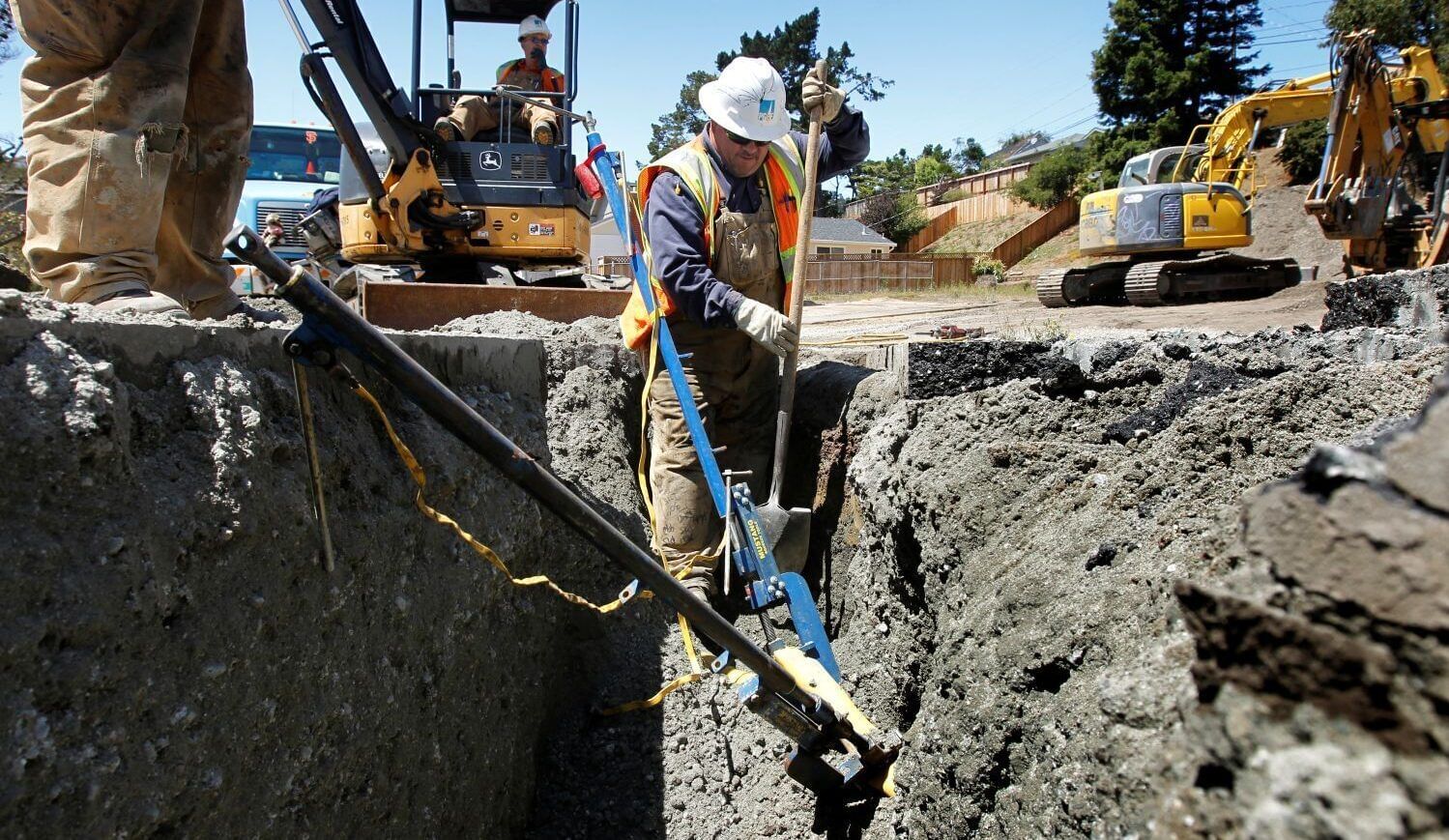
When one of the nation’s biggest investor-owned utilities, Pacific Gas and Electric, wanted to replace Merrian Borgeson’s aging gas service line in Berkeley, California, she asked the company not to do it.
Borgeson, who is the California policy director for climate and energy at the nonprofit Natural Resources Defense Council, explained that the repair wasn’t necessary: She was in the process of fully electrifying her home and would be replacing her stove — the only gas appliance left in the house — with an induction version during an upcoming kitchen remodel. At that point, she planned to request that the gas line be shut off.
But PG&E told her it couldn’t wait. That week, the utility dug up her yard and swapped in a new pipe to send gas from the distribution main line to her home.
Borgeson wasn’t charged for the service — at least not directly. The upgrade, which in PG&E’s service area typically costs $20,000 to $30,000, plus interest and operation and maintenance costs, gets paid for by all gas customers over the life of the infrastructure.
A few years later, the new pipe sits unused in the ground.
“Now, I have no gas in my house,” Borgeson said. “But the customers all around me are paying for that pipeline for the next 50 years.”
A new law, the Home Energy Choice Act ( Assembly Bill 2313 ), will require utilities to give households scheduled for a service line replacement the option of getting the new line or taking a financial incentive potentially worth several thousand dollars to get off gas instead.
Source link