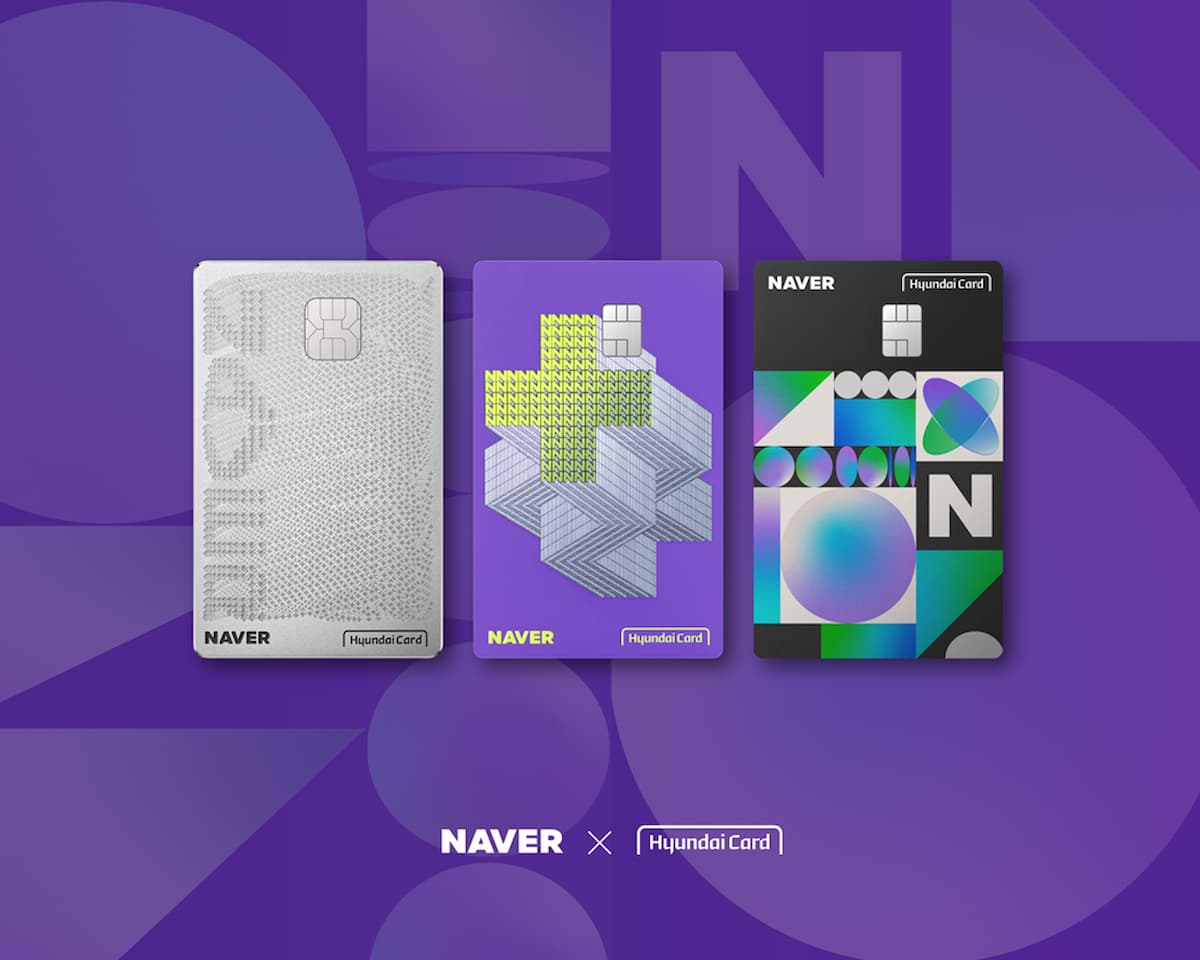
The project began in mid-2025 when Hyundai Card and CEKAI started exploring how to reframe the card as a medium for motion rather than a static graphic surface. Rather than designing in two dimensions and adding a sense of depth afterwards, the teams developed the visual concept and its dynamic qualities simultaneously. Korean technology group NAVER, whose brand assets anchor the card range, provided overarching design direction throughout.
After more than 100 design drafts, the collaboration produced three card variants. Plus is positioned around the benefits of NAVER Plus Membership. Neo uses colour gradients and geometric graphics to project what the release describes as futuristic energy. Logo Metal, the premium variant, uses motion graphic techniques to make the NAVER logo appear to shift depending on the viewing angle.
Hyundai Card’s Design Lab handled the translation from screen concept to manufactured product. Laser processing was used to render fine particle effects on the metal plate, while specialist films were applied to the two plastic cards to amplify the graphic movement. The manufacturing process required close co-ordination between the creative and technical teams to preserve the motion illusion at the scale and material constraints of a payment card.
Kota Iguchi, CEKAI’s creative director and motion designer, said: “Credit cards exist as physical plates, but we can easily imagine a future where they evolve into digital displays or take on entirely different forms. This project was incredibly exciting because of those diverse possibilities.”
The announcement is primarily a product design story rather than a financial or regulatory event, but it sits within a broader pattern worth noting.
Source link