Space Tech
- Space Tech1 day ago
A piece of Mars older than 4 billion years reveals its ancient watery history
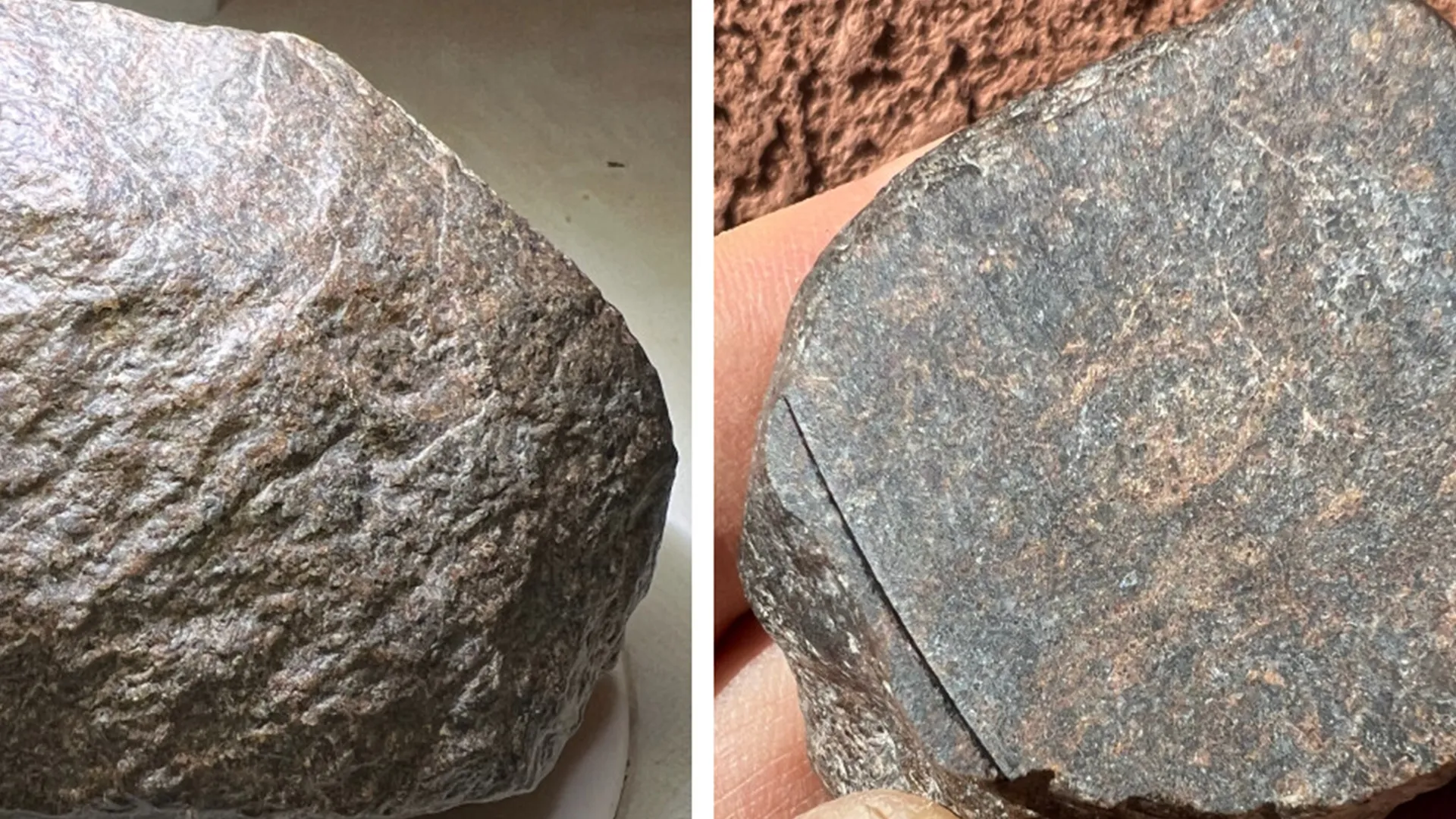
Much of Mars’ surface preserves a geological history stretching back billions of years, yet most Martian meteorites found on Earth come from considerably younger periods. This leaves scientists with few physical samples from the planet’s earliest history. Now, a rose-colored rock recovered from the Sahara Desert could help fill that gap. Named Teghaza 001, the 800-gram meteorite preserves a piece of Martian crust that formed at least 4.1 billion years ago, carrying clues to how the planet’s interior, surface, and water systems evolved. This discovery, described in detail in a recent study, is particularly important because the meteorite does not simply offer another glimpse of ancient Mars . Its unusual mineral composition points to a previously unsampled type of crust, while signs of water-related alteration suggest that liquid interacted with Martian rocks during the planet’s earliest geological history. “This is really our first piece of Martian crust from a part of Mars we’ve never had a sample of before. It records interactions of water and rock and maybe even an imprint of the Martian atmosphere as it was losing water,” Lee Saper, one of the study authors and a scientist at NASA, said . A different kind of Martian rock Teghaza 001 was discovered in Mali’s Sahara Desert in 2022 and initially identified as Martian through its oxygen isotopes. These isotopes act as geochemical fingerprints, allowing researchers to distinguish material originating from Mars from rocks belonging to Earth or other planetary bodies. However, its real significance emerged when scientists examined its internal structure and mineral composition. The rock contains a distinctive mixture of igneous minerals, formed when molten material cooled and solidified. Its texture suggests that the magma cooled relatively slowly beneath the surface rather than erupting as lava. This combination makes it different from other ancient Martian meteorites. ALH8400
- Space Tech1 day ago
China space station sets new record, cools atoms to 9.7 picokelvin, could help new experiments
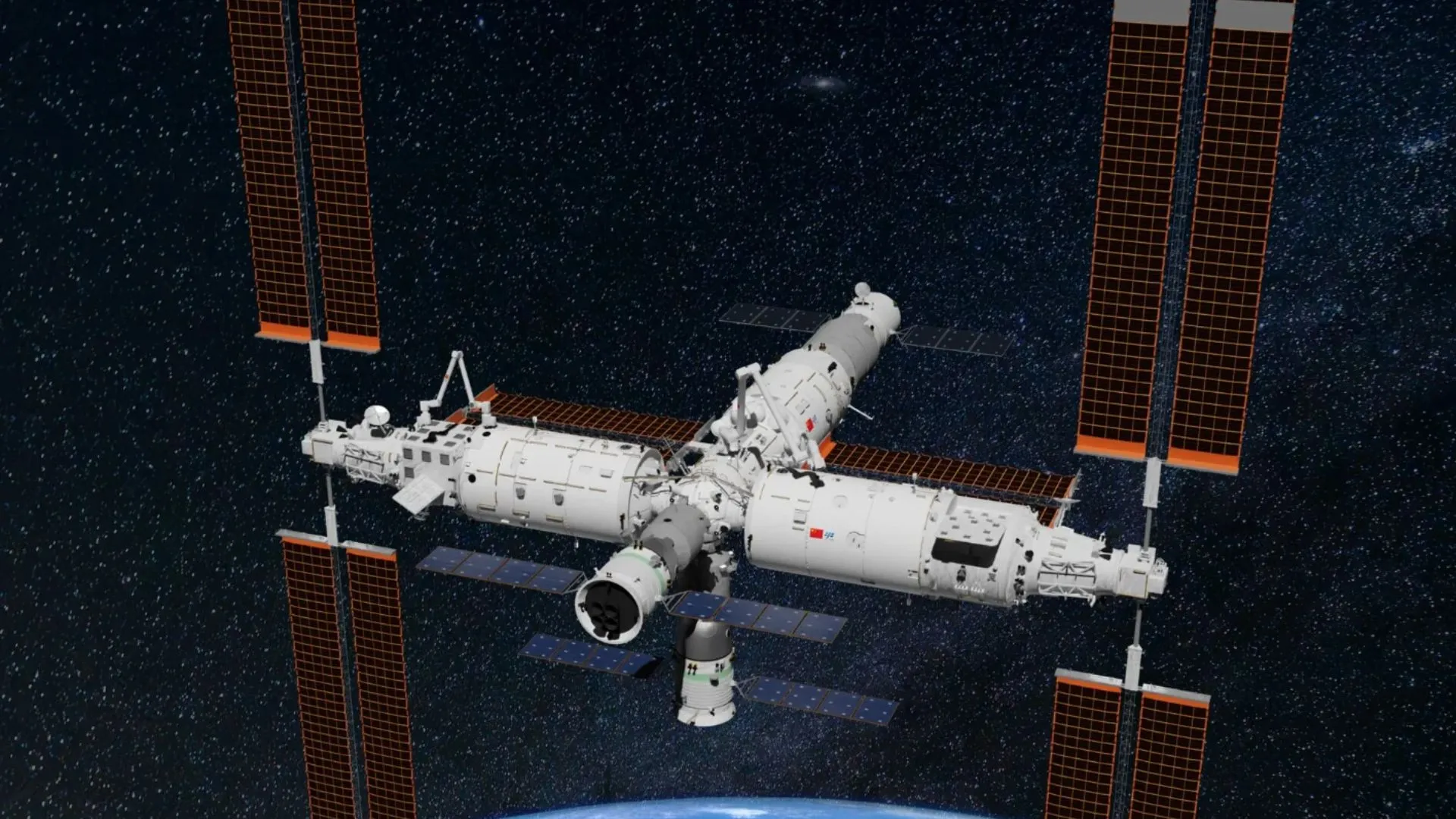
A cloud of rubidium atoms was tracked for seven seconds after researchers released it from a laser trap aboard China’s space station. By tracking that motion in three dimensions, the team measured a record-low equivalent temperature of 9.7 picokelvin, about a quarter of the previous record. The experiment used microgravity to produce and manipulate a Bose–Einstein condensate, a state in which atoms behave collectively as a single quantum wave. The ability to watch the cloud expand for several seconds could give researchers more time to probe unusual states of matter and make precision measurements in orbit. Why the team went to orbit On Earth, gravity pulls atoms downward inside a trap, making them harder to hold as the confinement weakens. Researchers can counter that pull with magnetic levitation, but doing so requires the atoms to share the same internal spin state. A trap made from focused laser beams gives researchers more flexibility over those states. Earlier experiments found ways to give atoms a brief period of free fall. A drop tower produced the previous record of 38 picokelvin and gave researchers two seconds to observe the cloud’s expansion. The International Space Station’s Cold Atom Laboratory reached 52 picokelvin using magnetic trapping and matter-wave lensing, with one second of free expansion. The orbital setup gave the team a longer period of microgravity than a ground-based drop tower could provide. A laser trap slows the cloud The team started with around 20,000 rubidium atoms . Laser cooling slowed the atoms, and evaporative cooling removed the most energetic ones, allowing the remaining atoms to form a condensate inside an optical dipole trap. A magnetic-field gradient aided the initial cooling and helped produce a condensate that was less sensitive to magnetic disturbances. The researchers then moved the cloud into a wider optical trap and gradually loosened its grip. This step reduced the energy driving the cloud’s expansion after release.
- Space Tech1 day ago
How nuclear rockets offer NASA a high-speed pathway into deep space
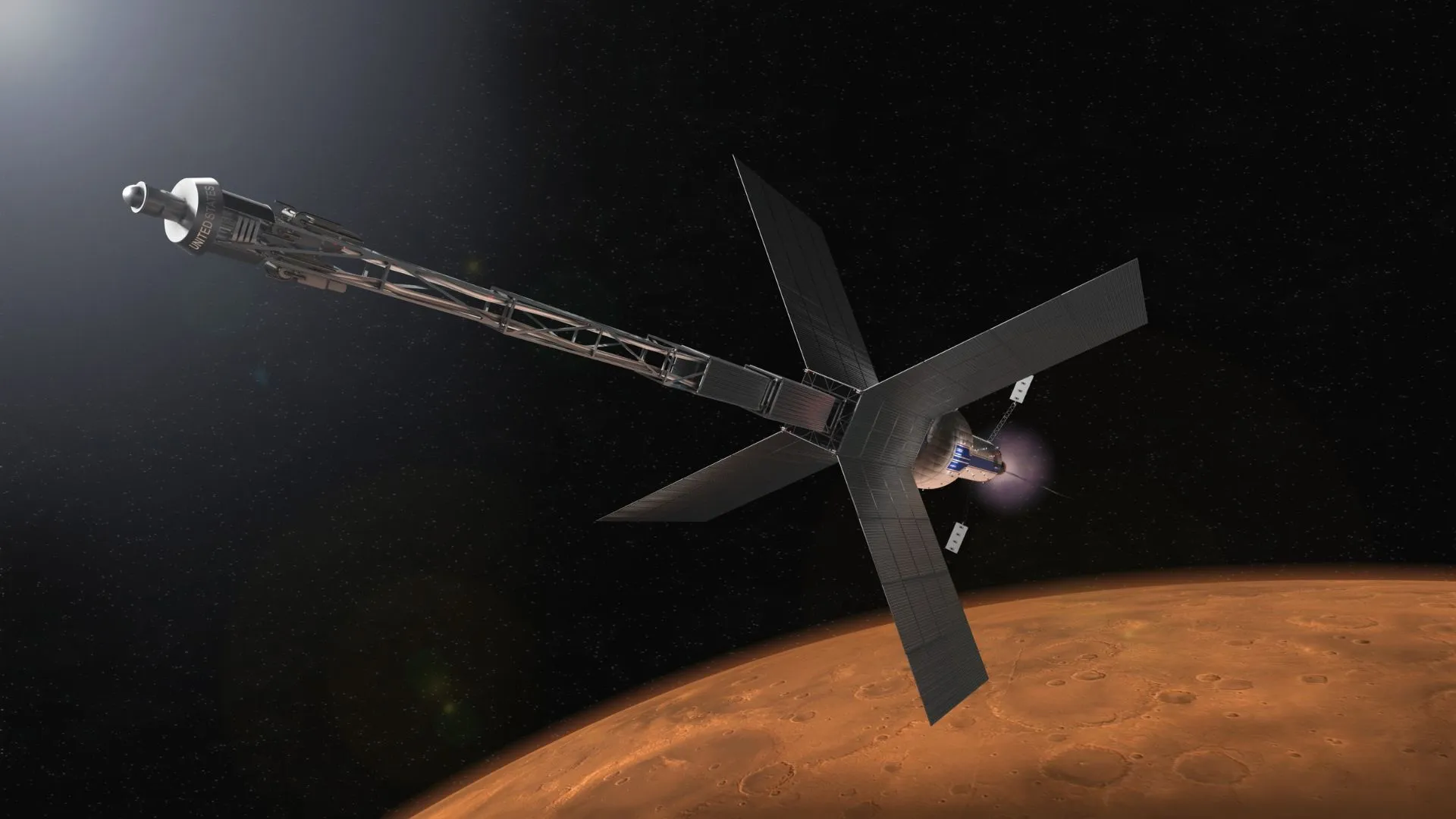
Someone has to dream big and take that bold step to reach for the stars and search for life in the vast universe. NASA has long been at the forefront of this mission, setting its sights on far-reaching destinations across our solar system — from the Moon and icy outer worlds to distant asteroids. But big dreams demand big ideas to conquer the immense challenges of deep space travel. For a long time, the power of our parent star has driven this journey, fueling robotic scouts across the cosmos. Solar panels have fueled countless orbiters, rovers, and satellites. However, the solar system is vast, and the Sun’s rays grow weak once a mission pushes past Mars. That is precisely why the focus is shifting toward nuclear-powered spacecraft to reach destinations once out of reach. What is a nuclear-powered spacecraft? Nuclear-powered spacecraft harness energy from atomic reactions rather than burning chemical propellants or capturing sunlight. These technologies fall into two distinct categories. Radioisotope systems use decaying radioactive materials like plutonium-238 to generate steady heat, which solid-state thermocouples then convert into electricity. These nuclear batteries have powered legendary long-haul missions like Voyager for nearly fifty years. Fission systems take a different approach. And use controlled nuclear reactors to produce massive amounts of electricity or direct thermal energy. This energy can power high-efficiency electric ion engines or heat propellant directly to create extreme thrust. Current prototypes in pipeline NASA is actively turning these concepts into hardware. The space agency is advancing nuclear electric propulsion projects and fission surface power designs. Prototypes like the SR-1 Freedom initiative aim to demonstrate fission power capabilities beyond Earth’s orbit. Programs like the SR-1 concept focus on building lightweight 10- to 40-kilowatt fission surface units to deliver continuous power for upcoming Moon and Mars b
- Space Tech2 days ago
SpaceX launches classified US military mission, Falcon 9 booster nails eighth landing
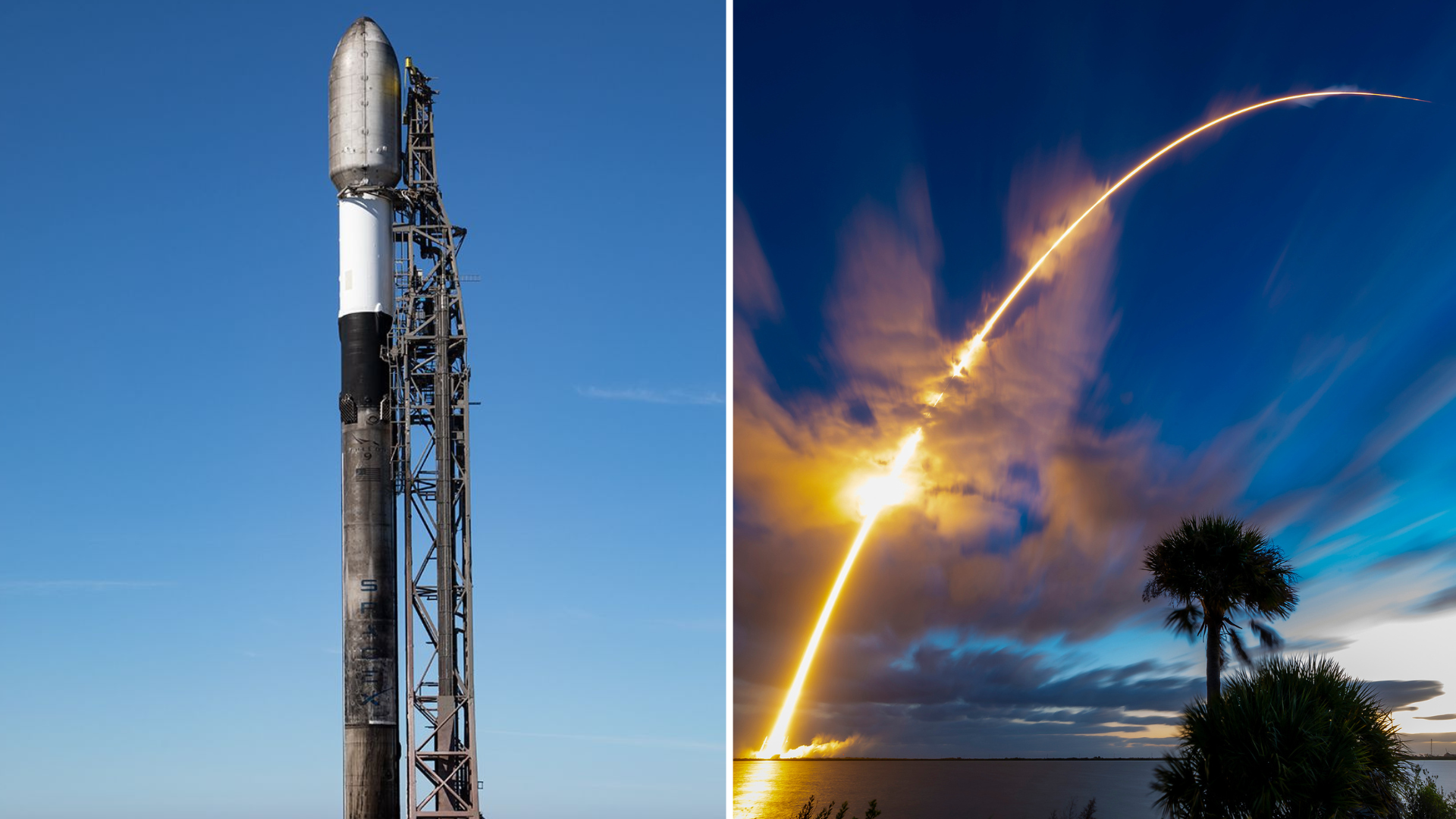
SpaceX has completed another national security launch for the U.S. military, sending its Falcon 9 rocket into orbit with the classified USSF-432 payload. The mission lifted off from Space Launch Complex 4E at Vandenberg Space Force Base in California on November 7. Its first-stage booster subsequently returned to Earth and landed on the Of Course I Still Love You droneship in the Pacific Ocean. Designated USSF-432 and R-4, the mission adds another classified payload to the U.S. Space Force’s growing orbital operations. Officials have not disclosed the spacecraft’s identity, capabilities, or exact mission objectives. However, its suspected connection to a military satellite program offers some clues about the technology involved. Inside the classified mission USSF-432 is part of a series of national security launches associated with the Space Force. Analysts have linked the R-series missions to the military’s Space Based Sensing and Targeting portfolio. The program aims to strengthen the military’s ability to gather information and support operations from orbit. The suspected payload could include satellites based on SpaceX’s Starshield platform. SpaceX developed Starshield specifically for government and national security customers. Its architecture draws on technology from the company’s commercial Starlink network. However, Starshield supports more specialized requirements, including secure communications and Earth observation. Liftoff! pic.twitter.com/v8mmRp00fG — SpaceX (@SpaceX) November 7, 2026 Neither SpaceX nor the Space Force has confirmed the payload’s composition. Its satellite count and individual capabilities also remain undisclosed. Any connection to Starshield therefore remains an assessment rather than an established mission detail. Falcon 9 booster returns The launch marked the eighth flight for Falcon 9’s first-stage booster, identified as B1095. Its previous assignments included the GPS III-8 na
- Space Tech2 days ago
Elon Musk teases SpaceX’s orbital supercomputers, says it will ‘blow people’s minds’
Elon Musk is preparing to take high-performance computing beyond Earth’s atmosphere. SpaceX plans to begin launching its StarMind SI computing systems into orbit in the third quarter of 2027. The company expects deployment to accelerate through 2028 and 2029. He says the project could reshape how engineers approach large-scale computing infrastructure. Speaking with investor Ron Baron at the 33rd Annual Baron Investment Conference in New York, Musk teased more details about the project. “When we unveil the details of the StarMind computer next year, it will blow people’s minds,” he said. SpaceX is developing its first orbital computing systems alongside NVIDIA. The initial hardware will center on NVIDIA’s Vera Rubin NVL72 platform. The partnership brings advanced computing hardware into a project designed for operation beyond traditional terrestrial data centers. Supercomputing moves into orbit Space-based computing could offer advantages beyond freeing data centers from land constraints. Musk also sees orbital infrastructure as an opportunity to rethink global data transmission. He discussed SpaceX’s upcoming Starlink Version 4 satellites during the interview. The next generation could deliver 10 times the capacity of Version 3. Musk said Version 3 already offers 10 times the capability of Version 2. When we unveil the details of the Starmind computer next year, it will blow people’s minds — Elon Musk (@elonmusk) November 6, 2026 Laser communication will play a major role in that upgrade. SpaceX plans to equip each satellite with 10 next-generation laser links. Each link could deliver data transmission speeds exceeding 10 terabits per second. Musk also outlined a more ambitious possibility involving more than 100,000 satellites. He suggested that roughly 100 laser links per satellite could eventually challenge traditional undersea communications cables. His argument centers on transmission physics and network geometry. Ligh
- Space Tech2 days ago
US defense giant accelerates NASA’s Moon capsule production for Artemis missions
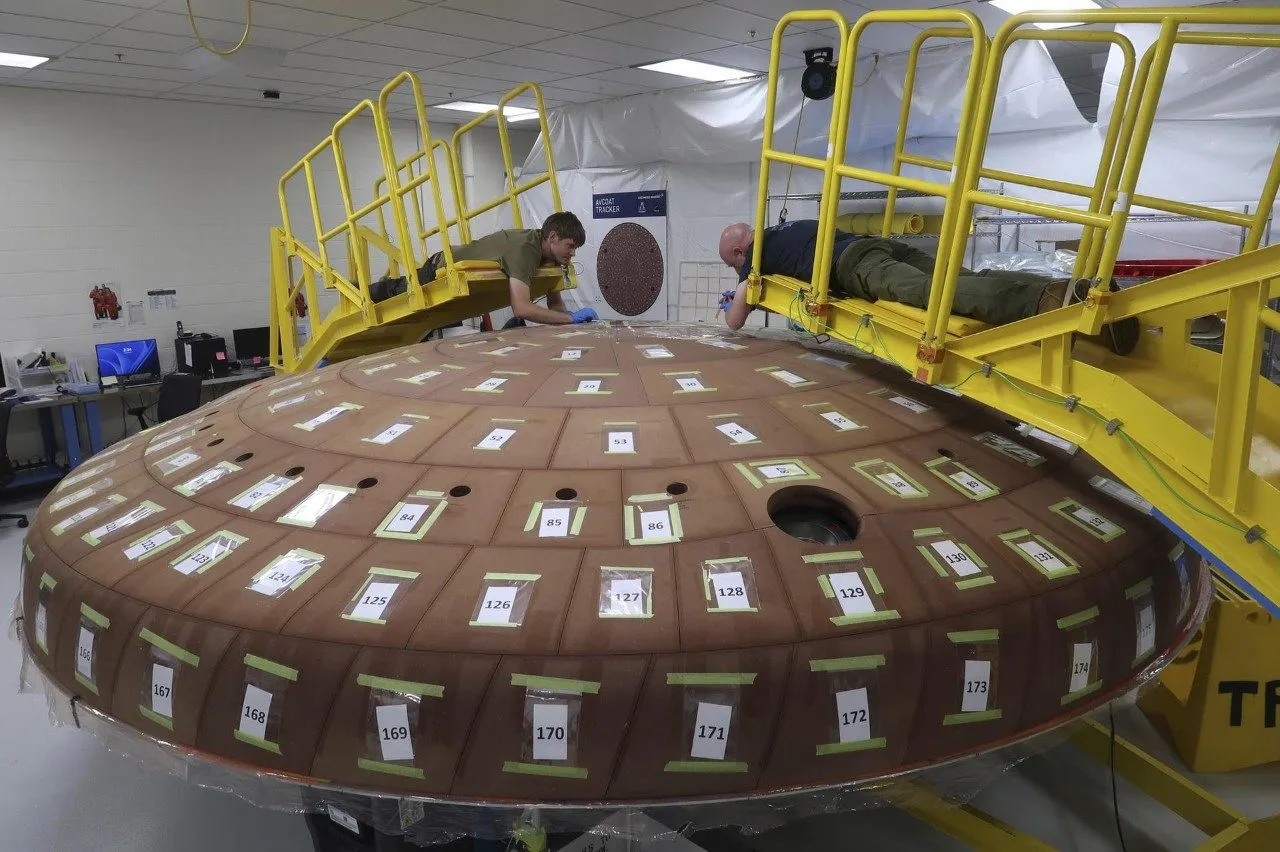
As NASA tightens its timeline to establish a permanent human outpost on the Moon, primary contractor Lockheed Martin is accelerating its manufacturing philosophy. The defense giant is turning the production of the Orion spacecraft into a streamlined assembly line designed to support NASA’s upcoming Artemis III, IV, and V missions. Overall, these efforts will support NASA’s revamped Artemis framework and Ignition directives designed to establish a sustained human presence on the Moon. Technicians analyze the heat shield tiles for the Orion Artemis IV spacecraft. Speeding up Orion production The Orion spacecraft is being designed to survive deep space while prioritizing human safety and high-rate manufacturing. Its life support system maintains a breathable environment for four crew members during extended flights. For atmospheric re-entry, the capsule features a 16.5-foot Avcoat heat shield built to withstand 5,000°F heat at speeds approaching 25,000 mph. Spacecraft operations utilize multi-redundant computers, data networks, and glass cockpit displays to allow automated monitoring and manual control. Transitioning from a “development mindset” to a “production mindset” requires changing how space hardware gets certified. Lockheed Martin experts and engineers are using data from previous flights to skip repetitive qualification testing, rather than treating every Orion capsule as an unproven prototype. Once a design is proven flightworthy, testing focuses exclusively on verifying build quality. “Once a design is qualified, acceptance testing can focus on verifying that each unit was built correctly,” said Tim Norick, Lockheed Martin Orion program hardware director. “We’re using experience from previous flights to reduce testing time and scope while preserving the must-do tests and evidence needed to confirm flight readiness and protect crew safety.” Lockheed Martin is also reusing flight-qualified hardware from pri
- Space Tech3 days ago
‘Physics Twin’ tool enables faster safety checks for close-range space maneuvers
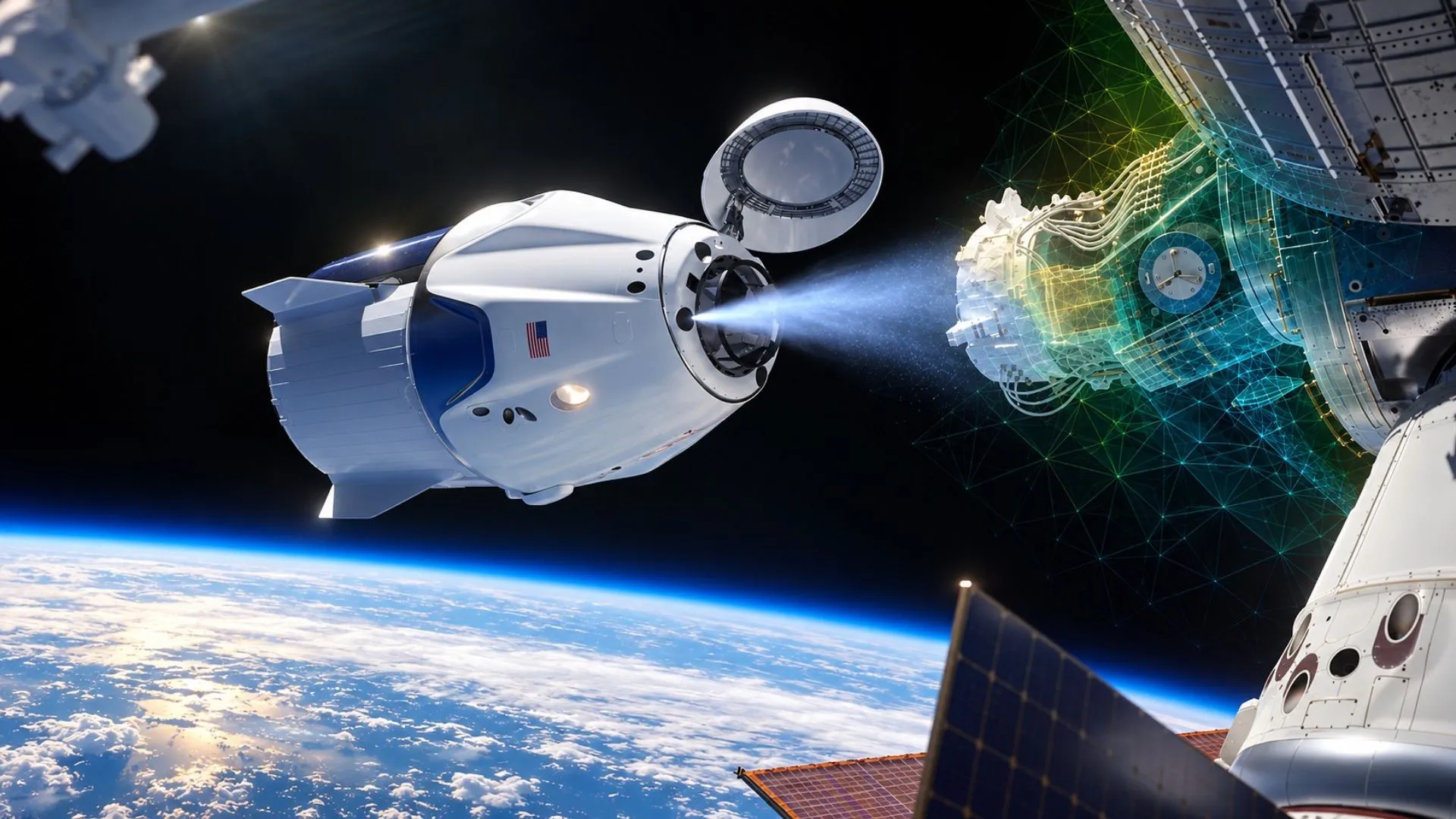
Flexcompute has developed a faster way to simulate how rocket thruster exhaust impacts nearby spacecraft in orbit. The firm has introduced its new Physics Twin for Space Plume Impingement, powered by a Physics World Model. According to the company, the tool is designed to help mission teams with complex rendezvous and proximity operations (RPO), such as autonomous docking, satellite servicing, and refueling. It evaluates thruster exhaust risks (forces, heating, erosion, and contamination) on nearby spacecraft. Existing simulation methods take days to calculate these complex particle interactions; hence, this new development is beneficial. Safer space docking Commercial space operations like autonomous docking , satellite servicing, and in-orbit refueling face severe risks from plume impingement. Exhaust from a thruster can destabilize nearby vehicles , damage outer surfaces, or obscure navigation sensors. Previously, Direct Simulation Monte Carlo (DSMC) predicted these high-velocity particle collisions. DSMC requires massive computational resources, restricting mission teams to testing only a limited number of flight paths. Flexcompute offers a new solution to overcome these computational limitations. This tool reduces long computational delays. It could help engineers and autonomous AI flight agents to simulate hundreds of close-range maneuvers in a fraction of the time. The technique is Tokenized Physics . The system combines neural networks with a novel Boltzmann solver within a unified framework to deliver DSMC-grade precision at groundbreaking speeds. Flexcompute bases its architecture directly on physical laws, avoiding the fragility of typical AI surrogate models when encountering unfamiliar scenarios. The software adapts instantly to new craft geometries and firing sequences without requiring retraining. “Flexcompute’s Tokenized Physics approach has the potential to speed up analysis ~200X compared with Direct Simulation Monte Carlo, allowi
- Space Tech4 days ago
Rover-deployed nodes could deliver 100 kW of power to support future Moon missions
Astrolab plans to build a lunar power and communications network capable of delivering more than 100 kilowatts (kW) of electricity using utility nodes deployed by its FLEX rovers. The company unveiled the Lunar Utility Module for Industrial Services (LUMIS) on November 4, describing it as a system designed to provide energy, connectivity, and data services to customers operating on the Moon. Initial LUMIS demonstration nodes are designed to generate 2 kW of power each, while future versions could reach 20 kW. Multiple units could be delivered on a cargo lander, transported by a single FLEX rover and connected to form a network exceeding 100 kW. Astrolab says this approach could provide substantial power before anticipated nuclear energy systems become available, without the regulatory and safety requirements associated with nuclear installations. The announcement also marks the expansion of Astrolab’s business beyond lunar rovers. Its newly introduced Lunar Operating System (LUNAR OS) combines FLEX mobility systems with LUMIS power, communications and data services to support longer-term human and robotic operations. Rovers position lunar infrastructure Unlike conventional infrastructure delivered to a fixed landing site, LUMIS nodes could be transported tens of kilometers across the lunar surface after landing. Astrolab’s FLEX rover would carry the equipment to locations with better sunlight exposure and communications coverage. This separates the choice of a safe landing location from the positioning of operational infrastructure, potentially allowing more equipment to be delivered with fewer lunar flights. The distinction is particularly important near the Moon’s south pole, where small changes in terrain can affect solar exposure and direct visibility of Earth. Astrolab said moving infrastructure by just 50 meters could result in hundreds of additional hours of darkness or reduce near-continuous visibility of Earth to roughly half the time. The
 SponsoredDot & Key
Plushie Jelly Lip Balm Now at Only Rs. 284!
- Space Tech6 days ago
New virtual Earth model could help distinguish alien life from geology on exoplanets
Scientists have built a computer model of Earth without life to help determine whether distant planets could host living organisms or merely have conditions that resemble those of an inhabited world. Researchers at the University of Washington developed a simulation that models how chemicals move between a planet’s core, mantle, crust, surface and atmosphere over billions of years. The model could help astronomers identify atmospheric signals on rocky exoplanets that cannot be explained by geological and other non-biological processes. The distinction matters as scientists search for signs of life beyond our solar system. Astronomers have cataloged more than 6,000 exoplanets and are examining the atmospheres of promising worlds for gases that could indicate biological activity. However, finding a potentially habitable planet does not establish that life exists there. To address this challenge, the researchers simulated Earth’s geochemical evolution over five billion years, covering its formation around 4.5 billion years ago and extending roughly 500 million years into the future. The model excludes the influence of living organisms, allowing scientists to examine how a planet’s systems could evolve without biology. Simulating a lifeless Earth The simulation builds on an earlier model developed in the laboratory of Rory Barnes, an associate professor of astronomy at the University of Washington. Previous versions included the planet’s core, mantle, crust and stellar radiation but did not account for the surface and atmosphere. Lead author Samantha Gilbert-Janizek expanded the model to include those missing systems, creating a more complete picture of how chemicals move throughout a rocky planet. The simulation reproduced 19 planetary properties, including heat flow through Earth’s mantle. The model provides a baseline for understanding what a planet’s atmosphere might look like without life. Researchers can adjust its inputs to rep