A ship can switch off its generators, burn less fuel and reduce pollution while docked, yet still face a higher power bill. That is the financial challenge surrounding Portsmouth International Port’s new shore power system.
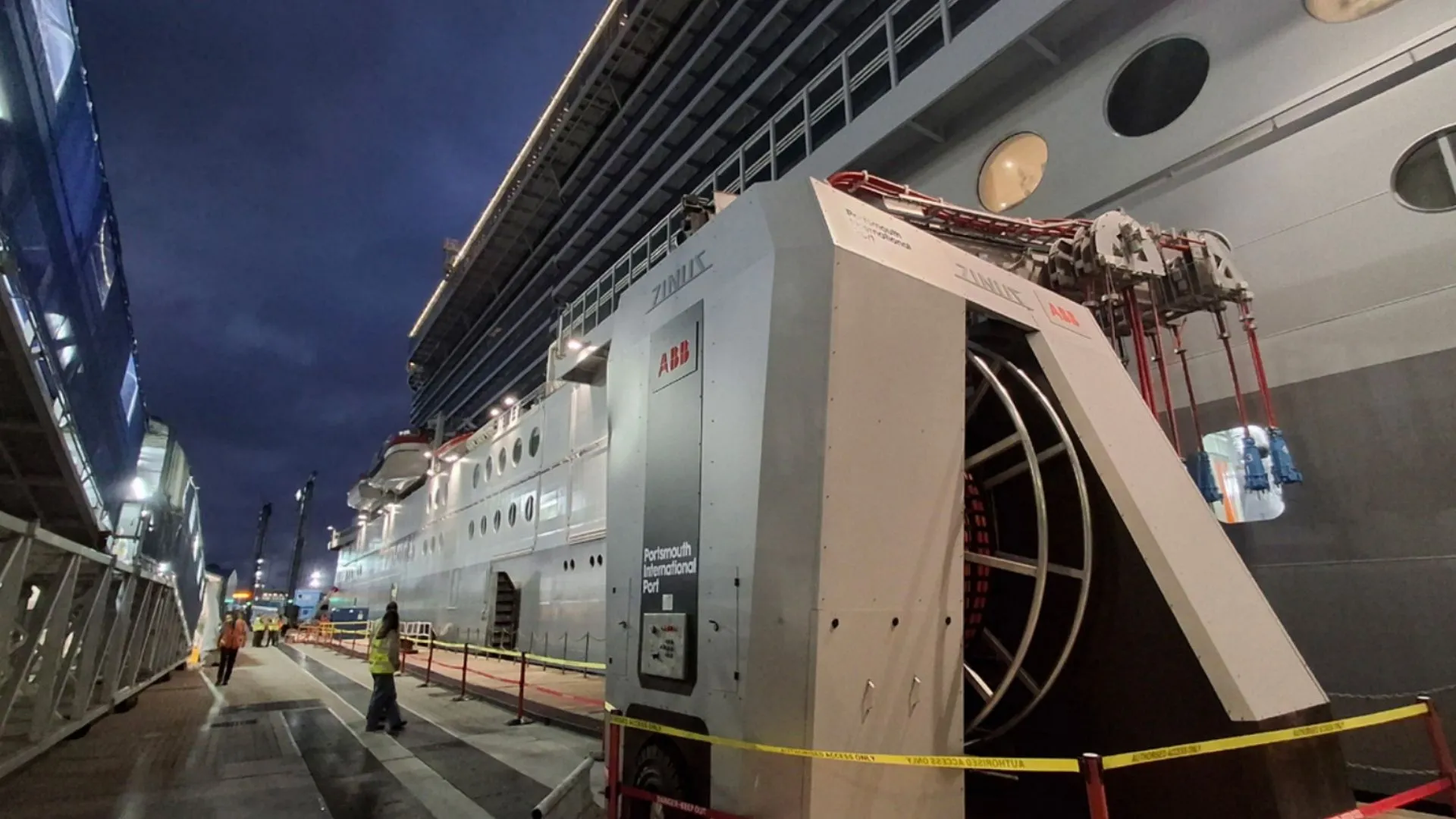
The port has launched the UK’s first high-voltage, multi-berth installation, allowing docked ships to connect to grid electricity instead of generating power onboard.
It supports Portsmouth’s ambition to become a net-zero facility, improve local air quality and contribute to the wider decarbonization of shipping.
However, high UK electricity prices complicate the economics. Shore power can replace fuel-burning generators without delivering the savings operators might expect, while rising grid-related charges add further pressure.
Shore power changes where a docked ship gets its electricity. Rather than keeping onboard generators running, vessels connect to the grid and switch those generators off.
For Portsmouth, this provides a way to address air pollution from marine engines while supporting its broader environmental goals. The principle is straightforward: supplying electricity from the shore reduces the need to burn fuel onboard while a vessel remains docked.
Portsmouth’s ambition sits alongside efforts at the ports of Long Beach and New York and New Jersey, as well as JFK’s Terminal One project, to make transport infrastructure cleaner.
But the environmental and financial arguments depend on different factors. Switching off generators reduces onboard fuel consumption. Whether it also saves money depends on the price of the electricity purchased to replace that generation.
Access to grid power therefore creates an alternative, rather than guaranteeing a cheaper option.
Source link