This article has been reviewed according to Science X's editorial process and policies. Editors have highlighted the following attributes while ensuring the content's credibility:
Zinc-air batteries can store significantly more energy than lithium-ion batteries, but until now have been virtually impossible to recharge. A team led by Professor Jörg J. Schneider from the Department of Chemistry has now demonstrated how a material made of iron, nickel and carbon enables the battery to be charged and discharged up to 500 times.
They have been used in hearing aids for decades: zinc-air batteries. They are technically mature and widespread, but they have one major drawback: once they are discharged, they end up in the trash.
Rechargeable versions have so far been rare on the market. Yet they have great potential. In theory, zinc-air batteries can store up to five times more energy than the lithium-ion batteries widely used today. The main stumbling blocks are their full rechargeability and the complex chemical processes within the cell, which are technically difficult to control. This is precisely what makes the topic so exciting for basic research.
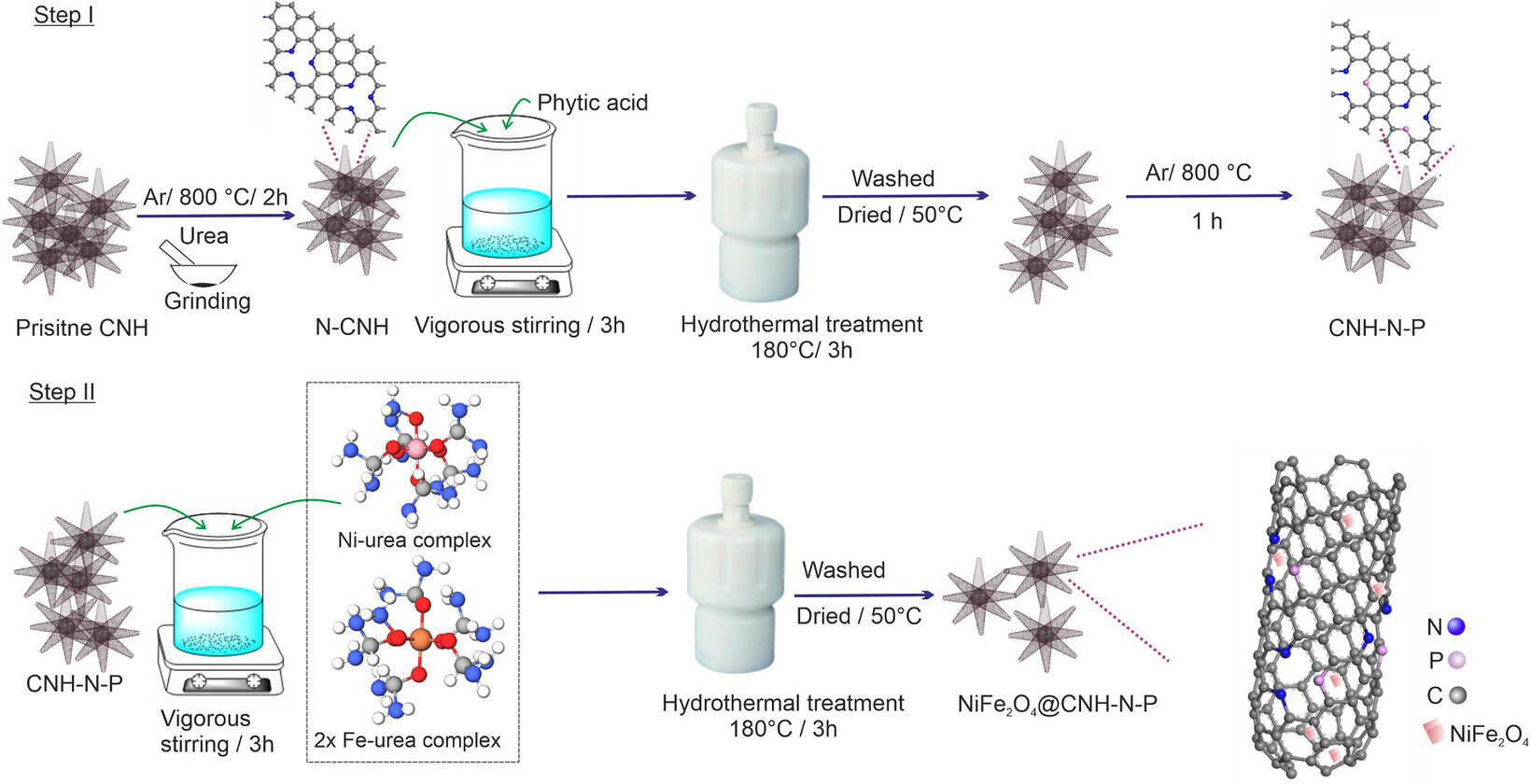
The research group led by professor Jörg J. Schneider from the Department of Chemistry at TU Darmstadt has now described an important step toward a rechargeable zinc-air battery in the journal Advanced Science. The team has developed a new material and investigated its electrochemical properties; this material acts as a particularly efficient and long-lasting catalyst within the battery.
The material is based on so-called spinels. This group of minerals is widespread in nature; one example is trevorite, a compound of nickel, iron and oxygen.
Source link