
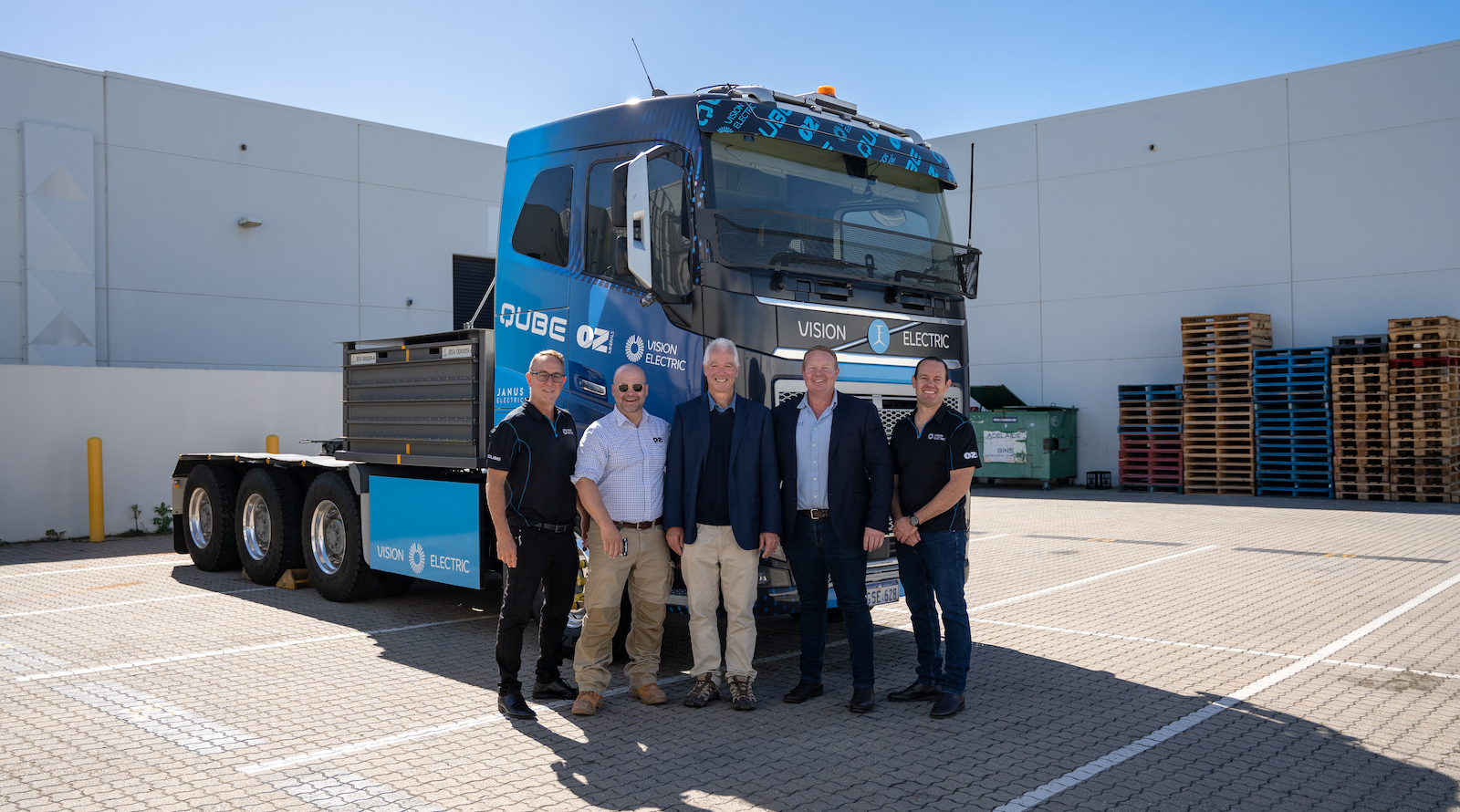
When I wrote an article a while ago about Janus Electric, an electric truck company in Australia that featured diesel semi electric conversions and battery swap, I put it away in my mind, until I happened upon an interview with Janus CEO Ben Hutt. The interviewer asked how much extra battery overhead there was for operating the trucks as a fleet in swap mode. He replied that it was about 30%. Janus would know, since they set up or operate heavy truck freight corridors. It turns out, I did calculations about that long ago that showed how this neat trick happens.
At first when I examined truck swap operations, I used a concept of unit charging transaction, the most basic element of battery replenishment. Over time, I drew illustrations of unit transaction to depict how they worked and how those unit cells expanded. If a picture is worth a thousand words, it is also a great way to see how something works, and show the math pictorially. When I came upon the Janus CEO quotation, I instantly remembered a concept I wrote about in a little article I called “EV Station & Charger Planning.” Let’s illustrate by comparing the simplest unit transaction and how it scales. This is an analysis with no waiting. Each expansion works by superposition of methods. Let’s do it by pictures. This is what a unit transaction looks like:
To get the unit transaction extended over longer distances we can do something I call chain staging.
Source link