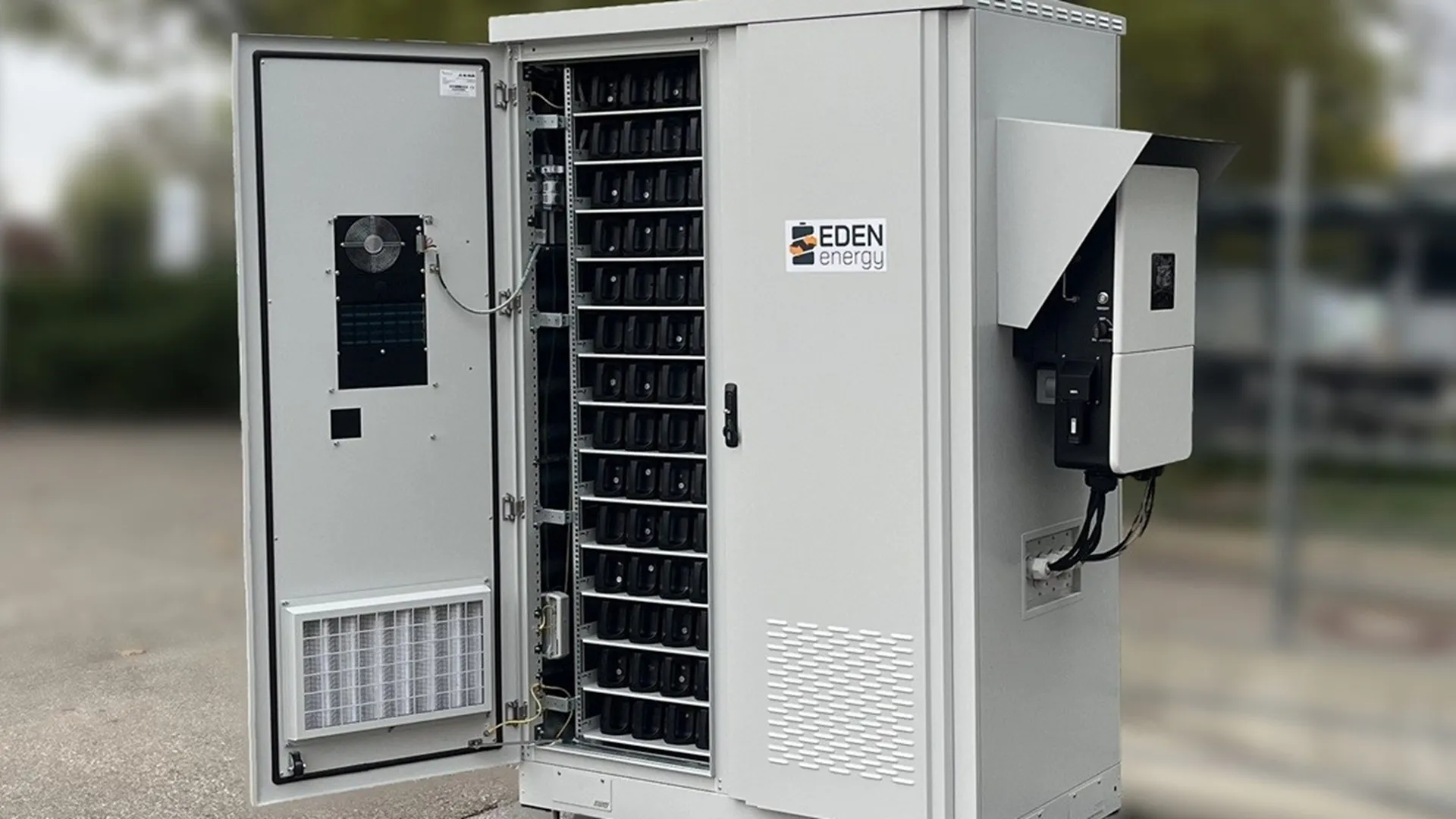
A German startup has given old e-scooter batteries a second life by using them to develop a high-performance, affordable, and sustainable 70-kilowatt-hour (kWh) energy storage system for industrial use.
The technology was designed by EDENenergy, a Freiburg-based cleantech startup and spin-off of the Fraunhofer Institute for Solar Energy Systems (ISE). It relies on modular units and advanced power electronics to connect used batteries into one larger energy storage system.
Florian Bierwirth, EDENenergy CEO and co-founder highlighted the importance of repurposing old batteries. “It allows different storage units to be connected and enables communication with various modules without having to disassemble the batteries,” he said.
According to the team, the batteries can retain over 90 percent of their original capacity, which makes them suitable for reuse in industrial energy storage. They could also enable businesses to store excess solar power while reducing battery waste.
Reports indicate that about one million batteries from e-bikes and e-scooters are prematurely discarded in Germany each year. However, many of them still have enough capacity to remain useful for several more years.
Reusing these batteries has been difficult because they come in different designs, cell types, and battery management systems. To address this, former Fraunhofer ISE researchers developed power electronics that can connect different batteries without dismantling them.
The startup initially focused on batteries from large e-scooter fleet operators to ensure a consistent supply of compatible units. Its first industrial storage system combines 112 used e-scooter batteries, each tested before installation.
While the team initially expected the batteries to retain around 80 percent of their original capacity, tests on the first 350 units revealed that some retained well over 90 percent.
Source link