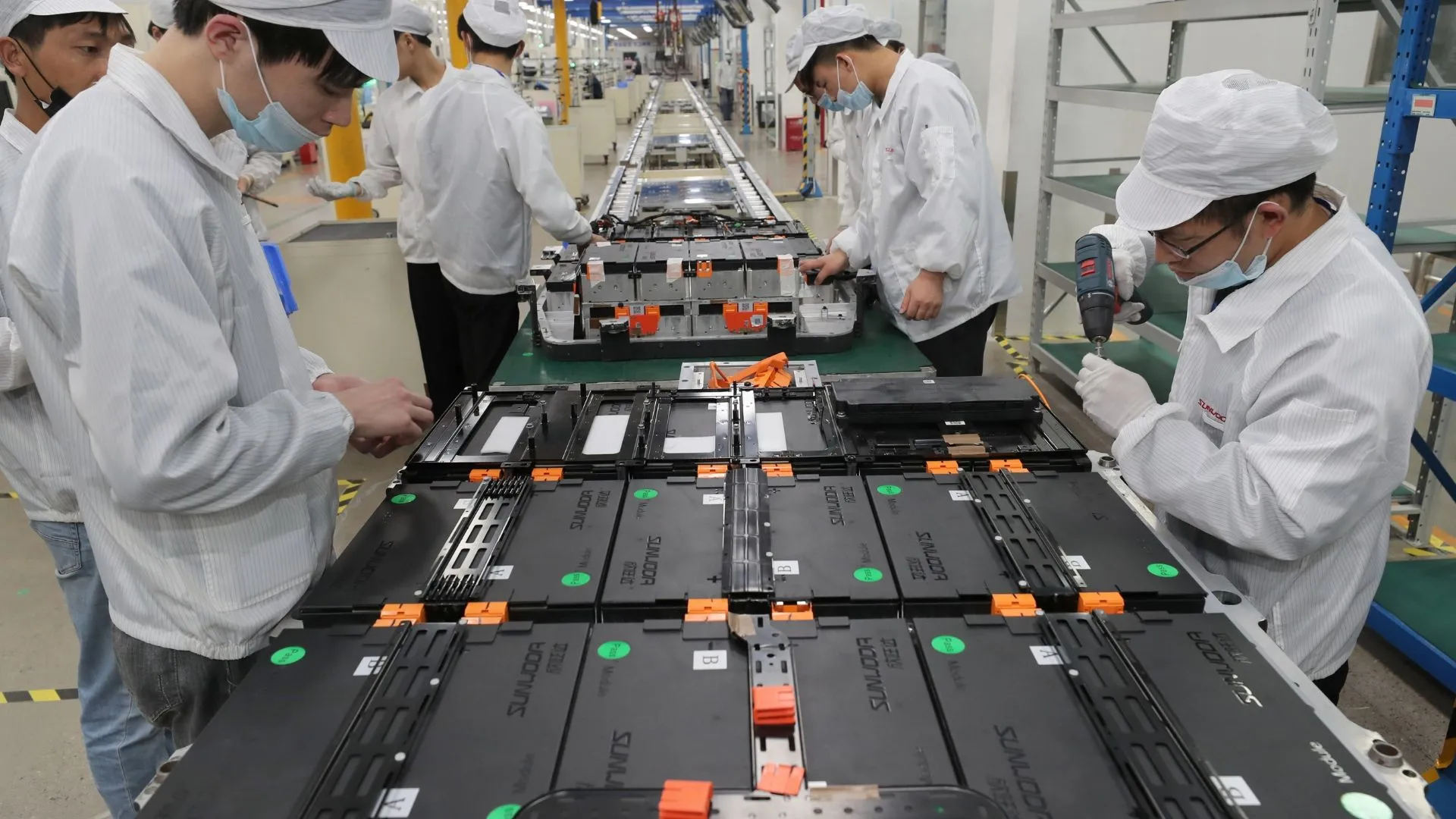
Next-generation all-solid-state batteries are gaining attention in the electric vehicle battery market, with several battery makers expanding research in the sector. Sunwoda, a Chinese battery manufacturer, has recently announced advances to its polymer-composite approach used for building solid-state batteries.
The company claimed that its latest 20 Ah all-solid-state battery, Xin Bixiao, withstood extreme thermal heat without catching fire or exploding.
Built with a nanoscale high-entropy silicon anode, a single cell of these polymer batteries showed strong thermal performance, passing the hot-box test with temperatures raised to 400 degrees Fahrenheit (200 degrees Celsius).
The model has previously achieved an energy density exceeding 400 Wh/kg and a cycle life of more than 1200 cycles at a low external pressure of 1 megapascals (MPa). This it stated is a breakthrough for long-range electric vehicles (EVs), offering a range of over 600 miles (1000 km).
With over 1,200 cycles and capacity retention above 80 percent, the company claimed the battery could support vehicle use for over a decade, assuming annual driving of more than 12,000 miles (20,000 km).
However, the company noted that the thermal and lifespan performance results were not obtained after integrating the entire battery pack in a vehicle. The testing process started earlier this year in May and is still ongoing.
Going forward, the company also plans to build a second-generation sulfide battery by next year at its pre-commercial solid-state battery production line. 2 gigawatt-hours (GWh), which is considered small in the battery world, making batteries enough for nearly 2600-2700 electric vehicles per year.
Source link