This article has been reviewed according to Science X's editorial process and policies. Editors have highlighted the following attributes while ensuring the content's credibility:
Understanding how battery components work at the molecular or atomic levels can help scientists create faster-charging, more powerful, longer-lived storage devices. But the electron microscopes powerful enough to give this view also change and distort the materials in ways scientists must cautiously appreciate.
"Zooming in and being able to see what happens at the interfaces between battery components is an invaluable tool to diagnose what's going wrong in our batteries and to figure out how we can heal that problem and fix it in the next generation," said Department of Energy Energy Storage Research Alliance (ESRA) Deputy Assistant Director James Burrow. "To study this, we shine a beam of, in this case, electrons onto our sample. In this process, the electrons interact with the sample and also destroy it. This is something that's often overlooked in the literature."
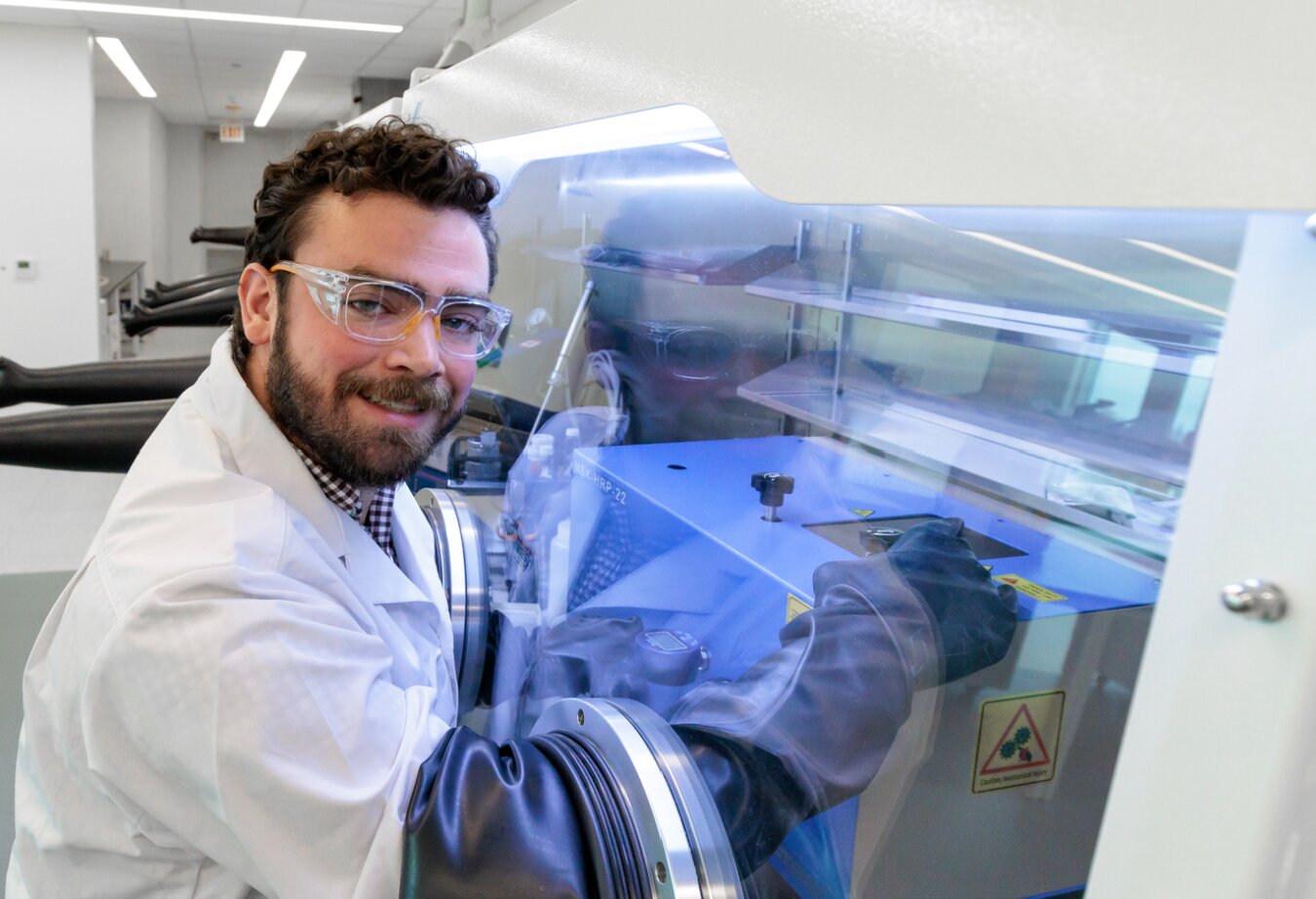
"If you think about water through a hose, the electron dose rate is how much pressure are we applying on the material with our microscope," said University of Chicago Pritzker School of Molecular Engineering (UChicago PME) Ph.D. student Thomas Marchese. "A lot of dose can create a pretty picture in the microscope, but if the 'pressure' is too high, we can damage the sample. The material we ended up examining is no longer the material that we wanted to study, and our conclusions can be wrong."
Marchese, of UChicago PME's Laboratory for Energy Storage and Conversion (LESC), is the first author of a study recently published in Microscopy and Microanalysis that explores how this firehose of electrons interacts with the components of sodium batteries—and offers new insights on the utility of tools that are advancing the technology needed to get the planet off fossil fuels.
Source link