Someone has to dream big and take that bold step to reach for the stars and search for life in the vast universe. NASA has long been at the forefront of this mission, setting its sights on far-reaching destinations across our solar system — from the Moon and icy outer worlds to distant asteroids.
But big dreams demand big ideas to conquer the immense challenges of deep space travel.
For a long time, the power of our parent star has driven this journey, fueling robotic scouts across the cosmos. Solar panels have fueled countless orbiters, rovers, and satellites. However, the solar system is vast, and the Sun’s rays grow weak once a mission pushes past Mars. That is precisely why the focus is shifting toward nuclear-powered spacecraft to reach destinations once out of reach.
Nuclear-powered spacecraft harness energy from atomic reactions rather than burning chemical propellants or capturing sunlight. These technologies fall into two distinct categories.
Radioisotope systems use decaying radioactive materials like plutonium-238 to generate steady heat, which solid-state thermocouples then convert into electricity. These nuclear batteries have powered legendary long-haul missions like Voyager for nearly fifty years.
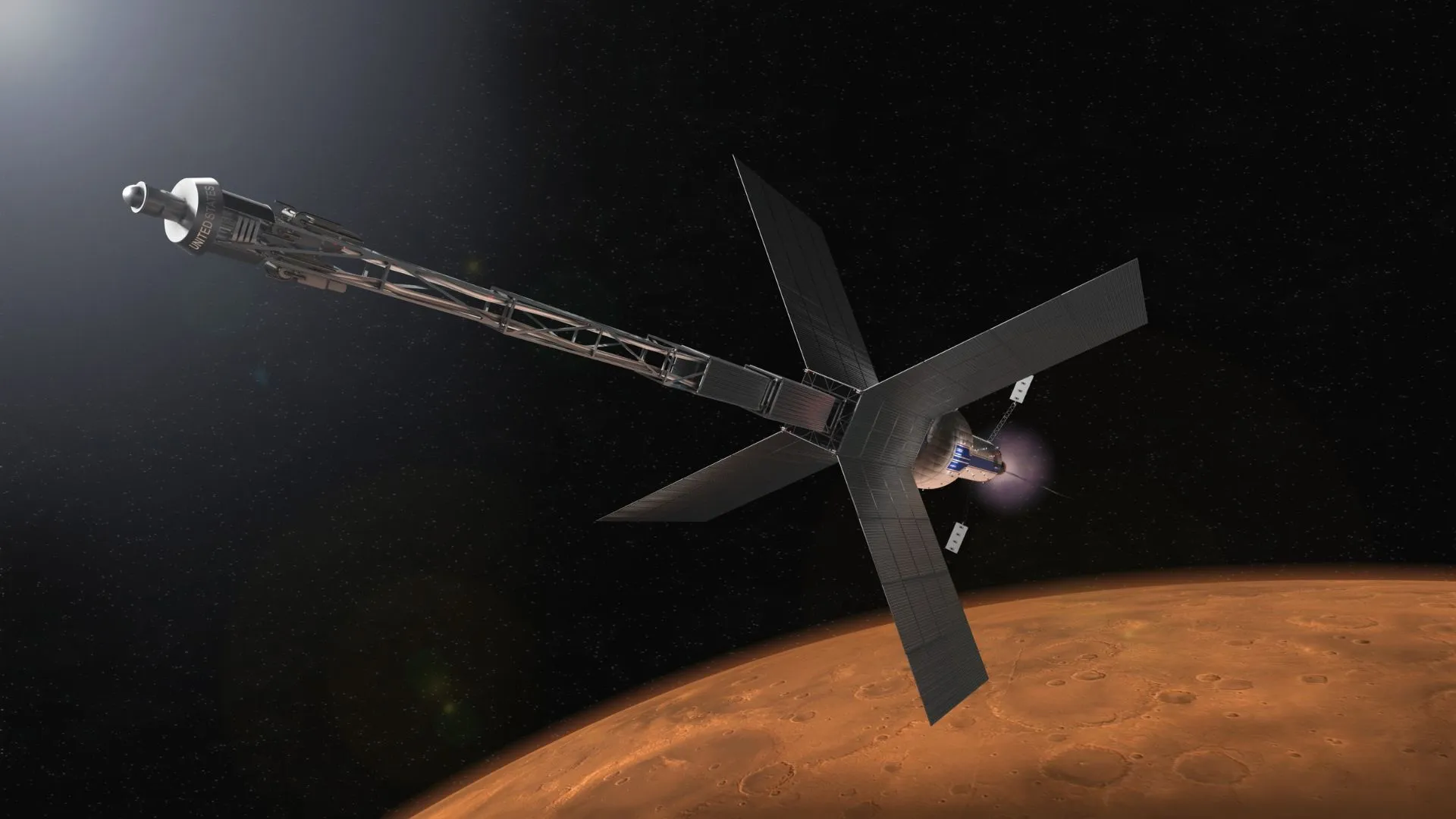
Fission systems take a different approach. And use controlled nuclear reactors to produce massive amounts of electricity or direct thermal energy. This energy can power high-efficiency electric ion engines or heat propellant directly to create extreme thrust.
NASA is actively turning these concepts into hardware. The space agency is advancing nuclear electric propulsion projects and fission surface power designs. Prototypes like the SR-1 Freedom initiative aim to demonstrate fission power capabilities beyond Earth’s orbit.
Source link