This article has been reviewed according to Science X's editorial process and policies. Editors have highlighted the following attributes while ensuring the content's credibility:
A study has found that increases in risk-taking behavior in people with mild to moderate alcohol use disorder (AUD) precede increases in alcohol consumption, not vice versa. This research is the first to predict changes in real-life drinking longitudinally using gamified smartphone-based decision-making tasks. The findings from the study, appearing in Biological Psychiatry: Cognitive Neuroscience and Neuroimaging, open up the possibility of future targeted and timely interventions for people with AUD.
AUD is a major contributor to global disability and mortality. Cross-sectional studies have linked AUD to reduced cognitive control and heightened risky decision-making. However, whether these cognitive-behavioral alterations are a consequence or a precursor of changes in drinking was previously unknown. This study clarifies the temporal direction of these effects.
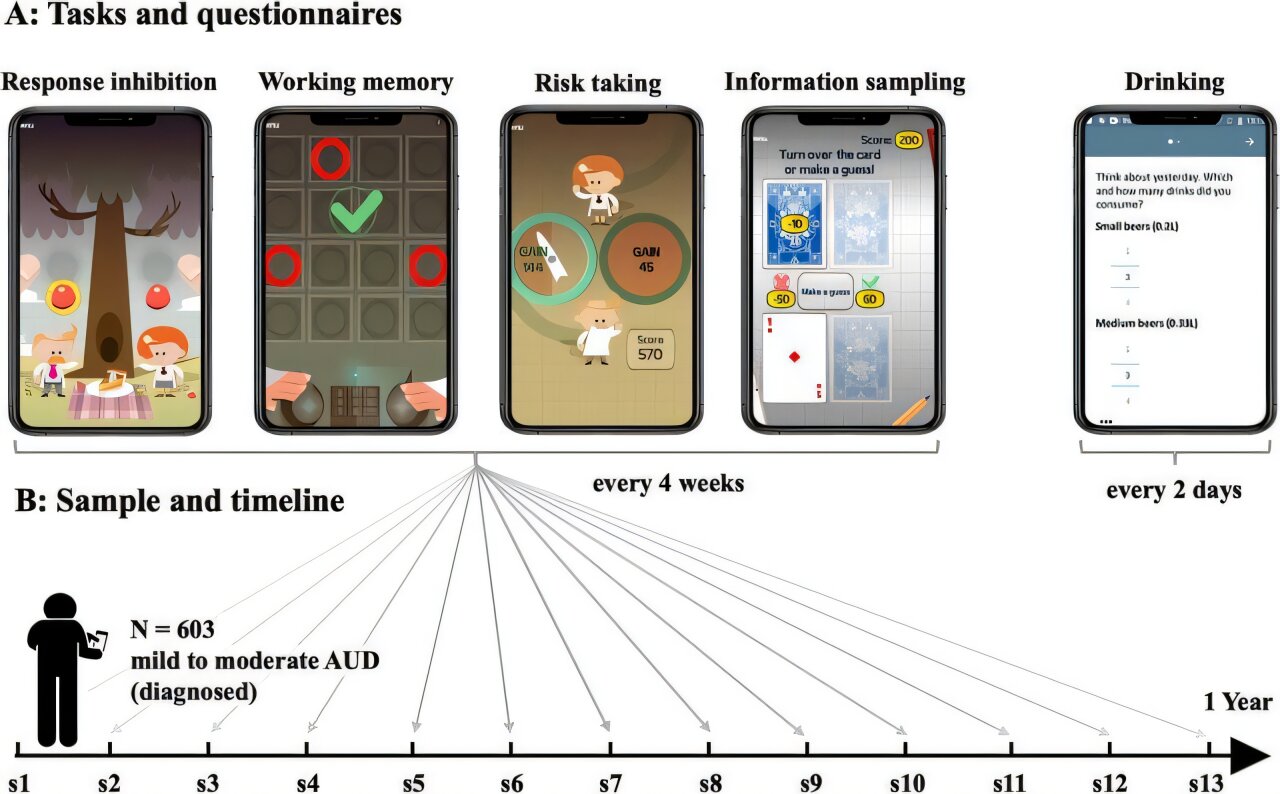
The investigators conducted a one-year longitudinal study in individuals with mostly mild to moderate AUD who may fluctuate substantially in their drinking over time. Using smartphone-based assessments and gamified experiments, the researchers tracked participants' drinking behavior, cognitive control and decision-making.
"We found that monthly fluctuations in aspects of decision-making predicted subsequent alcohol consumption," explains co-lead investigator Dr. Hilmar Zech, postdoctoral research fellow at the University Hospital Würzburg and Technische Universität Dresden, Germany. "Specifically, participants shifted to higher monthly alcohol consumption when their risk-taking was higher in a mixed gambling context and lower in a loss context in the preceding month.
Source link