This article has been reviewed according to Science X's editorial process and policies. Editors have highlighted the following attributes while ensuring the content's credibility:
In a comprehensive study of acute lymphoblastic leukemia, researchers at Karolinska Institutet have shown that the enzyme ADK plays an important role in determining how leukemia cells respond to triciribine. Published in npj Precision Oncology, the study also provides new insights into how the compound works and identifies ADK as a potential biomarker for predicting its effects on leukemia cells.
Acute lymphoblastic leukemia (ALL) is a blood cancer that can affect people of all ages. Triciribine is a compound that has previously been investigated as a cancer treatment, but its mechanism of action in ALL cells has not been fully understood. The researchers therefore set out to investigate how triciribine acts in leukemia cells and why some cells are more susceptible to its effects than others.
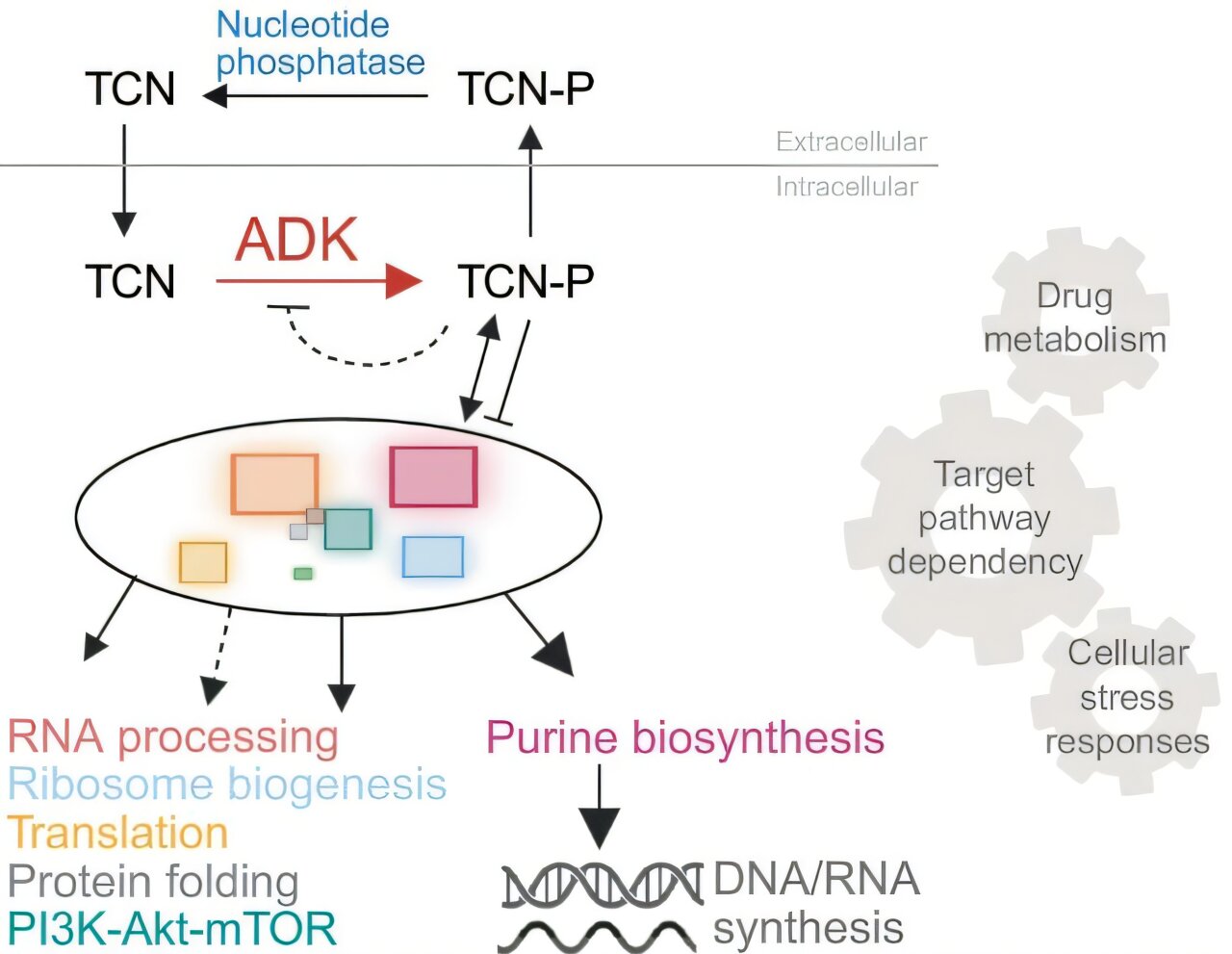
To better understand how triciribine works, the researchers used several methods to study a large number of proteins in leukemia cells. This allowed them to map the cellular processes affected by the compound. Their findings suggest that triciribine disrupts several processes that leukemia cells need to grow and divide, including the production of building blocks for DNA and RNA.
One important factor was the enzyme ADK, which is required to convert triciribine into its active form inside the cell. The researchers found that triciribine had a greater effect on laboratory-grown leukemia cells with higher levels of ADK. A similar pattern was observed in 10 patient samples containing leukemia cells exposed to triciribine outside the body.
Source link