This article has been reviewed according to Science X's editorial process and policies. Editors have highlighted the following attributes while ensuring the content's credibility:
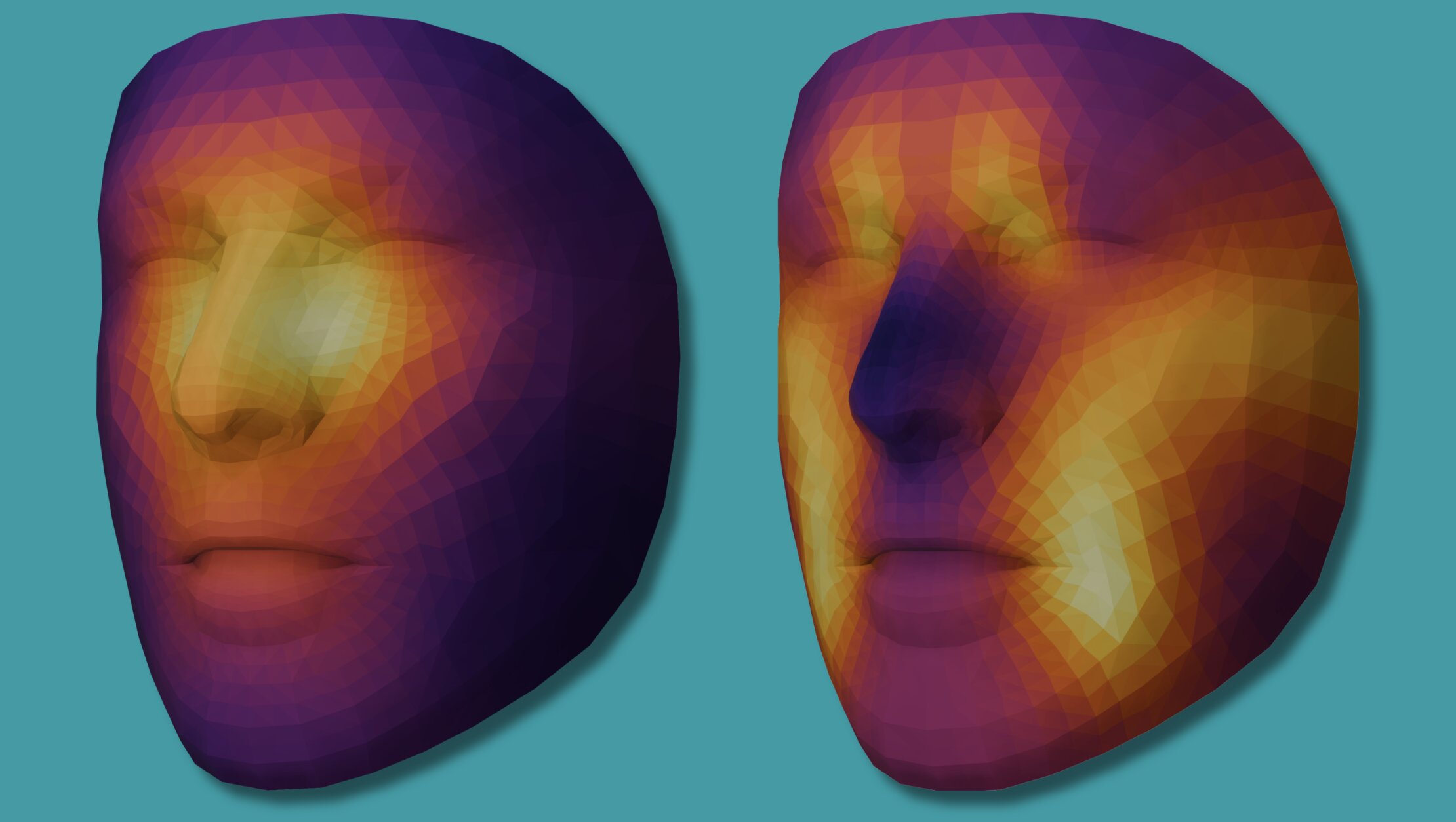
Researchers are using AI tools to analyze simple facial photographs to determine key indicators of a person's health. Mass General Brigham researchers built FAHR-Face (Foundation Artificial Intelligence for Health Recognition), a large AI foundation model trained on over 40 million face images.
They used the model to develop two complementary tools: FAHR-FaceAge, which estimates a patient's biological age with greater accuracy compared to prior age estimation algorithms, and FAHR-FaceSurvival, which directly predicts survival outcomes in patients with cancer from a face photograph.
The model development and validation study showed that the deviation between a patient's FAHR-FaceAge and their chronological age was independently linked to survival. It also demonstrated the robustness of the tools across common photo variations. The study is published in Lancet Digital Health.
"As the population ages, physicians need better ways to estimate physical reserve and frailty before recommending intensive treatments such as radiation, surgery or systemic therapy," said corresponding author Raymond Mak, a radiation oncologist at Mass General Brigham Cancer Institute and a faculty member in the Artificial Intelligence in Medicine (AIM) program at Mass General Brigham.
"Our goal is to make face photograph-based health assessment more quantitative, consistent and scalable so it can support personalized treatment decisions rather than replace physician judgment."
"The key technical advance is that FAHR-Face learns a general representation of the face from more than 40 million images, which can then be adapted to distinct health outcomes such as biological age and survival," said Hugo Aerts, co-senior author and director of AIM at Mass General Brigham.
Source link