This article has been reviewed according to Science X's editorial process and policies. Editors have highlighted the following attributes while ensuring the content's credibility:
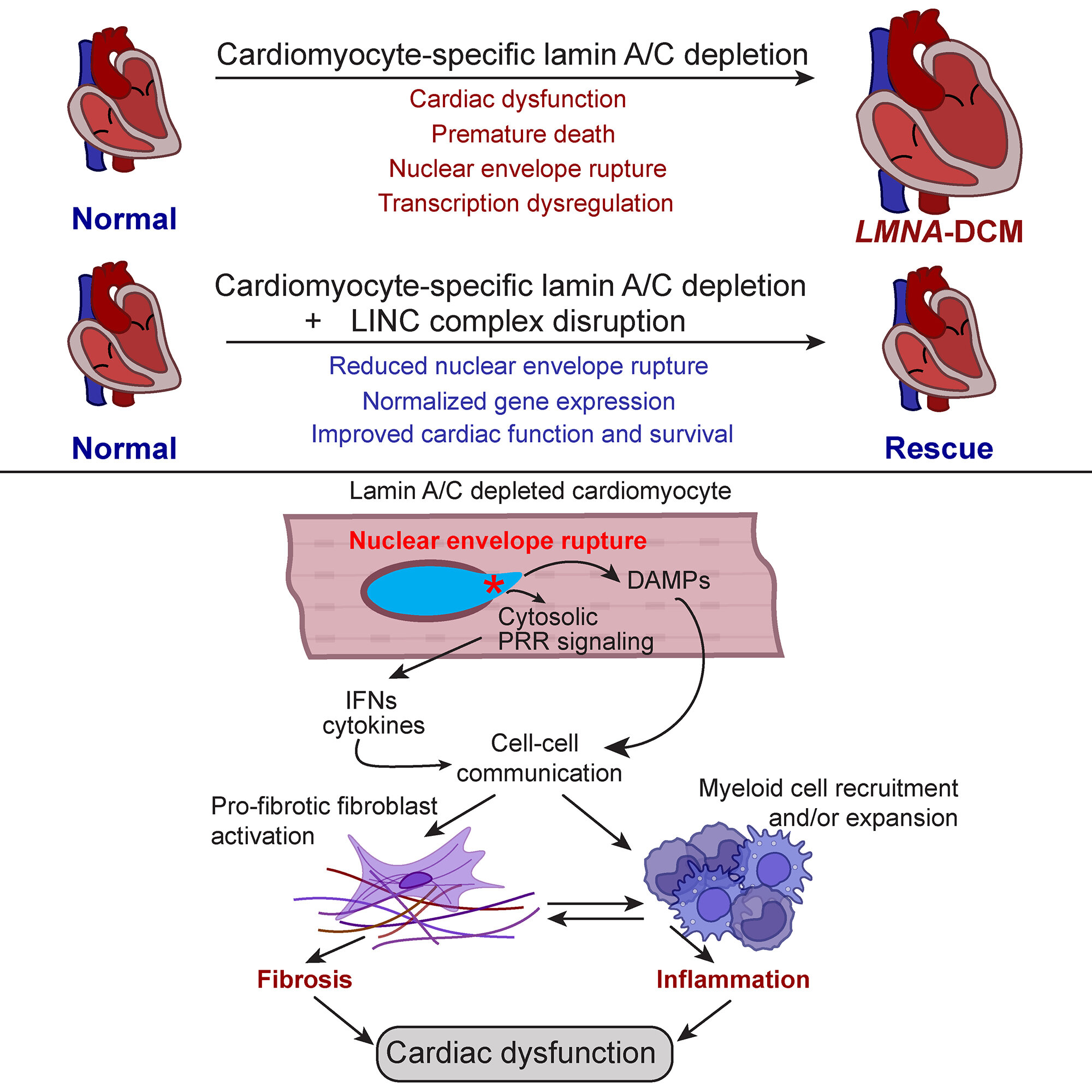
Reducing damage to the nuclei of heart muscle cells improved heart function and extended survival in mice with a form of inherited heart disease, according to a new study led by Cornell researchers. The findings point to new approaches for understanding and potentially treating LMNA-related dilated cardiomyopathy, a disease that leads to heart failure and sudden cardiac death.
The study, published in Circulation Research, was directed by Jan Lammerding, a professor in the Meinig School of Biomedical Engineering in the Cornell Duffield College of Engineering and a member of the Weill Institute for Cell and Molecular Biology, and jointly led by Noam Zuela-Sopilniak and Julien L.P. Morival in his group. Co-corresponding author Iwijn De Vlaminck is also a professor in the Meinig School.
LMNA-related dilated cardiomyopathy is an inherited heart disease caused by mutations in the LMNA gene, which encodes lamin A and lamin C, proteins that help maintain the structural integrity of a cell's nucleus. Although researchers have identified a link between LMNA mutations and heart disease, they do not completely understand the cellular mechanisms that lead to heart damage.
"We know that mutations in the LMNA gene cause heart disease, but we don't fully understand how on a cellular level, which makes it difficult to develop effective therapies for the disease," said Lammerding.
In their mouse model, after the researchers removed LMNA in heart muscle cells, signs of nuclear rupture in a subset of heart muscle cells were seen.
Source link