This article has been reviewed according to Science X's editorial process and policies. Editors have highlighted the following attributes while ensuring the content's credibility:
Opioid painkillers are some of the strongest analgesic medicines, but they are also the riskiest owing to a range of side effects, including addiction. An experimental opioid painkiller designed to be reversibly switched on and off with different light frequencies, keeping its action local and out of the brain, may eliminate the dangerous side effects of current opioids, according to a study led by Weill Cornell Medicine and University of Pennsylvania investigators. The findings herald a broad new approach for targeting medicines more precisely and effectively.
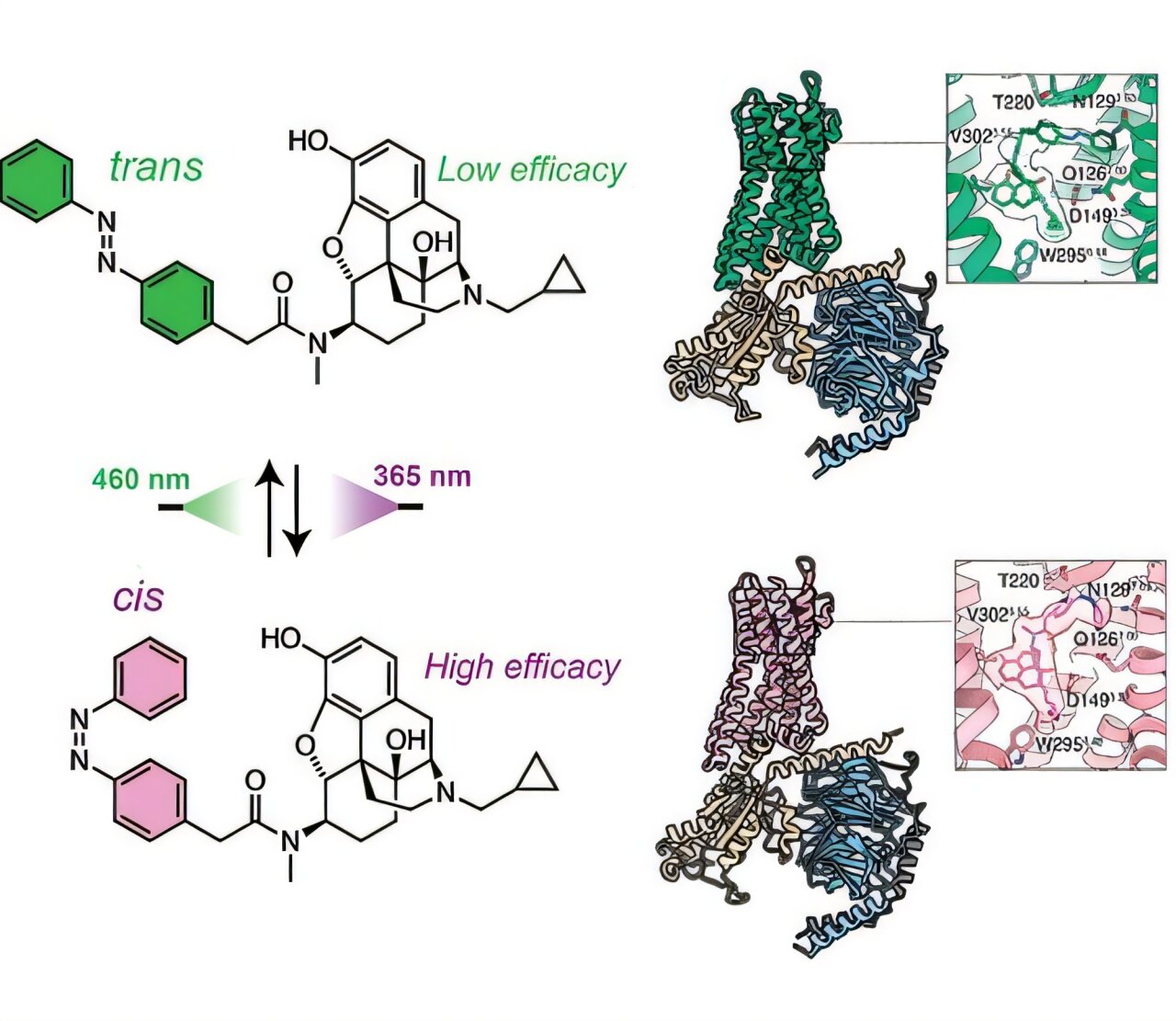
The investigators, whose results are published Oct. 15 in Cell, engineered a morphine-based compound called AM-3 that changes its shape in response to light in a certain frequency range. This conformational change alters AM-3's degree of engagement with the mu-opioid receptor, the principal target of opioid painkiller drugs.
The researchers showed that with this light-switching or "photopharmacology" approach they could activate AM-3's painkilling effect only where needed, allowing substantial pain relief without side effects in multiple preclinical pain models, including cancer pain models.
"We think this is a significant breakthrough not just for pain management but also for the general strategy of photopharmacology, which has a great many potential applications in biology and medicine," said study co-senior author Dr. Joshua Levitz, a professor of biochemistry and biophysics at Weill Cornell Medicine.
Source link