This article has been reviewed according to Science X's editorial process and policies. Editors have highlighted the following attributes while ensuring the content's credibility:
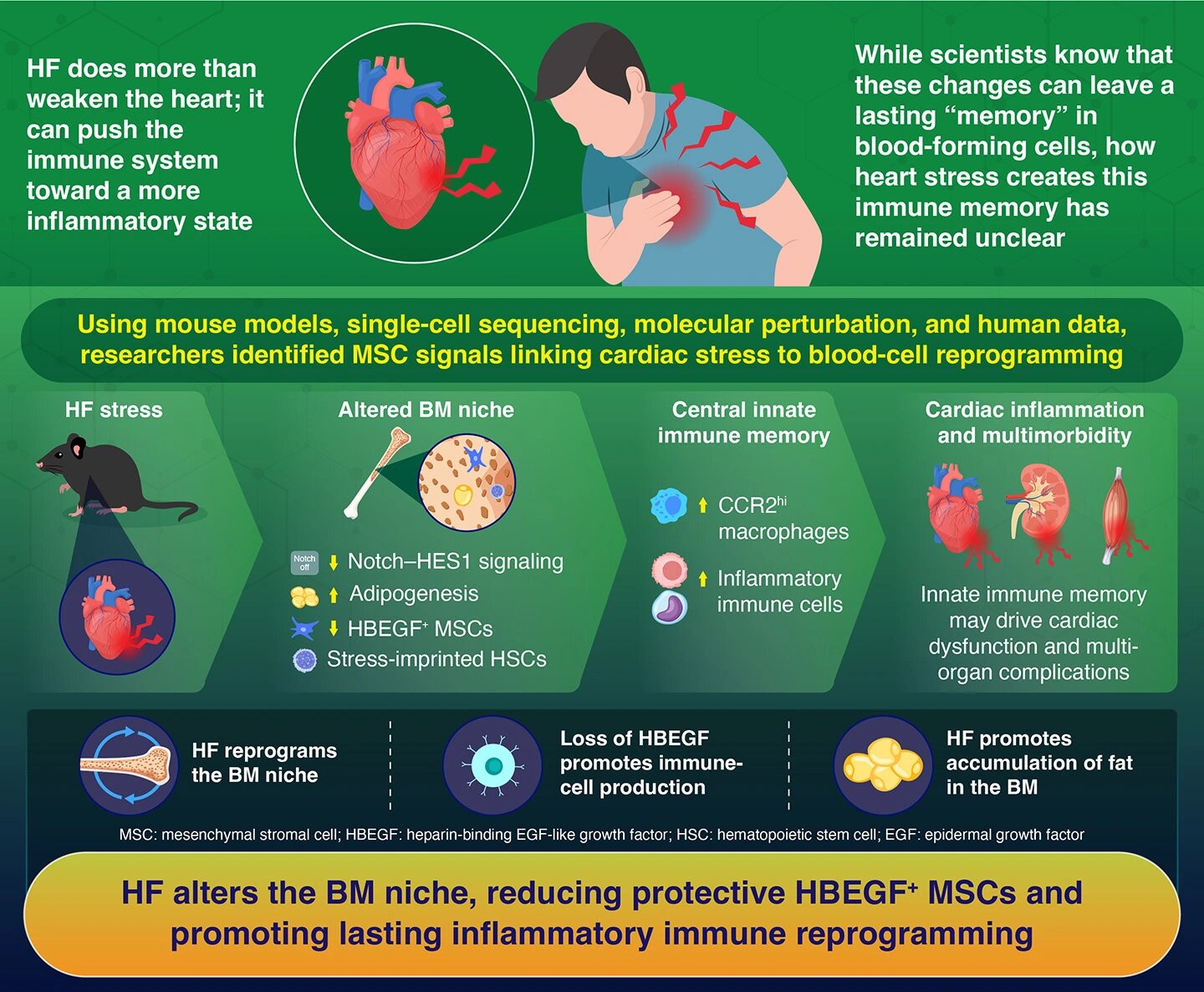
Heart failure (HF) is a condition in which the heart is not able to pump blood effectively. However, its effects go beyond pumping and circulation. HF is also known to cause a lasting form of innate immune memory in stem cells that synthesize blood and progenitor cells that are present in the bone marrow (BM). This can result in the production of immune cells that promote inflammation and worsen heart function. However, the exact mechanism of this process remained unclear.
A research team including Professor Katsuhito Fujiu from the Department of Integrative Physiology, Institute of Science Tokyo (Science Tokyo), Japan; Professor Ichiro Manabe from the Department of Systems Medicine, Graduate School of Medicine, Chiba University, Japan, and others set out to fill this knowledge gap.
They examined two important BM cell populations in mouse models: mesenchymal stromal cells (MSCs), which support blood cell development, and hematopoietic stem/progenitor cells (HSPCs), which synthesize blood and immune cells. The researchers investigated how interactions between these cells change during HF and contribute to lasting immune alterations.
"We combined single-cell RNA sequencing, cell transplantation, molecular perturbation and analysis of human BM data to investigate how cardiac stress changes the BM niche," explains Fujiu.
The researchers found that a population of leptin receptor-positive (Lepr⁺) MSCs in the BM plays an important role in transmitting the effects of cardiac stress to blood cell-forming stem cells.
Source link