This article has been reviewed according to Science X's editorial process and policies. Editors have highlighted the following attributes while ensuring the content's credibility:
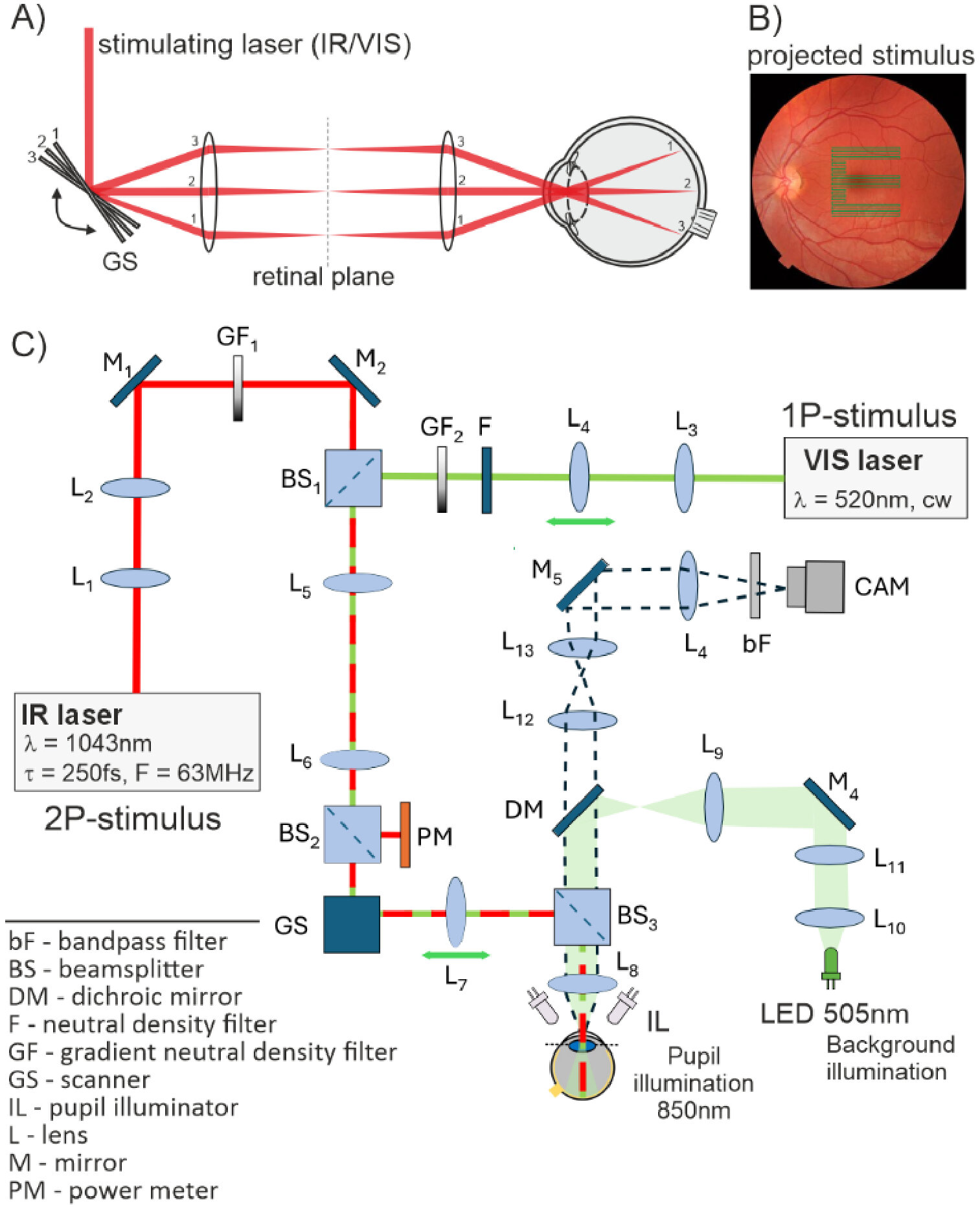
Infrared light is invisible to us. Yet under the right conditions, pulses of near-infrared light can give rise to a visible image in the eye—one that behaves in ways that defy intuition. ICTER scientists investigated what happens to that image when it is no longer perfectly focused.
A healthy eye automatically adjusts its focus to match the distance of the object we are looking at. When we shift our gaze from the far end of the street to a phone, the lens changes shape to keep the retinal image sharp. This process is called accommodation. It usually happens without us noticing, but head-mounted displays such as VR and AR headsets can place the eye in an unusual situation. A virtual object may appear at one distance while the display's optics require the eye to focus on a different plane.
Scientists at the International Centre for Translational Eye Research (ICTER), based at the Institute of Physical Chemistry, Polish Academy of Sciences, are investigating ways to display images using two-photon vision. In this phenomenon, pulses of near-infrared light—normally invisible to humans—can stimulate visual pigments in the retina when two photons are absorbed almost simultaneously. Their combined energy corresponds roughly to that of a single photon at half the wavelength. As a result, infrared light at about 1040 nm can produce a color sensation similar to 520-nm green light.
Source link