This article has been reviewed according to Science X's editorial process and policies. Editors have highlighted the following attributes while ensuring the content's credibility:
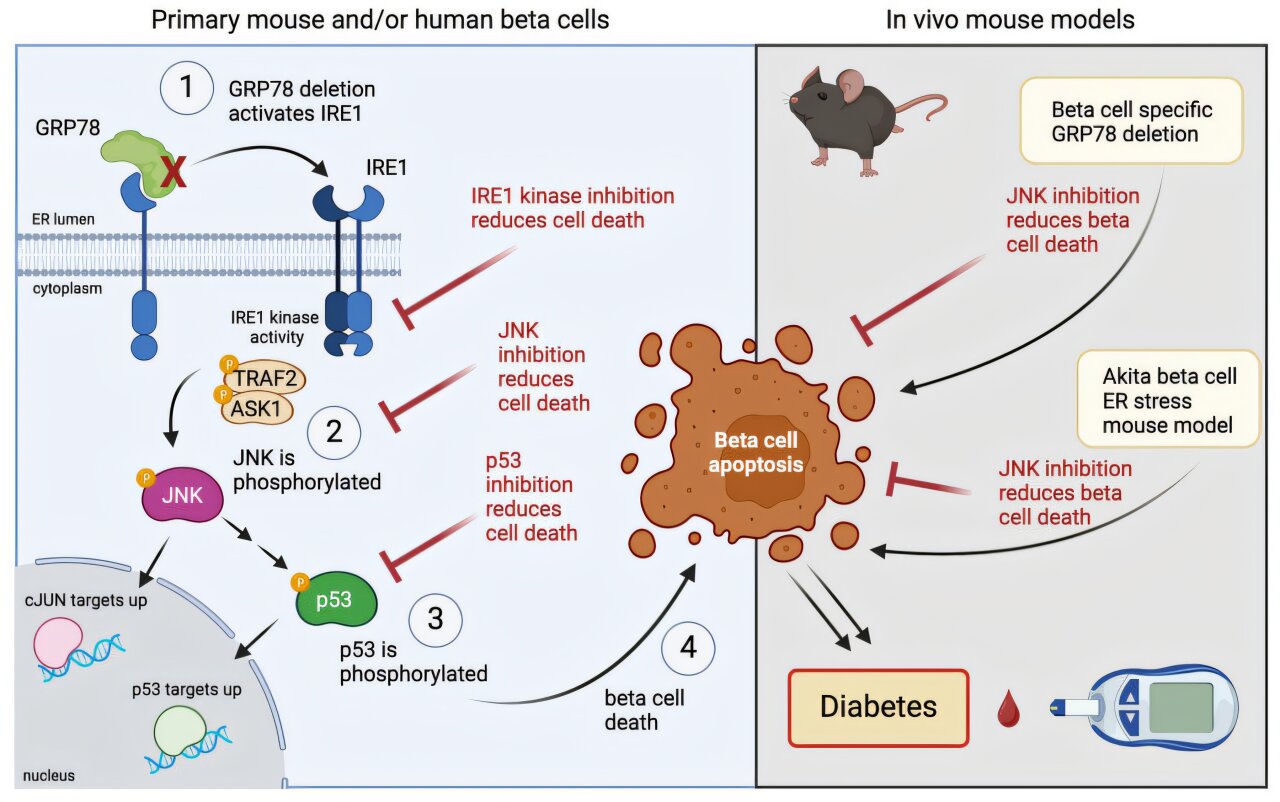
Researchers at Weill Cornell Medicine have identified a molecular pathway that contributes to the death of insulin-producing beta cells in the pancreas. Experiments with preclinical models and human pancreatic cells found that blocking certain proteins in the pathway helped protect beta cells from excessive cellular stress. The discovery, recently published in the Journal of Clinical Investigation, suggests a new strategy to preserve the cells that regulate blood sugar and potentially treat type 2 diabetes.
Diabetes is a complex, chronic disease with two forms. In type 1, the immune system attacks and destroys beta cells, leaving the body with little or no insulin. In type 2, the body's cells become less responsive to insulin, so beta cells must churn out more of the hormone to keep blood sugar in check. Over time, beta cells can become dysfunctional and some are lost through cell death, further compromising insulin production.
"The goal of this study was to understand the molecular pathways that cause overworked beta cells to die," said senior author Dr. Laura Alonso, chief of the division of endocrinology, diabetes and metabolism, director of the Weill Center for Metabolic Health and the E. Hugh Luckey Distinguished Professor in Medicine at Weill Cornell.
The researchers suspected the loss of overtaxed beta cells might involve the unfolded protein response (UPR)—a cellular system that helps cells cope when proteins accumulate faster than they can be properly processed.
Source link