This article has been reviewed according to Science X's editorial process and policies. Editors have highlighted the following attributes while ensuring the content's credibility:
Even when given the same drug, some patients respond well while others show little or no response. This is particularly true of immunotherapy. A research team at POSTECH (Pohang University of Science and Technology) has developed an artificial intelligence (AI) technology that can predict, in advance, which patients are likely to benefit from treatment.
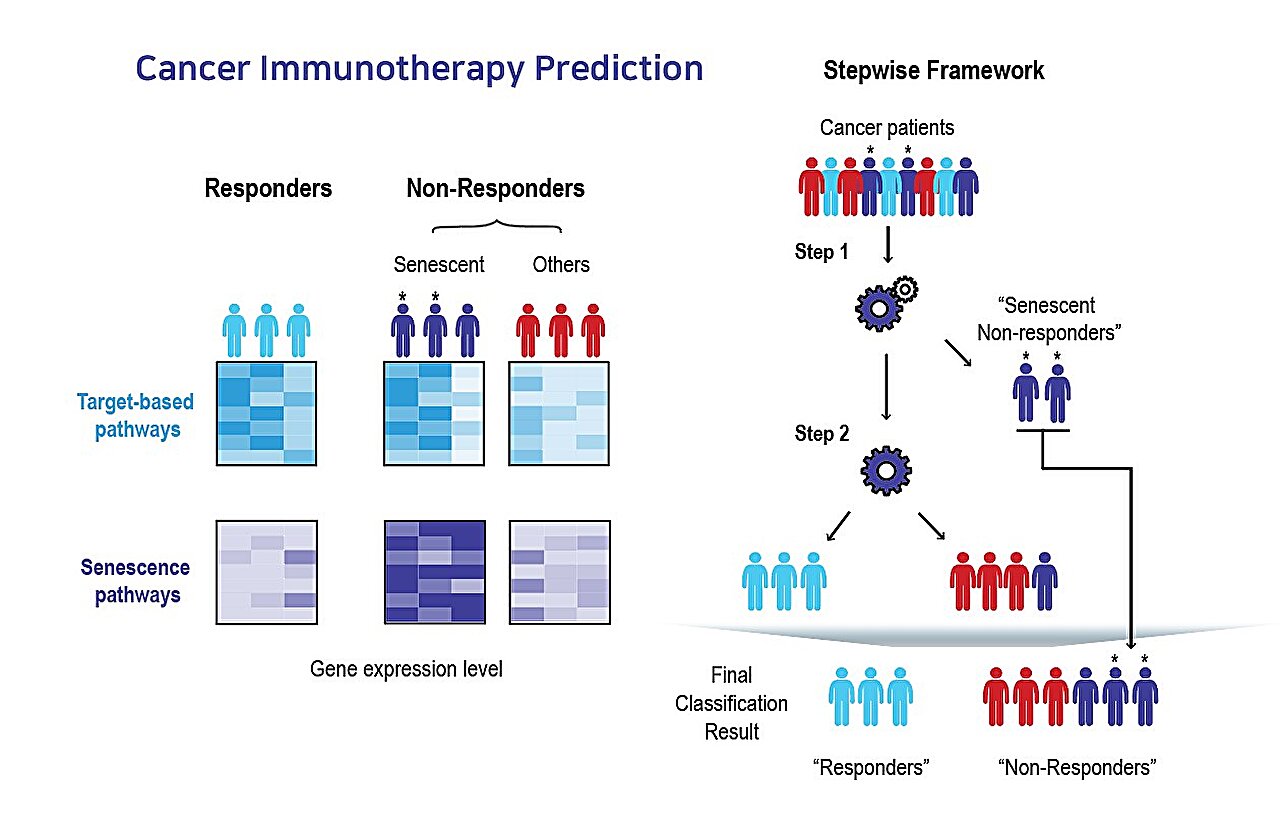
A research team led by professor Sanguk Kim of the Department of Life Sciences and the Graduate School of Convergence Science and Technology at POSTECH, together with Minsoo Kim, an integrated MS-Ph.D. student at the Graduate School of Artificial Intelligence, has developed a machine-learning method that analyzes genetic information from cancer patients to predict their response to immunotherapy. The study was recently published in npj Digital Medicine.
Unlike conventional cancer treatments that directly attack tumor cells, immunotherapy works by helping the patient's own immune system fight the cancer. While its ability to produce long-lasting responses is a major advantage, a significant number of patients do not respond to immunotherapy. In such cases, patients may not only incur substantial costs for an ineffective treatment but also lose valuable time that could otherwise be spent pursuing alternative therapies. This makes it important to determine in advance whether immunotherapy is likely to work for a particular patient.
One of the key challenges is that the environment surrounding a tumor varies considerably from patient to patient.
Source link