This article has been reviewed according to Science X's editorial process and policies. Editors have highlighted the following attributes while ensuring the content's credibility:
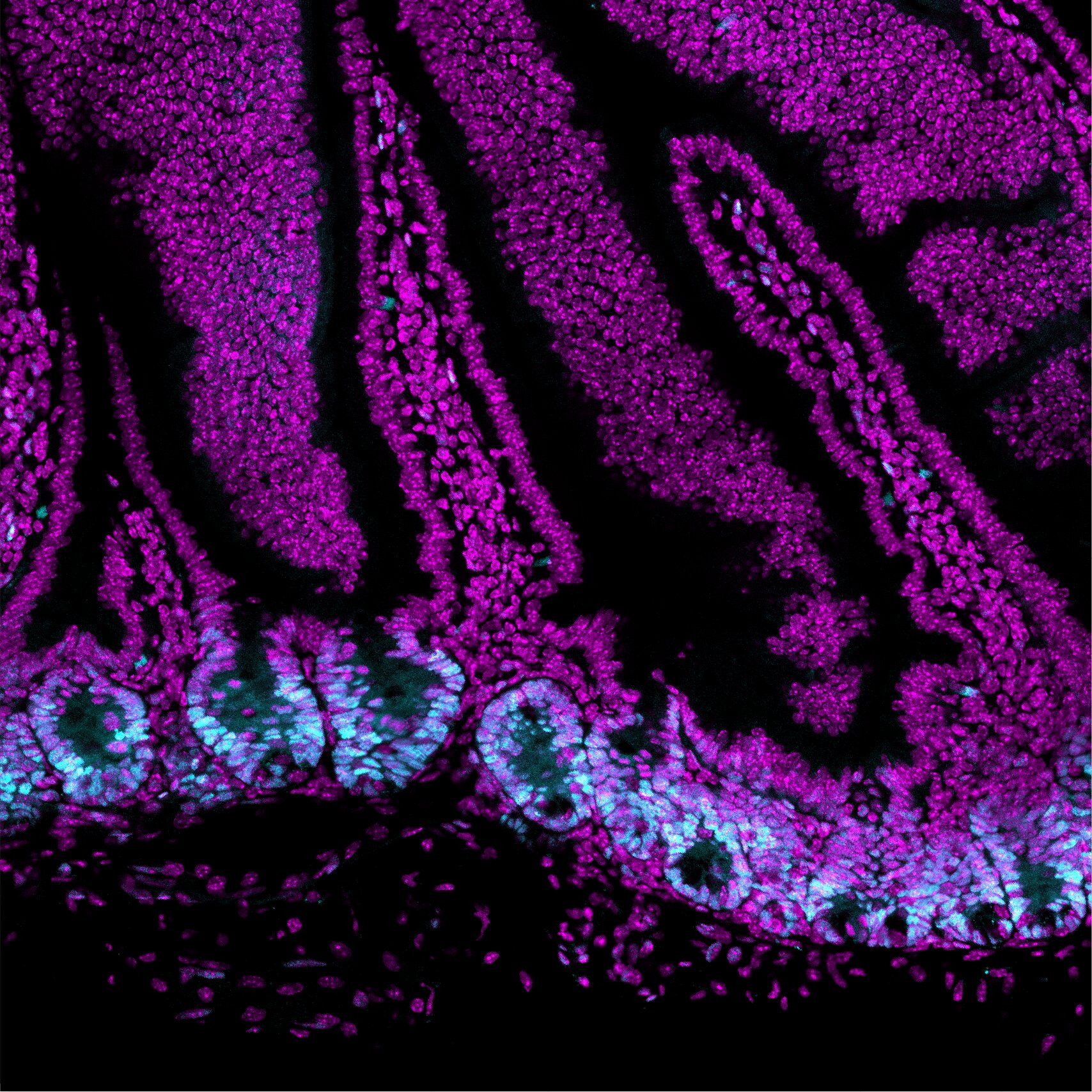
A study conducted at the Hubrecht Institute reveals that the intestines use the rhythm of a signal to decide which cells to make. Researchers from the Sonnen group discovered that chemical signals oscillate at different rhythms in different cells of the small intestine. In a new study published in Science, they show that altering the frequency of these oscillations changes the balance of cell types that form. The findings may improve our understanding of how tissues maintain a healthy cell-type balance and how disrupted signaling dynamics contribute to conditions such as inflammation and cancer.
The intestines have one of the highest cell turnover rates in the human body. They renew their lining every five to seven days. Stem cells in the intestinal lining produce these new cells, which take on different roles, from absorbing nutrients to protecting the gut. To keep the intestines healthy, the body must carefully control how many cells of each type it produces.
To coordinate this process, cells communicate through their own language of chemical signals. When a target cell detects a signaling molecule, this sets off a chain of events inside the cell known as a cell signaling pathway. This pathway helps the cell determine how to respond. The activity of signaling molecules can rise and fall in waves, called oscillations. In this study, the team shows that a certain chemical signal in the gut shows such oscillations, and that the rhythm of these oscillations has a functional role in keeping the gut cells in balance.
Source link