This article has been reviewed according to Science X's editorial process and policies. Editors have highlighted the following attributes while ensuring the content's credibility:
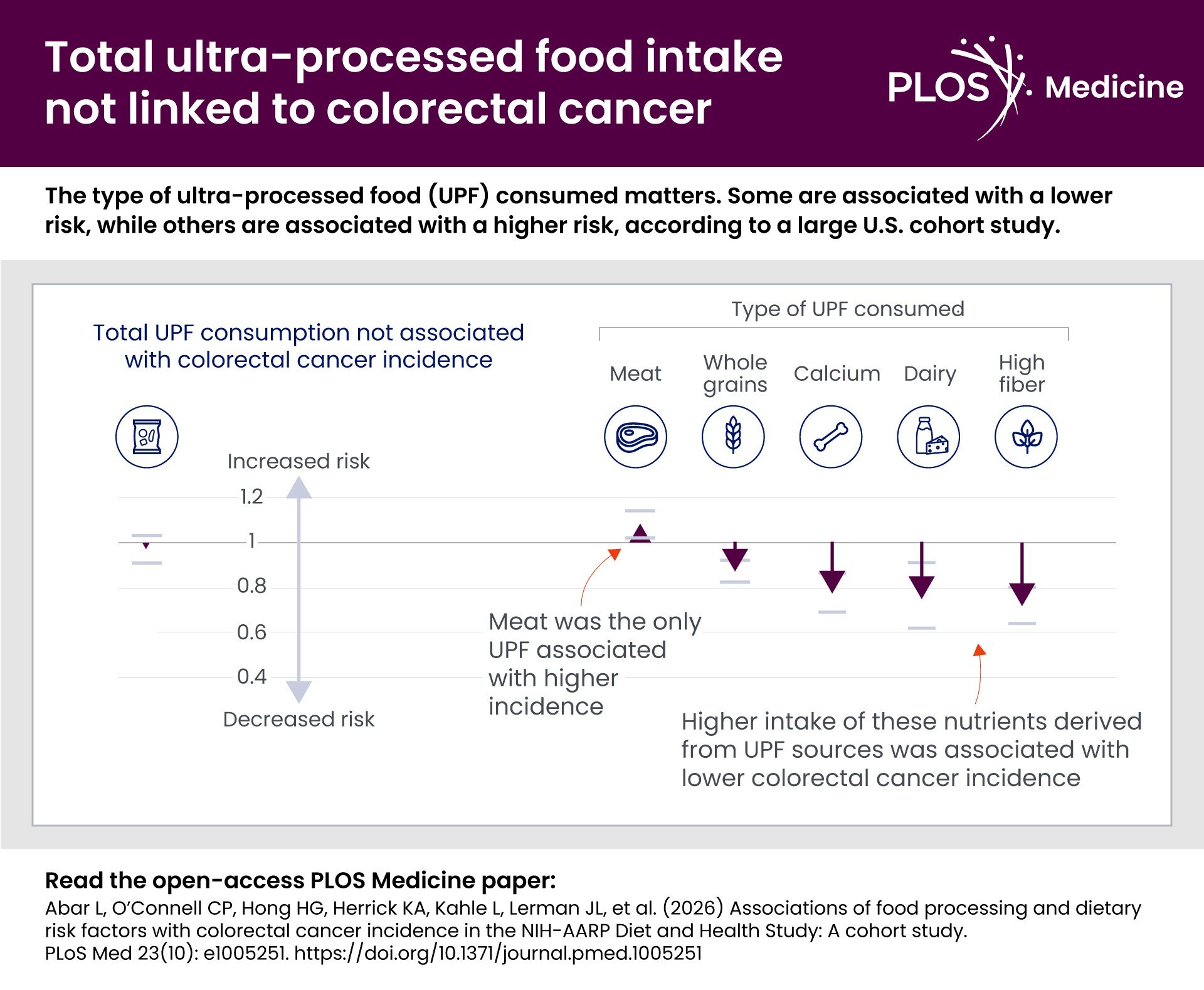
Overall ultra-processed food (UPF) consumption was not associated with increased colorectal cancer (CRC) incidence in a cohort of more than 400,000 U.S. adults, according to a study published Oct. 15 by Erikka Loftfield of the National Cancer Institute, U.S., and colleagues in the journal PLOS Medicine.
Ultra-processed foods account for more than half of energy intake among U.S. adults and have attracted growing attention due to potential links to chronic diseases, including colorectal cancer (CRC). However, UPFs represent a wide range of foods. Some, like whole-grain and dairy products, are associated with a lower risk of CRC while others, like processed meats, are associated with a higher risk.
To better understand these relationships, researchers analyzed data from 461,682 adults aged 50 to 71 years enrolled in the NIH-AARP Diet and Health Study between 1995 and 1996. Participants recorded their eating habits using a food frequency questionnaire that researchers used to estimate UPF intake. Participants were then followed until 2018, a median of 18.8 years.
The study found no association between overall UPF intake and CRC incidence. However, findings differed by type of food. Higher intake of whole grains, fiber, dairy products and calcium derived from UPF sources was associated with lower CRC incidence, whereas meat from UPF sources was associated with higher incidence. Researchers also found that replacing 10% of gram weight from UPF intake with minimally processed foods was associated with a 2% lower CRC incidence.
Source link