This article has been reviewed according to Science X's editorial process and policies. Editors have highlighted the following attributes while ensuring the content's credibility:
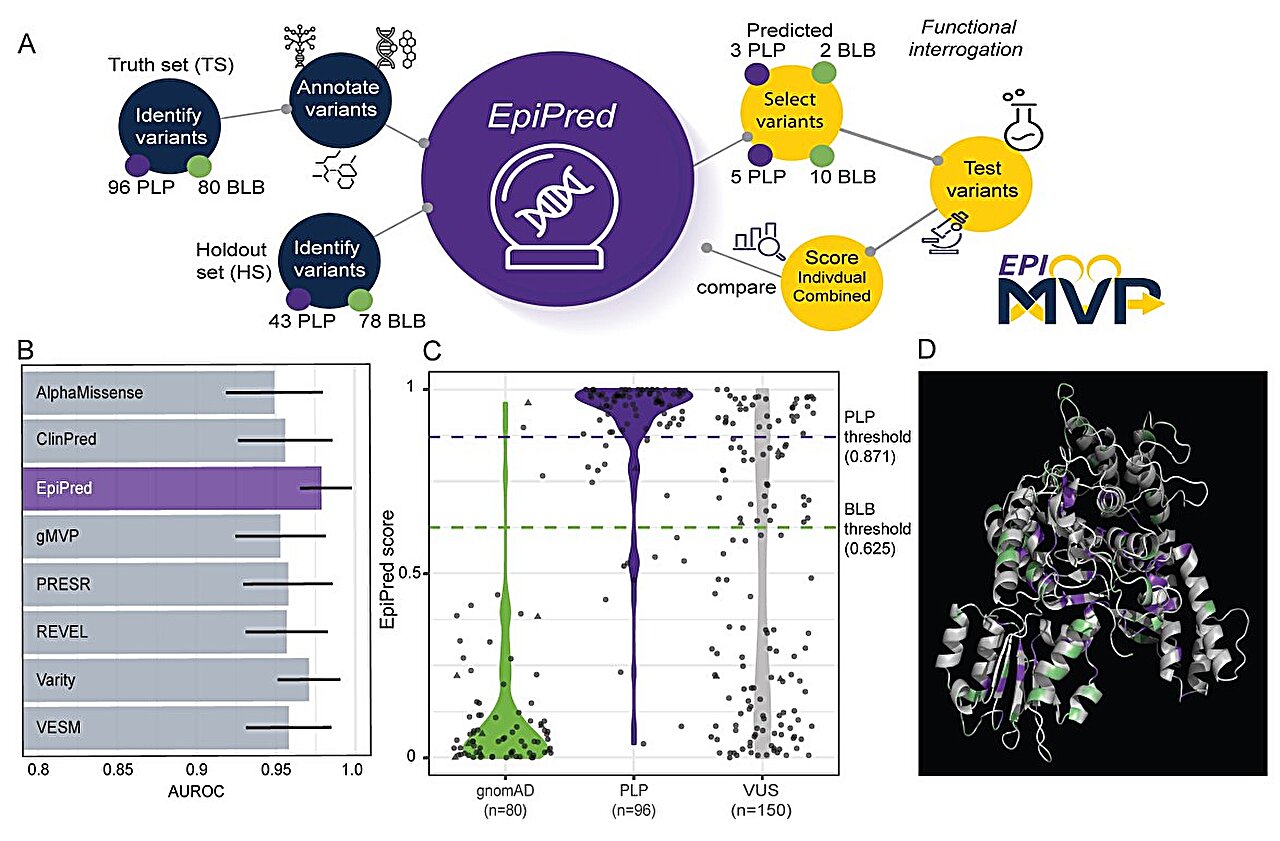
A new artificial intelligence tool developed by Northwestern Medicine scientists and collaborating institutions can help determine whether genetic variants associated with a severe form of childhood epilepsy will cause disease, according to a study published in the Journal of Clinical Investigation.
The findings represent a step toward connecting patients with emerging precision therapies, said Gemma Carvill, Ph.D., associate professor in the Ken and Ruth Davee Department of Neurology's Division of Epilepsy and Clinical Neurophysiology, who was senior author of the study.
In the study, Carvill and her collaborators focused on STXBP1, one of the most common genes associated with developmental and epileptic encephalopathies, a group of rare neurodevelopmental disorders characterized by seizures early in life and significant developmental delays.
Although genetic testing can identify variants in the gene, many are classified as "variants of uncertain significance," or VUS, leaving clinicians unable to determine whether they cause a patient's condition or are simply natural genetic differences.
"Variant of uncertain significance means we have insufficient information to tell whether it's disease-causing or benign," Carvill said.
For families affected by rare epilepsies, that uncertainty can have significant consequences.
"If you send off for clinical genetic testing, you get a variant of uncertain significance in this gene, it essentially precludes you from any future gene-targeting therapies," Carvill said.
Source link