This article has been reviewed according to Science X's editorial process and policies. Editors have highlighted the following attributes while ensuring the content's credibility:
Loneliness is common in older adults, and the mental and physical health risks associated with the condition are difficult for medical professionals to recognize and treat. To address this need, researchers from Virginia Commonwealth University and Emory University have developed a passive home sensing system that could detect behavioral patterns associated with loneliness in older adults and report those results to a caregiving team. The study is published in the journal Assessment.
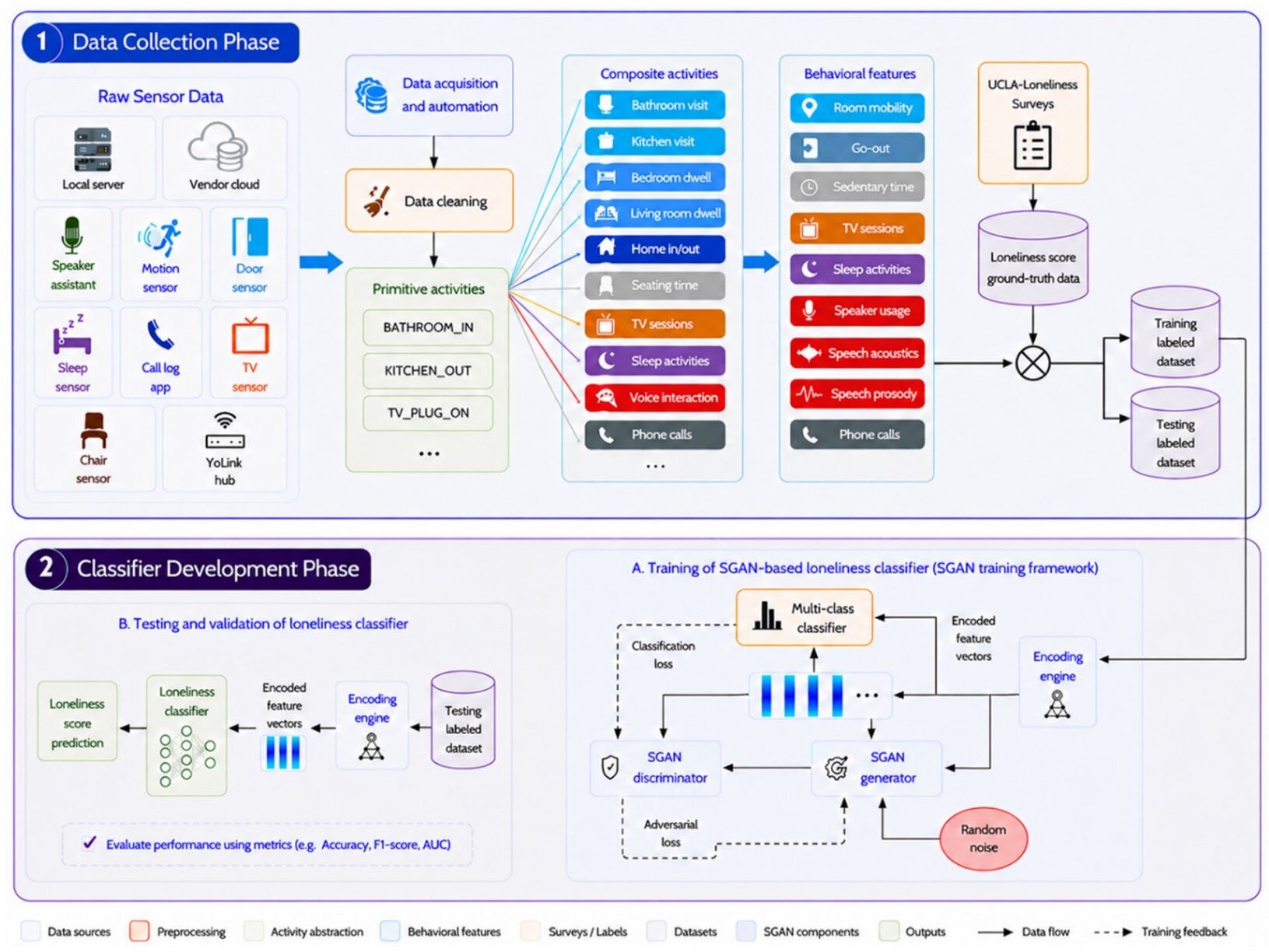
The system, which combines commercially available and custom sensors, passively measures movement, daily activities, sleep and phone usage within the home. The team deployed the prototype system, dubbed HomePal, for three months in the homes of 70 adults ages 65 and older living independently in metro Atlanta. The research team plans to compare the data against biweekly loneliness assessments.
"The main idea is to see whether everyday behavior at home can give early signs that an older adult may be experiencing loneliness or social withdrawal," said Mohamed Kamel, a computer science Ph.D. student in VCU's College of Engineering and lead author of the study about the system.
"Through your regular daily activities, we can actually collect, monitor and raise a flag either to the patients themselves or to their caregiver," Nadeem said.
The researchers' goal is to compare daily living patterns with reported feelings of loneliness, collected for each participant via assessments led by Chung, a former VCU School of Nursing professor.
Source link