This article has been reviewed according to Science X's editorial process and policies. Editors have highlighted the following attributes while ensuring the content's credibility:
Adapting to changing situations requires people to continuously revise their expectations about what might happen next when new information becomes available. These expectations are believed to be represented by mental models that help the brain predict outcomes and plan future behavior.
The contribution of different brain regions to the updating of expectations in changing circumstances has not yet been clearly delineated. One brain region that could play a role and yet remains poorly understood is the claustrum, a thin sheet of nerve cells deep inside the brain.
Researchers at Yale University and other institutions recently carried out a study investigating the possible contribution of the claustrum to aversive learning, the process through which humans and other animals learn about unpleasant outcomes in specific situations. Their findings, published in Nature Neuroscience, suggest that neurons in this brain region track uncertainty about outcomes and prediction error (i.e., the difference between an expected outcome and what ultimately happens) during aversive learning.
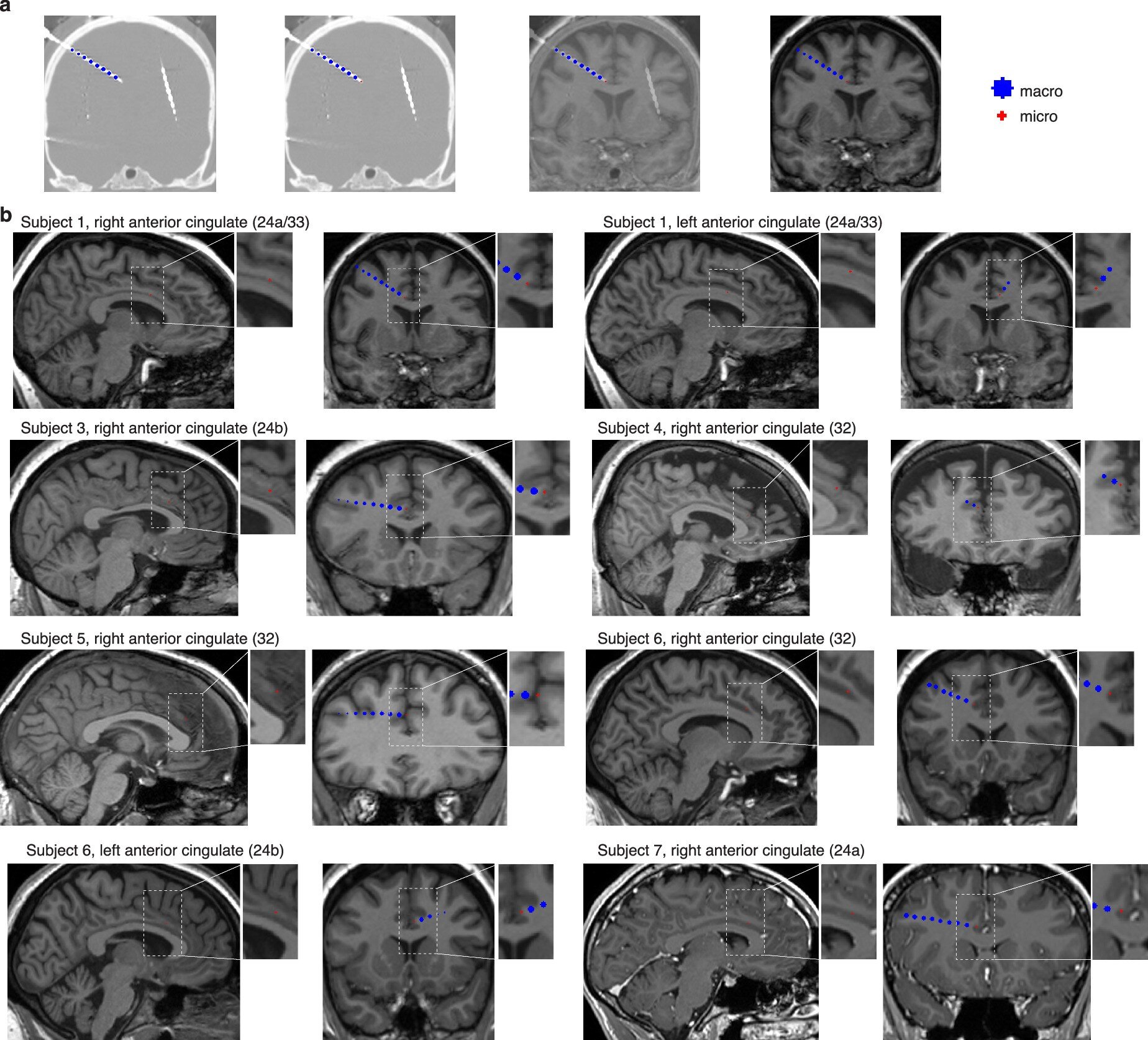
"The claustrum, which is reciprocally connected to nearly the entire neocortex, is uniquely positioned to influence cortical processing," wrote Mingyue Hu, Rodrigo Dalvit and their colleagues in their paper. "We report single-neuron recordings from the human claustrum during aversive learning, with anterior cingulate cortex and amygdala recordings for comparison."
Hu, Dalvit and their colleagues recorded the activity of individual neurons using electrodes that had been implanted in the brains of seven patients with epilepsy as part of clinical monitoring to identify where their seizures began.
Source link