This article has been reviewed according to Science X's editorial process and policies. Editors have highlighted the following attributes while ensuring the content's credibility:
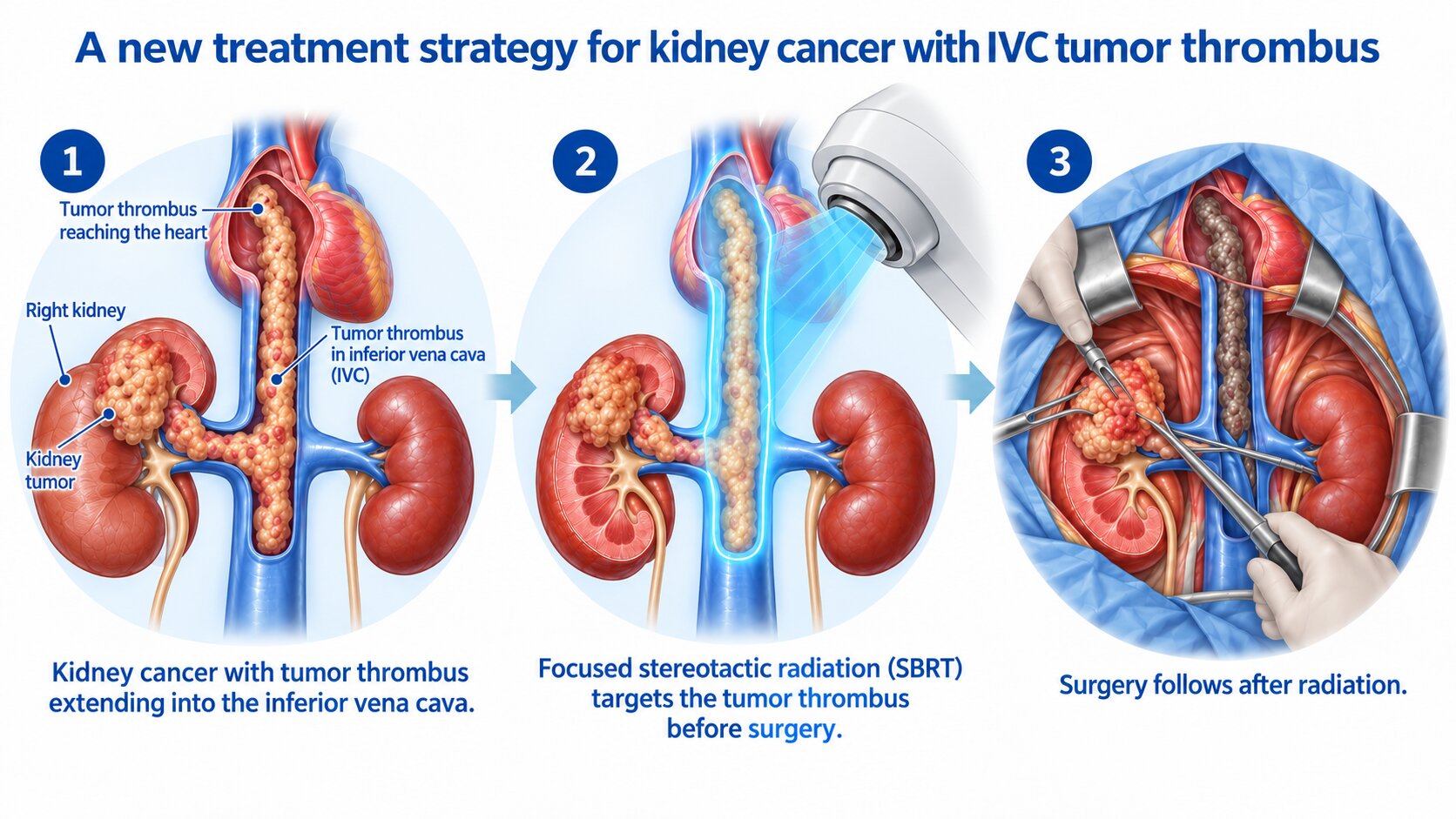
When Diane Gentry, a 71-year-old retiree from Watauga, Texas, was diagnosed with stage 4 kidney cancer in 2015, she learned the tumor had grown into her inferior vena cava, the body's largest vein. This potentially life-threatening complication can require extensive surgery and carries a high risk of cancer recurrence.
As part of a phase 2 clinical trial at UT Southwestern Medical Center, Gentry received targeted radiation followed by surgery that not only reduced her risks but also eliminated her disease. The findings from the trial, now published in JAMA Oncology, support further testing to determine whether the strategy can reduce the burden of treatment and lower the risk of recurrence.
"This approach provides a potential pathway to meaningfully improve the outcome for patients with kidney cancer and inferior vena cava tumor thrombus (IVC-TT)," said Raquibul Hannan, professor of radiation oncology, immunology and urology, and chief of the Genitourinary Radiation Oncology Service at UT Southwestern. Hannan co-led the trial with Vitaly Margulis, professor of urology. Both are members of the Experimental Therapeutics Research Program in the Harold C. Simmons Comprehensive Cancer Center at UT Southwestern.
It's estimated that about 4% to 10% of kidney cancer patients develop IVC-TT, in which cancer grows inside the vein. The condition can interfere with blood flow and sometimes extend into the heart.
Treatment typically involves removing the affected kidney and performing a thrombectomy to remove the tumor from the vein.
Source link