This article has been reviewed according to Science X's editorial process and policies. Editors have highlighted the following attributes while ensuring the content's credibility:
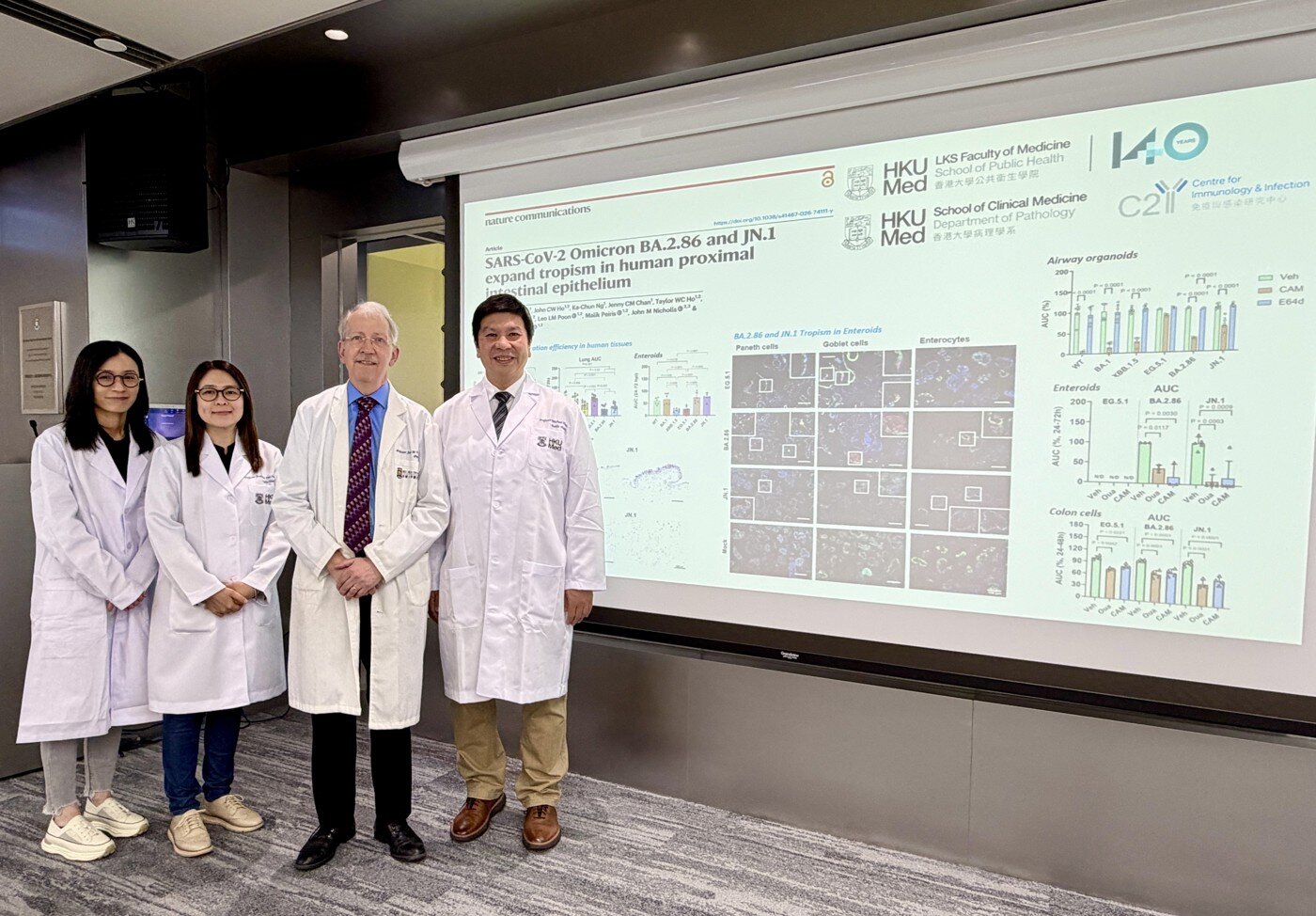
A research team from the School of Public Health at the LKS Faculty of Medicine, the University of Hong Kong (HKUMed), has discovered that emerging omicron sublineages of SARS-CoV-2 use distinct biological strategies to spread and cause disease. Specifically, the XBB.1.5 and EG.5.1 variants are better adapted for respiratory spread and may pose a heightened risk of severe respiratory disease, while BA.2.86 and JN.1 tend to replicate more effectively in the intestines, potentially opening alternative transmission routes.
This research highlights the importance of ongoing monitoring and functional characterization of emerging strains to support public health planning and preparedness for future outbreaks. The findings were published in Nature Communications.
Since the emergence of omicron variants, SARS-CoV-2 has continued to evolve into numerous sublineages. Scientists have found it increasingly difficult to determine whether differences in transmission and disease severity are caused by the virus itself or by existing immunity built up through vaccination or previous infections.
To address this, the researchers conducted controlled laboratory experiments using models that closely mimic human tissues, including human bronchial and lung tissues, airway organoids (miniature lab-grown models that resemble the human airway), and intestinal models, including proximal intestinal enteroids (miniature models of the small intestine) and colon cells.
1 under the same experimental conditions to better understand their differences in infection, replication and transmission potential.
Source link