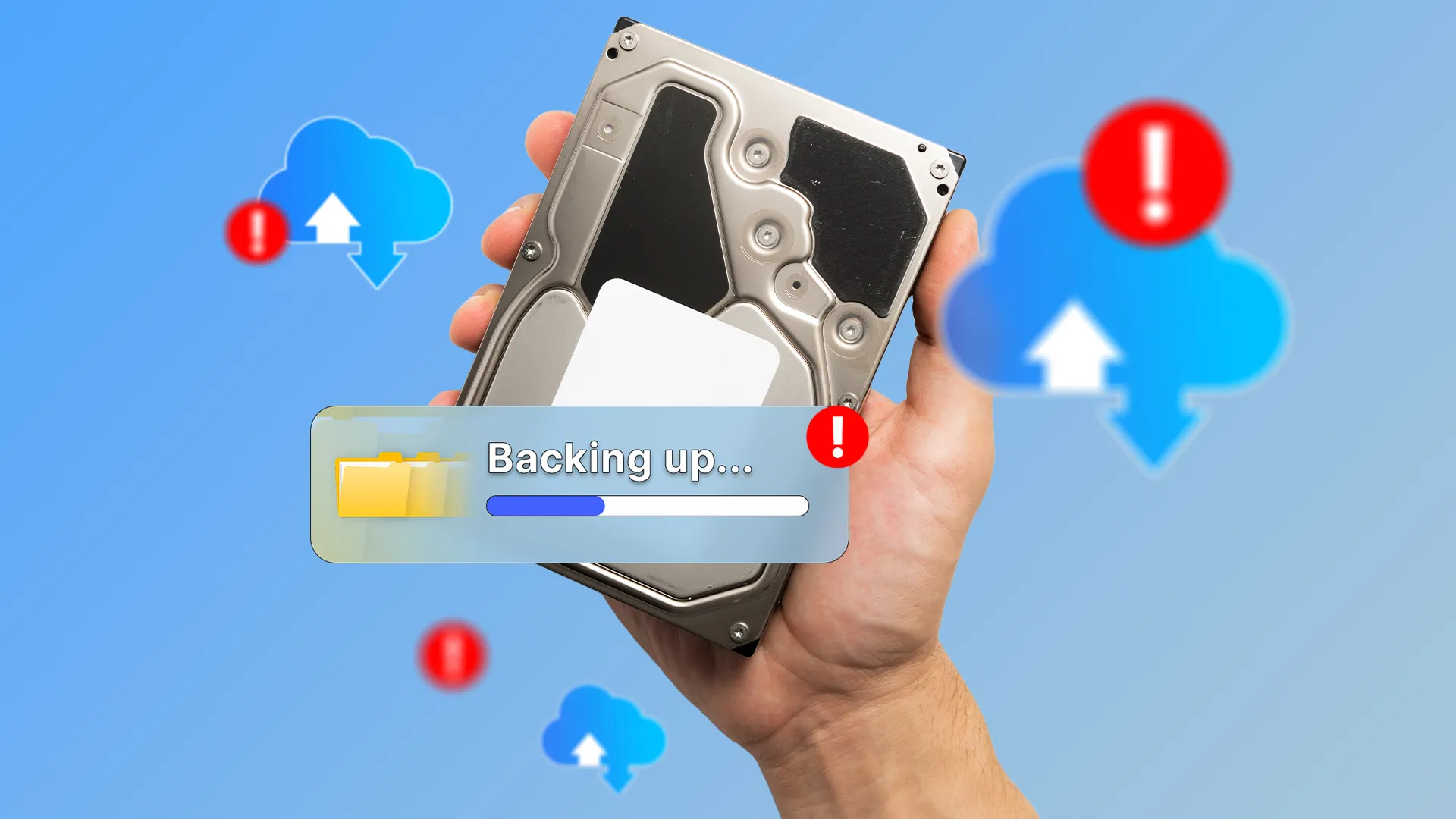
Cloud storage can get costly, so an alternative for many people is to just grab any important memories and store them in a hard drive to revisit in the future.
Sadly, though, this is a bad idea—and if you're doing this, you'll probably want to get that drive spinning as soon as possible. Enter the concept of bit rot: the silent killer for your precious photos and videos and, frankly, any file you might have on that old drive filled with dust.
At its most fundamental level, bit rot—formally known as data degradation or data decay—is how we call the gradual decay of storage media and the subsequent corruption of the information residing on it. Remember that, even as technology has progressed, data ultimately still exists and is stored as binary code, consisting of zeros and ones. The way a hard drive works is that these bits are recorded by magnetizing tiny, microscopic sectors on a spinning platter. A north pole might represent a one, while a south pole represents a zero.
Over time, these magnetic domains can lose their orientation due to the natural tendency of magnetic polarity to disperse, a process often accelerated by environmental factors. When a bit flips—changing from a zero to a one or vice versa—without the operating system explicitly commanding that change, bit rot has occurred. And a teeny tiny bit flip can have catastrophic consequences.
Your new hard drive is hiding a fatal flaw, and SMART data won't save you
Source link