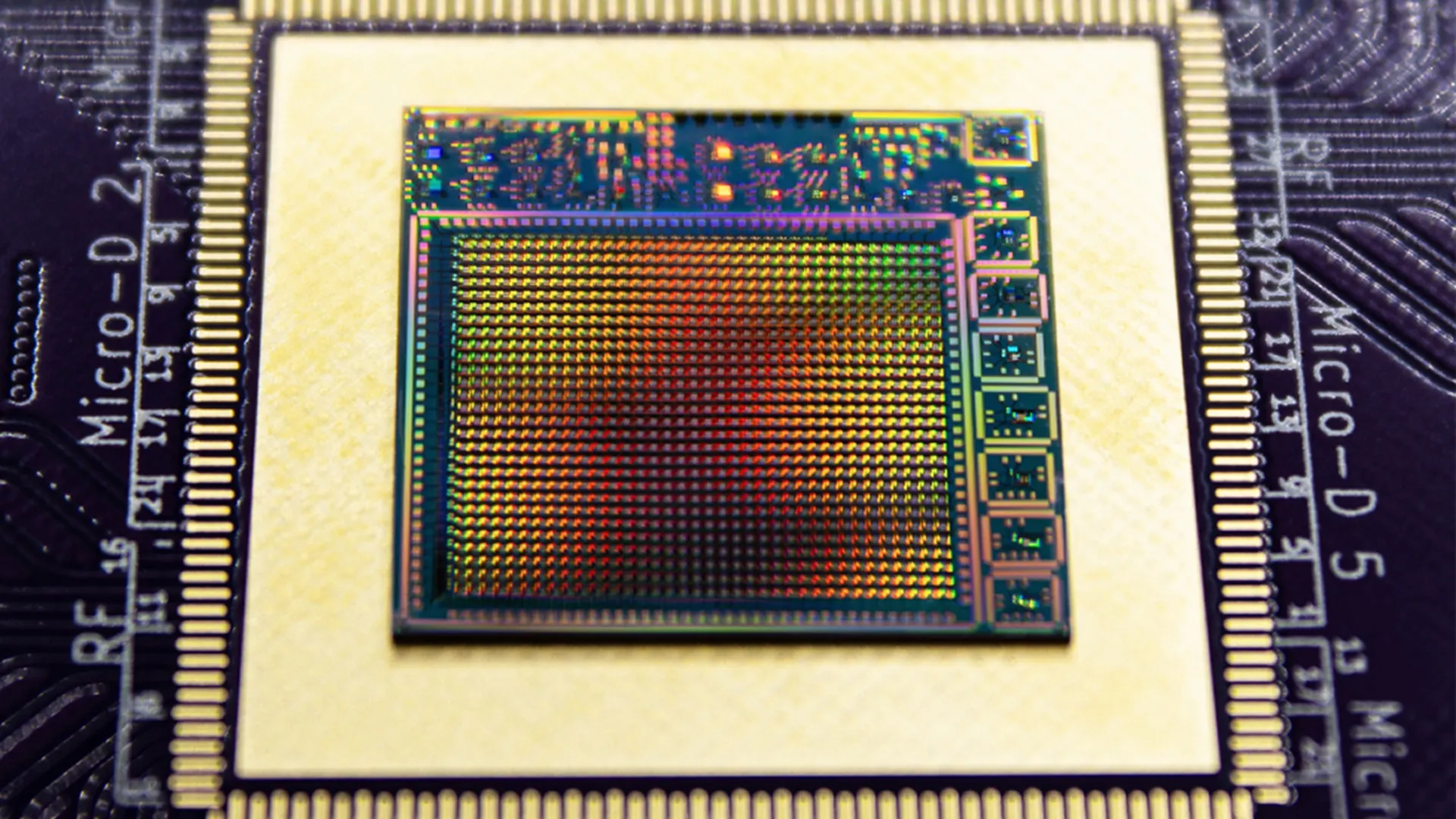
Scientists in the state of New York have created a first-of-a-kind superconducting neural chip that can reportedly process about one million fusion plasma samples per second.
The new Super Intelligence (SI) computer chip was designed by researchers at the US Department of Energy’s (DOE) Brookhaven National Laboratory (BNL). For the project, they partnered with the Princeton Plasma Physics Laboratory (PPPL), the DIII-D National Fusion Facility, and Colorado-based tech company Great Sky.
BNL noted that the chip relies on superconducting circuits to mimic human neural networks. It could eventually improve the way fusion reactors monitor and control hot plasma. Lab tests showed the chip could detect unusual plasma behavior and predict instabilities.
“It’s incredible to see the team processing data from our tokamak with this first-of-a-kind chip,” Richard Buttery, PhD, DIII-D Director, said. The team believes the technology could support faster and more reliable fusion reactor control systems.
Fusion reactors use magnetic fields to keep hot plasma confined at temperatures between 180 and 270 million degrees Fahrenheit (100 and 150 degrees Celsius). This extreme temperature is roughly 10 times hotter than the core of the Sun.
Still, plasma conditions can change rapidly, making real-time monitoring essential to keep it stable. This requires computers that can process huge amounts of data almost instantly. But conventional silicon-based computing systems struggle to process such large amounts of data quickly enough.
However, the novel superconducting neural chip can process signals at extremely high speeds. It uses superconducting circuitry arranged to mimic the connections found in the human brain.
Source link