
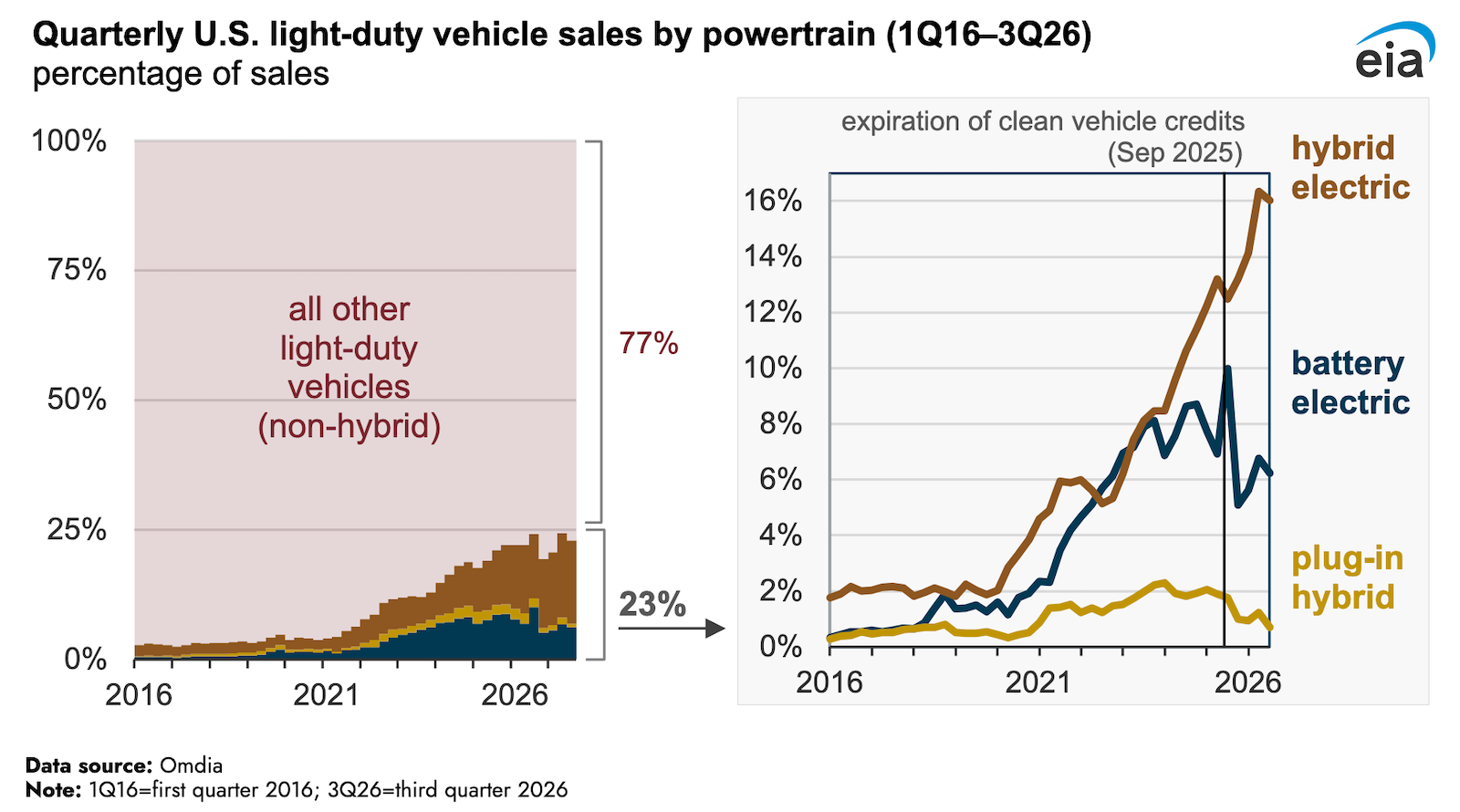
In the third quarter of 2026 (3Q26), 23% of new light-duty vehicles sold in the United States were hybrid electric, battery electric, or plug-in hybrid electric vehicles, down slightly from 24% in 3Q25. Between 3Q25 and 3Q26, hybrid electric vehicles continued to gain market share, reaching 16% of light-duty vehicle sales. Growth of hybrid electric vehicle sales has slowed this quarter as the average transaction price for a new vehicle passed $50,000—the first time this price has been reached so far this year, according to Kelley Blue Book.
The market shares of battery electric and plug-in hybrid electric vehicles decreased over the same period, according to estimates from Omdia. In 3Q26, battery electric vehicle sales were 6% of new light-duty vehicles sold, down from 10% in 3Q25; plug-in hybrid electric vehicle sales fell from 1.8% to 0.7% over the same period.
These vehicle types affect the broader energy sector in different ways. Battery electric and plug-in hybrid electric vehicles consume electricity from the grid, which affects electricity demand. By comparison, hybrid electric vehicles consume liquid fuels and do not connect to the grid. Hybrid vehicles were not eligible for any of the federal tax credits that expired in September 2025.
Two tax credits for purchasing or leasing new electric vehicles expired on September 30, 2025: the New Clean Vehicle Credit and the Qualified Commercial Clean Vehicle Credit . Battery electric vehicles made up a record 12% of light-duty vehicle sales in September 2025, immediately before the credits expired. However, 2025 marked the first year where annual sales and market share of battery electric vehicles declined, a trend that has continued in 2026.
Source link