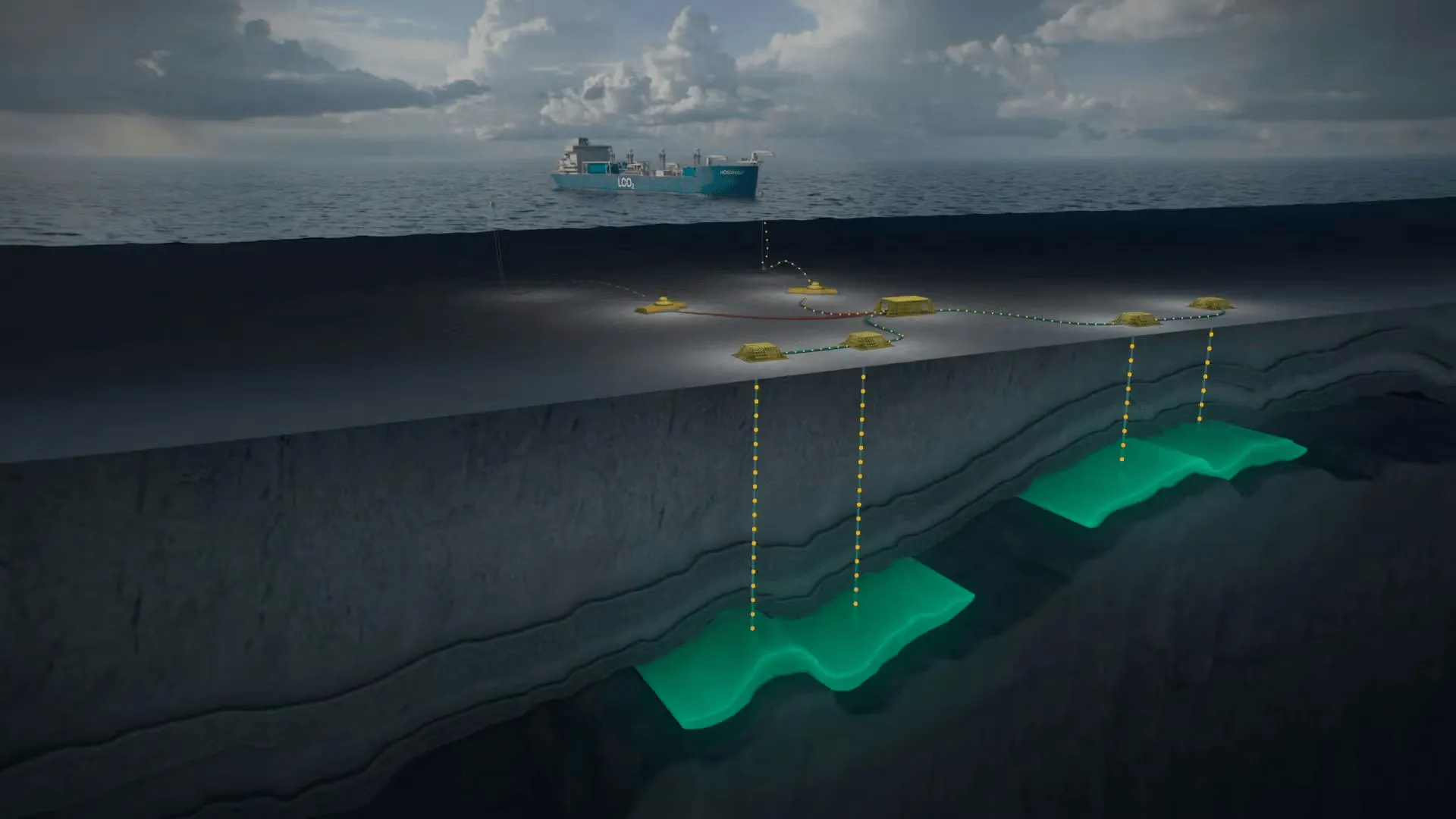
Norway is taking another step toward expanding Europe’s carbon capture and storage (CCS) infrastructure, as Aker BP and Höegh Evi advance a maritime solution designed to make offshore CO2 storage more accessible.
The development brings together offshore CO2 storage, carbon capture technology and innovative shipping infrastructure to address emissions from industrial facilities across Europe.
DNV has issued a Statement of Feasibility for the proposed Atlas project on the Norwegian Continental Shelf. The assessment covers the infrastructure needed to transfer liquefied carbon dioxide from specialised vessels directly into subsea injection wells.
The concept could eliminate the requirement for dedicated onshore facilities, cross-border pipelines and permanent offshore structures. Instead, ships would transport captured emissions to the storage location, where the CO2 would be injected into an underground reservoir.
According to project estimates, Atlas could accommodate approximately 150 million tonnes of CO2, with an initial injection capacity of up to 6 million tonnes annually. Operations could extend beyond 25 years, with first injection targeted for 2031, subject to investment approval.
The project also received a significant financial boost in October 2026, when the European Union awarded Aker BP and Höegh Evi $250 million (€223 million) through its Innovation Fund. A final investment decision is targeted for 2028.
Atlas enters a market already gaining momentum. Norway’s Northern Lights project began commercial operations in 2025, demonstrating that cross-border CO2 transportation and permanent offshore storage can work at industrial scale. Its planned expansion will increase annual capacity beyond 5 million tonnes by 2028.
For Atlas, the next challenge is turning technical feasibility into an operational and commercially viable system.
Source link