Advocates are entering the regulatory fray to push the utility company to commit to more equitable, reliable service that also furthers the clean energy transition.
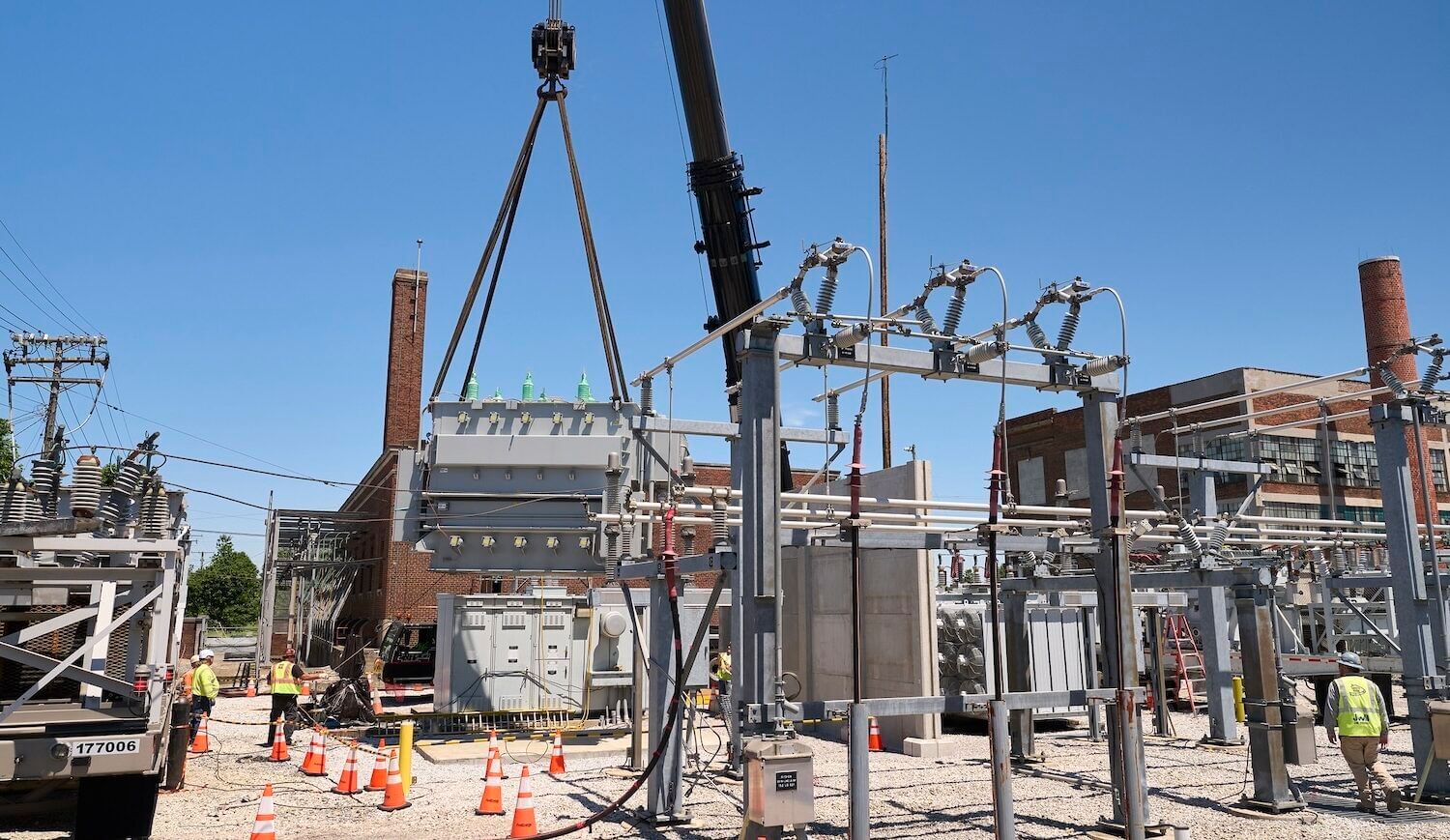
FirstEnergy delivers a new transformer to a Lakewood, Ohio, substation to help improve grid reliability. (FirstEnergy, CC BY-NC-ND 4.0, via Flicker)
Before a utility can raise electricity rates, it must get approval from regulators. In Ohio, some groups are looking to step into that process to make sure FirstEnergy, whose utilities supply power to over 2 million customers in the state, uses some of the money it will receive from ratepayers to equitably enable the clean energy transition.
Five environmental and clean-energy advocacy groups are among the 22 entities that have filed for formal party status in FirstEnergy’s latest rate case. Intervening in this manner is the main way organizations can provide evidence to regulators and influence utilities’ rate-related decisions.
That ability has become increasingly important as ratepayers nationwide struggle with an affordability crisis. Meanwhile, the aging grid faces growing reliability issues and ballooning demand from data centers.
A top ask from the Ohio groups is that FirstEnergy ensures customer money goes toward improving equitable grid service. Utility customers who live in disadvantaged census tracts — as determined by a Biden administration climate and economic justice screening tool — are twice as likely to have low-voltage circuits and older equipment as customers in other regions. That’s according to a 2025 analysis from the Interstate Renewable Energy Council commissioned by the Ohio Environmental Council.
“ Disadvantaged communities are really at risk from surges in power or being cut off from power, and we want to see that addressed in this case,” said Nolan Rutschilling, managing director of energy policy for the Ohio Environmental Council, which is one of the groups that filed to intervene in FirstEnergy’s rate case.
Source link