
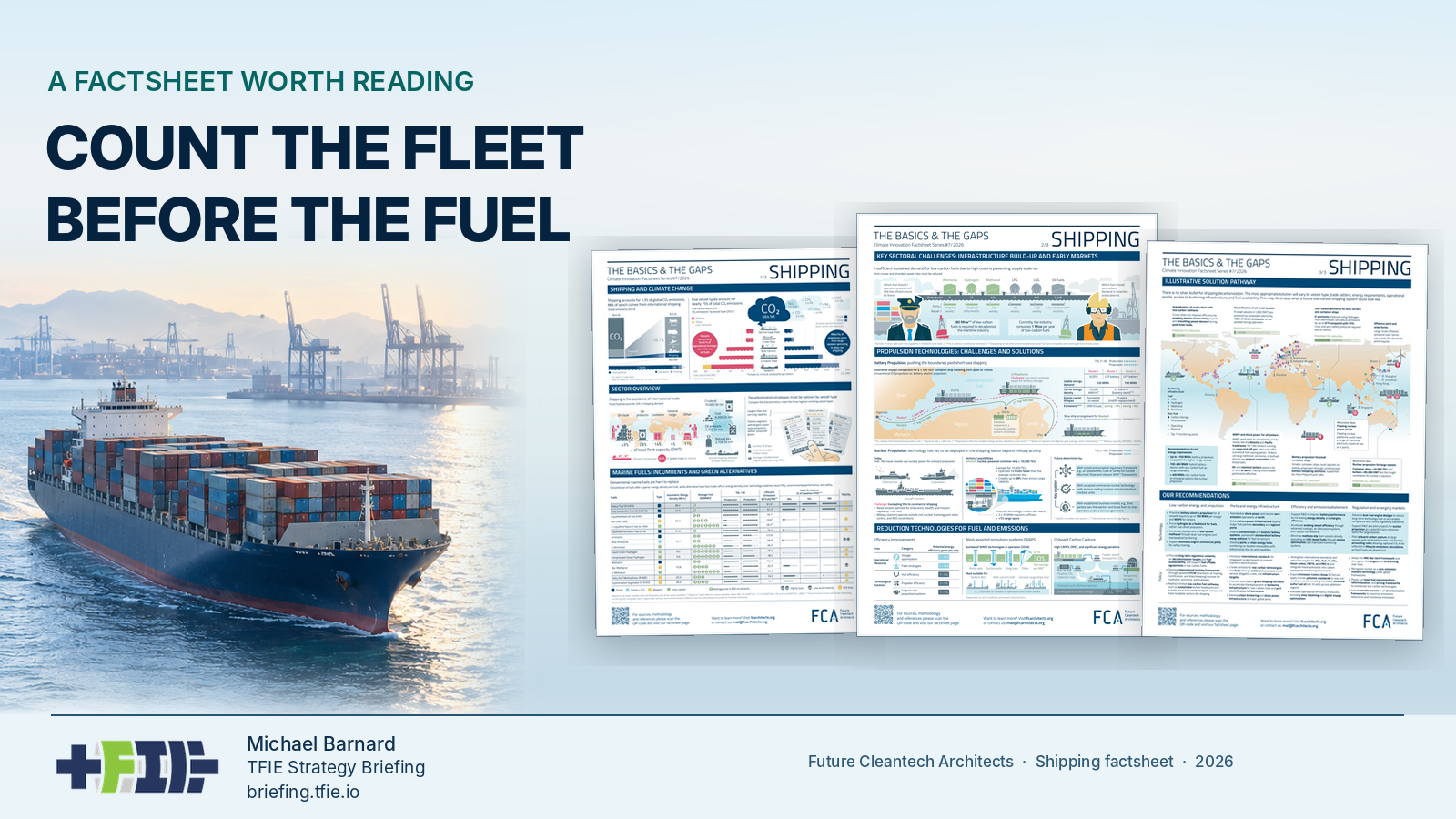
Shipping decarbonization presents policymakers with a bewildering range of choices. Batteries, biofuels, methanol, ammonia, hydrogen, wind assistance, shore power, nuclear propulsion and onboard carbon capture all compete for attention, despite serving very different vessel types and operating requirements. Future Cleantech Architects (FCA), a German nonprofit think tank that evaluates climate technologies and translates technical research into guidance for policymakers, has done a good job of bringing those differences into focus. Its October 2026 shipping factsheet is part of The Basics & The Gaps series. Three visually rich pages cover the industry’s emissions, fuels, technologies and infrastructure challenges with considerably more care than many much longer reports.
FCA commissioned TFIE Strategy to conduct a paid, independent peer review of a July draft. The version reviewed was already well researched and thoughtfully designed. The feedback mostly involved the way readers could interpret comparisons drawn from different system boundaries, along with the prominence given to technologies at very different stages of commercial development. FCA’s published edition incorporates substantial improvements in several of those areas. Its analysts deserve the credit for the final editorial choices.
The marine fuels table is particularly useful. LNG and LPG are identified as fossil fuels, while lifecycle emissions, local pollution, costs, technology readiness and toxicity receive more consistent treatment. These distinctions matter when methane leakage, synthetic fuel production pathways and the source of electricity can materially change the emissions associated with a particular fuel. Policymakers considering infrastructure subsidies need to understand those differences before treating a nominally alternative fuel as a climate solution.
Source link