Cold War conservatives used to say that, and they meant it: Better to suffer nuclear annihilation, they believed, than endure a “red” victory. And by “red” they meant anyone on the left of the political spectrum—from the Soviet communists to their “fellow travelers” in the U.S.
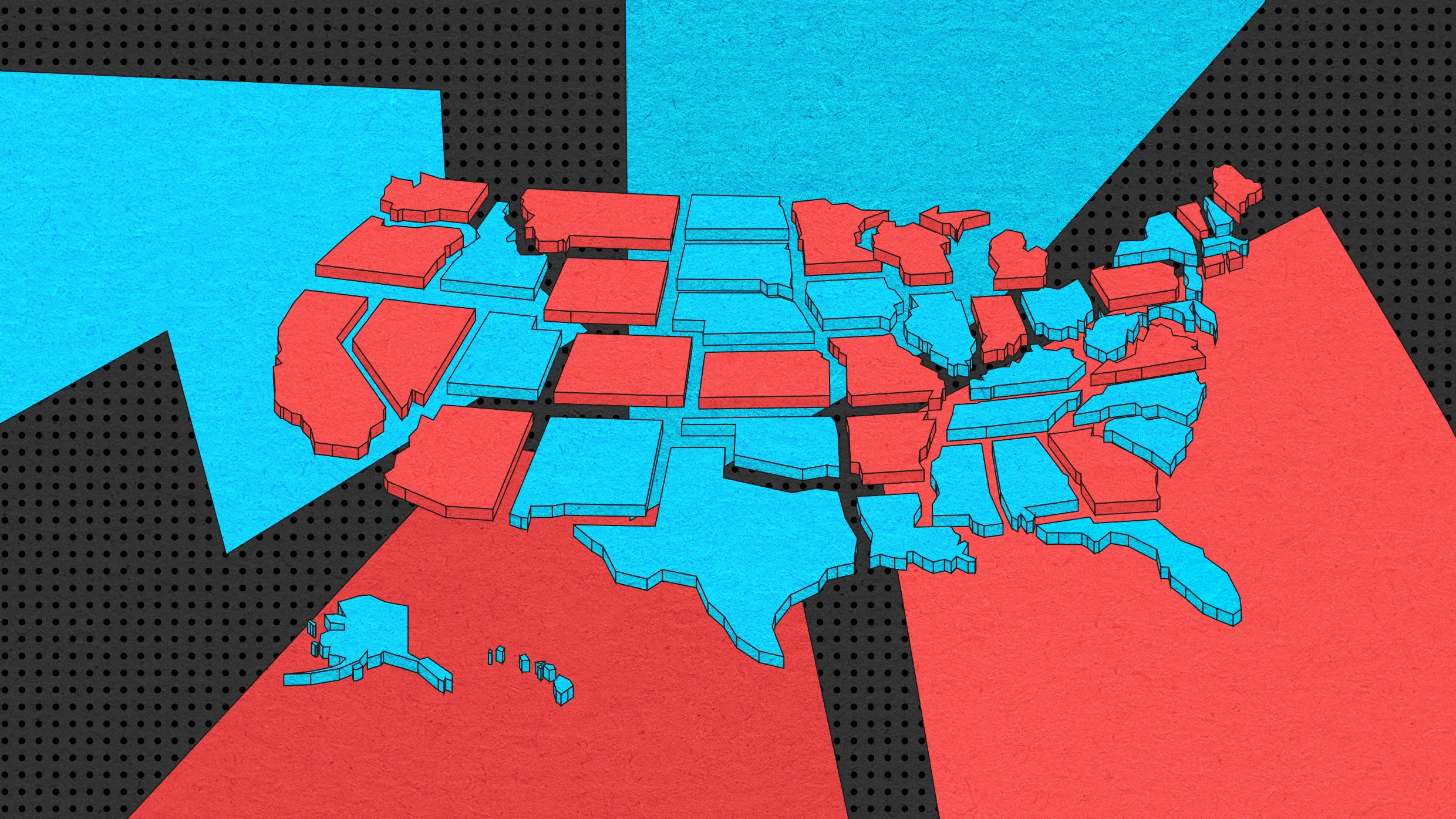
It’s strange, then, that America’s conservative party, the Republican Party, is now the red one. There’s no ideology behind the switch, no founding decision by either party to claim a color as its own. The whole red-state/blue-state vocabulary is much newer than most people assume. It dates almost exactly from the 2000 election.
And in many cases, it fails to capture the reality of politics in America.
Television networks needed to distinguish two candidates on a map, and for decades they just picked whatever looked good that year.
In 1976, NBC colored GOP presidential candidate Gerald Ford’s states blue and Democrat Jimmy Carter’s states red. Four years later, that same scheme meant Republican presidential candidate Ronald Reagan’s landslide victory painted the map almost entirely blue, which is a strange thing to picture now, given how thoroughly Reagan became the patron saint of the red party.
That wasn’t just a one-network quirk, either. The Washington Post was still assigning red to Democrats and blue to Republicans in graphics used during the 2000 campaign.
If you go looking for the decision that gave American politics its colors, you won’t find one. You’ll find almost a quarter-century in which nobody had settled on today’s version.
That inconsistency ended in 2000 with the fight over Florida’s presidential votes, though nobody at any TV network decided it should.
Source link