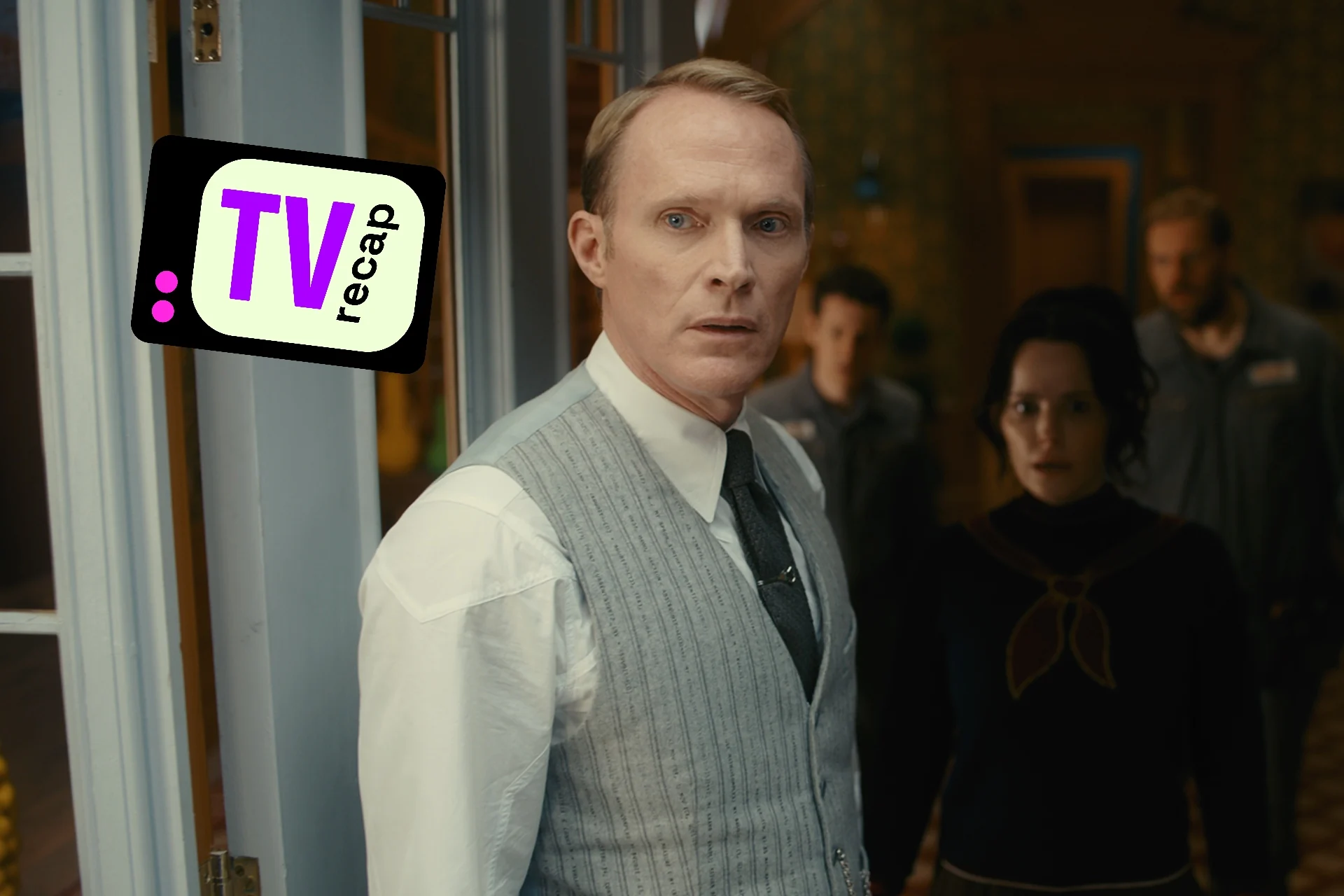
Throughout VisionQuest, Vision has drawn a line between his current self and his past self; Vision vs. the Vision, the former rebuilt from the pieces of the latter, with access to his memories but not his feelings.
“The Vision had a unique advantage,” Vision tells Thomas in episode four. “An otherworldly power source that helped him navigate the complexities of the mind and the heart.” The text of that conversation is that Vision is responding to Thomas’ question about why the Vision didn’t end up like J.I.M., the world’s first synthetic humanoid, whose inability to process complex emotions caused his clockwork to spin and spin until he was engulfed in flame. But the subtext is that he’s also talking about the advantage his past self had over his current self. The Vision had the Mind Stone. Vision doesn’t. The internal friction caused by that discrepancy, of remembering but not feeling yet desperately wanting to be able to, is building up. How long will it be until Vision sets himself aflame, too?
VisionQuest has been doing a lot of interesting thematic work that has, at times, felt too separated from its plot, testing the limits of its Marvel Cinematic Universe box with its internal meditations on humanity, identity, and what it means to be alive. The more conventional MCU aspects of its story have done an admirable job of reinforcing its philosophical leanings, but it hasn’t always been an easy fit. “Immolation” continues that uneasy alliance, essentially putting the external plot on hold while Vision figures his shit out.
Source link