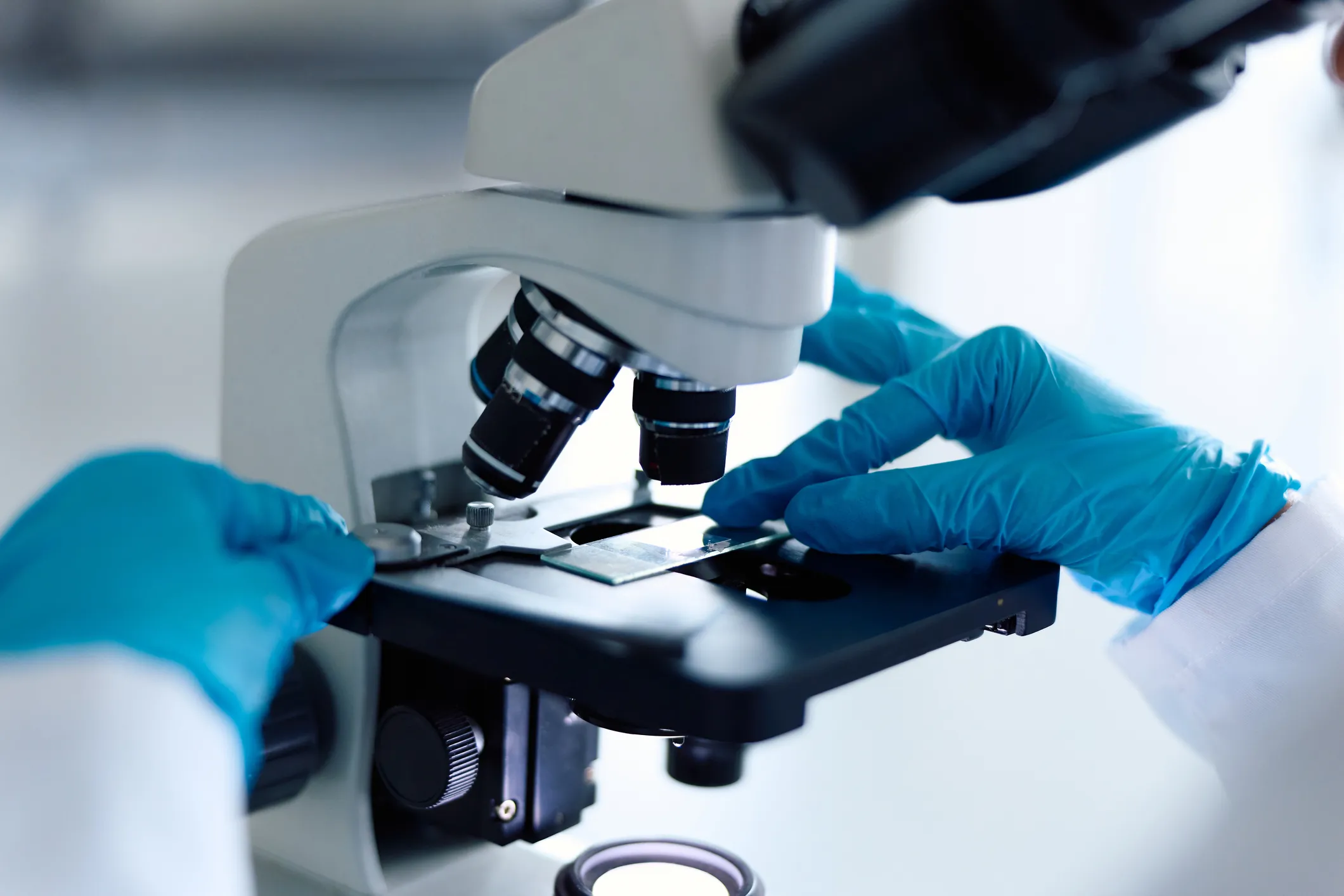
The study relied on the bacterium E. coli and V. natriegens to run the calculations.
Move over, microchips. The next generation of supercomputing might just run on living bacteria. For 20 years, an international team of scientists has been developing a biocomputer that uses bacteria to process information. Scientists from McGill University in Montreal announced their findings on Nov. 3 and published a paper detailing the results earlier this year in Nature.
Researchers from Canada, Europe, the United Kingdom and Australia contributed to this work, which combines biology with computer science and engineering. The researchers say the resulting biocomputer could be used to solve problems that give standard computers a hard time.
“Electronic (sequential) computers are not meant, or designed, to solve decision trees,” Dan Nicolau, a McGill bioengineering professor and senior author for the research paper, told CNET via email.
Nicolau noted that if electronic computers are to solve these types of problems, the computers will need a lot of RAM.
The study relied on the bacterium Escherichia coli and Vibrio natriegens to run the calculations. The researchers used E. coli because it moves through fluid in a predictable, measurable way and V. natriegens because it reproduces very quickly.
By using live bacteria rather than digital processing, the team says the biocomputer can solve big, complex problems at a small fraction of the memory and resources that regular computers require.
The researchers tested the biocomputer with a seemingly simple math problem called the Subset Sum Problem, which famously becomes exponentially harder as the number of inputs increases.
Source link