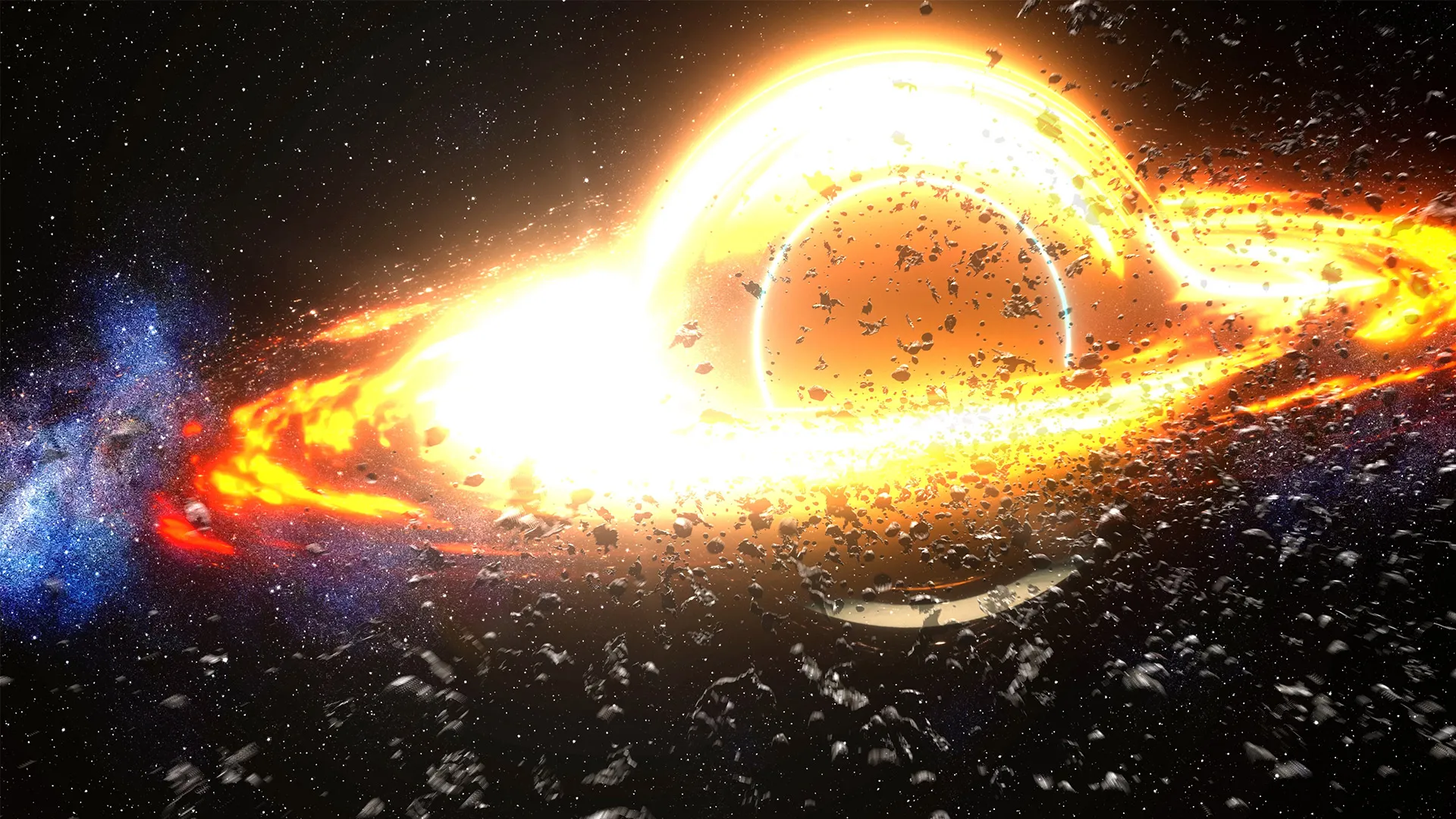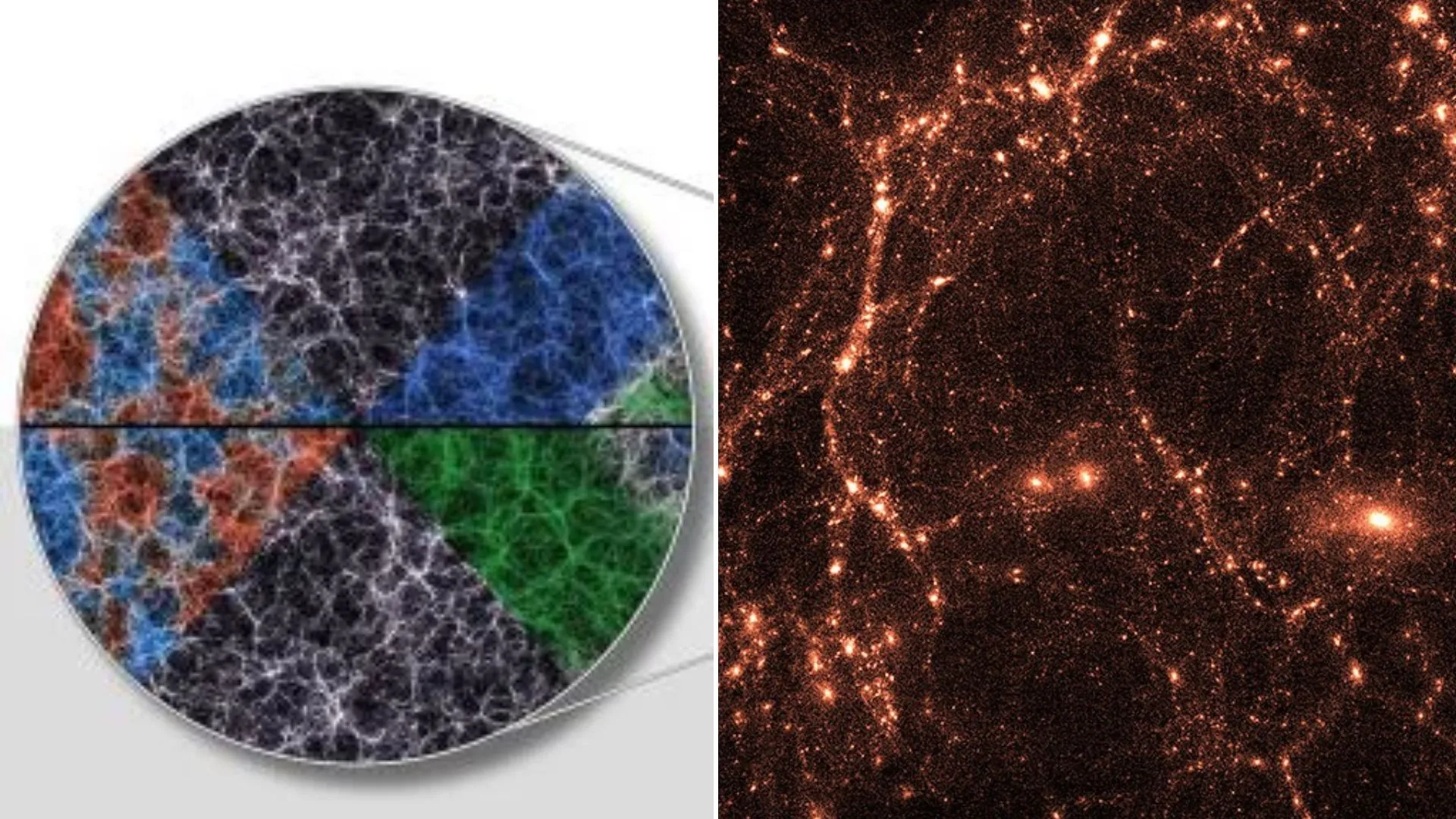
Researchers at the US Department of Energy’s Argonne National Laboratory completed two of the largest cosmological simulations ever, modeling 13.4 trillion dark matter particles across a 28.6-billion-light-year region of the universe.
The simulations ran on Aurora, Argonne’s exascale supercomputer, using 8,100 computing nodes and about 50,000 graphics processing units (GPUs) per calculation. The team completed both runs and much of the data analysis in about four days, creating enormous datasets designed to help scientists investigate the universe’s earliest moments and interpret observations from major astronomical surveys.
Led by Argonne computational scientist Nicholas Frontiere, the project focuses on understanding cosmic inflation, a proposed period of extremely rapid expansion shortly after the Big Bang. Although inflation is a central part of modern cosmology, the physics that drove it remains uncertain.
According to the researchers, inflation stretched tiny quantum fluctuations across vast distances in the early universe. Over billions of years, gravity amplified these small density variations, helping produce the large-scale cosmic web of galaxies and dark matter observed today.
Dark matter cannot be observed directly through ordinary light, but its gravitational influence helps shape the distribution of galaxies. The simulations use particles to trace dark matter’s density and velocity, allowing scientists to model how cosmic structures evolved.
The team is particularly interested in primordial non-Gaussianity: subtle departures from the simple statistical distribution predicted by standard inflationary models. Detecting such deviations could help distinguish between competing explanations for inflation and reveal more about the universe’s earliest conditions.
However, any potential signal is expected to be faint and can be obscured by cosmic variance, the statistical uncertainty that arises when observations cover only a finite portion of the universe.
Source link