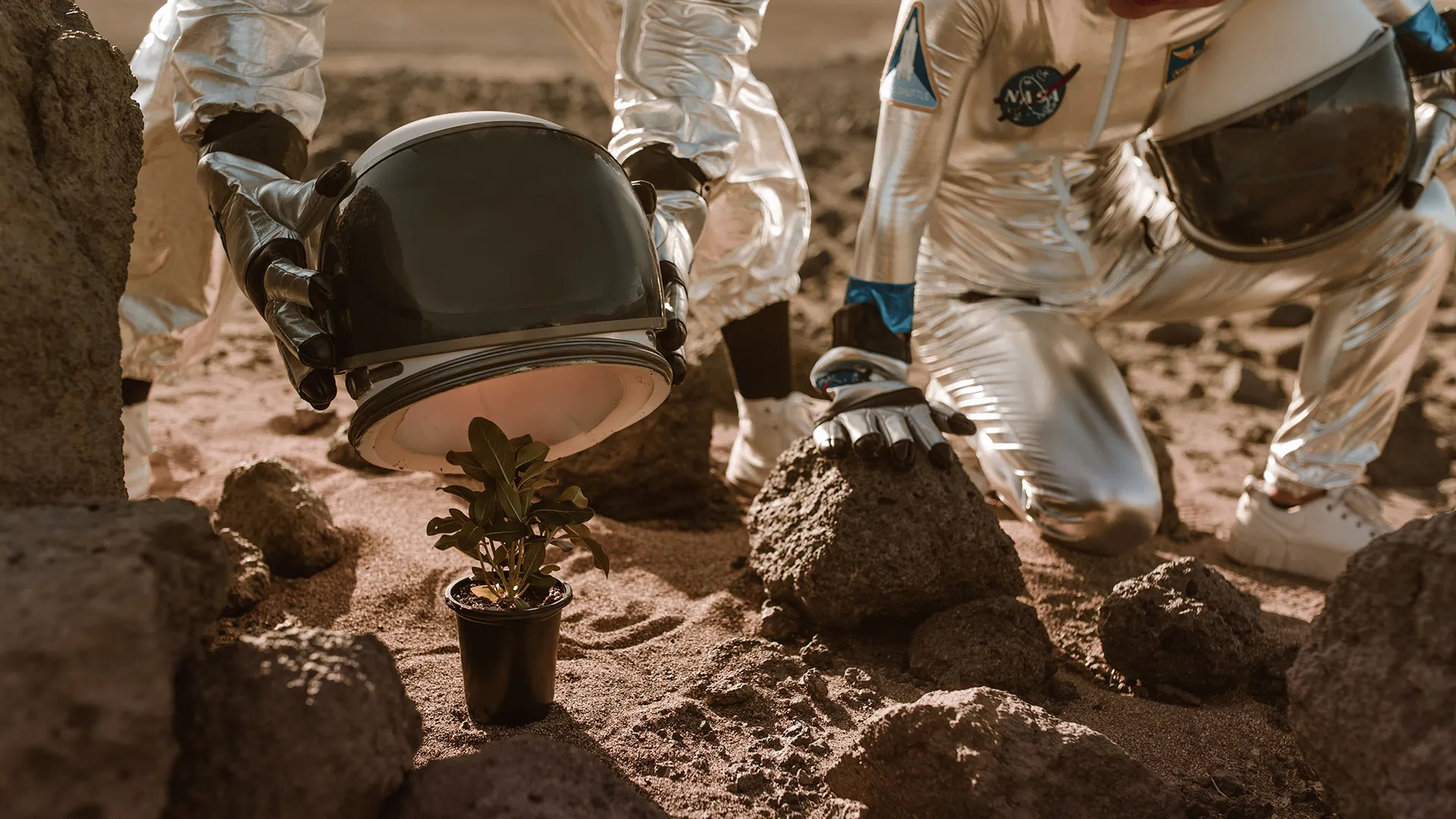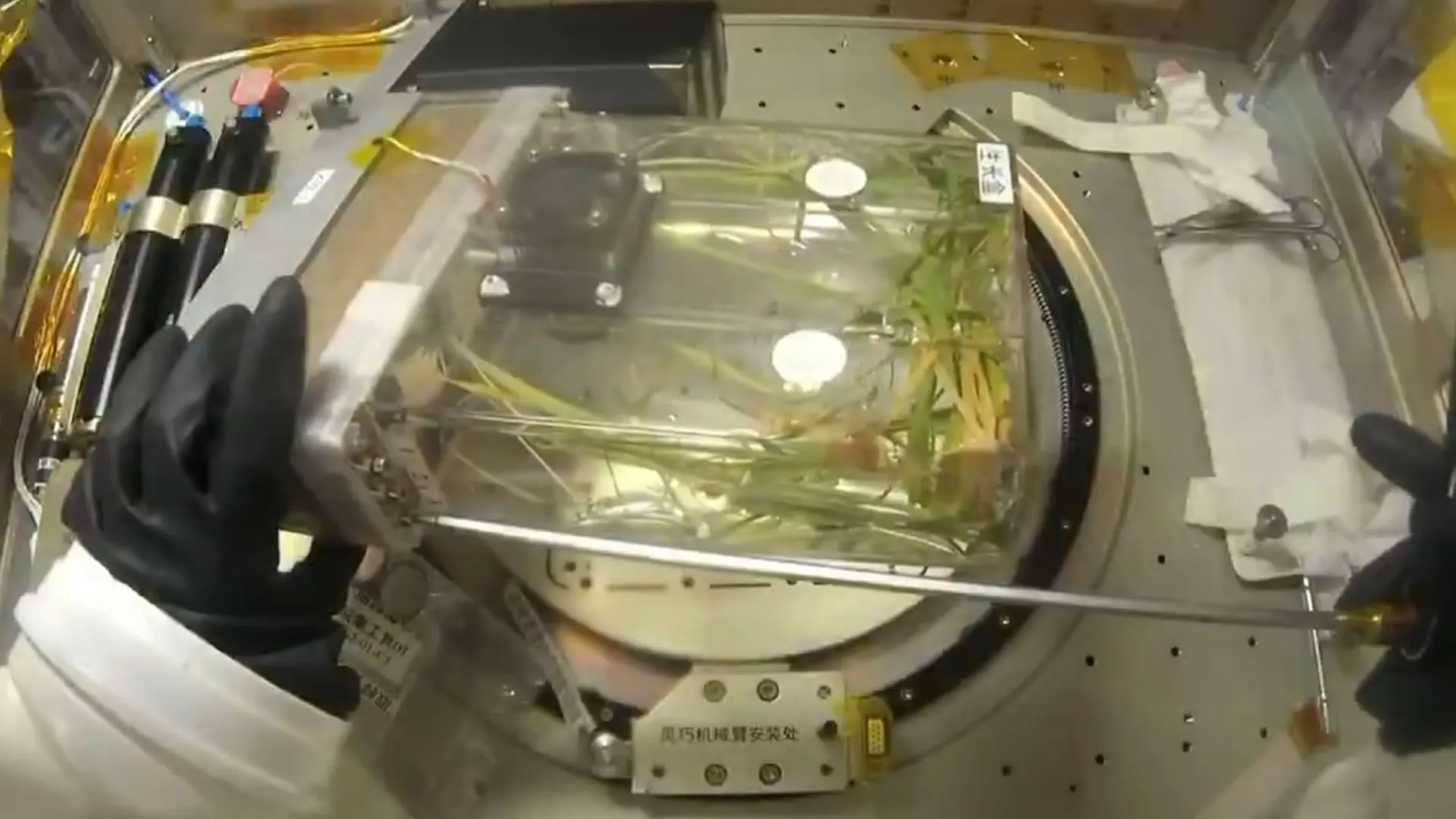
Chinese astronauts aboard the Tiangong space station have completed what they called the “Autumn harvest” of their in-space rice cultivation experiment. According to reports, the astronauts successfully collected, sowed, and stored a new batch of rice on the space station.
Reported on October 18, this marks a major milestone in the project’s hopes to reproduce rice over successive generations entirely in space.
The first generation of rice involved the use of seeds brought from Earth and sown in orbit. These have been allowed to germinate, mature, flower, and seed in microgravity.
Seeds harvested from these plants are then being used to grow a second generation entirely in orbit. This is crucial, as the new plants will develop from seeds produced in microgravity rather than on Earth
According to the Chinese Academy of Sciences, this experiment began earlier in 2026 and is intended to complete two seed-to-seed cycles. This is not the first time rice has been grown on the space station (in fact, this was achieved back in 2022).
The seeds produced by those plants were returned to Earth, where researchers successfully grew another three generations. But what is interesting here is that the astronauts are investigating the genetic stability of rice plants in microgravity.
Living organisms on Earth have evolved under Earth’s gravity, so removing that might, in theory, influence how the plants develop and reproduce, grow, and mature. They are particularly interested in not only genetic changes, but also things like epigenetics (or how genes express themselves).
Source link