Can a dying star reveal the location of a black hole that has otherwise gone unnoticed? Turns out, it can.
Astronomers have now traced a stellar destruction event to a massive black hole about 3,500 light-years from the center of its host galaxy. This discovery offers a rare look at a so-called wandering black hole and raises a further question: how did it end up so far from home?
Most massive black holes are found at the centers of galaxies, where they can sometimes reveal themselves by pulling in surrounding matter.
However, black holes away from galactic centers can remain nearly invisible when they are not actively feeding. The newly studied event, called TDE 2023mfm, shows how a star’s destruction can expose one of these otherwise elusive objects.
“We present the discovery and analysis of the optically selected tidal disruption event (TDE) 2023mfm, which originates from a wandering massive black hole (MBH) in a massive galaxy,” the study authors note.
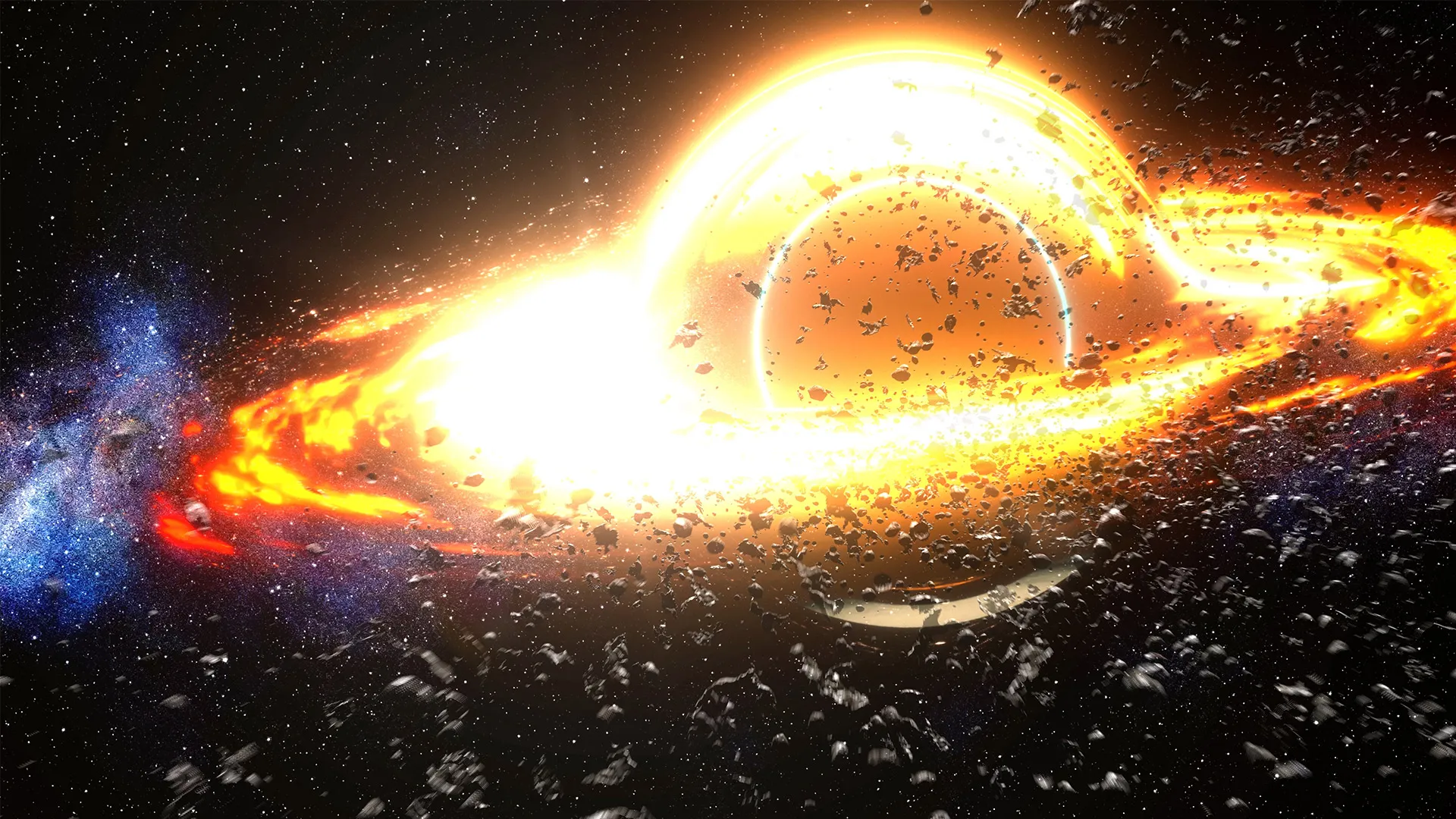
The event began when a star ventured too close to a massive black hole and was pulled apart by its intense gravity. This phenomenon, known as a tidal disruption event (TDE), sends stellar debris around the black hole and can produce a bright flare that astronomers detect across different wavelengths.
The Zwicky Transient Facility first spotted TDE 2023mfm on June 28, 2023. The researchers subsequently examined observations from several observatories, including the Hubble Space Telescope, Swift, Keck, Lick, Chandra, XMM-Newton, and the Very Large Array (VLA).
Source link