This article has been reviewed according to Science X's editorial process and policies. Editors have highlighted the following attributes while ensuring the content's credibility:
As our skies increasingly crowd with buzzing, hovering, flitting drones, spare a thought for the humble hopping robot. Hopping, a popular form of locomotion in the insect and amphibian worlds, is nearly two orders of magnitude more energy-efficient than flying. Unlike a mosquito that must constantly expend energy to stay aloft, a flea only works out when it jumps.
Those cost savings could also pay off in the world of robotics: A group of small, simple hopping robots could explore a location much more cheaply than flying drones. These robots could find gas leaks in an oil refinery, monitor water and fertilizer usage on a farm, or even explore other planets.
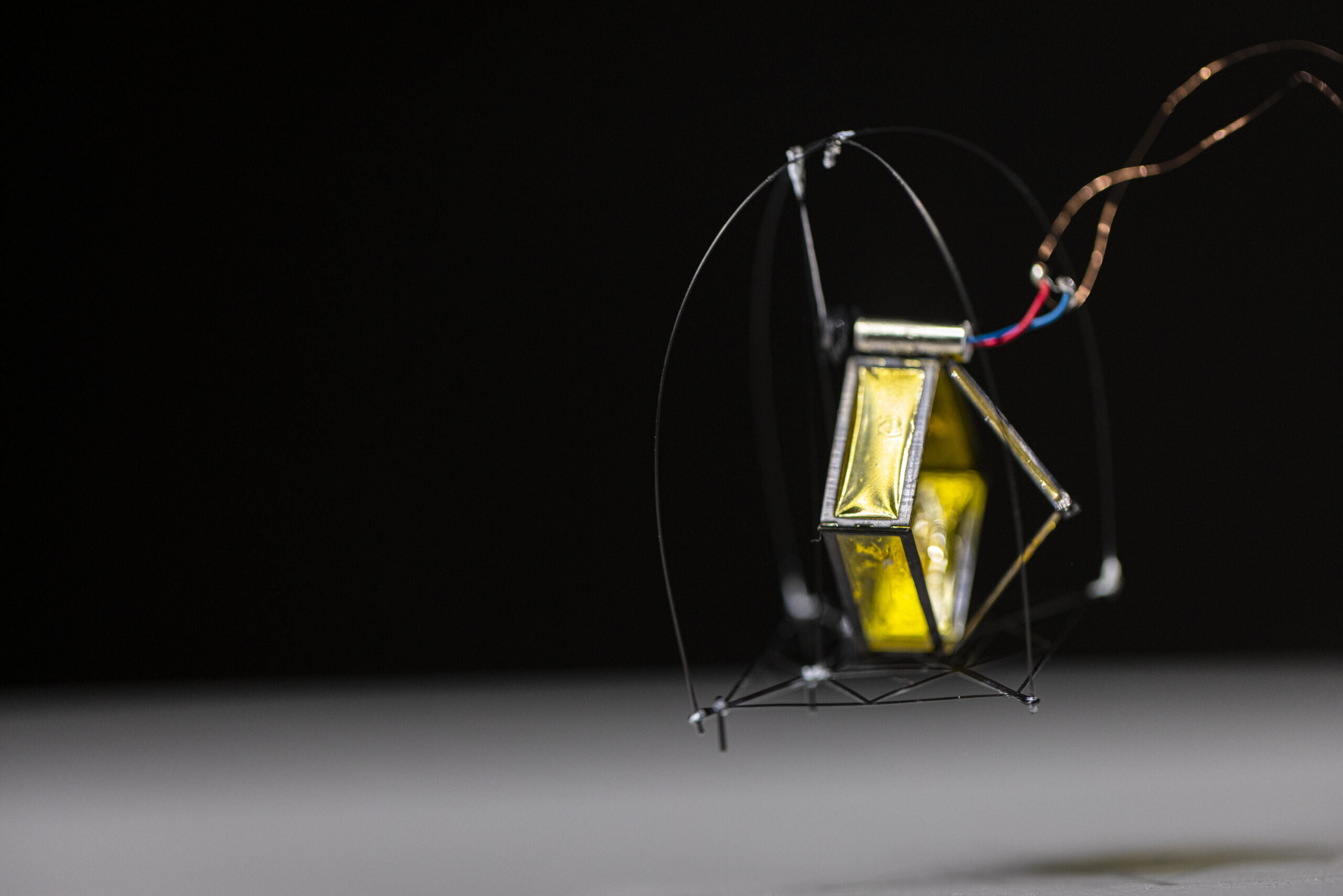
With this in mind, engineers at the University of Washington have created DirectHop, a roughly 1-gram (0.04-ounce) robot that can perform multiple hops in sequence and jump high enough to clear a standard stair step. The robot uses a tiny electric motor and three folding legs to launch itself to a specified jump height with 1-centimeter (0.4-inch) accuracy. After it lands, DirectHop can twitch to right itself and then prepare for another jump.
The prototype, which fits in the palm of a hand, represents multiple steps on the path to an autonomous hopping robot that can traverse a variety of environments.
"In my mind, the three hardest challenges for hopping robots are the ability to vary jump length, self-right and reload for multiple hops," said senior author Sawyer Fuller, a UW associate professor of mechanical engineering.
Source link