This article has been reviewed according to Science X's editorial process and policies. Editors have highlighted the following attributes while ensuring the content's credibility:
A simple pattern of black-and-white stripes could cause an autonomous vehicle or robot to misjudge how far away an obstacle is, potentially triggering an unexpected maneuver or even a collision, according to new University of Florida research.
The finding exposes a previously overlooked vulnerability in the technology that autonomous systems use to perceive depth—a critical capability for vehicles, drones and robots navigating their surroundings. The study will be presented in November at the Association for Computing Machinery Conference on Computer and Communications Security, or ACM CCS and appears on the preprint server arXiv.
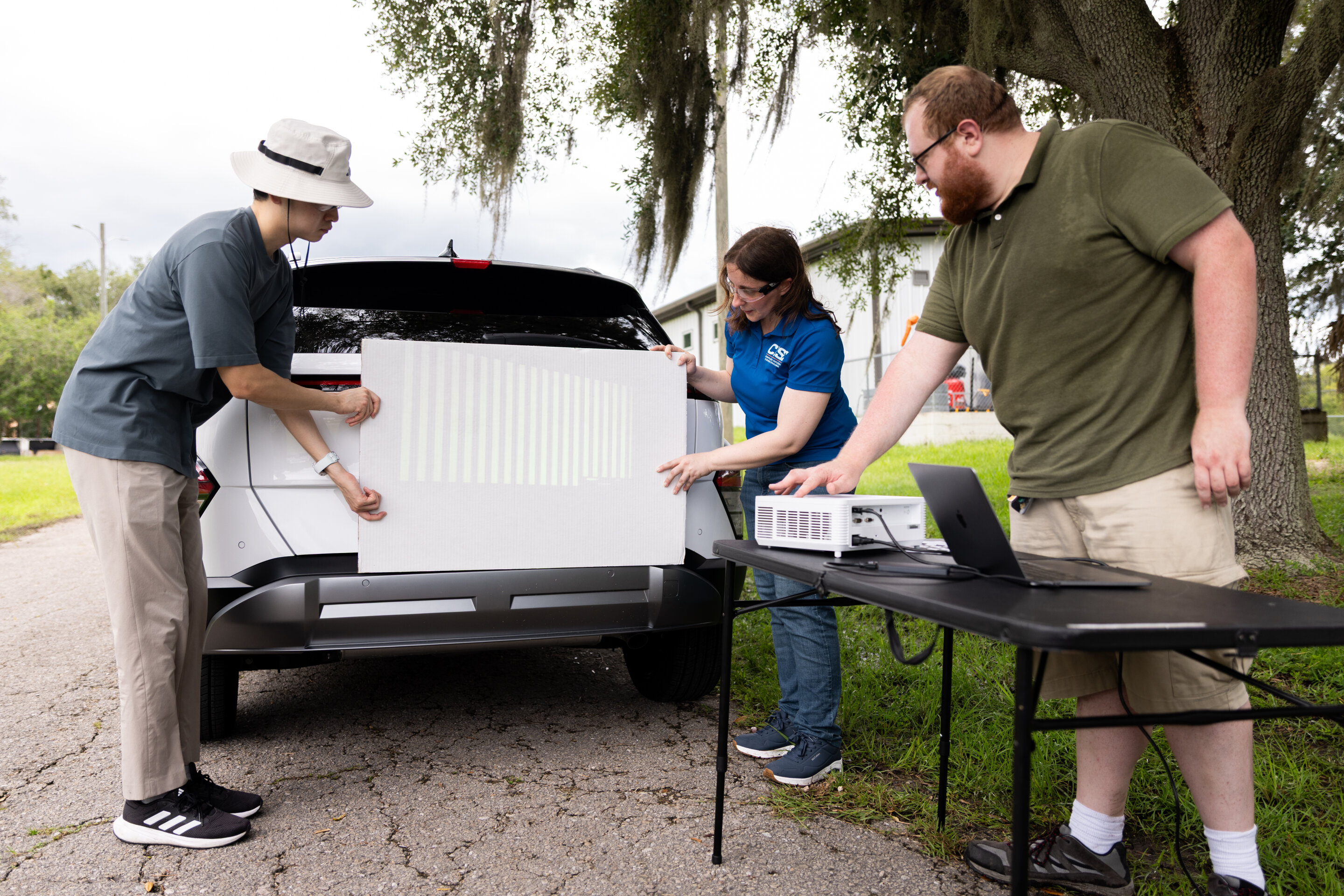
Researchers found that repeated patterns in the environment can interfere with the algorithms and artificial intelligence models that estimate the distance between a camera and an object. By manipulating the pattern, an attacker could make an obstacle appear significantly closer or farther away than it really is.
But the problem doesn't necessarily require an attacker, said Sara Rampazzi, Ph.D., an assistant professor in the Department of Computer and Information Science and Engineering at UF.
"These things can also happen naturally, so it's not a matter of imagining a sophisticated attacker. It becomes a safety problem," said Rampazzi, lead of the research effort.
The research focuses on autonomous systems that use stereo cameras—two cameras positioned close together—to estimate depth. These systems can use specific algorithms or artificial intelligence to make the same calculation from images captured by the cameras.
Source link