This article has been reviewed according to Science X's editorial process and policies. Editors have highlighted the following attributes while ensuring the content's credibility:
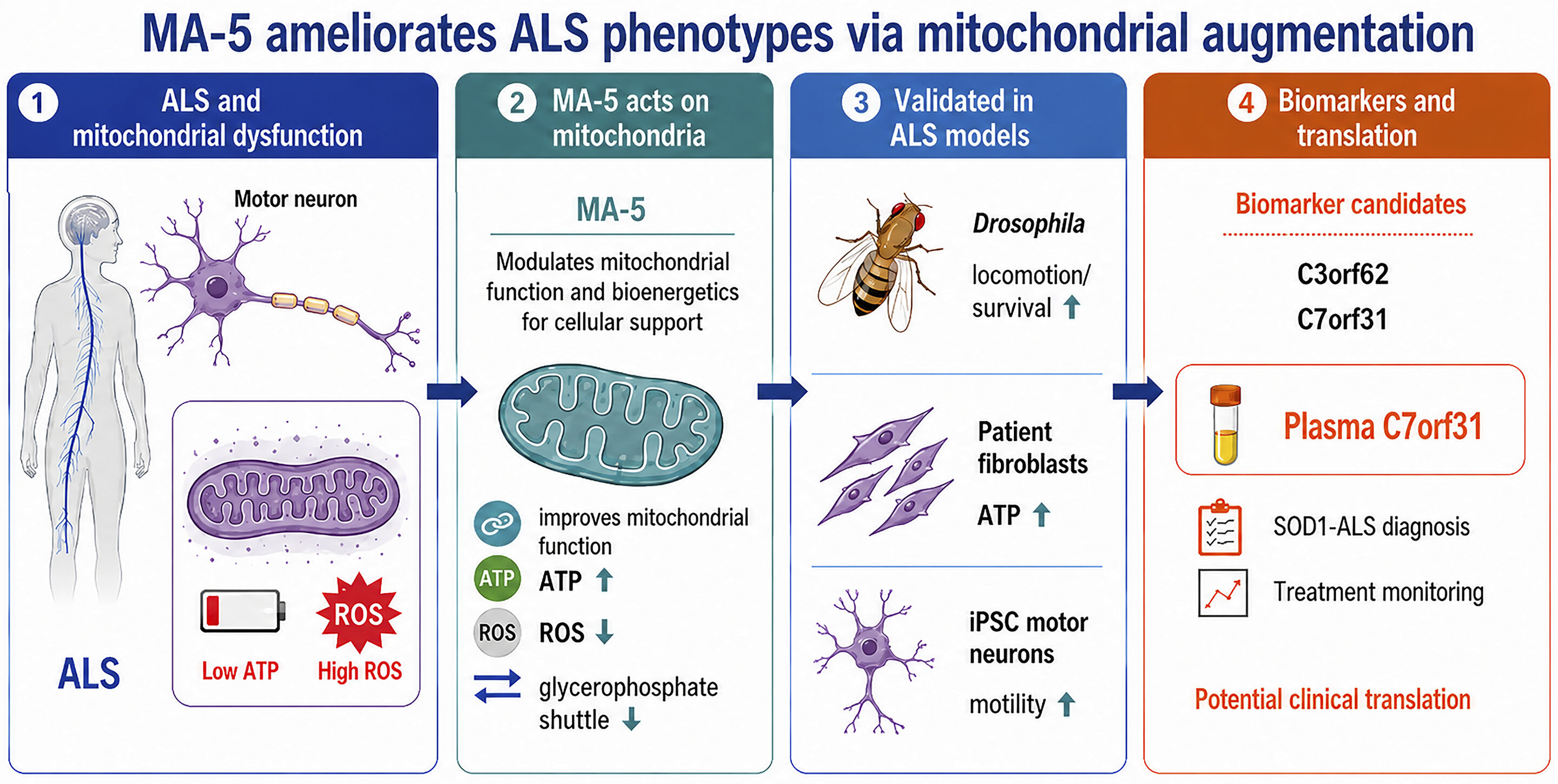
Amyotrophic lateral sclerosis (ALS) is a progressive neurodegenerative disease in which motor neurons are gradually lost, leading to muscle weakness and, as the disease advances, difficulty breathing and swallowing. Existing medicines can slow disease progression to some extent, but no treatment has been established that fundamentally reverses the disease process. Mitochondrial dysfunction is considered a potential therapeutic target because mitochondria play a central role in cellular energy production and are frequently impaired in ALS.
A collaborative research team led by Tohoku University, together with Kyoto University, the National Center of Neurology and Psychiatry, and Keio University, investigated Mitochonic acid 5 (MA-5), a small molecule developed by the Tohoku University group to enhance mitochondrial function. The team evaluated MA-5 in a fruit fly model of ALS, skin fibroblasts obtained from people with ALS, and motor neurons generated from patient-derived induced pluripotent stem cells (iPS cells). This three-pronged approach, presented in an article published in JCI Insight, enabled a comprehensive preclinical evaluation of MA-5 across multiple ALS models.
"ALS has diverse genetic and biological causes, so what works for one patient may not work for another," explains Takafumi Toyohara from Tohoku University. "However, mitochondrial dysfunction is a potential therapeutic target that may be shared across a broad range of patients."
In the fruit fly model, MA-5 improved impaired locomotor function. It also restored cellular ATP levels, increased mitochondrial membrane potential, and improved abnormal mitochondrial morphology in muscle.
Source link