This article has been reviewed according to Science X's editorial process and policies. Editors have highlighted the following attributes while ensuring the content's credibility:
Weill Cornell Medicine investigators have determined how a molecule within cells can help tune the eyes' sensitivity to light. The study identified the molecule's binding site on a protein in retinal cells, which should enable the development of drugs that target the site to treat related eye diseases.
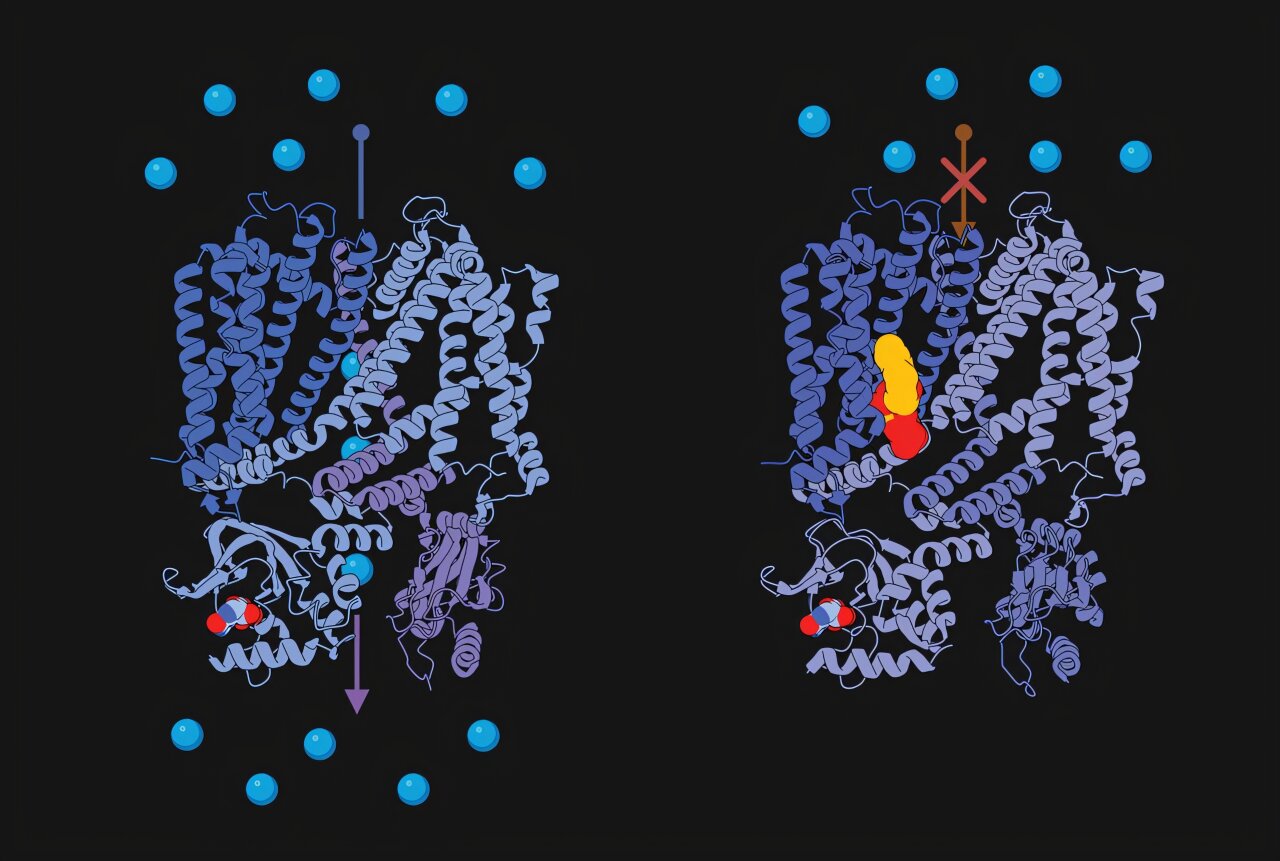
The study, published Sept. 3 in Nature Communications, examined a molecule known as PIP2 (PI(4,5)P2). This phospholipid is found in the membranes of most human cells and has a wide variety of signaling and regulatory functions. Prior research suggests that PIP2 can help tune the sensitivity of light-sensing "rod" cells in the retina by inhibiting the activation of a key ion channel called a CNG channel. But how PIP2 may do this has been unclear. PIP2 appears to be present at very low concentrations in rod-cell membranes, making it hard to measure and even harder to manipulate experimentally.
The researchers used model membranes containing CNG channels and well-defined PIP2 concentrations, along with high-resolution imaging techniques, to determine precisely how and where PIP2 binds to CNG channels to inhibit their activity. The results also showed that the very low concentrations of PIP2 seen in rod cells are sufficient to inhibit the channel and potentially help regulate vision.
"These findings establish a framework for understanding how lipids such as PIP2 regulate ion channel activity, and reveal the specific site where a drug could target CNG channels to inhibit their activity," said senior study author Dr.
Source link