This article has been reviewed according to Science X's editorial process and policies. Editors have highlighted the following attributes while ensuring the content's credibility:
A team of investigators co-led by Cedars-Sinai Health Sciences University has identified an enzyme that helps prevent the most common form of liver disease from progressing toward liver failure. Results of the preclinical study, published in Nature Metabolism, could point the way to new approaches for preventing serious organ damage.
An estimated 100 million people in the U.S. have metabolic dysfunction-associated steatotic liver disease (MASLD), formerly called nonalcoholic fatty liver disease, according to the American Liver Foundation. About 20% to 25% will progress to metabolic dysfunction-associated steatohepatitis (MASH), a more aggressive form of the disease in which excess fat buildup in the liver leads to inflammation, cell damage and scarring.
Treatments focus on lifestyle changes and protecting the liver from further damage. Medications are available, but effective options remain limited, and there is no cure for MASH.
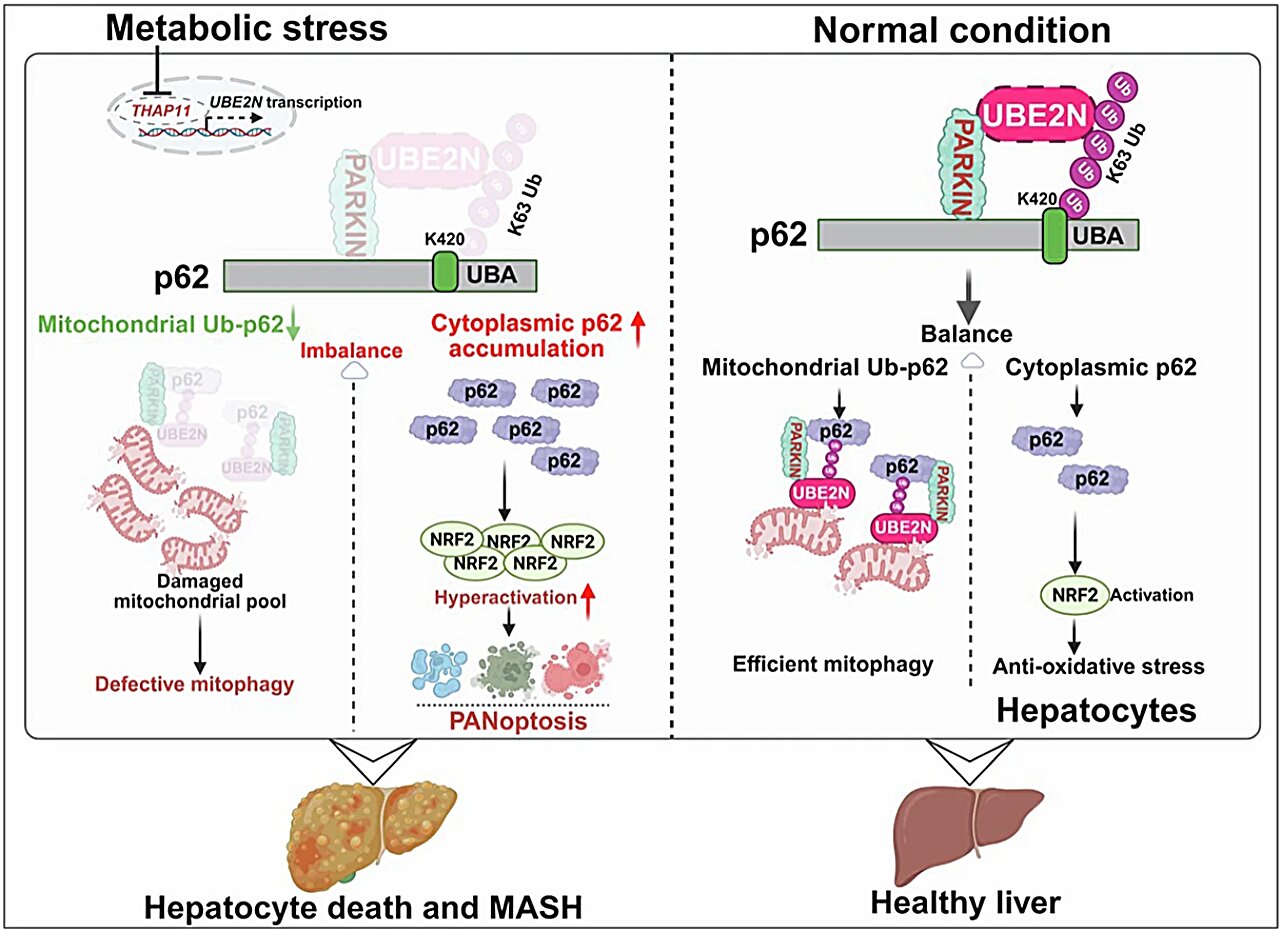
Previous research pointed to damaged mitochondria, which power cells, as a driver of MASH. In the new multicenter study, Cedars-Sinai investigators found that levels of the UBE2N enzyme in liver cells decrease as liver disease progresses.
"The UBE2N enzyme appears to protect the liver from the inflammation and damage associated with MASH by helping remove damaged mitochondria and supporting the breakdown of fat," said Ekihiro Seki, MD, PhD, professor of medicine and biomedical sciences at Cedars-Sinai and co-corresponding author of the study.
Source link