This article has been reviewed according to Science X's editorial process and policies. Editors have highlighted the following attributes while ensuring the content's credibility:
Chemotherapy faces a fundamental problem: The same drugs powerful enough to kill cancer cells can also damage healthy tissue. UC Irvine researchers are trying to change that equation by putting a safety lock on a highly potent cancer drug—a lock designed to be removed once the drug enters cancer cells with high levels of a specific protein-destroying activity.
The findings, published in Signal Transduction and Targeted Therapy, demonstrate a new way to turn a cell's own protein-recycling machinery into a trigger for drug activation. The approach could eventually help scientists develop cancer treatments that deliver powerful drugs more selectively while reducing harmful effects elsewhere in the body.
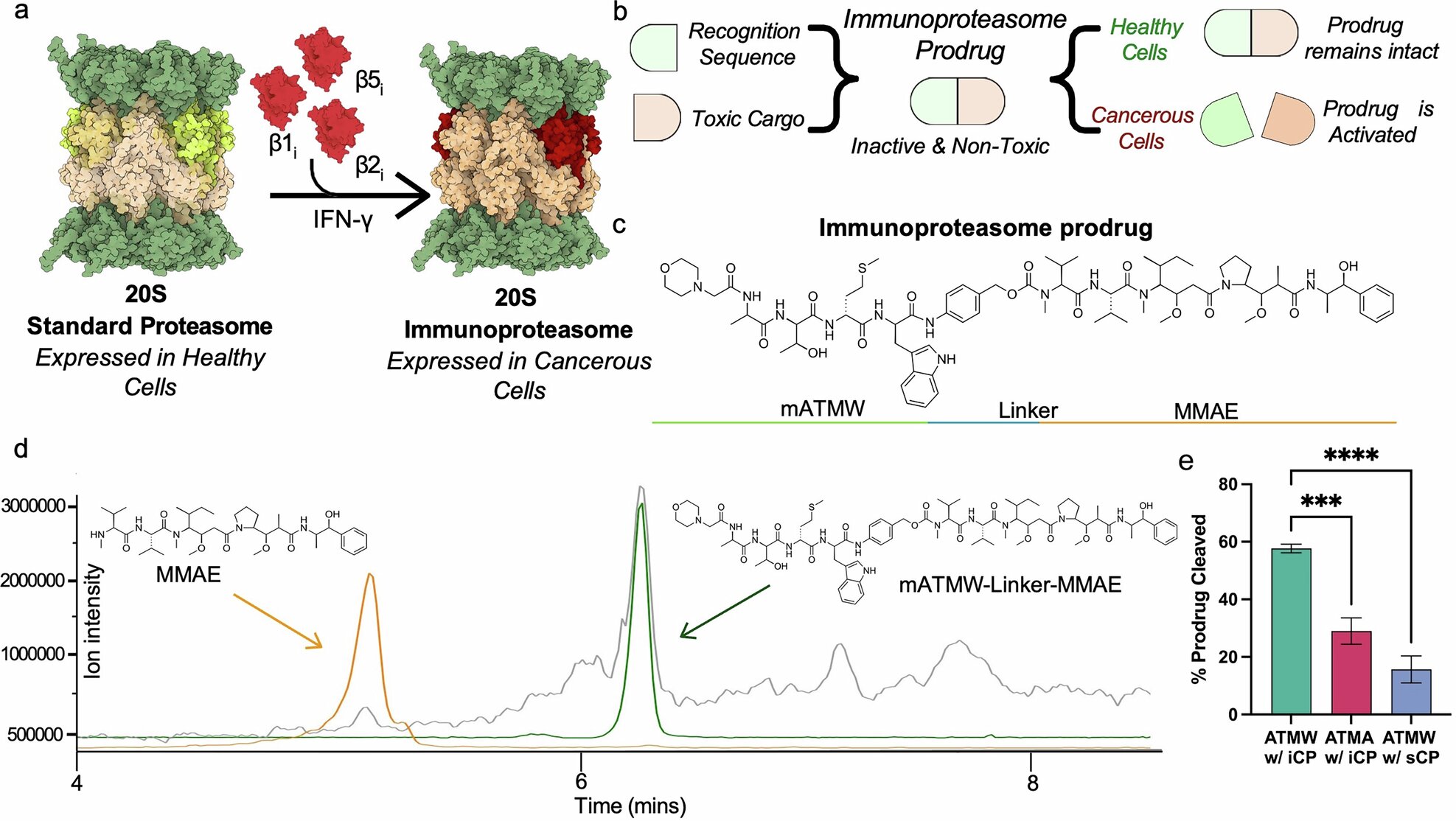
At the center of the strategy is the immunoproteasome, a specialized form of the proteasome, the cellular machinery responsible for breaking down proteins. Immunoproteasome activity can be elevated in inflammatory conditions and a variety of cancers.
Researchers designed an experimental prodrug—a pharmacologically inert compound that becomes active after administration—that takes advantage of that difference.
The team attached an extremely toxic anticancer agent called monomethyl auristatin E to a short peptide recognized by the immunoproteasome. While attached to the peptide, MMAE is essentially "caged," limiting its ability to harm cells. In a cancer cell with elevated immunoproteasome activity, the peptide is cut and the active drug is released.
Think of it as giving chemotherapy a molecular lock and giving certain cancer cells the key.
Source link