This article has been reviewed according to Science X's editorial process and policies. Editors have highlighted the following attributes while ensuring the content's credibility:
For most Americans with private health insurance, hospital prices are not set by the government. Instead, they are set by hospitals and insurers that negotiate how much an insurer will pay when one of its members receives care.
Threatening to end that relationship—and making the threat public—can give either side additional leverage in negotiations, but it can also create weeks or months of uncertainty for patients. Looming threats of coverage loss may even force some patients to change health systems to be sure they will receive in-network care.
"It's difficult to quantify anxiety, but aggressive negotiating tactics have clearly led to profound alarm," said Jason Buxbaum, an assistant professor in the Department of Health Services, Policy and Practice who led a new study of publicly announced threats to leave networks during hospital-insurer negotiations.
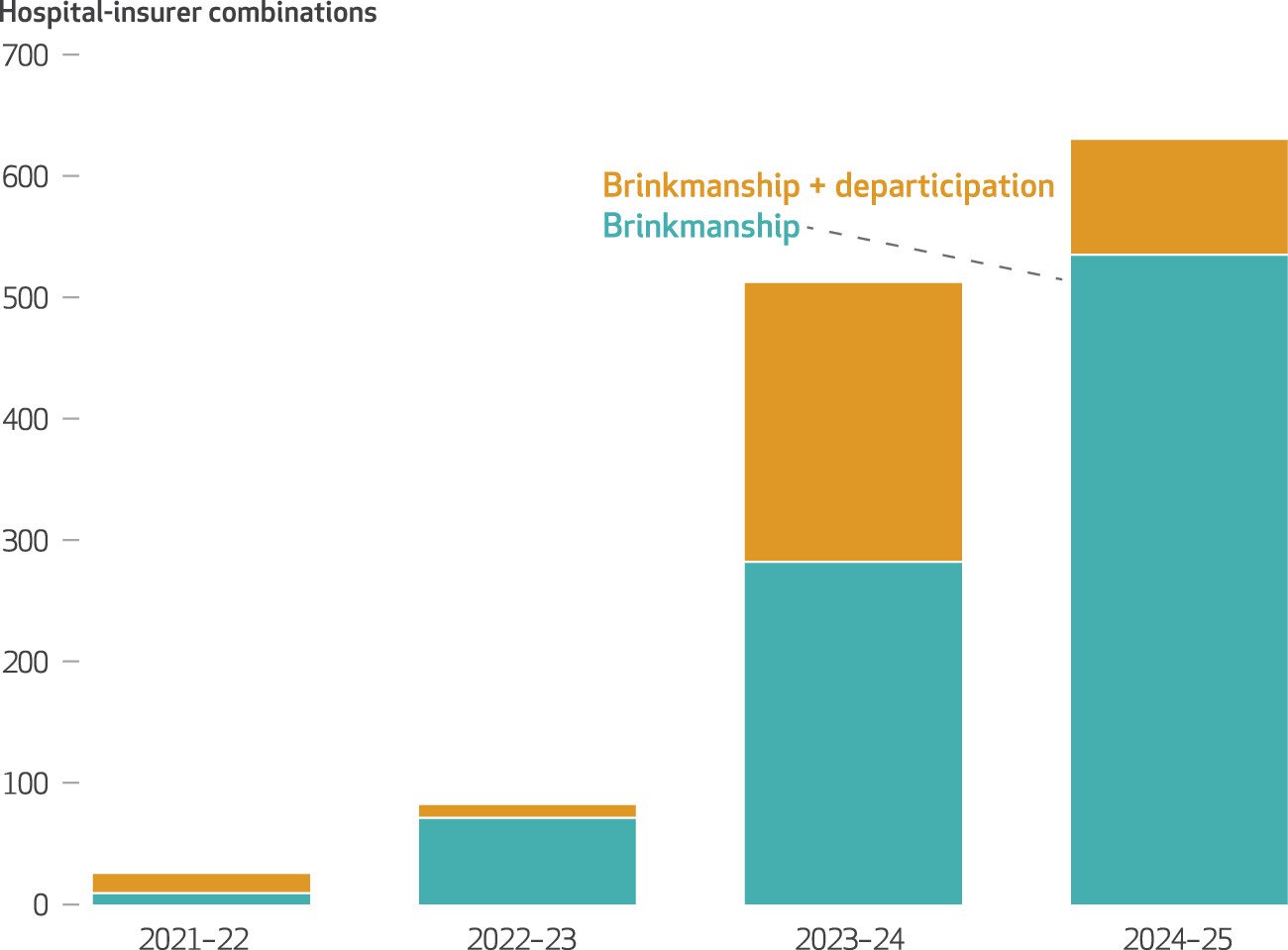
According to the study, published in Health Affairs, the tactic is relatively common in recent hospital-insurer contract disputes and is more likely to be used by some of the financially strongest players in health care, including large national insurers and hospitals already commanding relatively high prices.
The team from Brown's Center for Advancing Health Policy through Research (CAHPR) examined 14,918 relationships involving 3,772 hospitals and 92 commercial health insurers from August 2021 through July 2025. They also sifted through news reports, public notices and press releases for cases in which either side publicly announced plans to end a contract or threatened to do so unless certain demands were met.
Source link