This article has been reviewed according to Science X's editorial process and policies. Editors have highlighted the following attributes while ensuring the content's credibility:
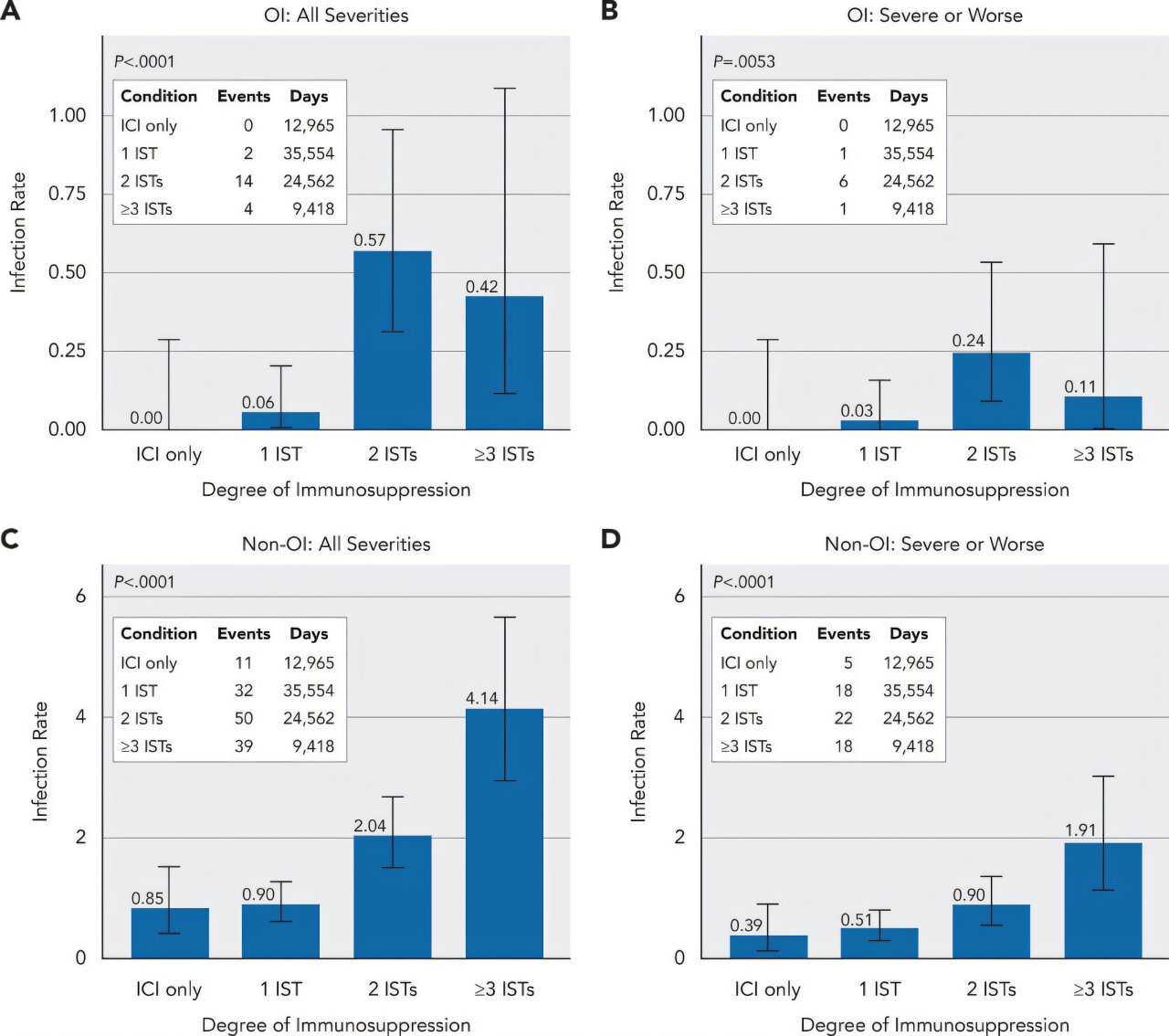
Immune checkpoint inhibitors (ICIs) can promote antitumor responses but can also cause adverse effects that require treatment with immunosuppressive drugs. A new retrospective study by Mass General Brigham Cancer Institute investigators found that patients who received ICIs and multiple immunosuppressive therapies were at higher risk of serious infections. Nearly half of the infections were severe, life-threatening or fatal. The results are published in Journal of the National Comprehensive Cancer Network.
"Complications from infection may adversely impact quality of life, disrupt cancer-directed therapies, lead to hospitalizations or even result in death," said lead author Ross Merkin, MD, a medical oncologist with the Mass General Brigham Cancer Institute. "Our study identifies patient populations for whom these risks might be mitigated with improved screening, monitoring, preventive or preemptive treatment approaches."
Patients receiving cancer treatment may receive multi-agent immunosuppressive therapy (IST) to treat severe autoimmune complications of ICIs, known as immune-related adverse events. However, evidence is limited on how IST affects the risk of opportunistic infections (such as herpesviruses, certain bacteria or invasive fungi) and non-opportunistic infections (all other pathogens) in high-risk patients with solid tumors who experience these complications.
The research team assessed infection risk in a cohort of 20,930 patients who received ICI therapy and had at least one immune-related adverse event requiring progressively more intense immunosuppression between June 2011 and February 2024. Within this cohort, 142 patients received at least one steroid and two nonsteroidal ISTs to treat an immune-related adverse event.
Source link