This article has been reviewed according to Science X's editorial process and policies. Editors have highlighted the following attributes while ensuring the content's credibility:
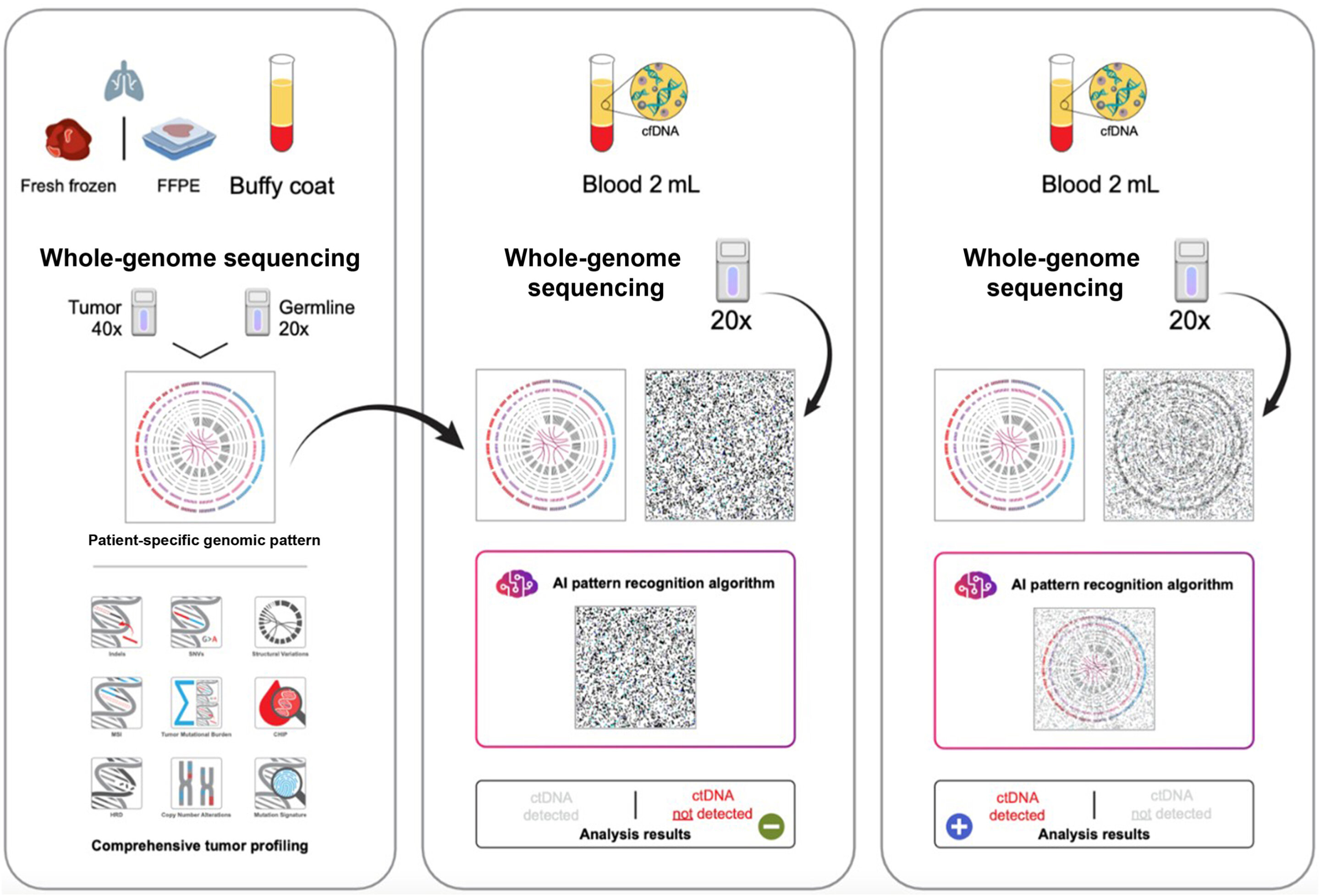
Despite advances in early-stage lung cancer treatment, a significant number of patients experience disease recurrence after surgery or initial therapy. A study has now demonstrated that a blood test (liquid biopsy) can reliably detect lingering lung cancer traces even in the earliest clinical stages, long before a tumor is large enough to show up on a scan. This real-time genetic monitoring detailed in an article appearing in The Journal of Molecular Diagnostics, accurately predicts relapse risk, opening a window for timely, personalized therapeutic interventions.
Non–small-cell lung cancer (NSCLC) is the most common type of lung cancer and remains the major cause of cancer-related death. Small tumors in patients with early-stage NSCLC (I to II) are usually surgically removed, and survival rates are reasonably high. However, even in stage I, disease recurrence rates range between 5% and 19%, and imaging follow-up remains standard of care.
"As oncology shifts toward personalized risk-adapted care, liquid biopsies are emerging as a critical tool to bridge the gap between treatment completion and clinical recurrence," explains lead investigator Matija Snuderl, M.D., Department of Pathology, NYU Langone Health and Grossman School of Medicine, and Laura and Isaac Perlmutter Cancer Center, New York, New York.
"In our study, we monitored patients with lung cancer across treatment stages using serial blood draws to track circulating tumor DNA (ctDNA) levels.
Source link